If you were asked who the greatest female scientists of all time are, what would you say? According to the history of Science, Marie Curie is one of the greatest female scientists of all time.
Among the greatest male scientists of all time, Albert Einstein, Isaac Newton, or other well-known figures are likely to be your answers. Those scientists undoubtedly produced groundbreaking discoveries that altered our perceptions of the world. However, despite facing systematic impediments and gender discrimination throughout history, women have played an important part in humanity’s scientific growth. In this Women’s History Month, let us learn about women’s accomplishments and honor their scientific achievements.
Top 10 Greatest Female Scientists of All Time
Ada Lovelace (Dec. 10, 1815-Nov. 27, 1852), Mathematician
Ada Lovelace was a mathematician and writer from England. She was born in England, the only child of poet Lord Byron and mathematician Lady Byron. Her father and mother divorced just a few months after she was born.
Because Ada worked on Charles Babbage’s planned mechanical general-purpose computer, the Analytical Engine, she is well-known. Ada Lovelace is sometimes referred to as the first computer, despite the fact that she lived centuries before modern computers were built. Ada is also regarded as the inventor of the first computer algorithm. She married William King in 1835 and had two kids with him.
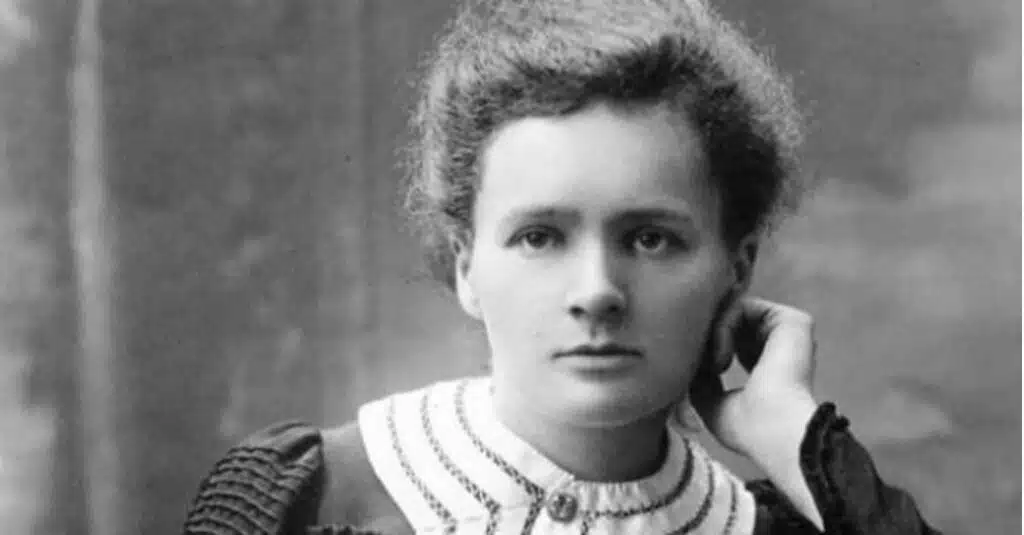
Marie Curie (Nov. 7, 1867-July 4, 1934), Physicist, and Chemist
She was a physicist and chemist. Among her numerous accomplishments, she discovered radioactivity and invented transportable X-ray equipment that was used during World War I. Marie Curie was a physicist and chemist.
Marie Curie discovered the radioactive elements polonium and radium — and devised procedures for isolating radioactive isotopes — with the help of her husband, Pierre Curie.
She was the first woman to win the Nobel Prize in 1903, and she was also the first woman and individual to win the prize in two different scientific categories.
Caroline Herschel (16 March 1750 – 9 January 1848), Astronomer
astronomer Caroline Lucretia Herschel (16 was instrumental in the discovery of numerous comets, notably 35P/Herschel–Rigollet, which bears her name. Her elder brother, astronomer William Herschel, with whom she collaborated throughout her career. She was the first woman to hold a government post as a scientist and to be paid for it. In 1828, she was awarded the Royal Astronomical Society’s, Gold Medal.
Marie-Anne Paulze Lavoisier (20 January 1758 – 10 February 1836), Chemistry
Marie-Ann Paulze Lavoisier was a French scientist and noblewoman who was the wife of chemist and nobleman Antonie Lavoisier. She is widely regarded as the founder of modern chemistry.
She was trilingual (Latin, English, and French), thus she assisted her husband in translating important scientific papers that contributed to the discovery of oxygen gas.
Physicist Chien-Shiung Wu (May 31, 1912 – February 16, 1997)
Chien-Shiung Wu was a physicist who was Chinese and American. She made significant contributions to nuclear and particle physics. In fact, she was a pioneer and a significant person in the field of physics.
Wu was the first woman recruited as a faculty member at Princeton University’s physics department, which is incredible. She earned the inaugural Wolf Prize in Physics in 1978, earning her the moniker “First Lady of Physics.”
Vera Rubin ( July 23, 1928-Dec. 25, 2016), Astronomer
Vera Rubin, an American astronomer, was the first to detect dark matter. It’s like a magical glue that binds our universe together. It was regarded as one of the most significant discoveries of the twentieth century.
Janaki Ammal (Nov. 4, 1897-Feb. 7, 1984), Botanist
Janaki Ammal is the first female plant scientist in India. She developed some hybrid species that are still cultivated today. She also contributed to and pushed for the conservation of India’s biodiversity.
Plant breeding, cytogenetics, and phytogeography were all areas of study for this Anglo-Indian scientist. She is well-known for her groundbreaking research on sugarcane and eggplant (brinjal). She received the Padma Shri award from the Indian government in 1977.
Flossie Wong-Staal ( August 27, 1946 – July 8, 2020), Virologist and Molecular Biologist
Wong-Staal, a Chinese-American virologist and molecular biologist, is credited with being the first scientist to clone HIV. She also produced a map of its genes, which led to a viral test.
This test helped to establish that HIV is the cause of AIDS. She worked at the University of California, San Diego (UCSD) from 1990 until 2002, where she held a prominent role in AIDS research. She was a co-founder and became the chief scientific officer of Immunol after departing from UCSD.
Rosalind Franklin (July 25, 1920-April 16, 1958), Chemist
Rosalind Franklin was an English scientist and X-ray crystallographer who made the groundbreaking discovery of the double helix structure of DNA. She also contributed to the study of RNA, viruses, coal, and graphite structure.
Rosalind Franklin is a chemist who works in the United States.
Franklin’s work on coal and viruses was well-received during her lifetime, but her pioneering contributions to the discovery of DNA structure went virtually unnoticed. As a result, she is known as the “forgotten heroine,” the “wronged heroine,” and the “dark lady of DNA.” Her male colleagues were awarded the Nobel Prize after her death in 1962.
Elizabeth Garrett Anderson (9 June 1836 – 17 December 1917), Physician
Elizabeth Garrett Anderson, an English physician, and suffragist paved the path for women in medicine in the United Kingdom. She was England’s first female doctor and achieved great success despite the fact that women were not allowed to practice medicine at the time.
Elizabeth Garrett Anderson is a physician.
Then she founded a women’s medical school, where women held the majority of the leadership roles. She was also England’s first female mayor and the first female dean of a medical school.
Conclusion
So far, we’ve looked at some of the greatest female scientists of all time. Women’s contributions in many sectors throughout history cannot be underestimated. Because of their tenacity, willpower, and patience, women have long played a key role in science and other essential fields. They demonstrate that they, too, can contribute to the development of society in the same way as men do. Salute to our female counterparts. We hope that by highlighting these trailblazing women in science, many more girls will be inspired to pursue careers in STEM fields.