Do you feel lost in the maze of new drug developments? You see news on phase 2 clinical trials for cancer therapies and wonder when real cures will arrive. You might fear that pharmaceutical companies move too slow, leaving patients waiting.
German Biotech Companies Supplying Next-Gen Medicines have changed that. BioNTech joined Pfizer to roll out the first mRNA vaccine for COVID-19 in record time. This post will show how seven firms use mRNA technology, antibody-drug conjugates, and checkpoint inhibition to speed drug development and offer fresh hope.
Ready for more?
Key Takeaways
- BioNTech uses mRNA to teach cells to fight tumors. It has BNT122 in phase 2 trials for pancreatic and colorectal cancers, aims for 10+ registrational trials by end of 2024, plans oncology launches by 2026, and will close its Biotheus acquisition for $800 million plus $150 million in milestones in Q1 2025.
- CureVac employs over 600 staff across Germany and the US. It tests a low-dose COVID-19 vaccine with GSK in a phase 2 study and has its multiepitope CVGBM cancer vaccine in phase 1 trials for glioblastoma.
- Immatics raised $175 million in January 2024 and is running a phase 2 study of IMA203 GEN1 in cutaneous melanoma. It also partners with Moderna to combine T-cell receptor (TCR) therapy with mRNA technology.
- Heidelberg Pharma and Tubulis develop antibody-drug conjugates (ADCs). Heidelberg’s lead, HDP-101, entered a phase 1 study in multiple myeloma after an $87 million funding round in 2022. Tubulis closed a €65 million Series B and received $22.75 million up front from Bristol Myers Squibb in April 2023.
- InflaRx and Vivoryon focus on inflammatory and neurodegenerative diseases. InflaRx won EUA for vilobelimab in April 2023, raised $40 million that month, and plans a phase 2 trial of INF904 by end of 2024. Vivoryon moves its varoglutamstat Alzheimer’s program into phase 2 VIVIAD and VIVA-MIND trials, expecting top-line data by Q1 2024.
BioNTech
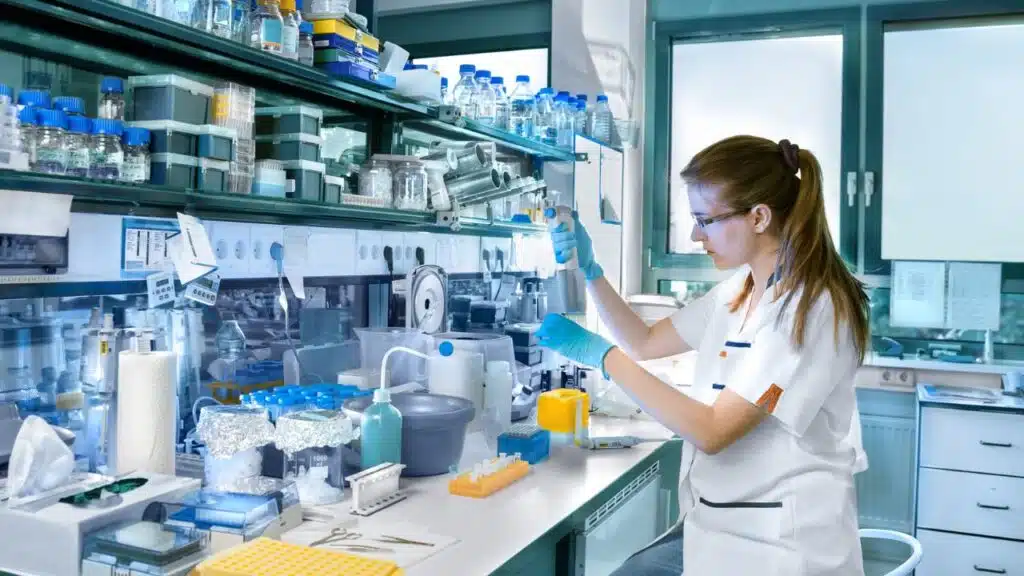
BioNTech uses messenger RNA to train cells that attack tumors, opening new paths in cancer immunotherapy. Uğur Şahin blends proteomic analysis with early human studies to advance RNA vaccines.
Pioneering mRNA-based cancer immunotherapies
In Mainz, a 2008 startup scaled into a 1,000-strong team across German cities. Scientists designed mRNA-based cancer immunotherapies that train T cells to attack tumors. They moved BNT122 into phase 2 clinical trials for pancreatic and colorectal cancers.
Goals include over ten registrational clinical trials by end of 2024.
Teams plan oncology launches by 2026. They test bispecific antibody candidates BNT311/GEN1046 and BNT312/GEN1042 in phase 1 and phase 2 studies. A phase 3 trial studies BNT316/ONC-392, an anti-CTLA-4 monoclonal antibody for NSCLC patients after prior immunotherapy.
Another phase 1/2 trial (NCT05438329) evaluates BNT327/PM8002 alongside a TROP2-targeted ADC. Pillars of support come from Genmab, MediLink, OncoC4, Regeneron and DualityBio partnerships.
Expanding into infectious disease treatments
BioNTech built a global infectious disease program after its FDA and EMA emergency use nod for its BNT162b2 COVID-19 vaccine. On November 13, 2024, the company agreed to acquire Biotheus with an $800 million upfront payment and up to $150 million in milestone fees.
The deal will close in Q1 2025 and will bring over 300 new staff on board. This move also adds fresh mRNA-based candidates to tackle a wider range of viral infections.
Partnerships with global biopharma groups such as Fosun Pharma, Genevant and Genentech expand the RNA therapeutics pipeline. These teams map new vaccine routes to tackle viral infections beyond SARS-CoV-2.
An Innovation Series R&D Day webcast will air on November 14, 2024, at 4:30 pm CET.
CureVac
CureVac crafts messenger RNA shots to battle infections, and it shapes them into custom cancer jabs. The team runs phase one trials at warp speed, so lab ideas become novel therapies.
Innovating mRNA technology for vaccines and therapies
The Tübingen-based biotech company employs over 600 people at sites in Frankfurt and the US. A phase 2 study with GSK showed strong immune defense at lower mRNA doses than licensed COVID-19 vaccines.
Lipid nanoparticle delivery drives these mRNA therapeutics. The team aims for emergency use authorization of its next-generation vaccine. Their research and development (r&d) lab fired up after the pandemic lull.
They advanced a multiepitope mRNA cancer vaccine in a murine melanoma model. Results at the 11th International mRNA Health Conference highlighted boosted CD8+/CD4+ T cell responses and longer survival.
A CVGBM vaccine enters phase 1 for patients with resected glioblastoma. The biotech uses gene editing and immunology tools to craft novel cancer vaccines. Their drug delivery know-how powers future cancer vaccine clinical trials.
Advancing personalized cancer medicine
CureVac’s oncology pipeline includes a multiepitope mRNA vaccine tested in rodent models. This vaccine prompts tumor-specific CD8+ and CD4+ T cell responses measured by cell profiling.
Their CVGBM candidate moved into a phase 1 clinical trial targeting resected glioblastoma. Murine models show improved survival with these mRNA treatments.
CureVac scales its clinical development by teaming with GSK to refine its mRNA platform. They presented data at the 11th International mRNA Health Conference on personalized cancer immunotherapy.
Their r&d team uses gene sequencing to select antigens, driving targeted cancer therapies in the German biotech sector.
Evotec
Evotec drives drug discovery with collaborative platforms, using high-throughput screening and gene editing to push precision medicine for rare diseases. Its team runs in vitro tests, merges bioinformatics data, and chases smarter, faster cures with a grin.
Revolutionizing drug discovery through collaborative platforms
A Hamburg-based group uses labs in Cologne, Göttingen, and Munich to drive drug discovery and contract research. It powers small molecule screening for oncology and neurology. A pact with Dewpoint Therapeutics boosts its cancer therapy pipeline.
A shared platform blends high-throughput assays and data tools. It helps scientists cut time to clinical trials.
A BRIDGE program links university projects to clinical proof of concept. It works with Bristol Myers Squibb. German biotech alliances include a precision medicine fund that backs rare disease targets.
A Singapore investment group drives neurology research. These ties speed drug development and shake up the pharmaceutical industry.
Focus on precision medicine and rare diseases
Evotec teamed with Amplitude Ventures to boost precision medicine. It hunts new small-molecule therapies for rare diseases. The firm taps Lightstone Ventures in Singapore to widen drug discovery for underrepresented conditions.
The BRIDGE initiative moves academic work into clinical proof of concept.
It aims at specific patient groups in drug development. It joins with industry leaders to craft new treatments for rare and challenging diseases. This precision approach speeds clinical trials and drug approval.
Immatics
Immatics engineers T-cell receptor therapies that teach immune cells to hunt stubborn tumors, like a GPS guiding T cells through a city of cancer. They pair high-throughput sequencing, flow cytometry, and custom data-crunching tools to map patient antigens and fuel next-gen treatments.
Developing T-cell receptor-based cancer immunotherapies
The firm uses T cell receptor platforms in its research. It builds T cell-redirecting immunotherapies for cancer. In January 2024 the team raised $175 million to fund new drug work.
That cash backs Adoptive Cell Therapies and TCR Bispecifics. A phase 2 trial in 2024 will test IMA203 GEN1 in cutaneous melanoma. The group uses clinical data and basic immunology to shape each step.
A pact with Moderna mixes TCR platforms with messenger RNA procedures. The pact has fees and future royalties. These new agents aim at solid tumors with high specificity. Scientists use bioinformatics and recombinant protein methods to pick targets.
This team drives new cancer therapies into clinical trials.
Combining immunology and bioinformatics for innovation
Immatics merges immunology with bioinformatics to find new targets for T-cell receptor therapies. Its proprietary platform analyzes huge data sets to pick top TCR candidates. It uses computational biology to boost precision and make immunotherapies safer.
They partner with Moderna to fuse TCR tech and mRNA innovation for cutting edge cancer therapies. Their pipeline runs on data analytics and translational research to tackle tumor heterogeneity and raise patient response rates across multiple cancer types.
Heidelberg Pharma
Heidelberg Pharma crafts ADCs that hitch chemo payloads to antibodies, striking cancer cells with surgical precision. Their precision oncology pipeline zips through drug-discovery, tackles clinical trials at warp speed, and lights a spark of hope for patients battling stubborn NSCLC tumors.
Specializing in antibody-drug conjugates for oncology
This German biotech firm makes antibody-drug conjugates for cancer therapies. They link Amanitin toxin to antibodies to ship cytotoxic agents to tumor cells. Their lead candidate is HDP-101.
It targets multiple myeloma and it showed strong signs at the ASH Annual Meeting in 2023. The firm raised about $87 million in 2022 to speed its drug development. A 2023 deal saw it sell a stake in Emergence Therapeutics to Eli Lilly.
It did not reveal the amount.
Proprietary ADC technology sets the firm apart in German biotech. It sends toxic Amanitin only to cancer cells, cutting damage to healthy tissue. HDP-101 moved into a phase I clinical study.
Lab tests in a mouse model also showed clear tumor shrinkage. Bio Deutschland notes its solid research and development r&d track record. Clinical trials now focus on multiple myeloma.
Pioneering proprietary drug delivery technologies
Amanitin serves as the payload in antibody drug conjugates at Heidelberg Pharma, aimed at blood cancers like hematological malignancies. The company links payload and antibody via specialized chemistry, increasing the therapeutic index and reducing off-target toxicity.
Researchers evaluate these conjugates using flow cytometry, mass spectrometry, and liquid chromatography. They invest in R&D to optimize payload-linker chemistry for stronger bonds and controlled release.
Partnerships drive rapid growth as major pharmaceutical firms sign licensing agreements for next-generation ADC platforms. A portfolio of novel conjugates also targets solid tumors, including candidates with unique mechanisms of action.
The company conducts early clinical trials for cancer treatments, seeking safer profiles in oncology. These advances advance pharmaceutical development by expanding targeted drug delivery to additional indications.
InflaRx

InflaRx tames runaway inflammation by targeting the complement system, offering fresh hope in intensive care. They take the bull by its horns in clinical trials, chasing immune therapies for asthma, COPD and stubborn depression.
Advancing anti-inflammatory treatments for critical care
INF904, a C5a receptor blocker, stopped over 90 percent of C5a induced neutrophil activation in phase 1 studies. It shows clear value in drug development for critical care. The team plans a phase 2 trial by the end of 2024.
They raised $40 million in April 2023 through a public offering to back these clinical trials.
FDA gave Emergency Use Authorization in April 2023 for Gohibic, known as vilobelimab, to treat critically ill COVID-19 patients. This biopharmaceutical sits on US pharmacy shelves.
The firm leads complement system targeted therapies for severe inflammatory diseases. These treatments aim to reset an overactive immune system before damage spreads.
Targeting the complement system in immune disorders
The firm drives pharmaceutical development by blocking the C5a/C5aR pathway to curb immune disorders. Preclinical and clinical trials show high efficacy in arresting C5a-induced neutrophil activation.
Its pipeline features biopharmaceuticals that modulate complement activity for broader immune regulation. These agents aim to rein in chronic and acute inflammation in critical care settings.
Tubulis
Tubulis engineers antibody-drug conjugates with site-specific recombinases, fusing VHH domains to potent payloads. Discover how their cleavable linkers boost safety in non-small cell lung cancer trials.
Designing next-generation antibody-drug conjugates
In April 2023, the company signed a strategic pact with Bristol Myers Squibb for next-gen antibody-drug conjugates, earning a $22.75 million upfront fee. It could see over $1 billion in milestone payments plus royalties.
A €65 million Series B round closed soon after to fuel its ADC pipeline. Scientists pair drugs and antibodies like puzzle pieces, using new link methods to hit tumors right on target.
The pipeline features proprietary conjugates for unmet needs in oncology.
Cancer therapy experts use fresh link methods and protein design for sharp dose control. They team with pharma giants to speed pharmaceutical development and r&d. This work moves cancer therapies into rapid clinical trials.
That know-how puts them at the lead of German biotech innovation.
Enhancing safety and efficacy in cancer therapies
Tubulis uses new conjugation chemistry to cut off-target toxicity in cancer therapies. It links cytotoxic agents to antibodies with mass spectrometry data guiding precise payload amounts.
This design homes in on tumor cells like a heat-seeking missile while sparing healthy tissue. The result widens the therapeutic window and boosts outcomes in clinical trials.
The team runs cell viability assays and flow cytometry during R&D. Each ADC targets markers like PD-1 or CD40 on tumor cells. They push past drug resistance in non-small cell lung cancer and pancreatic ductal adenocarcinoma models.
Early data shows fewer side effects and stronger tumor shrinkage rates.
Vivoryon Therapeutics
Vivoryon turns small molecule inhibitors into Alzheimer’s disease treatments. Read how their enzyme blockers progress through European Medicines Agency trials.
Developing solutions for neurodegenerative diseases
This German biotech invests heavily in drug development for severe diseases. Its lead program varoglutamstat targets early Alzheimer’s disease (AD) and blocks N3pE-amyloid formation by modulating glutaminyl cyclase.
Phase 2 studies, VIVIAD in Europe and VIVA-MIND in the US, run under clinical trials guidelines and plan top-line data by the end of Q1 2024.
The organic compound acts as a small molecule inhibitor, aiming to curb toxic peptide aggregates in the brain. Patients enroll in research and development programs that follow European Medicines Agency protocols to test safety and efficacy.
The company also advances candidates for cancer therapies and inflammatory diseases within its diverse pipeline.
Focused on disease-modifying treatments for Alzheimer’s
Vivoryon develops varoglutamstat as a disease-modifying therapy for early-stage Alzheimer’s. The drug targets amyloid beta deposits and QPCT-mediated neurotoxicity, it uses a dual mechanism.
Phase 2 VIVIAD and VIVA-MIND clinical trials will track memory scores and biomarker shifts. The team aims to slow or halt Alzheimer’s progression, filling a major unmet medical need.
Its pipeline reflects a focus on long-term disease modification over symptom relief. Researchers work on drug development and research and development (R&D) for neurodegenerative diseases, fine-tuning dosage and safety.
Each trial outcome could reshape pharmaceutical development and care for patients with Alzheimer’s.
Takeaways
German biotechs push medicine forward. They harness mRNA vaccines, cellular immunotherapy, and antibody-drug conjugates. BioNTech set the pace with the Pfizer-BioNTech COVID-19 vaccine, BNT162b2.
CureVac and Evotec run clinical trials for bivalent and monovalent candidates in cancer, NSCLC, and viral threats. Immatics and Tubulis tweak T-cell receptor therapy and bispecific antibody designs to stop tumors.
Heidelberg Pharma and InflaRx target programmed cell death protein 1 and the complement system to block inflammation. A later player, Vivoryon Therapeutics, crafts disease-modifying drugs for Alzheimer’s and treatment-resistant depression.
Readers can track progress in R&D and pipeline growth.
FAQs
1. What do German biotech firms do in R&D for cancer therapies?
They lead pharmaceutical development and research and development (r&d). They test cellular immunotherapy and PD1 blockers in clinical trials for non small cell lung cancer (nsclc).
2. How do dual-target antibodies and ADC therapies help cancer patients?
They work like guided missiles for cancer patients. They bind two markers, carry chemo right to tumors, cut collateral damage.
3. Which german biotech made the Pfizer-BioNTech covid-19 vaccine?
The Pfizer-BioNTech covid-19 vaccine, known as BNT162b2 vaccine, got emergency use authorization (eua). Now pharmacies offer its monovalent and bivalent versions.
4. What is autogene cevumeran and how does it work?
Autogene cevumeran is a personalized mRNA vaccine. It is genetically engineered, it trains the immune system to fight tumors, and it aims to tackle treatment-resistant cases.
5. Will these biotechs explore psychedelic medicine or etifoxine?
Yes, some firms study rapid-acting antidepressant paths. They test etifoxine and various psychedelic medicine in clinical trials for treatment-resistant depression.
6. How does Bio Deutschland shape future drug development?
The trade group boosts german biotech, funds research, speeds up covid-19 vaccine candidates, and sparks next-gen pharmaceutical development. It acts as a launchpad, giving biotechs fuel to explore new paths.