

Social interaction is crucial for a child’s development. Engaging in play with others helps kids build friendships, improve communication skills, and develop the ability to work in teams.
However, not all children find it easy to connect with their peers. That’s where creative games come in!
By incorporating fun activities that encourage social interaction, kids can learn to work together, share ideas, and build confidence in group settings.
In this guide, we’ll explore 7 creative games that encourage social interaction in kids. These activities are designed to foster teamwork, communication, and cooperation in a playful and engaging environment.
1. The Name Game
The Name Game is a fantastic icebreaker for children who may feel shy or hesitant in group settings. It encourages kids to introduce themselves to others, helping them remember names and form connections.
This game works especially well in classrooms, camps, or group activities where kids are meeting for the first time.
How to Play the Name Game
- Form a Circle: Have the kids sit or stand in a circle.
- Introduce with Actions: The first child says their name, followed by an action that describes something they enjoy (e.g., “I’m Sarah, and I love to swim,” while mimicking a swimming motion).
- Next Person Repeats: The next child repeats the name and action of the person before them, then adds their own name and action.
- Continue Around the Circle: The game continues until everyone has had a turn, encouraging kids to pay attention and remember the names and interests of others.
This game is a fun way to help children remember names and engage in active listening, boosting their confidence in social situations.
2. Collaborative Art Projects
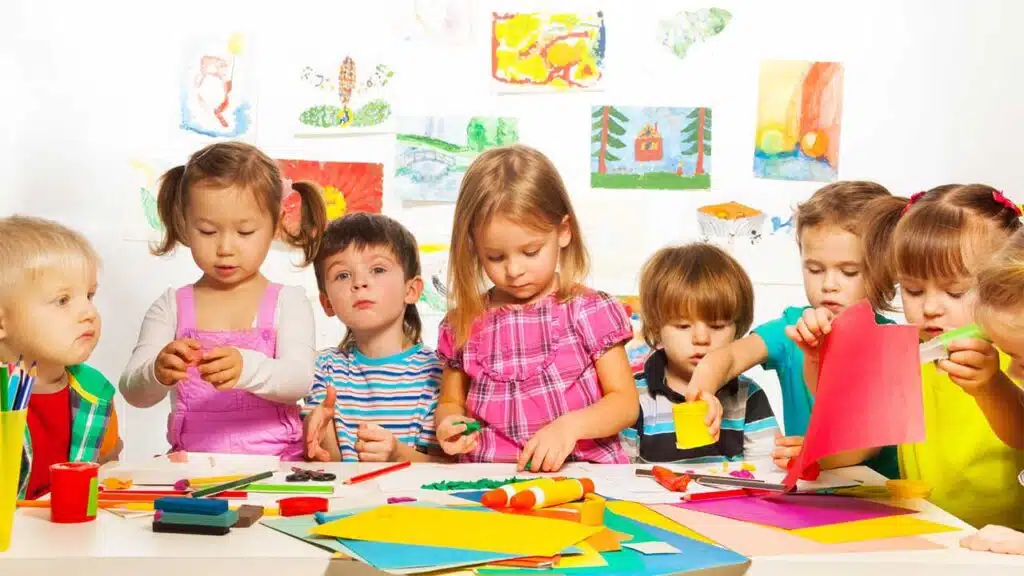
Collaborative art projects are a great way to promote social interaction, as they require children to work together toward a common goal. Whether it’s painting a mural, building a sculpture, or designing a large collage, kids learn to share ideas, communicate, and compromise to create something beautiful as a team.
Ideas for Collaborative Art Projects
- Group Mural: Provide a large piece of paper or a wall space where kids can collectively paint or draw a mural. Each child contributes their own design, but they must also collaborate to ensure the pieces come together harmoniously.
- Team Sculpture: Using materials like clay or recycled items, kids can work together to build a sculpture that represents a shared theme or idea.
- Collage Creation: Give the group magazines, colored paper, and other materials to create a giant collage. Encourage them to discuss and plan the layout together.
Collaborative art projects help children practice sharing, listening, and teamwork while unleashing their creativity.
3. The Human Knot
H2: A Physical Game to Build Communication and Cooperation
The Human Knot is a physical, hands-on game that encourages problem-solving, communication, and teamwork. In this game, children must work together to untangle themselves from a human knot without letting go of each other’s hands. This game is ideal for groups of kids, whether at school, camp, or during playdates.
How to Play the Human Knot
- Form a Circle: Have a group of kids stand in a circle.
- Hold Hands Across the Circle: Each child reaches out and grabs the hand of someone standing across from them, ensuring no one holds hands with their immediate neighbor.
- Untangle the Knot: Without letting go of each other’s hands, the group must work together to untangle themselves into a single circle. This requires communication, patience, and coordination.
The Human Knot is an excellent activity for building teamwork, as children must rely on each other and communicate clearly to succeed.
4. Charades for Kids
Charades is a classic party game that encourages social interaction, creativity, and nonverbal communication. In this game, one child acts out a word or phrase without speaking, while the others try to guess what it is. It’s a fun way to get kids moving, thinking creatively, and working together as a team.
How to Play Charades for Kids
- Prepare a List of Words or Phrases: Write down age-appropriate words or phrases (like animals, sports, or actions) on slips of paper.
- Divide into Teams: Split the group into two teams. One child from the team acts out the word, while the rest of the team tries to guess it.
- Set a Time Limit: Give each team a set amount of time (e.g., one minute) to guess as many words as possible.
- Alternate Between Teams: Each team takes turns guessing and acting out words, with points awarded for correct guesses.
Charades promotes creative expression, builds confidence in front of peers, and helps kids learn to interpret nonverbal cues, all while having fun.
5. Musical Chairs with a Twist
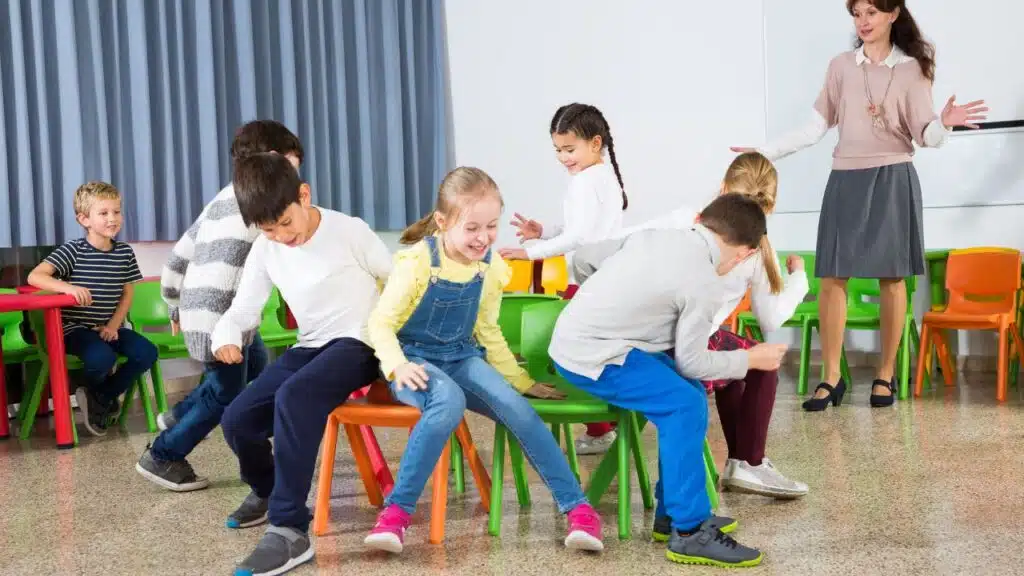
Musical Chairs is a familiar game, but with a creative twist, it can become a fun, cooperative activity that encourages interaction rather than competition. Instead of removing chairs as children get “out,” this version requires kids to work together to find solutions and help everyone stay in the game.
How to Play Musical Chairs with a Twist
- Set Up Chairs: Place chairs in a circle, one fewer than the number of players.
- Start the Music: Play music while children walk around the chairs.
- Everyone Stays In: When the music stops, instead of eliminating players, the kids must find a way for everyone to fit on the remaining chairs. They can share chairs, balance on laps, or get creative.
- Remove a Chair Each Round: Continue removing one chair each round, encouraging kids to cooperate and figure out how to fit everyone on fewer chairs.
This version of Musical Chairs focuses on teamwork and creativity, with the goal of keeping everyone in the game rather than competing to win.
6. Group Storytelling
Group storytelling is a wonderful way to engage children in creative thinking, listening, and cooperative storytelling. In this game, each child contributes to a shared story by adding a sentence or two, creating a fun and unpredictable narrative that everyone takes part in.
How to Play Group Storytelling
- Start with a Story Prompt: Begin the game with a simple sentence to set the scene (e.g., “Once upon a time, there was a brave knight…”).
- Each Child Adds to the Story: Going around the circle, each child adds a sentence or two to continue the story. Encourage them to be imaginative and build on the ideas of others.
- Continue Until the Story Ends: Keep going until the group feels the story has reached a satisfying conclusion.
Group storytelling encourages active listening, creative thinking, and collaboration as children work together to craft a story.
7. Scavenger Hunt Team Challenge
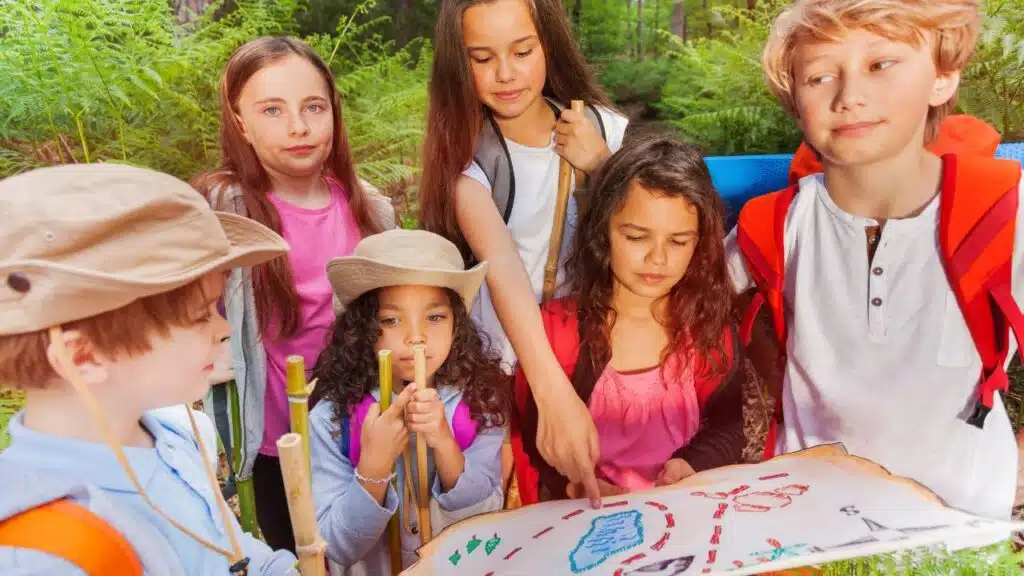
A team-based scavenger hunt is a fantastic way to encourage kids to work together, share ideas, and solve problems. This activity can be done indoors or outdoors and can be tailored to suit different age groups and themes. Teams of children must collaborate to find hidden items or complete challenges, fostering both social interaction and critical thinking.
How to Organize a Scavenger Hunt Team Challenge
- Create a List of Items or Challenges: Make a list of items for the teams to find or tasks to complete. These could be specific objects (e.g., a red leaf, a pine cone) or challenges (e.g., take a photo of your team making a funny face).
- Divide into Teams: Split the children into small teams, giving each team the same list.
- Set a Time Limit: Give the teams a set amount of time to find as many items or complete as many challenges as they can.
- Award Points: At the end of the time, tally up the points and reward the team that found the most items or completed the most tasks.
Scavenger hunts are an exciting way for children to develop teamwork, communication, and problem-solving skills, all while having a blast.
Conclusion: Encourage Social Skills Through Creative Play
By incorporating these 7 creative games into your child’s routine, you can help them develop essential social skills in a fun and engaging way.
Whether it’s working together in a scavenger hunt, expressing creativity through group storytelling, or building trust and communication in the Human Knot, these activities foster cooperation, problem-solving, and friendship.
Encouraging children to play these games not only enhances their social interactions but also boosts their confidence in navigating group dynamics.































