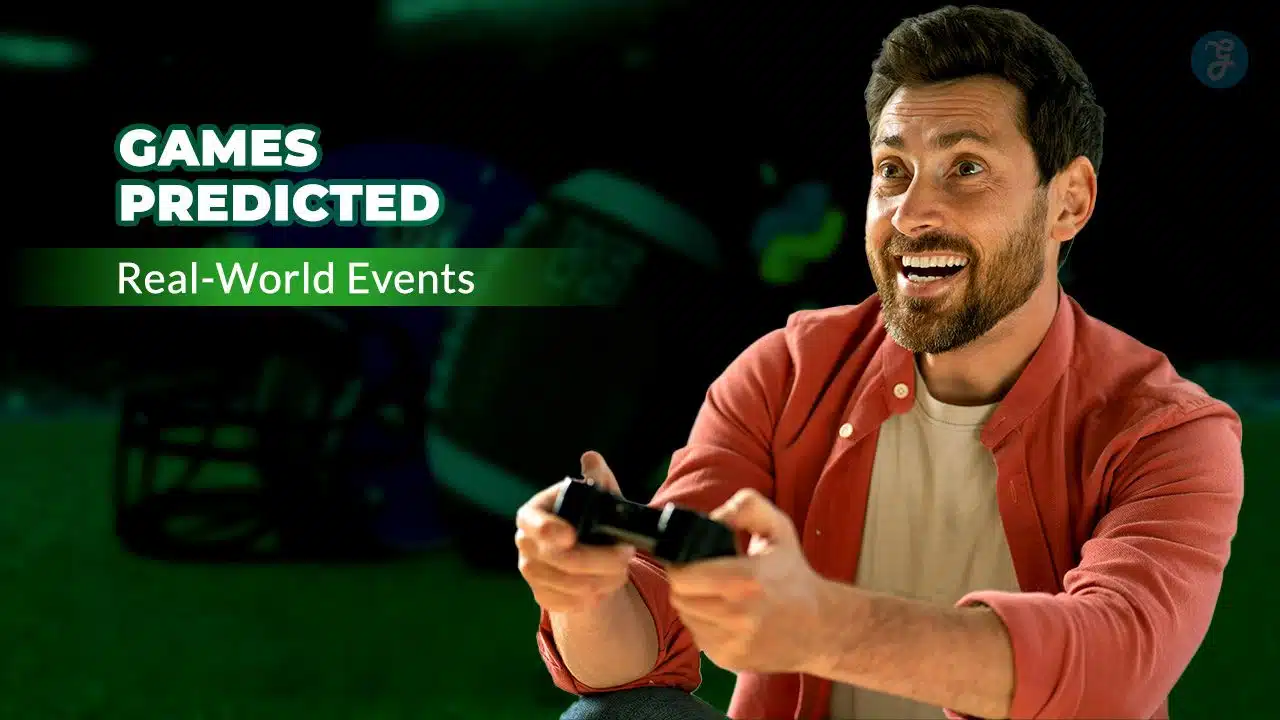
Have you ever played a video game and thought, “This feels too real”? Many gamers experience this strange feeling when games mirror real-world events. Sometimes these games come out years before the actual events happen.
It makes you wonder if game developers have crystal balls hidden in their studios.
Video games have an uncanny ability to predict the future. Metal Gear Solid 2: Sons of Liberty warned about fake news and information control years before these became major issues.
Death Stranding showed a world dealing with isolation and global crisis, much like our COVID-19 pandemic experience. Elite Dangerous even predicted the discovery of real star systems in our solar system before astronomers found them.
This article explores ten incredible times when video games predicted real-world events with shocking accuracy. From terrorist attacks to pandemics, from space discoveries to artificial intelligence concerns, these games saw the future coming.
Get ready to discover how your favorite games became accidental fortune tellers.
Key Takeaways
- Deus Ex removed Twin Towers from New York City in 2000, one year before the September 11, 2001 terrorist attacks happened.
- Metal Gear Solid 2 predicted fake news and information warfare problems in 2001, years before these became major global issues.
- Elite Dangerous included the Trappist-1 star system before NASA discovered it in February 2017, matching the 39 light-year distance accurately.
- Death Stranding showed isolation and delivery workers as heroes in 2019, months before COVID-19 created similar real-world conditions.
- Watch Dogs warned about cybersecurity threats and smart city vulnerabilities in 2014, before major data breaches proved these predictions correct.
How Did “Deus Ex” Predict the Twin Towers Destruction?
Deus Ex hit the shelves in 2000 with a chilling twist. The game’s developers removed the Twin Towers from New York City’s skyline, claiming terrorist attacks had destroyed them in the game’s backstory.
This creative choice came a full year before the real September 11, 2001 attacks shocked the world.
The game’s plot centered on conspiracy theories, government cover-ups, and terrorist threats. Players explored a world where shadowy organizations pulled strings behind major disasters.
The storyline painted a picture of surveillance states and privacy invasion that felt uncomfortably real after 9/11. Gaming communities still talk about this eerie prediction, calling it one of the most unsettling examples of video games seemingly forecasting major world events.
What Did “Homefront” Reveal About U. S. and North Korea Relations?
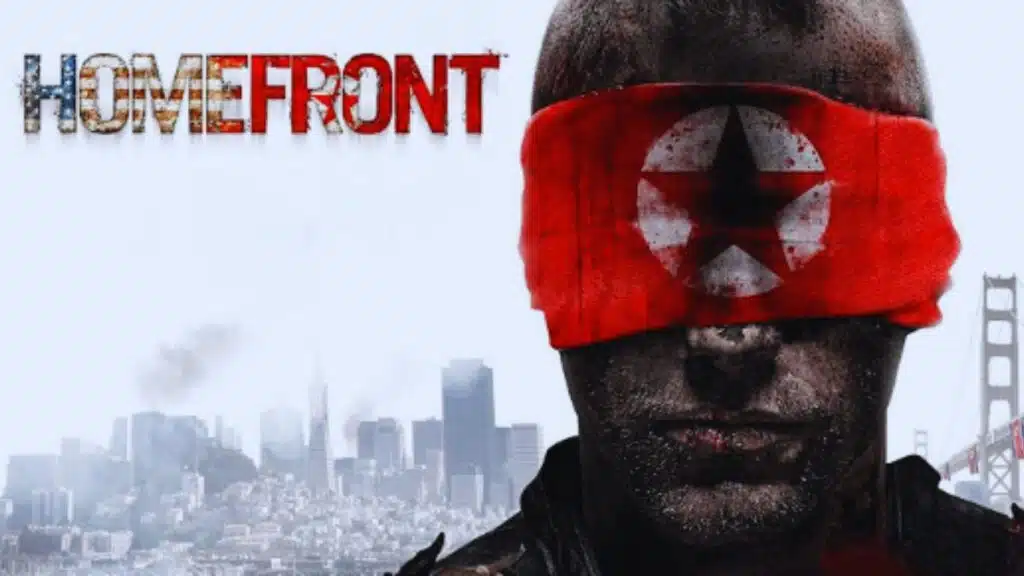
“Homefront” painted a scary picture of North Korea taking over America. The game showed how this conflict could happen in the future. Players saw North Korean forces occupy the United States.
This storyline made people think about real threats from North Korea. The game came out during a time of growing tension between the two countries. Many gamers started talking about whether North Korea could really become this powerful.
The video game sparked big debates about foreign relations. People wondered if games like this shape how we see other countries. Homefront” made North Korea look like a major threat to U.S. security.
The storyline got people thinking about military alliances in East Asia. Game developers created a world where power balances had shifted completely. This made players consider how geopolitical tensions could explode into real conflict.
The game’s impact went beyond entertainment, making people examine global security issues more closely.
How Did “Metal Gear Solid 2” Foresee the Fake News Phenomenon?
Metal Gear Solid 2: Sons of Liberty was released in 2001, just months before the world changed forever. Hideo Kojima’s masterpiece didn’t just entertain gamers, it presented a chilling picture of information warfare.
The plot explores attacks on U.S. information systems, showing how digital propaganda could distort reality. Players observed characters struggling to separate truth from lies in a world overwhelmed by manufactured data.
Post-9/11 concerns about information infrastructure security suddenly felt very real. The game’s narrative examined manipulation of information and media control with unsettling accuracy.
Kojima posed challenging questions about the authenticity and reliability of information in our digital age. Years later, fake news and disinformation campaigns would dominate headlines worldwide.
Metal Gear Solid 2 had already demonstrated the power of digital media in shaping public perception, making it one of the most prophetic video games ever created.
What Predictions About Space Did “Elite Dangerous” Make?
Elite Dangerous made space predictions that left astronomers stunned. Frontier Developments created this space exploration game using real astronomical data. Their algorithm built a virtual universe based on actual star charts and scientific measurements.
Players could explore countless star systems, including one that would later shock the scientific world.
In February 2017, NASA discovered the Trappist-1 star system with seven potentially Earth-like planets. Scientists celebrated this major find about 39 light years from Earth. Elite Dangerous players already knew about this system.
The game had included Trappist-1 long before NASA’s announcement, placing it at 39.5 light years away. This incredible match between virtual space and real discoveries showed how video games can predict future astronomical findings through careful scientific modeling.
Conflicts in Video Games: Eastern Europe in “Tom Clancy’s Ghost Recon”
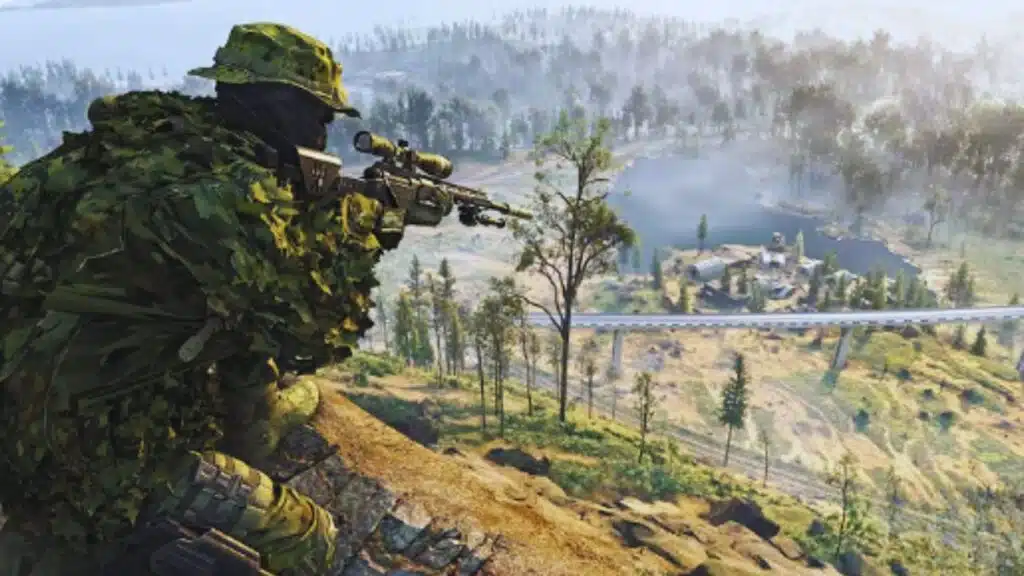
Tom Clancy’s Ghost Recon painted a chilling picture of Eastern European warfare years before real conflicts erupted. This tactical shooter game showed how quickly regional tensions could explode into full-scale military operations, mirroring the actual Russo-Georgian War that would later unfold.
What Conflict Does “Ghost Recon” Predict in Eastern Europe?
Tom Clancy’s Ghost Recon painted a dark picture of Eastern Europe’s future. The game featured military conflicts between Russia and its neighboring countries. Players fought through scenarios involving territorial disputes and geopolitical instability.
The storyline showed large-scale military engagement across the region.
Ghost Recon predicted these tensions years before they became reality. The game’s narrative used real-world political dynamics as inspiration for its conflict scenarios. Military strategists and gaming experts discussed the plausibility of such wars after the game’s release.
The predictions proved eerily accurate as actual conflicts later erupted in Eastern Europe, making Ghost Recon a prime example of video games foreshadowing major geopolitical developments.
How Does the Game Reflect Real-World Geopolitical Tensions?
Ghost Recon mirrors actual geopolitical anxieties regarding Russian expansionism across Eastern Europe. The game’s storyline reflects concerns about NATO and regional alliances that many nations face today.
Players witness military conflicts that feel eerily familiar to real-world tensions. The narrative underscores the role of advanced military technology in modern conflicts, showing how warfare evolves with new tools.
These video games don’t just entertain, they highlight the fragility of peace in post-Soviet states.
The game’s depiction of military engagement draws from real-world events that shaped international relations. It anticipates future power struggles in Eastern Europe, making players think about what might come next.
The storyline contributed to public discourse on Eastern European security issues. Analysts reference the game in studies of how media shapes perceptions of international relations.
The virtual battlefield becomes a mirror for actual diplomatic tensions that governments navigate daily.
What Parallels Exist Between “Death Stranding” and the Global Pandemic?
Hideo Kojima’s “Death Stranding” hit shelves in 2019, just months before the COVID-19 pandemic changed our world. The game shows a society torn apart by invisible threats, forcing people into isolation.
Players take on the role of Sam Porter Bridges, a delivery man connecting scattered communities across a broken America. Sound familiar? The COVID-19 pandemic created similar conditions in 2020, with people staying home and relying on delivery workers to bring essential supplies.
“Death Stranding” explores themes of human connection during crisis, much like our real pandemic experience. The game’s narrative focuses on rebuilding society through small acts of kindness and cooperation.
Essential workers became heroes in both the virtual world and reality. People found new ways to stay connected despite physical distance. The game sparked reflection on how individuals can make a difference during global disruption.
Both the fictional plague and the real pandemic showed how quickly normal life can collapse, yet also revealed human resilience in the face of uncertainty.
How Does “Watch Dogs” Highlight Cybersecurity Threats?
Watch Dogs arrived in 2014 with a chilling vision of Chicago under total digital surveillance. The game’s CtOS system could control traffic lights, spy on citizens, and access personal data with a simple hack.
Players witnessed how easily criminals could exploit smart city technology for their own gain. This fictional scenario felt uncomfortably real as cities worldwide began installing similar surveillance networks.
The game’s sequel, Watch Dogs 2, pushed these themes even further in 2016. Hackers battled corporate giants who collected massive amounts of personal information. Real-world data breaches soon made headlines, proving the game’s warnings correct.
Facebook, Equifax, and countless other companies suffered major security failures. The games sparked important conversations about digital privacy and personal freedom. Smart cities today face the exact same vulnerabilities that Watch Dogs predicted years ago.
How Did “Deus Ex: Human Revolution” Predict Advanced Prosthetics?
Deus Ex: Human Revolution hit the gaming world in 2011 with a bold vision of human augmentation. The game showed characters with advanced prosthetic limbs that worked better than natural body parts.
Players watched as people replaced healthy arms and legs with mechanical versions. These artificial limbs gave users super strength and special abilities. The game explored how society would react to this technology.
Some characters faced discrimination for their mechanical parts. Others gained unfair advantages in jobs and sports.
The game’s predictions about prosthetic technology came true faster than anyone expected. Real-world scientists developed mind-controlled artificial limbs. Companies created prosthetics that give users a sense of touch.
The game sparked serious talks in the scientific community about human enhancement. Medical technology advanced rapidly, just like the game showed. Accessibility improved for people who lost limbs.
The narrative raised tough questions about fairness and equality. Today’s bionic limbs mirror what players saw in the game years ago.
What Urban Planning Challenges Did “SimCity” Anticipate?
SimCity showed players the real struggles of building cities long before these problems hit the headlines. The game made players balance money, environment, and social needs in ways that mirror today’s urban challenges.
Managing population growth became a central puzzle that city planners now face in real life. Players had to think about where people would live, work, and play while keeping everyone happy.
Resource allocation and infrastructure development took center stage in every SimCity session. The game taught players that building roads, power plants, and water systems costs serious money and planning.
Smart cities and data-driven governance became natural outcomes as players used information to make better decisions. Disaster management scenarios in the game reflected the same challenges real mayors face during floods, earthquakes, and other emergencies.
The simulation pushed players to consider how their policy decisions would affect citizens years down the road, making sustainable city design a core part of the gaming experience.
How Does “The Division” Address Bioterrorism Concerns?
Tom Clancy’s The Division hit shelves in 2016 with a chilling premise. The game depicted a pandemic spread through contaminated currency, turning everyday money into deadly weapons.
Players witnessed society crumble as bioterrorism tore through New York City. The storyline centered on complete societal collapse after biological warfare struck the heart of America.
Four years later, the COVID-19 pandemic made The Division’s plot feel eerily familiar. The game had highlighted critical vulnerabilities in public health systems long before real-world events exposed them.
Players experienced the psychological toll of isolation and fear that would later define 2020. The Division sparked important conversations about pandemic preparedness, proving that video games could serve as powerful warnings about future threats.
What Environmental and Corporate Issues Are Explored in “Final Fantasy VII”?
Final Fantasy VII tackles environmental degradation caused by corporate greed head-on. The game features a massive corporation called Shinra that exploits the planet’s energy for profit.
This company drains the planet’s life force, called Mako energy, without caring about the damage it causes. Players witness firsthand how unchecked resource extraction destroys natural ecosystems.
The storyline shows how one company can control entire cities while poisoning the environment. Shinra’s actions mirror real-world concerns about corporations putting profits before planet health.
The narrative promotes collective action against environmental destruction through its rebel group, AVALANCHE. These characters fight back against corporate power that threatens their world’s survival.
The game raises awareness about industrialization’s impact on natural ecosystems in ways that feel relevant today. Modern debates about corporate responsibility echo the same themes Final Fantasy VII explored decades ago.
The story contributed to cultural conversations on sustainability long before climate change became a mainstream concern. Players learn that fighting environmental destruction requires people working together against powerful interests.
Takeaways
Games have shown us the future more times than we might think. Video games like Metal Gear Solid 2 warned us about fake news years before it became a major problem. Death Stranding painted a picture of isolation that felt all too real during the COVID-19 pandemic.
These digital crystal balls don’t just entertain us, they make us think. Developers often tap into real fears and trends, creating stories that later come true. Maybe next time you play a game, you’ll wonder what it might be telling us about tomorrow.
FAQs
1. How did Metal Gear Solid 2: Sons of Liberty predict fake news?
Hideo Kojima’s masterpiece warned us about fake news way before it became a household term. The game showed how artificial intelligence could manipulate information and control what people believe. MGS2 basically called out our post-truth world years before we lived in it.
2. Which video games predicted terrorist attacks?
Metal Gear Solid 2 depicted scenarios that felt eerily similar to real-world terrorist attacks. The game explored themes of information control and mass manipulation that became all too real. It’s like Kojima had a crystal ball, honestly.
3. Did any games predict the COVID-19 pandemic?
Death Stranding hit way too close to home with its isolated world and delivery systems. People staying apart, wearing masks, and relying on others to bring supplies? That’s basically 2020 in a nutshell.
4. How accurate was Elite Dangerous in predicting space exploration?
Elite Dangerous nailed the tech side of space travel before we saw similar advances in real life. The game’s approach to interstellar travel and space colonization mirrors current NASA projects. Sometimes fiction leads the way, you know?
5. What connection exists between Metal Gear games and real conflicts like the Russo-Georgian War?
The Metal Gear series, including Peace Walker and Guns of the Patriots, explored proxy wars and military conflicts that played out similarly in real life. These games showed how private military companies and advanced weapons could reshape warfare. The Russo-Georgian War had elements that felt ripped straight from Kojima’s playbook.