

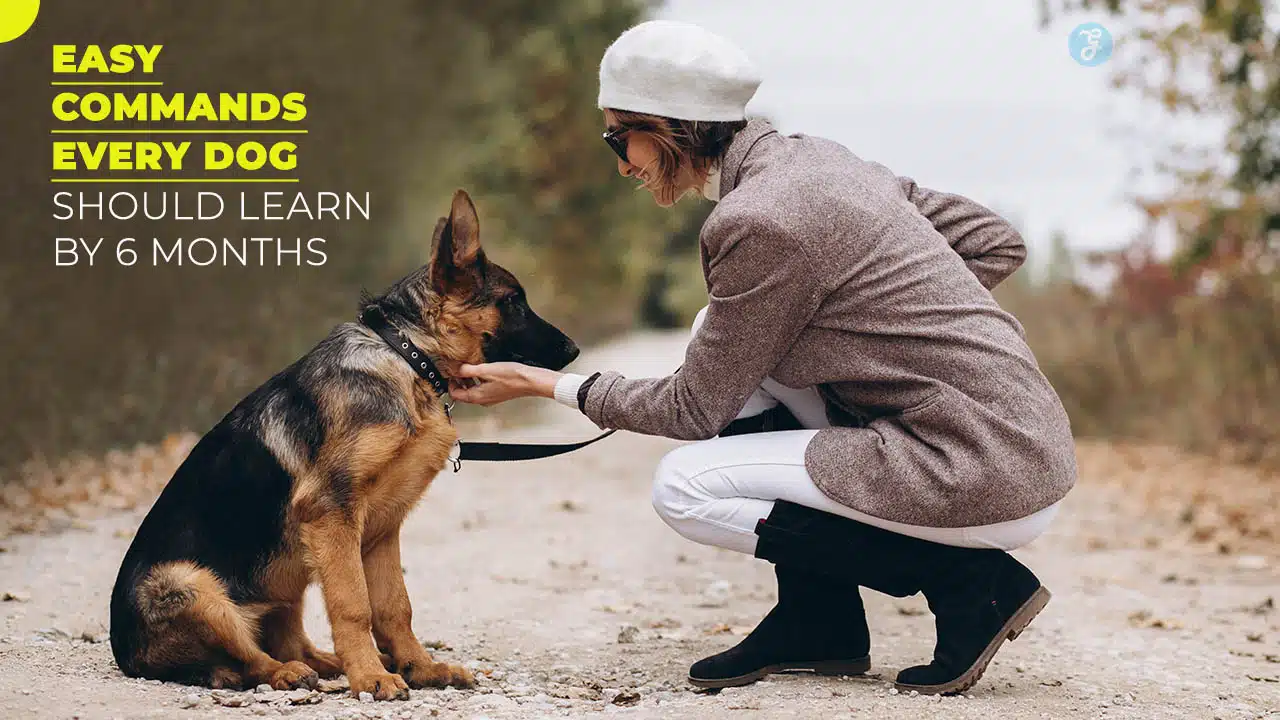
Many new dog owners feel frustrated when their pup ignores a sit command or drags them on a leash. AKC.org notes that puppies trained with positive reinforcement by six months show better dog behavior in parks and homes.
This guide will walk you through 10 must know cues, like sit command, stay command, come command, down command, heel command, leave it command, drop it command, off, watch me, and quiet command, using treats, clicker training, and leash tools.
Let’s get started.
Key Takeaways
- Puppies trained with positive reinforcement by six months show better behavior in parks and homes (AKC.org).
- Teach ten core commands—sit, stay, come, down, heel, leave it, drop it, off, watch me, quiet—using treats, a clicker, and a leash.
- Hold short sessions (3–5 minutes for impulse drills, up to 15 minutes for core skills) three to five times a day.
- Click the marker tool the instant your dog performs correctly, then reward. Use a clear release word like “Okay” to end each command.
- Practice commands in real settings (doorways, roads, parks) and add distractions slowly to build safety and strong obedience.
Sit
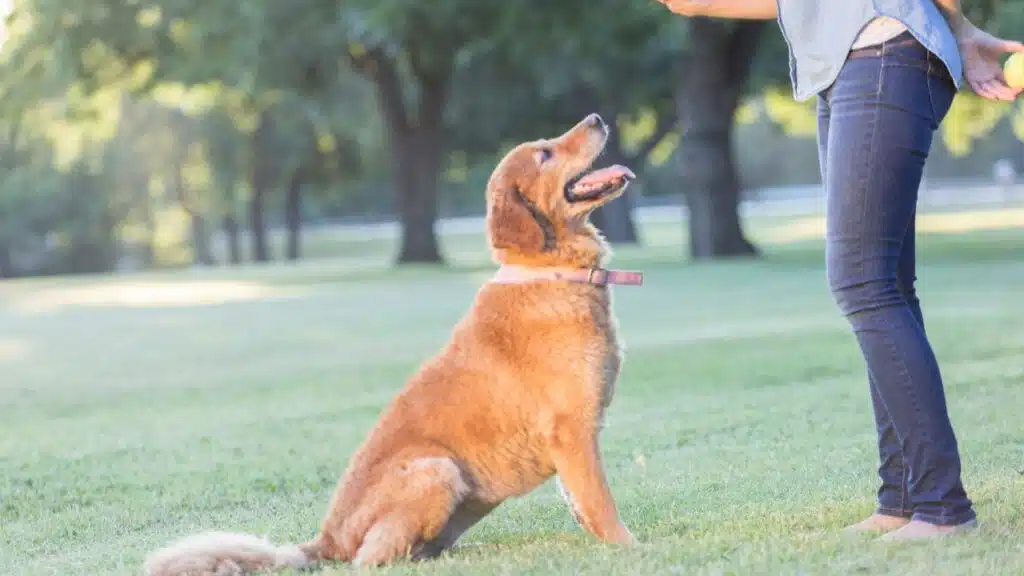
Sitting is a core skill for dog obedience. It helps manage your dog at home and on walks.
- Stand facing your pup; hold a treat at nose height. Lure its head up until its rear touches the floor. This sets the tone for good dog behavior.
- Say the sit command as the dog lowers; use a clear, calm tone. Avoid changes in pitch that confuse.
- Click the marker tool the moment paws hit the ground; this marks the correct move. Then drop a treat in front of paws.
- Praise your dog, give a small dog toy bonus; this positive reinforcement builds trust. Offer a pat or kind word as extra cheer.
- Limit each dog training session to fifteen minutes; shorter bursts keep pups eager. Offer water and breaks.
- Repeat this puppy training drill three to five times daily; consistency in training sharpens response. Track progress in a notebook or an app.
- Sign up for our free video lesson on your smartphone; provide email consent for data processing. This tutorial shows each step on screen.
Stay
Dogs need to learn the stay command early. It helps with dog behavior and saves lives near roads or busy doorways.
- Pick a quiet space with few distractions, lay out a training mat, clicker, and treat pouch.
- Ask the dog to sit, show your palm, say “Stay” in a calm firm tone.
- Wait three seconds, use the clicker, then hand over a bite sized treat to mark success.
- Step back one pace, watch for any shift, if the dog remains still, click, reward, and praise.
- Increase time and distance in small jumps, apply consistency in training, tap into positive reinforcement.
- Test near a door or curb to teach real world safety at doorways and roads.
- Use a release cue like “Okay” to signal the end of the stay command.
- Repeat short puppy training sessions, stick to a schedule of reinforcement for strong dog obedience.
Come
Calling your pup back can save its life near busy streets. Strong recall builds trust, keeps your bond solid.
- Place a long line on your dog in a fenced yard, hold a clicker and a treat pouch.
- Show a dog biscuit before you kneel and whisper a sharp “come” command.
- Call your canine companion with a bright voice, step backward to spark curiosity.
- Click the clicker at the first sign of return, then use positive reinforcement with treats.
- Practice the recall near a quiet road, your pup learns to ignore traffic noise.
- Add distance gradually, train at home, then in a park with gentle distractions.
- Use praise and pats, repeat short sessions daily to build trust and dog obedience.
Down
The down command calms your pup fast. It cuts hyperactive moves in crowds.
- Start with a nylon pouch near a standard leash, squat low to pup and use positive reinforcement.
- Lure the pup forward, slide a peanut butter treat to the floor, say down command in a firm tone.
- Mark with an electronic clicker as chest hits ground, feed training kibble and praise calmly to build self-control.
- Repeat in your living room, then in a city park, to manage excitable behavior in public settings.
- Add the stay command after down, this step links basic commands and builds dog obedience.
- Invite a friend into your home, use down to calm barking around visitors with consistent training patience.
- Place a cotton training mat on the ground, pair down with the mat to set a chill zone for body language cues.
- Pair down with the heel command or watch me, to boost advanced dog training tips and mind focus.
Heel
Your pup learns to walk near your side. Walks become safe and calm.
- Attach a 4-foot leash to a flat collar or harness for leash training.
- Hold the leash loosely so you guide your dog easily.
- Step forward and say heel command in a firm, calm voice.
- Praise gently or give a treat to guide the learning process with positive reinforcement.
- Pause every time your dog lunges or pulls away.
- Move again only when it returns to your side.
- Practice for short sessions of five minutes each day to train patience.
- Add a distraction like a tree or bench after two weeks.
- Increase training time gradually, up to fifteen minutes.
- Keep consistency in training to build leash manners, dog obedience, and basic obedience.
Leave It
This command keeps your dog safe indoors and outdoors. It stops them from grabbing harmful items.
- Show a treat in your closed fist, keep it near your dog, and say “Leave it”. This uses positive reinforcement to teach impulse control, and it sets a safe tone for training.
- Place a treat on the ground, cover it with your hand, then give the cue “Leave it”. Mark success with a marker device, offer a different treat for dog obedience praise.
- Repeat training in short bursts, three to five minutes each. This builds solid impulse control and good dog behavior.
- Practice in spots like the hallway, backyard, or local trail. Generalizing the leave it command indoors and outdoors builds confidence.
- Introduce dog toys or safe distractions, then give the cue. Award your dog for ignoring playthings or foods, this sharpens self-control.
- Ask for eye contact after you say the cue, then give praise. This boosts the leave it command response and dog obedience.
- Gradually add real hazards, like socks or wrappers on the floor. Use leave it to stop the dog from picking up dangerous objects, this protects their safety.
- Praise your dog with a calm voice and gentle pets, this supports puppy training with clear feedback.
- Stay patient and consistent, use the treat pouch to keep treats handy. Training patience and steady practice help dogs master this life-saving command.
- Use a marker device and a treat pouch for every session, this dog training tip helps dog trainers and pet parents stay set.
Drop It
Drop it command makes dogs release items from their mouth. It cuts choking and swallowing dangers.
- Teach the drop it command with a clicker and a treat swap.
- Play a trade game to shape dog behavior and curb resource guarding.
- Offer safe toys and common household items next. Keep control.
- Use joyful reinforcement when your dog frees items from its mouth.
- Run drills on a short leash indoors, then add outdoor distractions.
- Reward quick releases during fetch to link the command with fun.
- Keep sessions to two to five minutes. Short bursts stick.
- Test skills around dishes, tools, and risky items for emergencies.
Off
Off stops dogs from jumping up. It sets clear home boundaries.
- Attach leash, stand firm for leash training, show treat pouch for focus.
- Invite friend to knock, dog may spring forward like a jack-in-the-box.
- Say Off command as front paws leave couch surface.
- Press leash to ground, curb the leap, spare your sofa a trip to the repair shop.
- Hold that floor position, this differs from Down which asks to lie flat.
- Mark the moment with sound marker, feed treat, use positive reinforcement.
- Practice in five minute sessions, keep tone upbeat, build consistency in training.
- Test with guests, curb over excitement, save your pants from soggy kisses.
Watch Me
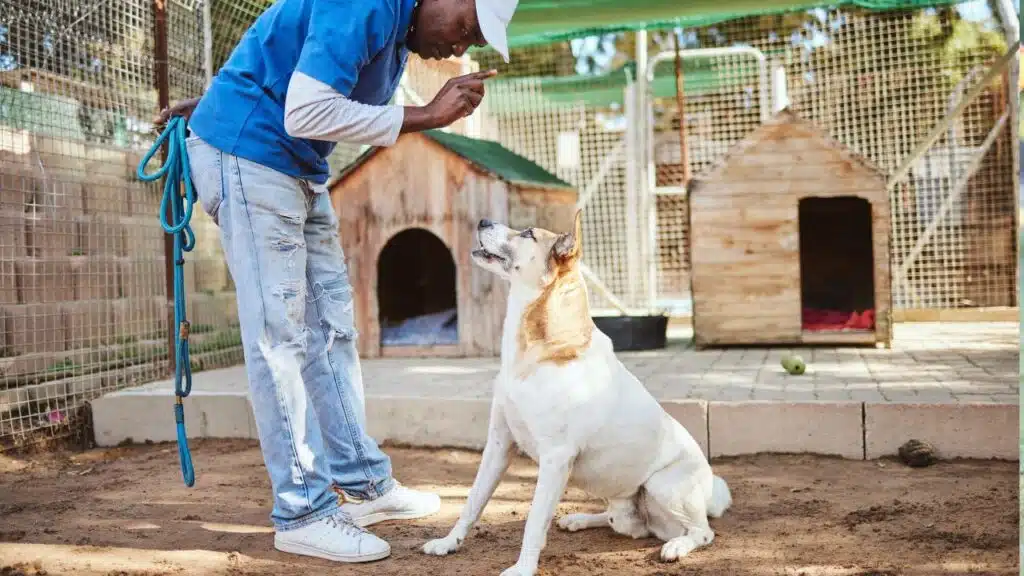
This cue helps you focus your dog’s eyes on your face. It redirects bad behavior, and builds dog obedience fast.
- Show a small snack at eye level, hold a clicker in the other hand.
- Mark the look with your clicker, use positive reinforcement on each glance.
- Use a clear cue phrase “Watch me” right before eye contact.
- Delay the click by a beat, then deliver the snack.
- Practice in a quiet room, then move to a fenced yard or busy park.
- Add distractions gradually, like a bouncing ball or a squeaky toy.
- Reward long stares with a dog toy or a high value snack.
- Practice this cue before leash training or stay command drills.
- Lay a foundation for advanced obedience and trick training by adding down, come, or heel commands.
- Boost communication and responsiveness in puppy training sessions.
Quiet
Dogs bark for many reasons, like excitement or fear. Quiet command helps curb that noise indoors.
- Pick a cue: Say quiet like a drill sergeant, avoid mumbling.
- Wait for silence: Hold a bag at your side; after barking stops, reward calm behavior with a treat.
- Pair with a training device: Mark silence with a feedback device right after the last bark; follow with positive reinforcement.
- Introduce real sounds: Play doorbell chimes or distant traffic; say quiet and reward if your pup stops.
- Teach in low spots: Practice near hallways or balconies; apartment dwellers need a peaceful home environment.
- Fade treats: Swap snacks for pets and praise over time; keep positive reinforcement strong.
- Add distractions: Walk past strangers or other dogs; use the command to curb barking at noises or people.
- Reward consistency: Offer a favorite treat after each calm pause; praise during dog obedience drills.
- Use in everyday life: Stop barking at the mail carrier; cue quiet before you open the door.
- Track progress: Note fewer barks per day; log each ten percent drop in vocalization.
- Maintain practice: Run quick drills in busy rooms; keep the quiet command sharp in close quarters.
Go to Mat
Place a rest pad near your dining area. It tells your pup where to chill during meals.
- Pick a quiet zone and set the rest pad on a clean floor.
- Show the rest pad to your pup, lure them with a treat from a treat pouch.
- Say “go to mat” in a clear tone and guide their paws onto the pad.
- Click with a marker tool the moment they land on the mat, then hand over the treat.
- Repeat this step during guest visits to manage dog behavior at the table.
- Add the stay command once they settle, building self-control and healthy boundaries.
- Practice around dog toys or kitchen sounds to boost dog obedience under distraction.
- Train this command before your pup hits 6 months for basic commands in puppy training.
Leash Manners
Dogs walk better with clear leash manners. Good leash training cuts stress and boosts fun.
- Fit a flat buckle collar or no-pull harness and attach a six-foot leash for steady control and polite walking.
- Call out “let’s go” in a bright voice to signal the start and maintain pace during your sessions.
- Put a snack satchel near your hip and give treats for loose leash steps, using positive reinforcement and a training click device.
- Practice in your backyard or quiet park first, to teach dog behavior in low-distraction areas.
- Speak in a cheerful tone when your pup follows heel command or stays by your side, paving the way for safe and fun outdoor walks.
- Keep sessions to five minutes, to avoid burnout and build training patience in puppy training.
- Increase distractions slowly, adding other dogs or car noise after your pup nails basic commands.
- Use consistent cues, say “heel” to hold pace, “stay command” at curbs, and “come command” to guide direction changes.
- Praise your pup with a pat or soft word, this reduces stress for both the dog and owner, making walks more relaxed.
- Walk on alternate sides sometimes, to vary steps and keep your dog alert to leash training tips.
- Roll up any extra leashes or lines to avoid tangles, and store gear in a snack satchel or click device bag.
- Repeat this routine daily, consistency in training leads to long-term good behavior on any trail.
Crate Manners
Your puppy needs a spot it can call its own. Crate training builds calm habits fast.
- Choose the right crate size: pick one with room to turn, lie down, and stand.
- Make it cozy: add a soft bed plus a stuffed Kong toy for a comforting hideaway.
- Feed meals inside: link breakfast and dinner with housebreaking habits. This shapes solid dog behavior.
- Use a clicker and treat pouch; say the crate command, mark calm entry, then drop a reward.
- Start short stays: leave your pup alone for just a few minutes. This cuts separation anxiety early.
- Offer praise on exit: open the door gently, speak in a happy tone, reward calm steps out.
- Practice near you: park the crate by your desk or sofa. Let pups nap while you read or type.
- Prep travel and vet trips: wheel the crate into your car. Treat every ride as a fun outing.
- Create quiet breaks: send your dog to the crate during fireworks or storms. Let it calm frazzled nerves.
- Stay consistent: keep session times steady and cues the same. This boosts positive reinforcement and dog obedience.
Takeaways
Training dogs early builds trust and safety. These basic commands shape dog behavior with positive reinforcement. A treat bag and a sound marker mark success fast. Crate training and leash training guide manners.
Daily practice helps pups grow into polite companions.
FAQs
1. What are the 10 basic commands every pup needs by six months?
You should teach the come command, stay command, sit command, down command, leave it command, drop it command (release cue), quiet command, heel command, touch command, and crate training.
2. How do I teach the come command in puppy training?
Start with a short leash and some treats. Call your dog by name, say come command, then give a treat when they arrive. Use positive reinforcement, keep the tone light, repeat with consistency in training.
3. My dog won’t drop it command, what can I do?
Offer a toy, dog toys help. When your dog holds the toy, say drop it command, trade it for a treat. Show patience, work on dog obedience with short sessions. Healthy play and training patience pay off.
4. Can crate training help with down command and dog behavior?
Yes. A crate teaches calm, safe space. Ask for the down command before you close the crate door. Praise your dog for good dog behavior. Crate training and positive reinforcement make learning easy.
5. How does leash training improve heel command and overall obedience?
Leash training sets the pace, it guides your dog to walk by your side. Use the heel command, reward with a treat or kind word. Practice short walks, add dog training tips like stopping when the leash pulls. This builds dog obedience fast.































