Are you tired of feeling worn out, even after a full night’s sleep? Maybe you notice your energy drops by lunch or find it harder to remember names and faces. Many people want to live longer but aren’t sure where to start.
Poor sleep patterns, growing stress, and unhealthy food choices can lead to age-related diseases like heart disease or type 2 diabetes.
Did you know simple biohacks like intermittent fasting and vitamin D-rich foods can help boost metabolic health and improve your life expectancy? These easy habits may lower oxidative stress, support gut bacteria, and sharpen your mind.
This post shares ten proven ways—such as strength training, ice baths for the immune system, and red light therapy for cellular repair—that bring big health benefits without making things complicated.
Ready for tips that work as hard as you do? Keep reading!
Key Takeaways
- Good sleep helps your heart and brain. Aim for 7.5 to 8 hours each night. Sunlight in the morning sets your body clock right.
- Intermittent fasting can boost insulin sensitivity and lower inflammation. Eating less may add 1–5 years to your life, says science.
- Strength training twice a week keeps muscles strong as you age. Even small boosts in fitness, like raising VO2max by just 1 ml/kg/min, cut early death risk by 9%.
- Ice baths and saunas help your cells repair faster. Dr. Rhonda Patrick links ice baths to higher norepinephrine, which sharpens thinking.
- Omega-3s from fish or flaxseed lower inflammation and help the heart. Vitamin D supports bones and immune health—most people need extra during winter months.
Sources: Laukkanen & Laukkanen (2018), Alda et al., (2016), Yetisen A.K., Anton S.D., Dresler M., Dr. Rhonda Patrick
Optimize Sleep for Longevity

Good sleep acts like a reset button, helping you keep your internal clock ticking in sync. Quality rest sharpens the mind, slows biological aging, and boosts heart health—so don’t snooze on its power!
Regulate circadian rhythms
Step outside for sunlight right after you wake up. Five minutes in the morning, and 20 at midday, help your internal clock tick along smoother than a Swiss watch. Families with strong circadian rhythmicity often live longer, science says.
A regular sleep schedule works wonders—your body likes routine more than some folks like coffee.
Lights off an hour before bed lets your brain cool down and slip into “sleep mode.” Try fitness trackers to spot patterns or slips in your circadian rhythm. Better rhythms mean improved insulin sensitivity, heart rate variability, and less chance of cardiovascular diseases sneaking up on you later.
Even small changes can spark big shifts in sleep quality and healthy aging over time.
Prioritize sleep quality and duration
Aim for 7.5 to 8 hours of sleep each night, but shoot for over 8 if you want to squeeze out every year possible from your time on Earth. Deep sleep works like a cleanup crew—it clears beta-amyloid waste from the brain and helps prevent Alzheimer’s disease down the line.
Long snoozes boost immune function, strengthen cardiovascular health, and keep metabolic health in check. Poor shuteye messes with insulin sensitivity and can lead straight into chronic diseases or even cognitive decline.
A dark room, cool temperature, regular bedtime—these tricks support circadian rhythm balance. Think of it as setting your internal clock so your body repairs cells at night, handles stress better by day, and avoids heart diseases creeping up over decades.
Miss out too much? Problems pile up: higher risk for metabolic syndrome or worse memory struggles later in life. Treat good sleep like gold; it pays interest in both energy levels and healthy aging!
Practice Intermittent Fasting
Skip breakfast, and stretch out the time between your meals—your body might thank you. Some people notice higher energy levels, better insulin sensitivity, and even sharper minds with this simple habit.
Benefits of calorie restriction
Cutting back on calories can spark big changes inside your body. Even a modest drop, around 10 to 15 percent, helps people live healthier and possibly even longer—sometimes adding one to five years of life.
Calorie restriction triggers autophagy, which is the body’s way of cleaning up damaged cells. This process also reduces oxidative stress and boosts insulin sensitivity—all good news for your metabolic health.
Eating less ramps up the switch from sugar-burning to ketone-based energy during intermittent fasting. That shift supports mitochondrial function and lowers inflammation, both key defenses against chronic diseases like diabetes or heart problems.
Studies show that calorie restriction may slow some hallmarks of aging such as age-related muscle loss while helping keep your mind sharp by supporting cognitive function. These simple changes in eating patterns could set off a domino effect for better physical health and improved energy levels every day.
Impact on metabolic health
Intermittent fasting works wonders for metabolic health. It kicks off a switch from sugar to ketone-based energy, kind of like your body flipping on a new power source during low fuel days.
This helps cut down inflammation and can fire up your mitochondria for stronger energy levels. People who fast see better insulin sensitivity, dropping their risk for diabetes and other chronic diseases.
Fasting also shapes gut microbiota in surprising ways. Tiny microbes inside you love a change of pace—less snacking gives them space to flourish, which sharpens digestion and boosts the gut-brain connection.
Sirtuins get activated too; these are special proteins tied with lifespan extension and cellular repair. Studies show folks using intermittent fasting have lower chances of heart attacks, strokes, or neurodegenerative conditions such as Alzheimer’s disease by keeping metabolic stressors under control.
Harness the Power of Nutrigenomics
Your body acts like a puzzle, and genes are the pieces that help decide what fuel works best for you—think Mediterranean diet or keto. Imagine exploring how food choices, vitamins like B complex and vitamin D, plus omega-3 fatty acids, can boost your energy and spark better cellular repair.
Personalized diet for longevity
Scientists now study how food and genes mix. This field, called nutrigenomics, helps people pick foods based on their DNA. One person might need more omega-3 fatty acids, while another should add extra vitamin D or B vitamins for better metabolic health.
Some try compounds like resveratrol or nicotinamide mononucleotide (NMN). NMN raises NAD+ levels in cells—a big deal since NAD+ helps with cellular repair and energy.
Experts still check the best doses and long-term safety of these supplements. Even so, things like choosing a Mediterranean diet rich in leafy greens, nuts, and healthy fats can support strength training progress, insulin sensitivity, cognitive function and may help reduce chronic diseases.
It’s not one-size-fits-all—just like shoes that pinch if they don’t fit right!
Key nutrients and supplements
Good food and the right supplements can make a world of difference to your health. Pick smart, stay sharp, and keep away from chronic diseases with these key nutrients.
- Omega-3 fatty acids like those from salmon or flaxseed oil lower inflammation and help with heart health, brain function, and longevity.
- Vitamin D is vital for strong bones, immune defense, and even healthy mood; sunlight makes it for you but most people in the US need extra during winter.
- Magnesium helps your muscles relax, supports sleep optimization, calms nerves, and even aids in blood sugar balance—beans and nuts are rich sources.
- Nicotinamide mononucleotide (NMN) boosts levels of NAD+, which helps repair cells and powers up mitochondria—the little engines inside your body’s cells.
- Resveratrol comes from grapes or dark chocolate; it activates sirtuins that scientists link to longer life spans and protection against aging.
- Creatine monohydrate isn’t just for athletes—it helps muscle mass stay steady over time, aids cognitive function in older adults, and may support energy levels for resistance training.
- GLYNAC is a blend of glycine plus N-acetylcysteine—a duo shown to fight oxidative stress and support the body’s cellular repair systems as we age.
- Taurine stands out as an amino acid that keeps your heart pumping strong, muscles working right, and may boost metabolic health by supporting insulin sensitivity.
- Probiotics found in yogurt or kefir push good bacteria into your gut flora—they help digestion run smooth while supporting the gut-brain connection for mental clarity.
- Consider adding protein-rich foods if aiming for better muscle recovery after HIIT workouts or weight training—chicken breast or lentils work well.
Look after these nutrients now—the future you will thank you!
Incorporate Physical Exercise
Exercise boosts your energy and helps your body repair itself, like recharging a tired battery. From kettlebell swings to jump rope or brisk walking, each move keeps you sharp—body and mind alike.
Strength training for longevity
Muscle loss sneaks up fast as you age, but lifting weights just twice a week fights it off. You build strength with things like dumbbells, bodyweight moves, or resistance bands. Toss in creatine monohydrate to hang onto muscle and give your brain an extra boost—science backs this up for both muscle mass and cognitive function.
Research shows strength training can lower risk of early death and help keep metabolic health on track.
Don’t sweat fancy equipment; soup cans or heavy books work too. Even short sessions matter for stress management and insulin sensitivity. Think about doing squats while waiting for coffee to brew or using stairs instead of the elevator for a quick burst of activity.
Start slow if you are new, focus on good form, and add more weight over time for best results that help ward off chronic diseases well into old age!
Importance of consistent movement
Sitting still is like letting a tire go flat, slow but steady. Physical activity keeps your body running strong. Walking or cycling for 150–300 minutes each week can lower the risk of dying early.
Even small boosts in VO2max matter—a jump of just 1 ml/kg/min drops death risk by 9%. That’s not trivia—it’s metabolic health and stress resilience, right there.
Yoga and Pilates stretch things even further. Doing flexibility moves for only 30–45 minutes per week helps with recovery and mobility. Cardio gets your heart happy; strength training builds bones; stretching calms nerves, sparks the vagus nerve, and improves energy levels daily.
So next time you think about skipping movement—think again!
Leverage Temperature Therapy
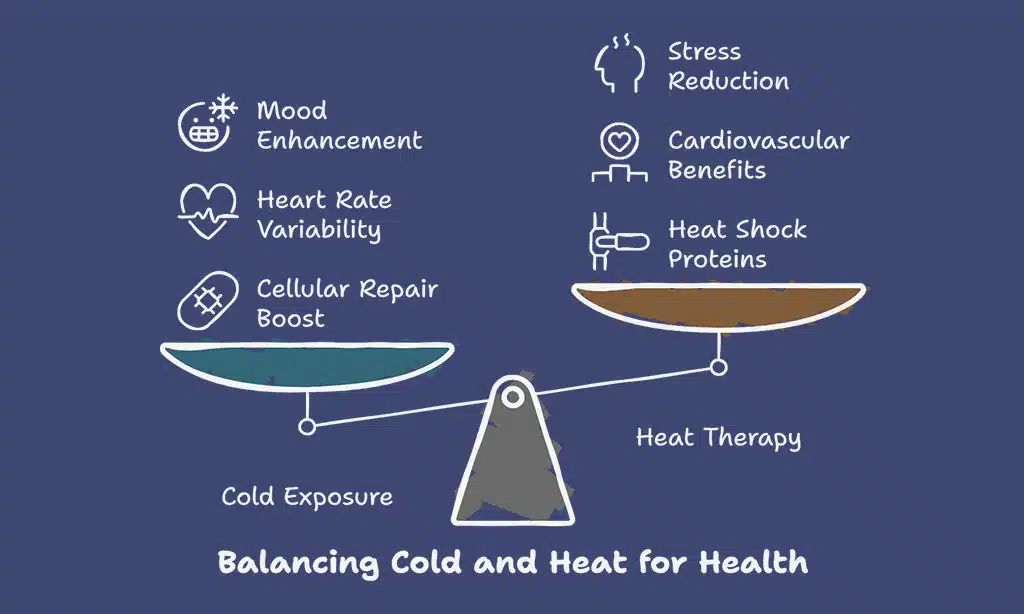
You can use ice baths or saunas to shock your body, helping it build strength and stress resilience. Studies show both heat shock proteins and cold exposure support cellular repair, boost heart rate variability, and even brighten your mood on rough days.
Cold exposure techniques
Cold exposure is making waves in health optimization circles. It nudges your body, sharpens your mind, and may even help you live longer.
- Ice baths are the classic move. Sitting in icy water shocks your body into high alert mode. This jumpstarts brown fat, known as brown adipose tissue (BAT). BAT burns energy to create heat and can boost metabolic health while promoting better insulin sensitivity.
- Cryotherapy is a quick freeze for the brave. You step into a chamber that blasts you with air chilled to minus 200 degrees Fahrenheit. The cold acts like a wakeup siren for your cells, kicking off cellular repair and reducing inflammatory reactions.
- Cold showers offer an easy way to squeeze cold therapy into daily life. They bump up norepinephrine levels, which sharpens focus and boosts mood. Over time, these chilly splashes may build stress resilience.
- Gradual exposure always wins over shock tactics. Start with short bursts of cold and build your tolerance slowly. This helps lower risks such as hypothermia or fainting, so listen to what your body says each step of the way.
- Cold plunges can help soothe sore muscles after strength training or high-intensity interval training (HIIT). Many athletes swear by them for faster muscle recovery and less swelling caused by oxidative stress.
- Regular cold therapy sessions have been linked with better cardiovascular health because they make blood vessels work harder and improve heart rate variability.
Dr. Rhonda Patrick has studied how ice baths trigger the release of norepinephrine by up to fivefold—supporting sharper thinking and stress management. Dave Asprey credits his morning ice bath routine for cranking up energy levels throughout the day.
Even if you’re no Wim Hof (the Dutch “Iceman” famous for his stunts), safe cold exposure may encourage positive changes like more thermogenesis and active metabolism via the NRF2 pathway. Just skip heroics; slow steps lead to big results without icy regrets!
Heat therapy and saunas
Heat therapy and sauna sessions are more than just a way to relax after a long day. They push your body, offer deep health rewards, and boost energy levels.
- Sauna use raises your body temperature and pushes out sweat, which helps muscle recovery and stress reduction.
- Traditional Finnish saunas lower risks of strokes, heart diseases, and chronic diseases (Laukkanen & Laukkanen, 2018).
- Heat from the sauna makes your heart work harder—like physical exercise without lifting a finger.
- Regular sweat sessions can help optimize heart rate variability for better cardiovascular health.
- Intense heat sparks Heat Shock Proteins (HSPs) in your cells. These proteins power up cellular repair by cleaning damaged parts—a key step in autophagy.
- FOXO3 gets a kickstart in the heat; this gene aids DNA repair and supports healthy aging.
- The Nrf2 pathway lights up too—your body’s tool for fighting oxidative stress and boosting resilience against toxins.
- In Finland, frequent sauna visits are common among older adults aiming to keep cognitive function sharp as a tack.
- Saunas support vitamin D synthesis which matters for metabolic health and immune defense—try to catch some rays afterward if you can!
- Some folks combine sauna use with cold exposure or ice baths to double down on benefits like insulin sensitivity and mood-boosting endorphins.
Saunas take passive sweating into an active habit for anyone chasing health optimization or extra years on their life’s clock!
Enhance Cognitive Health
Boosting your brain is a daily job, not magic. Try new habits for sharper thinking, like learning names faster than the school gossip or outwitting your little brother at chess—your neurons will thank you.
Neuroplasticity practices
Meditation and yoga spark real changes in your brain. These simple habits, done daily, help the mind bounce back from stress and boost cognitive function like a muscle at the gym. Studies show that Zen meditation can raise telomerase activity.
More telomerase means longer telomeres—good news for slowing down aging (Alda et al., 2016). Just 15 to 25 minutes of meditation or breathwork each day works wonders.
Deep breathing, also called diaphragmatic breathing, trains your vagus nerve and helps with stress management—a win for heart rate variability too. People who add these practices often see sharp thinking and steady moods roll in.
Many biohackers use tools like ginkgo biloba supplements or vagus nerve stimulation for an extra nudge to their mental clarity routine. Think of it as weightlifting for your brain cells—simple moves now may bring lasting effects over time.
Nootropics for mental clarity
Omega-3 fatty acids help support thinking and focus. Many people eat more fish or take supplements for this reason. Magnesium is another key player. It helps your brain work better and makes you feel calm.
Ginkgo biloba is famous for boosting memory, too.
Some people add NMN and resveratrol to their routine. They hope these can boost brain health, sharpen the mind, and even extend lifespan over time. Research from 2023 points to their possible role in healthy aging and cognitive function.
These nootropics may also help with energy levels, stress resilience, and mood balance—like having a little extra sunlight on cloudy days!
Improve Microbiome Health
Your gut acts like a bustling city, with trillions of bacteria working in shifts. Feed them well, and they just might help your brain fire on all cylinders, Sunday morning bright.
Probiotic-rich foods and supplements
A healthy gut can make your whole body feel good. Probiotic-rich foods and supplements help boost both mood and energy.
- Yogurt, kefir, and kimchi feed your gut with billions of friendly bacteria.
- These probiotics help balance the gut microbiome, which can lower harmful inflammation linked to chronic diseases.
- Gut health has strong links to brain power and emotional wellness, thanks to the gut-brain connection.
- Recent studies show that probiotics may improve insulin sensitivity and support metabolic health.
- Omega-3 fatty acids work with probiotics to help reduce oxidative stress in cells.
- Adding vitamin D supports probiotic growth and helps with vitamin D synthesis, which boosts immune defense.
- Supplements like Lactobacillus or Bifidobacterium can increase heart rate variability—a sign of better stress resilience.
- Fermented foods also increase diversity in the microbiome; a more diverse mix means greater cellular repair capacity.
- Probiotics may help reduce risk markers for cardiovascular health problems.
- Intermittent fasting can change gut bacteria in positive ways by activating sirtuins—proteins connected to longevity.
Choosing probiotic-rich foods daily is like planting seeds for lifelong strength.
Gut-brain connection
Tiny microbes in your belly talk to your brain, and boy, do they have a lot to say. These gut bugs help shape moods, memory, even how well you sleep at night. Ever eat yogurt or sauerkraut? Those foods feed the good bacteria in your microbiome.
Research shows that people who eat more probiotic-rich food notice better emotional well-being as well as sharper focus.
Intermittent fasting also plays a role here—crazy, right? Fasting sparks changes in your gut microbiota and activates sirtuins linked with longevity. Scientists spot links between gut health and lower risk of chronic diseases too.
Your vagus nerve acts like a two-way phone line connecting belly and head; it sends signals back and forth all day long. Choosing smart snacks can boost cognitive function faster than you can say “fiber.”.
Use Photobiomodulation
Red light therapy may boost your cells, sort of like giving them a pep talk. Studies suggest it helps with energy levels and supports skin repair, all while you just sit there, soaking up the glow.
Benefits of red light therapy
Shining red and near-infrared light on your skin can lower swelling and help your cells make more energy. This is called red light therapy, or photobiomodulation. Scientists see that it helps mitochondrial health, which means your tiny cell batteries work better.
People use this method to boost muscle recovery after strength training or even reduce pain in stiff joints.
Studies also show that this kind of therapy may slow signs of aging by helping with cellular repair. It improves blood flow and supports brain function, too—think sharper memory and quicker thinking for daily tasks.
Many athletes add it to their routine to speed up healing from workouts like HIIT sessions and cold exposure treatments such as ice baths. The result? Clearer thinking, less swelling, stronger cells—and a small nudge toward living longer with better metabolic health, higher energy levels, enhanced cognitive function, and improved insulin sensitivity.
Cellular rejuvenation effects
Red light therapy shines deep into your skin, reaching the tiny power plants inside your cells called mitochondria. These little engines begin to work harder and better, making more energy for your body.
Studies by Yetisen A. K., Anton S. D., and Dresler M. show this process helps your cells repair themselves faster.
Swelling goes down, too, like ice baths reduce soreness after a tough workout. Photobiomodulation can also boost stem cell activity, speeding up muscle recovery and fighting signs of aging at the root level.
With stronger cellular repair and less oxidative stress, you may notice higher energy levels in daily life—like swapping old batteries for fresh ones every day!
Build Social and Nature Connections
Friends are like the sun—spending time together lifts your mood and boosts heart health. Take a walk in the park, watch for vitamin D synthesis, and let your worries melt away in the fresh air.
Benefits of meaningful relationships
Strong social bonds can help you live longer. Studies show that people with close connections have lower death rates and face fewer chronic diseases like heart issues or diabetes. Laughter over a shared meal does more than lift your mood; it boosts insulin sensitivity, calms stress, and protects your cardiovascular health.
People with deep friendships also tend to have higher cognitive function as they grow older. Emotional support strengthens your brain’s pathways, making it easier to think sharp and remember things.
Meeting up with friends for walks in nature combines two important factors for mental well-being—social connection and time outdoors—helping you keep energy levels steady and daily stress low.
Time in nature for mental and physical well-being
Nature changes the way your mind and body feel. Walk through a city park, a forest trail, or just sit under a sunny tree. In only 10 minutes, nature drops your blood pressure and slows your pulse rate—your heart feels less stressed.
Stay outside for 20 minutes, and you might notice your mood lift like clouds after rain.
Two hours outdoors each week make you stronger inside. Your immune system wakes up and defends you against sickness better—think of it as a shield that gets bigger in the sun. Soaking up sunlight helps vitamin D synthesis too, which boosts immunity even more.
Nature gives both calm and energy; even short breaks help with stress reduction and mental clarity. This is health optimization without fancy tools or gadgets—just green grass, fresh air, open sky, and time well spent nurturing metabolic health while feeding your soul real peace.
Takeaways
Living longer does not mean working harder, just smarter. Small steps like better sleep, cold showers, and eating well can boost energy and help your body fight aging. Even time with friends or a walk outdoors lifts your mood and sharpens your mind.
Try these habits one at a time, see what works for you—and watch the years add up with a lighter heart.
FAQs
1. What is intermittent fasting, and how does it help with health optimization?
Intermittent fasting means you eat during set hours and fast the rest of the day. It often boosts insulin sensitivity, supports metabolic health, and may lower your risk for chronic diseases.
2. How can I improve my circadian rhythm to sleep better?
Try going to bed at the same time each night. Get sunlight in the morning for vitamin D synthesis. This helps regulate when you fall asleep and wake up—your body loves a good routine.
3. Are omega-3 fatty acids really good for cardiovascular health?
Yes, they are! Omega-3s support heart health by lowering oxidative stress and improving blood flow. You can find them in fish or supplements.
4. Can cold exposure like ice baths help me recover faster after exercise?
Yes, cold exposure such as ice baths or even a chilly shower aids muscle recovery and reduces inflammation after strength training or high-intensity interval workouts.
5. What’s red light therapy all about? Does it boost cellular repair?
Red light therapy uses certain wavelengths of light on your skin to speed up cellular repair processes, reduce oxidative stress, and may even support cognitive function over time.
6. Is there an easy way to manage stress that also helps my physical performance?
Try diaphragmatic breathing or vagus nerve stimulation techniques—they calm nerves fast! These habits build stress resilience and promote better heart rate variability so you can keep moving strong every day.