Do you ever feel like your house is running you, instead of the other way around? You juggle multiple remotes, forget to turn off the kitchen lights, and watch those energy bills climb higher every single month. It is completely exhausting. How AI smart home devices are redefining daily life is an exciting topic because this technology changes everything by putting control right in your hands.
You speak a simple command, and your home actually listens. Lights click on, the thermostat adjusts to your favorite temperature, and doors lock automatically. The market is booming right now across the US. A 2025 Parks Associates study found that nearly two-thirds of US internet households now own at least one smart device. These systems learn your habits, predict what you need, and save you serious money on utilities.
I am going to walk you through exactly how these devices work and which ones might fit your lifestyle best. Get ready to transform your space.
What Are AI Smart Home Devices?
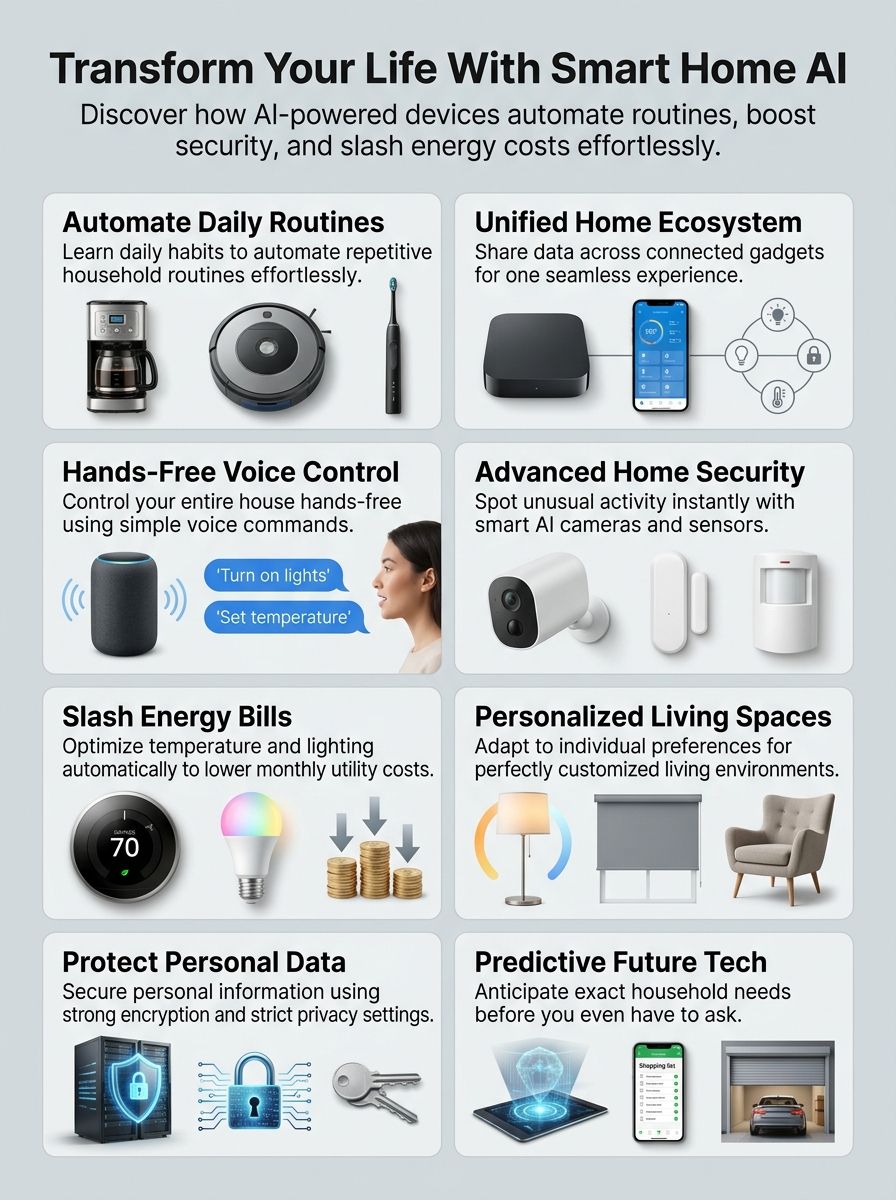
Smart home AI devices represent a new category of connected technology that learns your habits, adapts to your preferences, and makes your home smarter every single day. These gadgets combine artificial intelligence with IoT Internet of Things connectivity. This allows them to communicate with each other and respond to your needs without you lifting a finger.
A smart thermostat learns when you like your home warm or cool. Smart lighting systems adjust brightness based on the time of day. Digital assistants listen for voice commands and control everything from your coffee maker to your security system.
This interconnected ecosystem transforms your living space into something that anticipates what you want before you even ask. The industry calls this “ambient computing,” which means the technology fades into the background and simply works for you.
Smart homes aren’t about having the fanciest gadgets; they’re about making life simpler, safer, and highly efficient.
Think of smart home AI devices as the brain of your house. They constantly gather data and make intelligent decisions to optimize your comfort. These connected devices work together as a unified home ecosystem, sharing information and coordinating actions that benefit your entire household.
A smart security system alerts you instantly if someone approaches your door. Energy management systems reduce your electricity bills by learning peak usage times. AI-powered air purifiers detect invisible indoor pollution, like formaldehyde, and activate automatically when air quality drops.
Each device operates independently, yet they all sync up through a central hub or cloud platform. This creates a network that responds to voice commands, smartphone apps, and preset automation routines.
Key Features of Smart Home AI Technology
Smart home AI technology learns your habits and adjusts your home settings automatically, so you spend less time managing things manually. These systems talk to all your devices at once, creating one connected home that works together like a well-oiled machine.
Automation and Learning Capabilities
Your home learns your habits and adjusts itself automatically. These devices track when you wake up, when you leave for work, and when you return home. They notice your temperature preferences and adjust the thermostat before you even ask.
A great example is Ecobee’s Smart Recovery feature. It learns exactly how long your house takes to heat up or cool down. It turns your HVAC system on at the exact right moment to reach your preferred temperature right when you walk through the front door.
Automation handles repetitive tasks so you can focus on what matters most. Your lighting turns on as you enter a room. Your coffee maker starts brewing at your usual time. Your security system activates when you leave.
Integration with Multiple Devices
Smart home AI devices talk to each other like a seamless team. Your smart speaker can trigger your lights, which then signal your thermostat to adjust the temperature. This interconnected approach means you control everything from one place.
In 2026, the Matter smart home standard is the absolute gold standard for device integration. If you buy a device with the Matter logo on the box, you know it will work seamlessly with Apple HomeKit, Google Assistant, and Amazon Alexa.
Integration across devices saves you serious time and mental energy. Imagine walking through your front door. Your security system disarms, your lights turn on, your music starts playing, and your air purifier kicks into gear.
Voice Recognition and Control
You talk, and your home listens. Voice recognition technology powers this magic by letting you command your devices through natural speech. Natural language processing has improved dramatically over the last few years.
You no longer have to memorize robotic commands. Here is what modern voice control looks like today:
- Conversational Commands: You can simply say, “I’m feeling a bit chilly,” and your digital assistant knows to raise the thermostat.
- Voice Profiles: The system learns different accents and recognizes specific family members, tailoring music choices to whoever is speaking.
- Follow-up Questions: You can ask a question, get an answer, and ask a follow-up without having to say the “wake word” a second time.
- Offline Control: Many newer hubs process your voice commands locally, meaning your lights still turn on even if your internet goes down.
Benefits of Smart Home AI Devices
Smart home AI devices transform how you live by making your home smarter, safer, and more efficient than ever before. Keep reading to discover exactly what these amazing systems can do for you and your family.
Enhanced Convenience in Daily Tasks
Artificial intelligence transforms how you handle everyday chores around your home. Your AI-powered devices learn your habits and automate routine tasks effortlessly.
Platforms like Samsung SmartThings allow you to create complex routines. You can set a “Good Morning” routine that slowly raises your bedroom blinds, turns on the bathroom lights to 20 percent brightness, and starts the coffee pot all at 6:30 AM.
You no longer waste time managing separate apps or remembering complicated settings. Connectivity across your devices means everything communicates. Your home becomes an extension of your needs rather than something you constantly fight to control.
Improved Home Security
Smart home AI devices turn your house into a fortress that watches itself. Security cameras with AI learn what normal looks like, so they spot strangers or unusual activity fast.
Modern security features give you incredible peace of mind:
- AI Person Detection: Cameras from brands like Ring and Arlo can tell the difference between a neighborhood stray cat, a waving tree branch, and an actual person on your porch.
- Smart Locks: Devices like the Schlage Encode Plus let you tap your iPhone or Apple Watch against the door to unlock it instantly.
- Proactive Alerts: If a window sensor detects a break-in, your system alerts your phone and can notify local US authorities immediately.
- Package Monitoring: Doorbell cameras identify and track packages, alerting you the moment a delivery driver drops off a box.
Energy Efficiency and Cost Savings
AI-powered thermostats learn your daily routines, adjust temperatures automatically, and cut your heating and cooling costs significantly. These connected devices track your patterns, predict when you need warmth or cool air, and make changes seamlessly.
According to the US Environmental Protection Agency’s Energy Star program, homes with certified smart thermostats save around 8 percent on their heating and cooling bills. For the average American household, that translates to keeping an extra $50 to $100 in your pocket every single year.
Lighting systems with artificial intelligence detect when rooms sit empty and dim or turn off automatically. These interconnected devices integrate with your other smart technology, creating a unified approach to power consumption that cuts waste.

Personalized User Experiences
Smart home AI devices learn your specific habits, preferences, and routines over time. Your system notices you like the temperature at 72 degrees when you wake up, so it adjusts automatically.
Personalization reaches new heights with advanced data integration. Apple HomeKit Secure Video uses local facial recognition to announce exactly who is at the front door through your HomePod speakers. It identifies your friends and family from your photo library.
Each family member gets their own profile. The system knows what music to play when your teenager arrives home versus when your partner gets back from work. Your daily life becomes smoother and genuinely personalized to how you actually live.
Popular Smart Home AI Devices
The market floods with smart home AI gadgets that fit different needs and budgets. You will find devices that handle everything from talking to your home to keeping it highly secure and comfortable.
Smart Voice Assistants
Smart voice assistants like Amazon Alexa and Google Assistant sit at the heart of modern smart home ecosystems. You talk to these digital helpers, and they listen, learn, and act on your commands.
With recent upgrades integrating large language models like Google Gemini, these assistants are smarter than ever. They understand complex, multi-part requests. You can say, “Turn off the kitchen lights, lock the front door, and play some jazz,” and the assistant handles all three tasks perfectly.
Your interconnected devices work together because these assistants speak the same language. This connectivity creates a unified smart living experience that feels completely natural.
AI-Powered Security Systems
Your home’s safety demands a serious level of intelligence. AI-powered security systems take protection to the next level by learning your habits and spotting real threats.
These systems offer features that traditional alarms simply cannot match:
- Rapid Response Integration: Systems like SimpliSafe use advanced AI to verify break-ins through camera feeds, speeding up police dispatch times.
- Facial Recognition: High-end cameras memorize family members, ensuring you do not get annoying phone alerts when your kids play in the driveway.
- Automated Lighting Sync: If an outdoor camera detects motion at 2 AM, it can tell your indoor hallway lights to turn on, scaring off potential intruders.
Smart Thermostats with AI Control
Your thermostat works incredibly hard to keep your comfort in check. Smart thermostats with AI control learn your temperature habits and adjust your heating and cooling without you lifting a finger.
The Google Nest Learning Thermostat 4th Gen is a prime example of this technology in action. It uses advanced predictive analytics to build a micro-schedule for your home, adjusting temperatures by a degree or two based on the current weather forecast outside.
Energy efficiency and cost savings go hand-in-hand with this smart technology. These connected devices cut your bills by learning when you are home and when you are away. They never waste energy cooling an empty house.
AI-Driven Lighting Systems
AI-driven lighting systems transform how you illuminate your home by adapting to your needs throughout the day. These smart lights adjust brightness and color temperature based on your schedule, time of day, and even your mood.
Brands like Philips Hue offer incredible lifestyle enhancements. You can sync your living room lights directly to your Spotify account or your smart TV. The lights will pulse and change color to match the beat of the music or the explosions in an action movie.
For those on a tighter budget, companies like Wyze offer highly affordable smart bulbs that still deliver great energy efficiency. Smart scheduling means lights turn off in empty rooms, eliminating wasted electricity completely.
AI-Powered Air Purifiers
AI-powered air purifiers work like invisible guardians in your home. They constantly scan the air and remove pollutants before you even notice them.
Connected devices like the Dyson Purifier Cool or the Coway Airmega use artificial intelligence to learn your home’s air quality patterns. If you start frying bacon in the kitchen, the purifier in the living room senses the particulate matter and automatically ramps up its fan speed.
Data integration from multiple sensors helps the system understand exactly what particles float through your rooms. Your family breathes cleaner air while spending less money on energy.
Choosing the Right Smart Home AI System
Picking the right smart home AI system matters because the wrong choice can leave you frustrated. You want to match your needs with what actually works in your home, so take time to compare options before you buy.
Compatibility with Existing Devices
Your current smart home devices need to work together flawlessly. Most smart home AI systems operate on different platforms, so you must check if your new gadgets can talk to what you already own.
This is where the Thread networking protocol comes in. Thread creates a fast, low-power mesh network exclusively for your smart devices. It does not bog down your home Wi-Fi router.
Before you buy anything, check the box for a Thread or Matter logo. Getting this right from the start means your home automation runs smoothly and without frustrating connection drops.
Data Privacy and Security Considerations
After you pick devices that work together, you need to think about what happens to your private information. Smart home systems collect data about your daily habits, routines, and preferences.
Protecting your home ecosystem requires a few simple, actionable steps:
- Look for Local Processing: Devices like the Apple HomePod or newer Amazon Echo hubs process voice commands directly on the device, rather than sending recordings to the cloud.
- Enable Two-Factor Authentication: Always turn on 2FA in your smart home apps to prevent hackers from accessing your cameras or locks.
- Check the FTC Guidelines: Buy from reputable brands that comply with the US Federal Trade Commission guidelines on IoT data privacy.
- Mute the Microphone: Most smart speakers have a physical button that disconnects the microphone power. Use it when you want guaranteed privacy.
Ease of Use and Setup
Smart home AI devices should work right out of the box. Most top manufacturers get this part exactly right. You plug in your smart speaker, download an app, and follow a few simple steps to connect it to your home network.
The Matter standard has made setup incredibly easy. With most new devices, you simply open your Apple Home or Google Home app and scan a QR code printed on the bottom of the device. The system configures the Wi-Fi credentials automatically.
Your smart devices learn your habits and preferences over time, making life easier as days go on. The integration happens seamlessly once you link them together.
Budget and Long-Term Value
When you shop for smart home AI devices, the initial price tag certainly matters. You need to balance what you spend today against the real value you gain tomorrow.
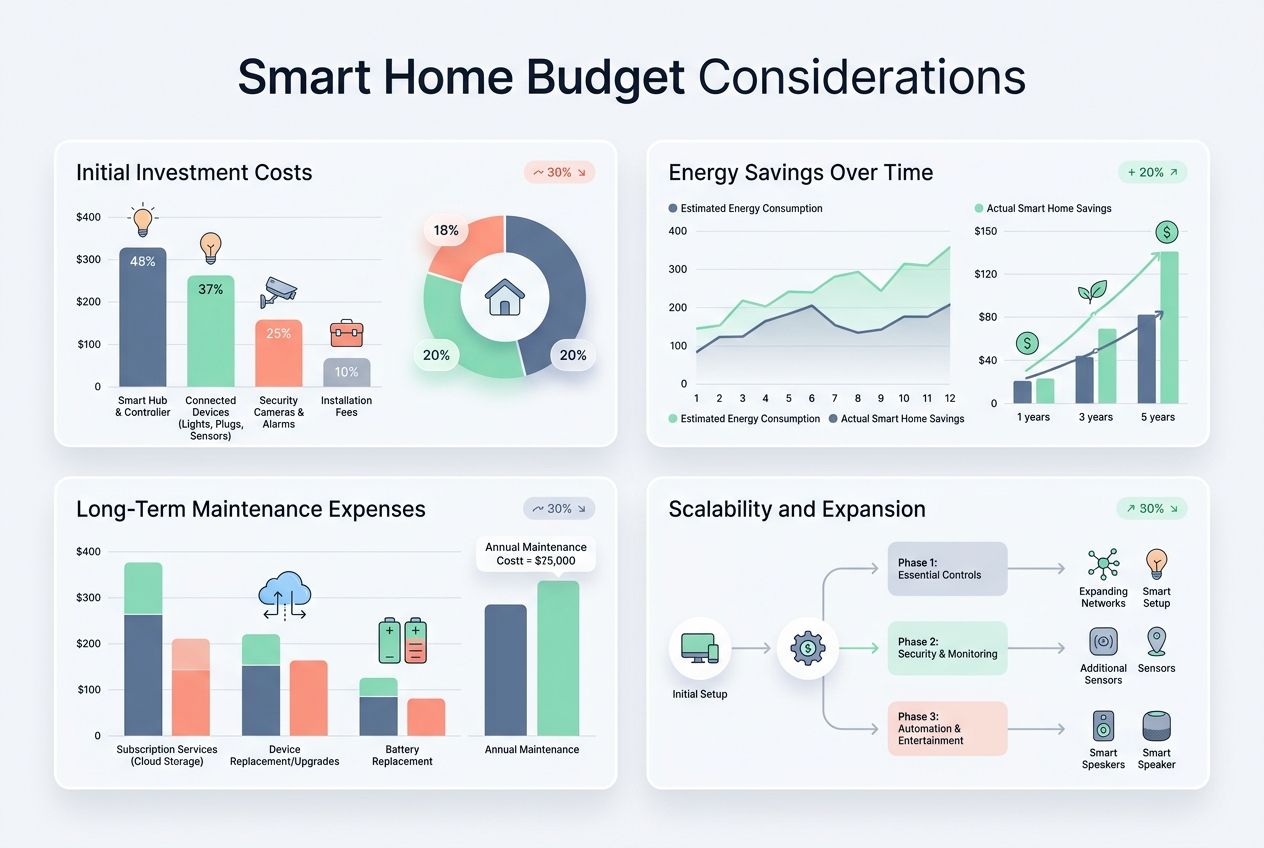
| Budget Consideration | What This Means for You in 2026 |
|---|---|
| Initial Investment Costs | Basic voice assistants run between $30 and $100. High-end AI thermostats typically cost $200 to $250. A great starter kit from a brand like Wyze or Ring can get you going for under $150 total. |
| Energy Savings Over Time | AI thermostats reduce heating and cooling costs by about 8 to 10 percent annually. A household spending $1,500 yearly on temperature control saves around $120 to $150 per year. You recover your investment in just two years. |
| Long-Term Maintenance Expenses | Most AI devices require zero ongoing maintenance fees. Software updates arrive automatically. You will need to replace batteries in wireless door sensors every one to two years, adding maybe $15 annually. |
| Scalability and Expansion | Starting small keeps costs totally manageable. Buy a smart plug for $15 to control a lamp before buying a $200 whole-room smart lighting kit. You can expand your setup at your own pace. |
Your wallet feels a small impact upfront, but your bank account smiles later. Energy bills shrink noticeably within months. Many major US insurance companies even offer a 5 to 10 percent discount on homeowner’s premiums when you install a monitored smart security system.
How Smart Home AI Devices Are Transforming Daily Life
Smart home AI devices reshape how people manage their homes by handling routine tasks without constant human input. These systems learn your habits, anticipate your needs, and adapt to your lifestyle beautifully.
Simplifying Household Management
Your home runs like a well-oiled machine when AI handles the repetitive stuff. Lights turn on before you walk through the door, thermostats adjust perfectly, and your morning routine flows seamlessly.
Household management reaches a new level with smart appliances. Smart refrigerators, like the Samsung Family Hub, feature interior cameras. If you are standing in the grocery store aisle and cannot remember if you need milk, you can check a live video feed of your fridge directly from your smartphone.
You stop wasting mental energy on mundane tasks and start focusing on what actually matters. Data integration across your connected devices means your home understands your lifestyle completely.
Increasing Accessibility for All Users
Smart home AI devices break down massive barriers for people with different physical abilities. Connected devices respond to simple spoken requests, making home automation feel incredibly empowering.
These features deliver life-changing accessibility:
- Visual Assistance: Amazon Alexa features a “Show and Tell” function. Visually impaired users can hold a pantry item up to an Echo Show camera, and the AI will read the label out loud.
- Mobility Support: People with mobility challenges can lock doors, turn off distant lights, and adjust window shades without leaving their chair or bed.
- Elder Care Monitoring: Motion sensors can alert remote family members if an elderly parent’s daily movement pattern suddenly stops, ensuring safety without intrusive cameras.
Enhancing Entertainment Experiences
Your home entertainment setup transforms completely with AI-powered devices working together. Voice assistants control your music, movies, and lighting with simple, casual commands.
Products like Sonos speakers use spatial audio and room-tuning AI. The speaker sends out a test tone, listens to how the sound bounces off your specific walls and furniture, and adjusts its equalizer to deliver perfect audio for your exact room.
You can also install Govee or Philips Hue TV backlights. These systems use a tiny camera to read the colors on your TV screen and project matching colored light onto the wall behind it. It pulls you deeper into the action of every movie you watch.
Challenges and Considerations with Smart Home AI Technology
Smart home AI systems raise some real questions about who accesses your personal data and how companies store it. You will also face occasional compatibility headaches, so it pays to be prepared.
Privacy Concerns
Your home devices collect tons of data about your daily habits, routines, and preferences. These AI systems listen, watch, and track information constantly. Companies store this data, which raises valid questions about security.
You can protect yourself by understanding the risks and taking action:
- Read the Data Sharing Policies: The FTC regularly cracks down on companies that sell user data. Stick to brands that explicitly state they do not sell your personal information to third-party marketers.
- Manage Video Storage: Decide if you want your security camera footage stored in the cloud for 30 days, or if you prefer local storage on a MicroSD card right inside your home.
- Review Device Permissions: Check your smartphone app settings monthly. If a smart lightbulb app asks for access to your smartphone’s contact list, deny it. It does not need that data to function.
Compatibility Across Devices
Different smart home devices often speak different languages, so making them work together sometimes takes real effort. Your older smart plug might not talk to your brand-new thermostat.
This happens because older devices rely on fragmented protocols like Z-Wave or standard Wi-Fi, while newer devices favor Thread and Matter. Mixing generations of technology without checking compatibility first leads to annoying connectivity drops.
Before installing anything new, read reviews from real people who have the same setup you want. Smart hubs can act as translators, but sticking to devices that clearly advertise cross-platform compatibility saves you massive headaches.
Initial Costs and Maintenance
After you pick devices that work together, the price tag becomes your next hurdle. A full home ecosystem with interconnected devices demands an upfront investment, and that reality stops some people cold.
However, you do not have to buy everything at once. A basic starter kit, like a smart speaker and two smart bulbs, costs under $75. The initial costs reflect the technology’s sophistication, but you can build your system room by room over several years.
Maintenance keeps your smart technology running smoothly. Most connected devices need occasional software updates, which happen automatically while you sleep. The long-term value of automation absolutely outweighs the modest maintenance demands.
Future Trends in Smart Home AI Devices
Smart home AI technology will keep advancing, mixing artificial intelligence with IoT devices in ways that predict what you need before you even ask. The next few years hold some incredible upgrades.
Advanced AI Integration with IoT
Artificial intelligence and the Internet of Things work together to create home ecosystems that learn your habits and adapt to your needs flawlessly. The biggest shift right now is the integration of Generative AI into smart home platforms.
Generative AI features mean you no longer have to program strict “If This, Then That” rules. You can simply tell your home, “Make it cozy in the living room for movie night.”
The AI understands the context of “cozy.” It automatically dims the lights to 10 percent, closes the smart blinds to block street lamps, and turns on the TV. This data integration turns raw technology into a truly helpful assistant.
Development of Predictive AI Models
Smart home systems now move beyond simple reactions to your commands. Predictive AI models learn your habits, patterns, and preferences over time, then anticipate what you need.
This is the core of ambient computing. The technology fades into the background. Your home’s AI studies when you wake up, how warm you like your space, and which lights you turn on first.
Your AI-powered home learns that you shower at 7 AM on weekdays, so it warms the bathroom at 6:50 AM. It discovers you always brew coffee at 6:30 AM, then adjusts kitchen lighting gradually to match your morning routine. The automation handles countless small decisions for you.
Expansion of AI-Driven Sustainable Solutions
AI technology now powers incredible solutions that cut energy waste and protect our planet. These systems learn your habits, then adjust heating, cooling, and lighting to match your actual needs.
Sustainable technology is getting much bigger and much smarter:
- Smart Electrical Panels: Companies like SPAN make electrical panels that let you monitor and shut off individual circuits in your house directly from your smartphone app.
- EV Charging Integration: Smart home systems now connect to electric vehicle chargers like the Tesla Wall Connector. The AI waits to charge your car until after midnight, when electricity rates drop to their lowest point.
- Leak Detection: Predictive analytics allow smart water valves to detect tiny changes in water pressure, shutting off your main water line automatically before a burst pipe floods your basement.
Finally: The Future of Smart Homes is Here
Smart homes have stopped being a distant dream. They are a wonderful part of our everyday reality. Your home learns your habits, adjusts your lighting, and manages your energy use effortlessly.
Connected devices work together seamlessly, creating a home ecosystem that anticipates your exact needs. Seeing How Smart Home AI Devices Are Redefining Daily Life shows us that these tools make our routines smoother and highly efficient.
The future of smart living is not something you wait for anymore. It is something you can experience right now, one automated task at a time.
Frequently Asked Questions
1. How do smart home AI devices make daily life easier?
They handle your daily chores automatically, and with the average US internet household now juggling 17 connected devices according to a 2024 Parks Associates study, having an AI assistant like Amazon Alexa to control them all is a huge time saver. You can simply ask your assistant to dim the lights or adjust the temperature without ever leaving the couch.
2. Can these devices really save energy and money?
Yes, tools like the Google Nest Learning Thermostat learn your daily routine and can save US customers an average of 10% to 12% on their heating bills.
3. Are smart home AI systems safe for families with kids or pets?
Safety is actually a top priority, as smart cameras from brands like Ring use AI person detection to easily tell the difference between your family dog and an actual intruder. This means you only get notifications for real security threats on your property, which gives you complete peace of mind without the constant annoyance of false alarms.
4. What happens if my internet goes out? Do I lose all control over my house?
You definitely will not lose all control because modern systems, like the Samsung SmartThings Hub, use edge computing to process your routines locally. Even if your Wi-Fi drops, any devices connected via local Zigbee or Z-Wave networks will keep your basic home automations running smoothly.