Microsoft CEO Satya Nadella wrote on Dec. 29, 2025 that 2026 must move past the “AI slop vs sophistication” debate and focus on AI systems that deliver real-world outcomes, earn public trust, and justify their energy costs.
The Post That Sparked the 2026 Reset
Nadella published the message on his new personal blog, framing 2026 as a different kind of “pivotal year” for AI. His core claim is simple: the industry is moving from the early discovery stage into widespread diffusion, and the real test is no longer what models can do in demos, but what people can reliably do with AI in daily work and public life.
He described a gap between fast-rising AI capability and slower-moving real-world usefulness. He called that gap “model overhang.” In plain terms, the technology looks powerful, but it still fails too often in the moments that matter, like when businesses need consistent accuracy, or when the public needs clarity about what is real and what is generated.
Nadella’s post also tries to lower the temperature of the debate. Instead of arguing about whether content is “slop” or “sophisticated,” he wants the focus to shift to product design, engineering discipline, and societal choices about how AI is deployed.
Here is the structure of his argument, translated into the practical questions it raises for businesses and users.
| Nadella’s Theme | What It Means In Practice | The Real-World Test |
| AI As A Cognitive Amplifier | AI should help people think and create, not replace them by default | Does AI make users more capable without removing accountability? |
| Shift From Models To Systems | Useful AI depends on the full system around the model, including tools, memory, and permissions | Can the system behave safely and consistently in messy conditions? |
| Societal Permission | AI must prove it helps people and planet enough to justify energy and infrastructure costs | Do communities and regulators see benefits that match the scale of build-outs? |
His message matters because it comes from the CEO of a company spending heavily on AI infrastructure and selling AI tools to governments, schools, and enterprises. When Nadella says “outcomes” are the measure, he is also setting the standard Microsoft will be judged by in 2026.
Why “AI Slop” Became a Mainstream Concern?
“AI slop” is not a technical term. It is a public reaction to a visible wave of low-quality, synthetic, and often misleading material spreading across the internet and into workplaces.
The phrase gained traction because the problem is easy to recognize. People see AI images that look almost right but not quite, videos designed to trick viewers, product pages stuffed with generic text, and social posts made to farm clicks. In workplaces, employees also see internal “workslop,” like AI-written summaries that sound confident but do not match the underlying facts.
Merriam-Webster’s decision to name “slop” its 2025 Word of the Year signals that the concern is not limited to tech circles. The public story is no longer only about impressive AI capabilities. It is also about quality, trust, and the feeling that the internet is getting noisier.
Several forces have pushed “slop” into the mainstream.
- Generative AI tools became cheap and fast to use at scale.
- Social platforms reward volume and engagement, not careful sourcing.
- Search and recommendation systems struggle when synthetic content floods channels.
- Political and financial incentives encourage manipulation, not clarity.
The impact is not just annoyance. It changes how people judge information.
- Readers become more skeptical, even of real reporting.
- Creators worry about stolen style, impersonation, and dilution of their work.
- Brands face reputational damage if fake content spreads under their name.
- Schools and employers face new pressure to verify authorship and authenticity.
This is why Nadella’s framing is strategic. If the public associates “AI” with low-quality spam, it becomes harder for even high-value AI systems to earn adoption.
The “slop” problem also includes several distinct categories, which require different fixes.
| Type Of AI Slop | Common Where It Shows Up | Typical Harm | What Reduces It |
| Synthetic Spam Content | Social feeds, comment sections, SEO pages | Pollutes discovery and wastes time | Platform enforcement, rate limits, provenance signals |
| Misleading Synthetic Media | Deepfake clips, doctored images, fake endorsements | Fraud, defamation, confusion during breaking news | Content credentials, labeling, rapid takedown, public education |
| Low-Quality “Workslop” | Internal reports, meeting notes, generic presentations | Bad decisions from wrong summaries | Human review, grounded data retrieval, audit trails |
| Fake Product And Review Text | Marketplaces, app stores, affiliate pages | Consumer deception and scams | Identity verification, review integrity checks, model detection signals |
A key point is that “AI slop” is not one single technical failure. It is a system-wide outcome created by incentives, distribution channels, and weak verification. That is why Nadella keeps pulling the conversation back to systems and governance, not only model improvements.
From Bigger Models to Safer Systems and Agents
Nadella’s second big claim is that the next phase of AI is about systems, not only models. This matters because many real failures do not come from the model being “too small.” They come from the model being used in settings where it has missing context, unclear permissions, or unsafe tools.
A “system” approach typically includes several layers.
- A model that can generate text, code, or images.
- A retrieval layer that pulls relevant documents or data to ground the answer.
- A tool layer that can take actions, like creating a ticket, sending an email draft, or querying a database.
- Memory and personalization, which must be constrained and auditable.
- Entitlements, meaning permissions that decide what the AI can access or change.
- Monitoring and evaluation that checks performance over time.
When people talk about “AI agents,” they usually mean AI that can plan and execute multi-step tasks using tools, within defined permissions. That can be valuable, but it also raises the stakes. A chatbot that makes a wrong statement is annoying. An agent that takes a wrong action can be costly.
This is where the “jagged edges” Nadella mentioned become important. Modern AI can be brilliant in one moment and unreliable in the next. A system has to anticipate that and respond safely, rather than pretending the model is always correct.
What Reliability Looks Like In The Real World?
In 2026, AI products will be judged less by clever outputs and more by operational reliability. That typically includes:
- Clear confidence boundaries, including when the system does not know.
- Strong grounding in verified data sources for factual tasks.
- Guardrails that prevent unsafe or unauthorized actions.
- Consistent behavior across users, teams, and contexts.
- Transparent logging so organizations can audit what happened.
This is also where evaluation culture is shifting. Companies increasingly need repeatable testing, not only impressive demos. That includes testing for hallucinations, bias, security vulnerabilities, and failure modes that only appear in edge cases.
The Link Between Systems and “AI Slop”
It may sound odd, but systems thinking can reduce “slop” even for everyday users.
If an AI writing tool must cite internal sources before producing a claim, it is less likely to generate generic filler. If an image generator adds provenance metadata, it becomes easier to identify generated content and harder to pass off as authentic. If an enterprise agent must operate with strict permissions, it becomes harder for it to create accidental harm.
This is why provenance is becoming a practical topic, not an academic one. Industry standards such as C2PA aim to make media origin and edits more traceable through tamper-evident metadata. Microsoft has also documented the use of content credentials in at least some AI media workflows, positioning it as a transparency feature rather than a marketing add-on.
None of these steps magically eliminate “slop,” but they help change incentives. When generated content is easier to label, trace, and moderate, the cost of flooding channels rises.
Microsoft’s Stakes In The Shift
Microsoft is deeply invested in the shift Nadella describes because its AI strategy depends on enterprises trusting AI inside core workflows.
In its fiscal Q4 2025 results announcement, Microsoft reported $76.4 billion in quarterly revenue, and highlighted rapid growth in Azure and cloud services. That growth supports the build-out of AI capacity, but it also increases expectations. Businesses that pay for AI copilots and agent platforms will demand evidence of productivity gains, not just novelty.
For Microsoft, “systems not models” also fits its historical position. Microsoft tends to win when it turns powerful technology into integrated platforms with governance controls, developer tools, and enterprise security. Nadella’s post reads like a commitment to that playbook.
The Real Constraint: Energy, Data Centers, and Public Permission
Nadella’s third point, “societal permission,” is where AI debates become physical.
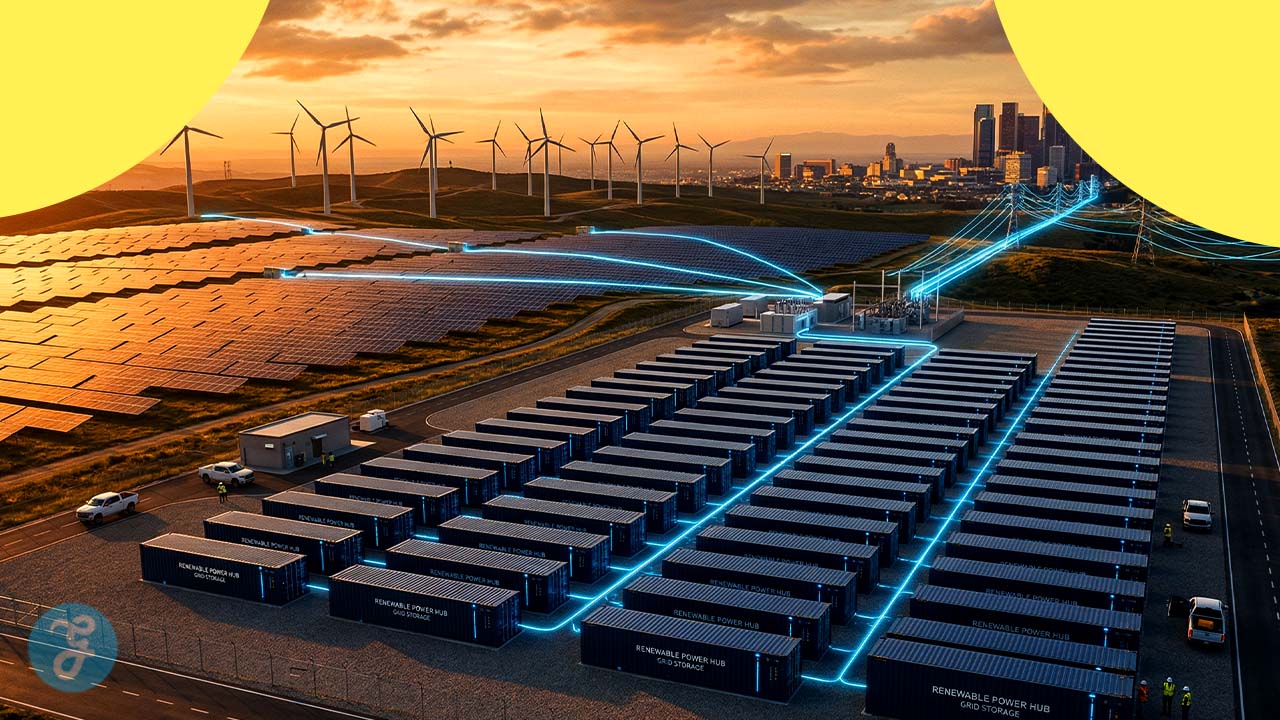
Large-scale AI requires data centers, chips, electricity, cooling, land, and grid upgrades. Those costs are not abstract. Communities see new construction, higher demand for power, and debates about water and sustainability. Regulators see a technology that could boost productivity, but also expand infrastructure pressures.
A U.S. Department of Energy analysis reported that data centers consumed about 4.4% of total U.S. electricity in 2023, and projected they could rise to roughly 6.7% to 12% by 2028. Globally, the International Energy Agency estimated data centers used around 415 TWh of electricity in 2024, and projected a large increase by 2030 as AI accelerates demand.
These numbers shape the political economy of AI. The question is not only whether AI is useful. It is whether the benefits are clear enough to justify major energy and infrastructure commitments.
Here is a simplified view of key energy indicators often cited in policy discussions.
| Indicator | Recent Baseline | Outlook | Why It Matters |
| U.S. Data Center Share of Electricity | About 4.4% (2023) | Roughly 6.7% to 12% (2028 projection) | Drives grid planning, permits, and energy policy pressure |
| Global Data Center Electricity Use | About 415 TWh (2024) | Substantial rise by 2030 in IEA projections | Becomes a global energy and climate planning factor |
| AI Infrastructure Build-Out | Rapid expansion of high-density compute | Ongoing through 2026 and beyond | Ties AI adoption to physical capacity and supply chains |
Why “Societal Permission” Is Harder Than It Sounds?
Societal permission is not a single vote. It is a mix of public trust, regulatory expectations, and local community acceptance.
Communities may ask:
- Does this data center create local jobs, or mostly remote value?
- Who pays for grid upgrades, and who benefits?
- Will electricity prices change for local residents?
- How is water used for cooling, and how is heat managed?
- What happens if the facility expands again next year?
Regulators may ask:
- Are AI-driven decisions explainable in high-stakes settings?
- How do organizations prevent discrimination or harmful automation?
- What disclosure is required for synthetic media and political content?
- How do companies handle incidents, model updates, and accountability?
Enterprises may ask:
- Can we safely integrate AI into workflows without leaking data?
- Who owns the risk when AI is wrong, the vendor or the customer?
- Can we measure outcomes and show ROI to leadership?
This is why Nadella emphasizes “deliberate choices” and scarce resources. If AI spend and AI energy demand climb while outcomes remain vague, permission erodes. If outcomes are clear, permission becomes easier to sustain.
A Practical Shift: Efficiency and “Right-Sized AI”
One likely trend in 2026 is that more organizations will push for right-sized AI.
That can include:
- Smaller models for simpler tasks.
- More retrieval and verification, less free-form generation.
- Using AI for drafting and analysis, not final authority.
- Aggressive monitoring to reduce wasted compute.
This approach can improve both quality and cost. It can also reduce the incentive to flood channels with low-value generation, because the economics become less attractive.
The Metrics That Will Define 2026
Nadella’s post is best read as a call for accountability, not a defense of everything AI produces. He is asking the industry to stop treating the “AI slop” debate as the main storyline and to move toward a harder set of metrics.
In 2026, several measurable signals will likely define whether the industry is truly moving beyond slop.
Watch For Outcomes, Not Demos
The strongest indicator will be whether organizations can point to concrete gains.
- Faster product cycles without increased error rates
- Better customer support without lower trust
- Higher employee productivity without weaker accountability
- Reduced fraud and impersonation through better verification
If those outcomes remain hard to prove, skepticism will grow, regardless of how impressive models look.
Watch For Governance That Works In Practice
AI governance will matter most when it is operational, not symbolic.
Organizations will increasingly adopt:
- Clear policies for what AI can be used for and what it cannot
- Human review requirements for high-risk outputs
- Audit trails that show what data was used and what actions were taken
- Vendor evaluation processes tied to security and reliability
Frameworks and standards will keep influencing this space, including NIST risk guidance and AI management system standards such as ISO/IEC 42001. The EU AI Act timeline also places real deadlines on companies operating in Europe, with major provisions applying on a phased schedule and a general date of application in August 2026.
Watch For Stronger Provenance Signals
Synthetic media will not disappear. The more realistic goal is better transparency.
Expect more focus on:
- Content credentials and provenance metadata
- Clearer labels and platform policies for manipulated media
- Faster response systems for impersonation and fraud
- Education efforts that help users assess authenticity
Provenance will not solve every problem, but it can make deception harder and moderation more effective.
Watch For A “Systems Era” Of Enterprise AI
Nadella’s “models to systems” argument is likely to accelerate the shift to agentic workflows, where AI interacts with tools under permissions.
If that shift is done well, users may see:
- Fewer generic, filler outputs
- More grounded answers tied to real sources of truth
- More consistent performance in common workflows
- Safer automation that does not overreach
If it is done poorly, “slop” could move from public content into business operations, which is far more damaging.
Nadella’s bet is that AI can still become one of the most important computing waves, but only if the industry proves it can deliver real impact with responsibility. In 2026, that bet will be tested in boardrooms, classrooms, policy debates, and the everyday moments when people ask a simple question: “Can I trust what I’m seeing?”