You may lose money when stock runs out or sits too long. AI tools can cut supply chain costs by 20% and shrink inventory by almost 30%, per recent studies. This post shows 10 AI-based tools, from demand forecasting and warehouse automation to delivery drones, that will cut costs, boost reliability, and speed up your deliveries.
Read on.
Key Takeaways
- AI demand-forecasting models cut supply chain costs by 20% and shrink inventory by 30%. Teams feed daily estimates into routing apps to staff crews and limit waste.
- Warehouse automation blends robots and AI. Amazon uses over 200,000 robots, and experts expect adoption to top 60% by 2026.
- Autonomous delivery tech speeds last-mile and freight moves. DHL and Wingcopter flew a drone 60 km in 40 min; Tesla Semi trucks go 500 miles per charge. BCG forecasts 10% of light trucks will be driverless by 2030.
- AI-driven inspection and maintenance boost uptime. Google Cloud Visual Inspection AI raises damage-detection accuracy tenfold, and a 23-month DINGO–QUT trial cut stoppages by 50%.
- Automation slashes back-office work and improves support. RPA/OCR software scans shipping docs in seconds, and Streebos chatbots serve customers in 38 languages. CMA CGM invested $100 M in Mistral AI from a $500 M fund.
Demand Forecasting Tools
AI-driven demand forecasting models blend recent data, seasonal trends, promotion figures, and region patterns to shape sharp demand forecasts. Analysts run machine learning modules, such as neural nets or ARIMA packages, on AWS EC2 servers to spot spikes and dips.
Tools cut safety stock, flag stock outs, and feed inventory teams with daily estimates.
Logistics teams trim inventory by almost 30 percent and slash transport costs by 20 percent, while procurement spends fall by 15 percent, thanks to predictive analytics engines. Managers plug forecasts into routing apps to staff crews right, boost customer experience, and limit waste in real time.
Clear demand signals guide supply chain moves and power dynamic pricing plans.
Supply Chain Planning Solutions
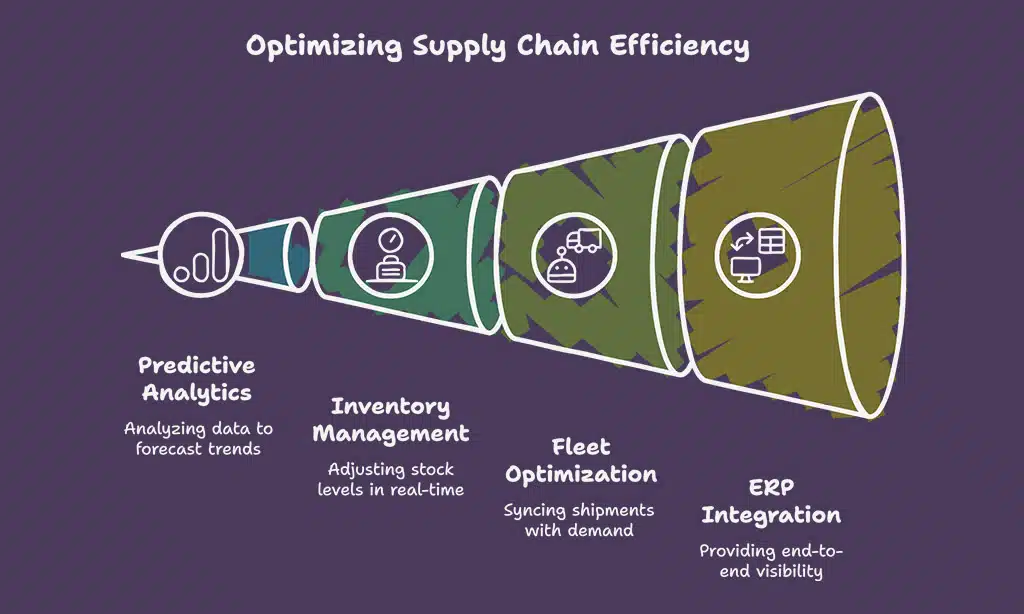
APS platforms form core supply chain planning solutions. They run predictive analytics models to adjust reorder points and safety stock in real time. They pull data from sales forecasts, weather feeds, and supplier delivery records.
These systems use machine learning algorithms to spot demand shifts weeks ahead. An e-commerce giant cut excess inventory by 20% in Q1 2024.
Predictive analytics also slashes fleet utilization costs by syncing shipments to demand peaks. Managers cut carbon emissions by 15% through leaner routes and smarter load plans. ERP modules give an end to end view.
They cover orders, inventory and transport schedules. Teams boost delivery rates while trimming operational costs.
Warehouse Automation Systems
Warehouse automation systems blend robotics and artificial intelligence in logistic hubs. Amazon uses over 200,000 robots for picking, packing, and sorting in its distribution centers.
Self-driving bots scan shelves with computer vision and machine learning algorithms to track inventory. Robot carts shuttle pallets around aisles, cutting manual lifting and work injuries.
Conveyor belts move goods to packing stations, shrinking cycle times.
Logistics teams chase operational efficiency as they adopt smart solutions. Experts project adoption to exceed sixty percent by 2026, compared to 2020 levels. Firms add energy-efficient chargers and LED lights to boost sustainability and cut carbon footprints.
Companies link predictive analytics to maintenance routines for lower repair costs and fewer breakdowns. Training programs help staff program partner bots and update software. AI-driven platforms integrate supply chain data to guide demand forecasts and boost profit margins.
AI-Powered Damage Detection Tools
Computer vision tools scan parcels for cracks or dents as they move along conveyor lines. Google Cloud Visual Inspection AI boosts quality control accuracy tenfold with just a handful of labeled images.
Supply chain teams use this platform to flag damage fast and slash logistics costs.
IoT sensors feed data into predictive analytics models that spot weak spots before they break. This approach reduces maintenance costs and cuts downtime. Field crews and warehouse staff apply checks in real time to keep cargo moving.
Predictive Maintenance Platforms
These predictive maintenance tools use smart probes and ML code to catch wear signs early. They feed data from IoT sensors into AI models, and send repair alerts before gear breaks.
The system taps predictive analytics to help teams fix issues on time.
A joint effort by DINGO and QUT ran for 23 months and proved this tech. The trial slashed stoppages by 50 percent, freeing up hours for other tasks. Supply chain teams cut logistics cost and kept fleets moving without unexpected stops.
Autonomous Delivery Vehicles
Autonomous delivery vehicles roll down quiet streets with careful precision, guided by artificial intelligence and machine learning. They gather data on traffic flow and adjust speed with radar-based obstacle detection.
Tesla Semi, an all-electric rig, travels up to 500 miles on a single charge. It uses advanced driver assistance systems like drift alert sensors and crash prevention braking. It helps fleets cut carbon footprints.
Logistics teams use these vehicles for last-mile deliveries and freight hauling. Boston Consulting Group predicts only ten percent of light trucks will be driverless by 2030, but early adopters already test them on public roads.
Vehicle oversight dashboards track each truck in real time, monitor battery levels and plan routes. Companies link those dashboards to supply chain management platforms, boosting predictive analytics and slashing logistics costs.
AI-Driven Delivery Drones
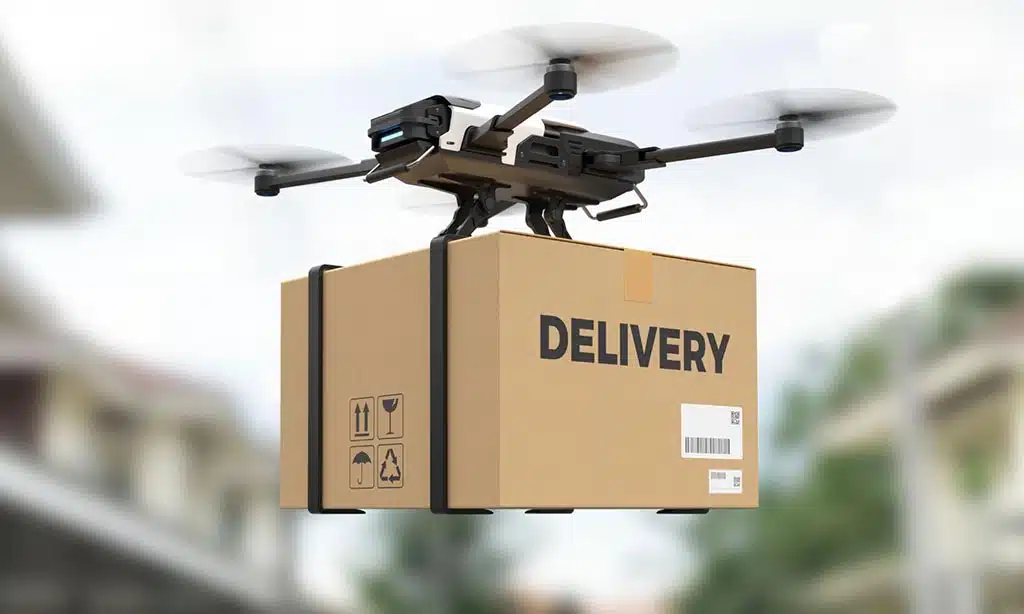
Small drones zip over steep hills and busy streets to drop parcels in minutes with artificial intelligence. DHL and Wingcopter flew a drone 60 km in 40 minutes for their Deliver Future trial.
Firms mount image recognition chips and machine learning (ML) microcontrollers so craft dodge trees, power lines, even birds. Pilots set flight paths through predictive analytics and route optimization tools.
Shoppers will expect deliveries under 30 minutes by 2025. Carriers chase that goal with parcelcopter and autonomous vehicles that lift and land vertically. These gadgets link to mobile apps for inventory management and real-time alerts.
Staff avoid traffic jams and tight turns with air lanes. Each unit uses AI technology and computer vision to scan for obstacles. Safety modules mimic adaptive cruise control, lane departure warnings, and automatic emergency braking, boosting road safety beyond highways.
Drone fleets feed data to databases and fleet management systems so teams tweak flight plans with predictive analytics. Carriers achieve logistics cost reduction and greener operations.
A tiny flyer cuts road miles and driver hours in rugged regions.
Route Optimization and Freight Management Tools
Smart maps drive route optimization to trim fuel use and cut costs. Maps apply shortest path formulas to chart each trip. Valeranns Smart Road System taps roadside sensors, AI, and cloud data to smooth traffic flow, curb jams, prevent crashes.
A shipment visibility platform links route planning with predictive analytics for freight managers. Its live GPS and connected sensors show slowdowns in real time. Managers dodge toll lines and junk traffic at scale.
AI tools adjust plans in seconds after a crash or roadwork. That blend of long range vision and swift response drives logistics optimization. Virtual models mirror each truck, and connected sensors track load health.
Platform alerts guide drivers around backups and risky spots. Teams swap stops and reset ETAs on the fly. They slash empty miles, boost delivery speed, and cut logistics costs.
Document Processing Automation Software
Logistics teams slash back-office work with document processing automation software. AI and RPA scan shipping documents in seconds. OCR technology pulls text from images and PDFs. A capture engine extracts key fields from freight records.
It plugs into inventory management and route optimization tools. This blend of data sources drives predictive analytics and dynamic pricing.
Software cuts errors, trims logistics cost, speeds billing. It trims delays by auto-sharing shipment updates with carriers. The automation platform logs status changes in real time.
Integrating predictive analytics helps planners spot bottlenecks fast. Teams free up staff for more critical tasks.
Customer Service AI Solutions
Streebos chatbots handle questions in over 38 tongues, and link with Watson, Dialogflow, Lex, or Azure CLU. The tools use sentiment analysis to spot moods and solve problems fast. They even laugh at typos, but never need coffee breaks.
Brands use generative ai to cut hold times and boost replies in supply chain portals.
CMA CGM pumped $100 million into Mistral AI to sharpen chatbot skills and add media fact checking. That move sits in a $500 million fund for artificial intelligence across routes, inventory management, and customer calls.
Dynamic Pricing and Analytics Tools
AI analytics and predictive analytics power dynamic pricing tools. They adjust rates based on demand, supply, market trends. An AI model sifts through data from sensors on trucks, warehouse logs, sales tickets.
Pricing engines run real-time analytics. They tweak rates per route, per slot, per load. This method beats manual spreadsheets in speed and accuracy. It acts like a traffic cop for data, rerouting prices in real time.
Big data analytics spots bottlenecks in supply chains. It flags slow movers and alerts planners to stock gaps. Visualization tools show trends and demand forecasting in clear charts.
Artificial intelligence reduces pricing errors and lost revenue. Analytics platforms replace hours of manual work with minutes of AI power.
Takeaways
Tools like demand forecasting and logistics mapping feel like a secret weapon. Robotic sorting and computer vision damage detection stop errors before they spread. Predictive maintenance platforms and failure foresight keep rigs rolling without hiccups.
Self-driving vehicles and sky couriers carry goods with fresh speed. Form processing bots and smart pricing free up teams to think big. Every shipper who taps these tools gains an edge that lasts beyond 2025.
FAQs on AI-Powered Logistics Tools
1. What is demand forecasting software in 2025?
It uses artificial intelligence and predictive analytics like a crystal ball for your stock. It studies past orders, supplier data, and market trends to cut guesswork.
2. How do autonomous trucks help cut logistics costs?
Driverless trucks steer routes with route optimization to slash fuel bills. They run predictive maintenance checks, avoid breakdowns, and boost logistics cost reduction.
3. What role does computer vision play in warehouse and yard ops?
Computer vision reads license plates at gates, it speeds up checks and trims wait times. It also spots safety risks with smart surveillance, it aids traffic enforcement on site.
4. How does dynamic pricing tie into the supply chain?
Digital tools tweak prices in real time, they match demand and move stock fast. Dynamic pricing fits into pricing strategies with suppliers, it keeps your supply chain nimble.
5. Can AI tools improve last-mile delivery safety?
Yes, they map safe routes for self-driving cars and vans, they work with ADAS to boost driver safety. They cut delays, and add peace of mind for every drop.
6. How do these AI-powered tools drive digital transformation?
They automate systems like inventory management, they run predictive maintenance to avoid breakdowns. They pave the way for sustainable mobility in your entire fleet.