Have you ever scrolled through your favorite shopping app and felt like nothing was right? The products shown do not match what you actually want. You waste time clicking through endless items that miss the mark. Sound familiar? Most shoppers face this problem every single day. They spend more time searching than buying, and it gets frustrating fast. But I have found that having smart tools working behind the scenes changes everything.
In fact, the US artificial intelligence e-commerce market hit a massive 8.65 billion dollars in 2025. Stores now use these smart computer programs to understand what you want before you even know it yourself. Let’s explore how AI in online shopping transforms your experience.
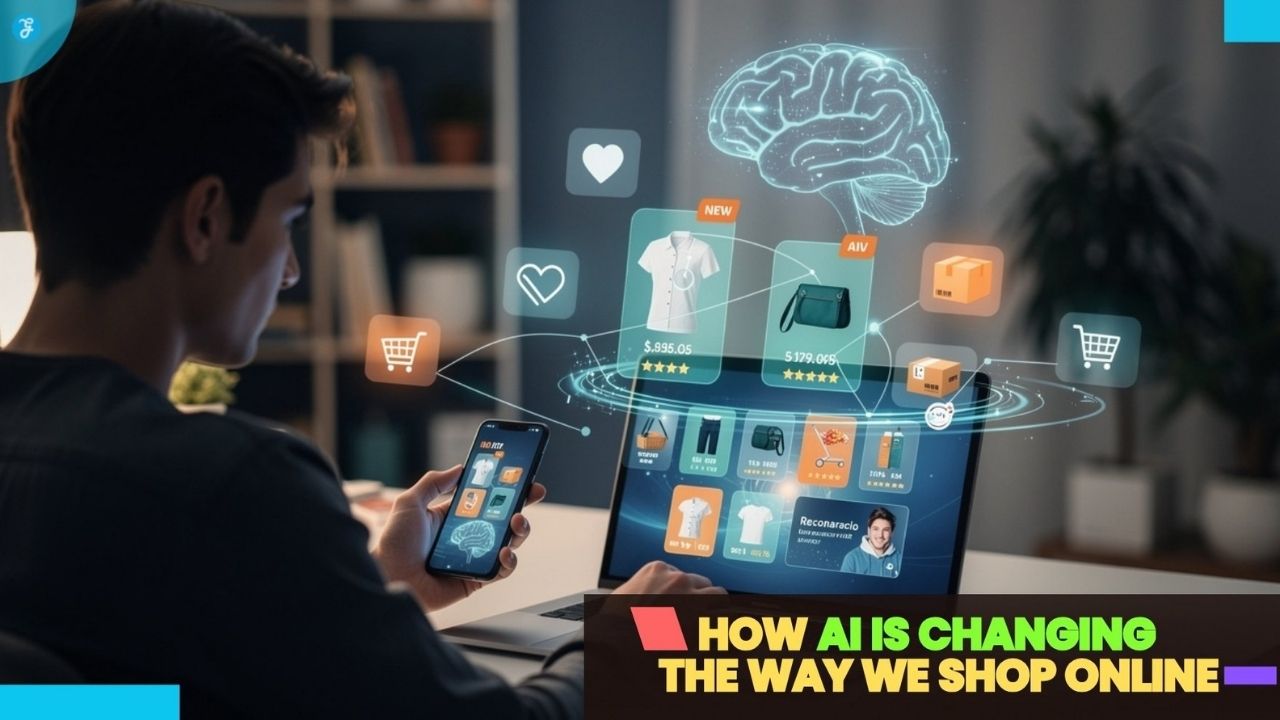
The Role of AI: How AI Is Changing The Way We Shop Online
AI reshapes how stores talk to shoppers, making each visit feel personal and fast. Smart systems learn what you want, then show you exactly that before you even ask.
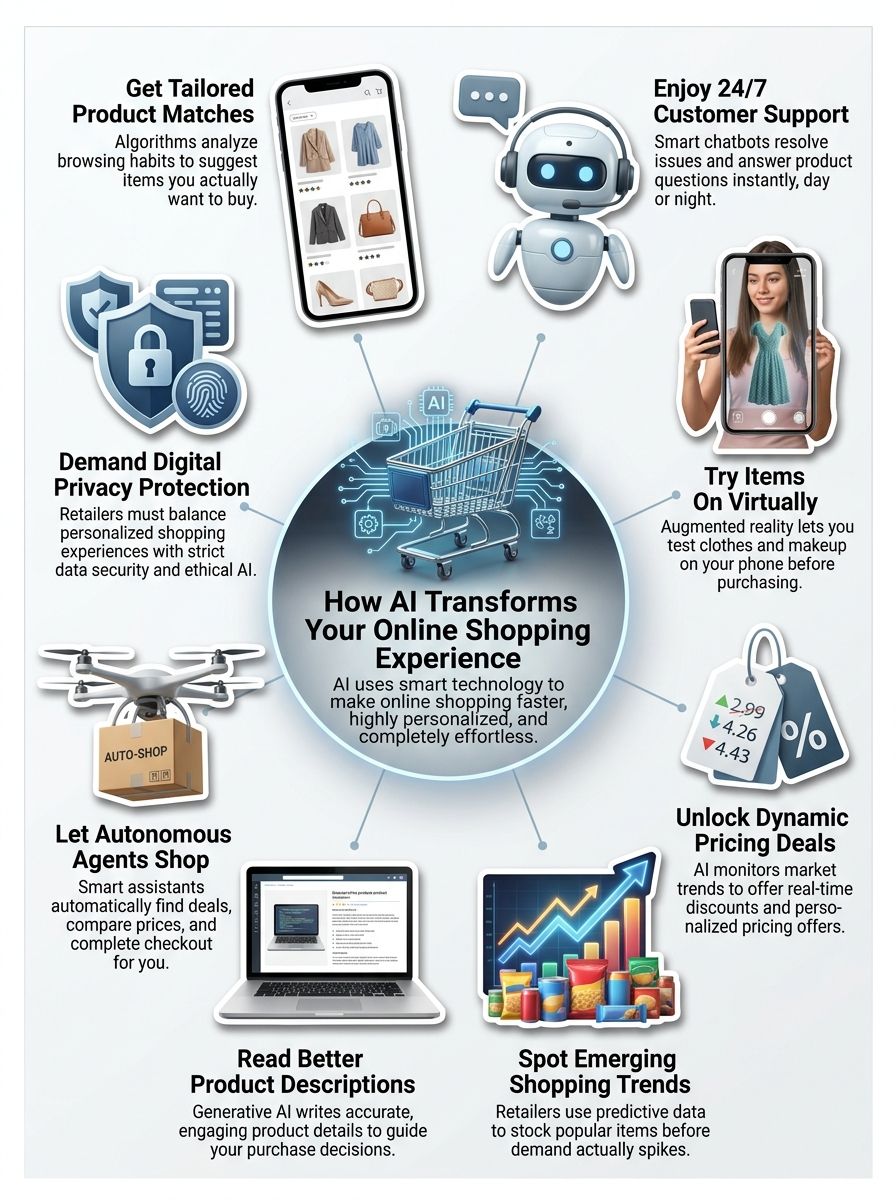
Overview of AI in e-commerce
Artificial intelligence reshapes online shopping in ways that feel almost magical. Retailers now use machine learning to watch what customers do, what they click, and what they buy.
This data helps stores predict what you want before you even know you want it. E-commerce companies have turned shopping into a personalized experience that feels like the store knows you personally.
The shift from old-school retail to AI-powered shopping happened faster than most people expected. A 2026 report from Cubeo AI shows that 78 percent of US retail organizations now use AI in at least one business function.
Here are a few ways stores use this technology today:
- Chatbots answer your questions instantly.
- Product recommendations pop up exactly when you need them.
- Prices shift automatically based on demand.
- Automation handles tasks like inventory management without breaking a sweat.
The shift from traditional to AI-powered shopping
Old shopping methods relied on static product displays and one-size-fits-all approaches. Customers browsed shelves or scrolled through endless pages with little help.
Store owners could not track what shoppers really wanted. They guessed at inventory needs and pricing strategies, wasting time for both buyers and sellers.
Machine learning changed everything. Today’s online stores watch how you shop and learn your preferences instantly.
“Companies leveraging AI see an average revenue increase of 10 to 12 percent, proving that this shift saves money and time for everyone involved,” according to a 2026 Anchor Group study.
This shift matters because retailers see higher conversion rates, and customer satisfaction scores climb. Your next purchase will likely come from a product discovery experience powered by machine learning algorithms.
Types of AI Used in Online Shopping
Online retailers now use several different AI technologies to transform how customers shop. Each type serves a specific purpose, from answering questions to predicting what you will buy next.
Conversational AI and Chatbots
Chatbots powered by conversational AI handle customer questions instantly. These smart assistants work around the clock, answering product questions and guiding customers through checkout.
Machine learning trains these bots to understand what people actually mean, not just the exact words they type. They learn from millions of conversations, getting sharper at their job every single day.
A great example is Klarna. Their AI assistant handled 2.3 million conversations a month globally in 2025, doing the work of 853 full-time agents.
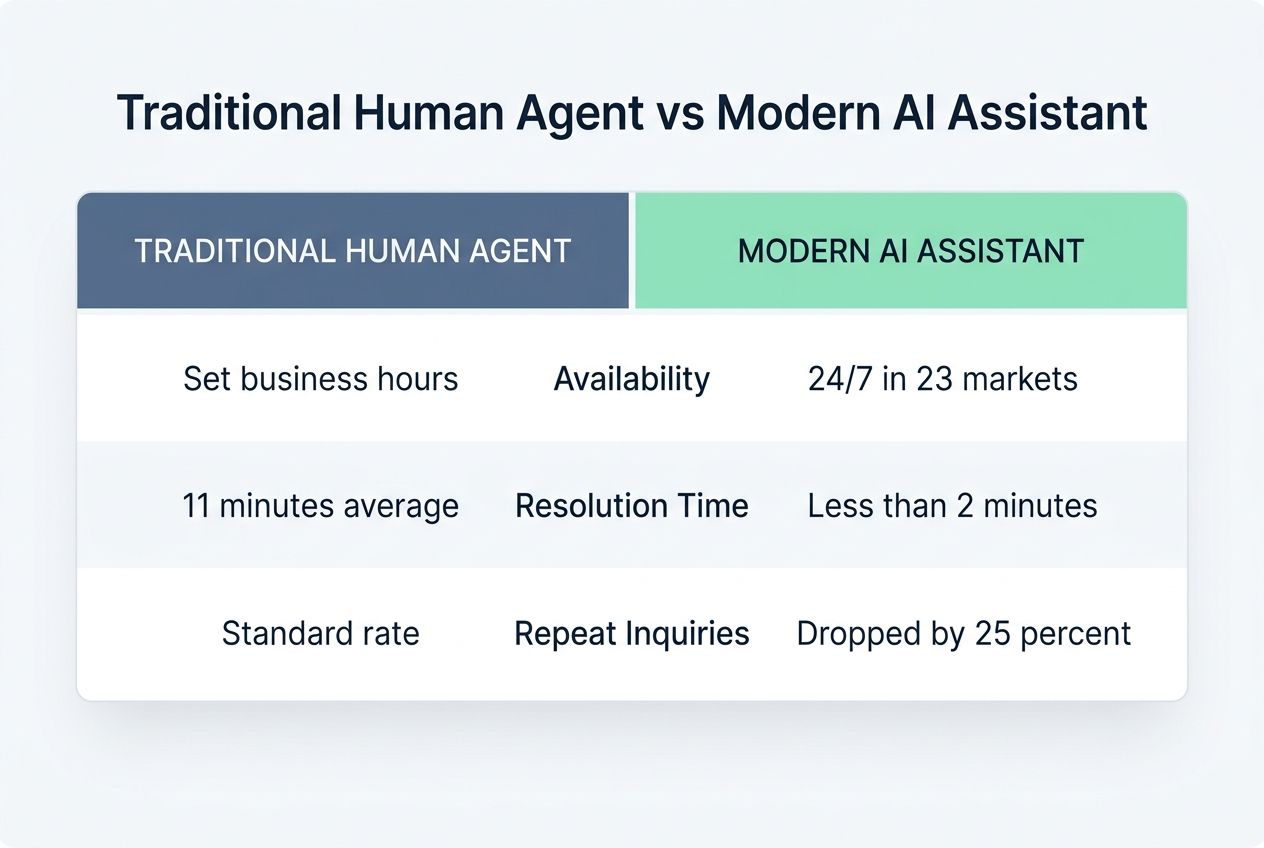
| Feature | Traditional Human Agent | Modern AI Assistant |
|---|---|---|
| Availability | Set business hours | 24/7 in 23 markets |
| Resolution Time | 11 minutes average | Less than 2 minutes |
| Repeat Inquiries | Standard rate | Dropped by 25 percent |
Shoppers get faster help, retailers save money on customer service staff, and everyone benefits.
Predictive AI for Trend Analysis
Predictive AI systems act like crystal balls for retailers. They scan massive amounts of shopping data, social media activity, and search patterns to spot trends before they explode into mainstream popularity.
Machine learning algorithms crunch numbers from past consumer behavior to forecast what products customers will want next. Retailers use these predictions to stock inventory smarter, avoiding the trap of overstocking items nobody wants.
This data analytics approach transforms guesswork into science. For instance, First Insight launched an AI copilot named Ellis in 2026. This tool helps major US retailers compress their planning cycles from six to nine months down to just two to four weeks. Trend analysis gives retailers a real edge in the competitive e-commerce landscape.
Generative AI for Content Creation
Generative AI creates product descriptions, marketing copy, and images faster than humans ever could. Retailers use this technology to write hundreds of product listings in minutes, not weeks.
The AI learns from existing content and generates fresh, engaging descriptions that match each product’s style. Customers benefit too because they read better descriptions that help them make smart buying choices.
Anchor Group reported in 2026 that 38 percent of US consumers have actively used generative AI for online shopping.
Benefits of generative AI include:
- Faster content production across digital retail operations.
- Custom emails and homepage banners built for buyers.
- Lifestyle photos created without hiring photographers.
- Lower operational costs for the brand.
Autonomous AI for Agentic Shopping
Autonomous shopping agents represent the next frontier in e-commerce. These AI systems take action on your behalf, completing purchases and finding the best deals without you lifting a finger.
Instead of you scrolling through product pages for hours, your shopping agent does the heavy lifting. It studies your past purchases and spots patterns in your consumer behavior. Amazon introduced a powerful agent named Rufus. By the end of 2025, Rufus reached 300 million users and drove nearly 12 billion dollars in incremental sales.
Rufus even has a special feature that completes transactions for you. This technology cuts through the noise of digital retail by filtering options that truly matter to you.
How AI Enhances the Online Shopping Experience
AI transforms your shopping trips by making every click feel like it was made just for you.
Personalized product recommendations
Stores now show you products based on what you actually like, not just what they want to sell. Machine learning systems track your browsing history and items you have viewed to build a picture of your shopping style.
These recommendation systems work behind the scenes, analyzing your behavior patterns to surface products you will probably want. You spend less time digging through thousands of items and more time finding things that fit your life.
Amazon reported in late 2025 that shoppers who use their AI assistant during a trip are 60 percent more likely to complete a purchase.
Your homepage becomes a personalized storefront designed just for you. Search optimization powered by machine learning means the products appearing first match what you are actually hunting for. This level of personalization drives higher conversion rates because people buy stuff they genuinely want.
Automated customer service with AI chatbots
AI chatbots handle customer questions around the clock, giving shoppers instant answers without waiting for a human agent. These bots use machine learning to understand what customers ask, then provide helpful responses fast.
They answer common questions about shipping, returns, product details, and order status. Customers appreciate getting quick help at 2 AM or during busy shopping seasons.
Virtual assistants powered by artificial intelligence learn from each conversation, getting smarter over time. If a customer asks about sizing, the chatbot saves that preference for future interactions.
As we saw with Klarna, resolution times drop from 11 minutes to under two minutes. This automation keeps costs low for retailers while keeping customers happy and satisfied.
Virtual try-on technology
Virtual try-on technology lets shoppers see how products look on them before buying. Using augmented reality, customers point their phone cameras at their faces or bodies, and the app shows them wearing clothes or makeup in real time.
This technology cuts down returns because people make smarter choices. According to a 2025 Forrester report, virtual try-on cuts US apparel return rates by 20 to 30 percent.
Advanced tools like Fytted are highly effective at boosting buyer confidence. Brands use these features to improve the user experience:
- Shoppers enjoy a personal and fun experience.
- People stay on retail websites longer.
- Customers get total confidence in their purchases.
- Retailers gather better data about product preferences.
Dynamic pricing and offers
Beyond helping you see how clothes fit, AI now watches market trends and adjusts prices in real time. Stores use machine learning to analyze what shoppers buy, how often they buy it, and what price makes them click that purchase button.
If demand spikes for a winter coat, prices go up. If inventory sits collecting dust, prices drop fast. A 2025 report by TGN Data predicts that by 2026, over 70 percent of large retailers will use dynamic pricing at scale. Major events like Prime Day already use these systems to offer massive discounts based on real-time demand.
AI-powered systems also craft personalized offers just for you. Retailers win by moving inventory faster, and you win by getting deals that actually match what you want to buy.
Examples of AI Applications in Online Shopping
AI powers real shopping moments across major retailers right now. Stores use these smart systems to show you what you actually want to buy.
Social proof messaging powered by machine learning shows customers what others are buying and loving. Retailers display real-time notifications like “5 people bought this item today.”
The automation behind this technology tracks consumer behavior patterns and surfaces the most compelling social signals at exactly the right moment. Shoppers see proof that real people trust these products.
| Metric | Standard Messaging | AI-Driven Social Proof |
|---|---|---|
| Timing | Static placement | Real-time pop-ups |
| Relevance | Generic text | Tailored to the user segment |
| Impact | Low engagement | Higher sales conversions |
Machine learning systems analyze which social proof messages drive the highest conversions for each product category. The technology takes the guesswork out of marketing by letting data guide every message.
Customized homepage layouts
AI takes personalization a step further by reshaping your entire homepage. Stores now use machine learning to craft custom homepage layouts that shift based on your shopping habits, browsing history, and purchase patterns.
Your homepage becomes a mirror of your interests, showing products you actually want to see rather than generic displays everyone receives.
DemandSage reported in 2026 that companies using AI for personalized experiences boost customer satisfaction by over 25 percent. The automation behind these changes happens instantly.
Stores report higher engagement rates and better conversion metrics when they implement customized homepage layouts. Your shopping experience feels less like browsing a crowded mall and more like walking into a store designed just for you.
Customized product recommendations
Your homepage layout sets the stage, but custom product recommendations take center stage in driving actual sales. AI systems analyze your browsing history and behavior patterns to suggest products you will actually want.
Retailers like Sephora use predictive AI tools to offer hyper-specific cross-selling opportunities. The system learns continuously, getting smarter with each click you make.
This data analytics approach means stores show you products that fit your style and budget by:
- Tracking which items you viewed the longest.
- Noting what you added to your cart but did not buy.
- Analyzing past purchases to predict future needs.
- Serving up items that match your interests perfectly.
Inventory management and trend predictions
Behind those personalized product recommendations sits a powerful system that keeps stores running smoothly. AI analyzes what customers buy, what they search for, and what trends are gaining steam.
This data feeds directly into inventory management systems that predict what products will fly off shelves. Retailers stock items before demand spikes, so they never disappoint shoppers. Brands like Zara use predictive analytics for demand forecasting. They spot patterns in consumer behavior that humans might miss entirely.
Stores use these insights to order the right quantities at the right times, cutting waste and maximizing profits. Smart inventory management transforms how businesses operate.
The Rise of Agentic Commerce
AI agents now shop for you, making purchases easily without you lifting a finger.
Autonomous shopping agents
Autonomous shopping agents work like your personal shopping assistant, but they reside inside your computer or phone. These AI-powered helpers learn what you like and what catches your eye.
They can search through thousands of products, compare prices across stores, and add items to their cart. Machine learning powers these agents, so they get smarter every time you shop.
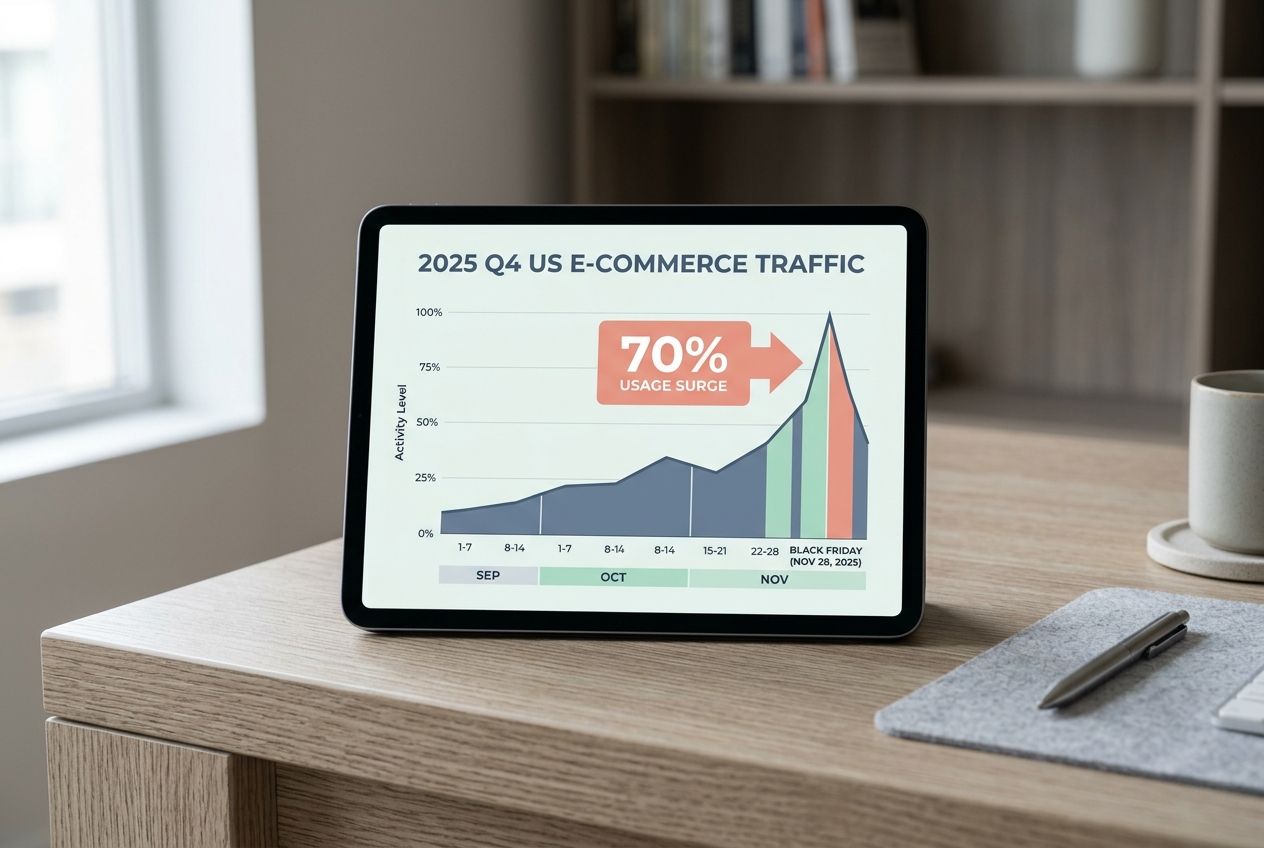
Amazon’s Rufus assistant experienced a massive 70 percent usage surge leading up to Black Friday 2025, showing just how fast shoppers are adopting this technology.
Your shopping agent tracks your budget and even your past purchases to make better choices for you next time. The agent handles product discovery by sifting through massive catalogs to surface exactly what matters to you. This automation saves you hours of scrolling and clicking.
AI is completing tasks for users
AI shopping agents now handle tasks that shoppers used to do by hand. These smart systems browse products, compare prices, and add items to your cart without you lifting a finger.
Machine learning powers these agents to learn your shopping habits, so they grab exactly what you need before you even ask. They work around the clock, which means your shopping gets done while you sleep.
According to Salesforce data, AI and AI agents influenced 14.2 billion dollars in global sales on Black Friday 2025 alone, with 3 billion dollars coming directly from US shoppers.
Data analytics help these systems spot patterns in consumer behavior, so recommendations hit the mark every single time. As a result, shoppers save hours each month, and retailers see higher conversions.
Benefits of AI in Online Shopping
AI makes shopping faster and smarter for you. Stores sell more products and make happier customers when they use these smart tools.
Enhanced personalization
Stores now learn what you want before you even know it yourself. Machine learning systems track your browsing history, purchase patterns, and the items you view the longest.
These algorithms build a detailed picture of your preferences, then serve up product recommendations that feel handpicked just for you. Your homepage looks different from your friend’s homepage because the system customizes everything based on your behavior.
A 2026 report by Cubeo AI states that AI-powered personalization boosts conversion rates by up to 23 percent. This personalization shapes your entire shopping journey by:
- Shifting prices based on what the data says you will buy.
- Changing product layouts dynamically.
- Making the checkout process smoother.
- Turning anonymous browsing into a helpful conversation.
Higher customer satisfaction
AI chatbots handle customer questions fast, and shoppers love the quick responses. These bots work around the clock, so customers get help at 3 AM or 3 PM without waiting.
Faster answers lead to happier customers, and happy customers come back to buy more. Personalization through AI makes each shopper feel like the store knows them, which builds loyalty and trust.
Klarna noted that their AI agent saved the company 60 million dollars while keeping customer satisfaction scores completely on par with human agents.
Shoppers find exactly what they need without digging through thousands of items. This smooth user experience cuts frustration and saves time, two things every buyer values.
Improved efficiency for retailers
Retailers save massive amounts of time and money when they use machine learning and automation in their operations. AI systems handle inventory management, predict which products will sell fast, and adjust stock levels automatically.
Algorithms process thousands of transactions in seconds and flag trends that humans might miss. This speed means retailers can restock popular items before they run out and reduce waste on slow-moving products.
In fact, real-time inventory management using AI-driven retail solutions can lead to a 30 percent improvement in stock accuracy, according to a 2025 Technavio analysis.
| Area | Traditional Method | AI-Powered Method |
|---|---|---|
| Stocking | Manual data analysis | Automated restocking |
| Support | Shift-based human agents | 24/7 chatbot assistance |
| Search | Basic keyword matching | Machine learning optimization |
Employees shift away from repetitive tasks and focus on strategy, creative work, and building real relationships with shoppers.
Increased sales and conversions
AI-powered recommendation systems drive sales up in real ways. When stores show customers products they actually want, those customers buy more stuff.
Machine learning analyzes what shoppers browse, what they buy, and what they ignore. The system learns fast, spotting patterns in consumer behavior that humans would miss.
An Anchor Group report found that AI-driven revenue-per-visit increased by a staggering 84 percent from January to July 2025. Dynamic pricing and offers seal the deal for many retailers.
Search optimization powered by machine learning helps shoppers discover products faster, too. The result speaks for itself with higher conversion rates, bigger order values, and customers who come back for more.
Challenges and Considerations in AI-Powered Shopping
AI-powered shopping brings real problems to the table, from keeping your data safe to building genuine trust with customers.

Data privacy concerns
Stores collect massive amounts of personal data when you shop online. They track your browsing habits, purchase history, location, and payment details.
This information helps retailers build customer profiles and offer personalized recommendations. However, this data collection raises serious questions about privacy and security.
In the US, the California Consumer Privacy Act (CCPA) updated its rules in 2026 to specifically target automated decision-making and neural data. Businesses must now conduct formal risk assessments when using AI.
Consumers worry about how companies store their data, who accesses it, and whether they truly control their own information. Transparency matters because it builds trust between customers and e-commerce platforms.
Maintaining trust and transparency
Retailers must show customers exactly how AI systems work behind the scenes. Shoppers want to know why they see certain products on their homepage or receive specific recommendations.
Companies that explain their machine learning processes build stronger connections with buyers. A 2026 PwC survey found that 58 percent of retail consumers believe AI recommendation engines treat customers unequally based on demographics.
Customers feel more confident when stores tell them what information gets collected and how it gets used. This openness turns skeptical shoppers into loyal fans who come back again and again. When businesses share their commitment to protecting personal information, consumer behavior shifts to greater engagement.
Ethical use of AI in e-commerce
Building trust requires companies to act with integrity when using AI. Retailers must design machine learning systems that treat all customers fairly, avoiding bias in recommendations and pricing.
Companies should collect only the data they need, not everything they can grab. They must tell customers how AI shapes their shopping experience, from product discovery to dynamic pricing.
“In 2026, the World Economic Forum found that 63 percent of companies cite bias as their top ethical concern in AI deployment, overtaking data privacy,” showing how seriously the industry takes this issue.
Honest communication builds loyalty, so brands that explain their automation practices gain customer confidence.
Brands that respect privacy while using machine learning create stronger relationships with their audiences, turning one-time buyers into repeat customers who feel safe shopping online.
The Future of AI in Online Shopping
Generative AI will reshape how stores create product descriptions, images, and marketing content at lightning speed.
The growth of generative AI in retail
Retail stores now use generative AI to create product descriptions, marketing content, and personalized shopping experiences at scale. This technology writes product copy, generates images, and builds custom homepage layouts for each shopper.
Retailers save time and money while customers see content that speaks directly to their interests. Machine learning systems learn what each person likes, so the AI creates messages and offers just for them.
Experts predict the US AI e-commerce market will reach an astonishing 22.6 billion dollars by 2032. This approach beats old methods where one description fits everyone.
Generative AI powers recommendation systems that suggest products shoppers actually want to buy. Here is what is coming next:
- Smarter data analytics for accurate predictions.
- Better search optimization matching real intent.
- Faster, more personal digital retail experiences.
- Stricter attention to customer data protection.
Expanding virtual shopping experiences
Virtual shopping experiences are growing fast, and they are changing how customers buy things online. Augmented reality lets shoppers see products in their own homes before they purchase them.
According to Grand View Research, the global market size for augmented reality virtual try-on is expected to reach 4.08 billion dollars by 2033. These digital retail tools make the shopping process smoother and more fun.
Machine learning powers these experiences by learning what each customer likes and wants. AI agents are building the next layer of virtual shopping by doing the heavy lifting for you.
E-commerce platforms now offer immersive environments where you can walk through digital stores, pick items off shelves, and chat with AI helpers. This shift toward digital retail is making shopping faster, easier, and way more enjoyable for everyone.
Wrapping Up
AI transforms online shopping in ways that matter to real people. Stores now use machine learning to show you products you actually want. Chatbots answer your questions instantly, and augmented reality lets you try things on before buying.
These tools make AI in online shopping clearer than ever. Retailers benefit too, seeing higher sales and better customer satisfaction.
Your shopping experience will keep changing as automation and data analytics grow stronger. Companies use consumer behavior insights to build better recommendation systems and search optimization. This digital retail revolution puts power in your hands. You get to shop on your terms.
Frequently Asked Questions
1. How does AI help people shop online today?
AI acts as your brilliant personal shopper by learning your style and answering specific product questions in seconds. For example, over 300 million US shoppers used Amazon’s Rufus assistant in 2025 to make finding the perfect item faster and much easier. It makes the whole experience feel like chatting with a helpful store worker who never gets tired.
2. Can AI make finding the right product easier?
Yes, it completely transforms the process by doing the heavy lifting for you. Tools like Yotpo’s AI Review Summary instantly analyze hundreds of customer reviews to highlight the true pros and cons of an item, which helps shoppers decide so quickly that brands see a 5.4% average increase in sales. It is exactly like having an incredibly knowledgeable friend who has already read every single label and review for you.
3. Is my information safe when I use stores with AI features?
Yes, but staying cautious is always a smart move. While major US retailers use encrypted systems to comply with strict privacy laws like the CCPA, a 2026 Salsify report found that 27% of shoppers still prefer to verify how their data is used before buying. You should definitely enjoy the convenience of AI, but take a quick second to check a store’s privacy settings before handing over sensitive details.
4. Will shopping with AI get better over time?
Absolutely, because as the conversational AI market grows to a projected $32.6 billion by 2035, these smart assistants will become so advanced that buying gadgets will feel exactly like chatting with a close friend who knows your exact taste.