A rare sword, skin, or trading card may feel like yours, but in many games it remains tied to an account and the publisher’s servers. Blockchain games can give players different ways to verify, manage, or trade certain digital items. Useful blockchain gaming features create clear options and explain their limits.
A token in a wallet does not automatically grant copyright, guarantee a resale market, or make an item usable in another game. The developer may still control the servers, rules, and whether the item works. Here are 10 features that can shift some control toward players when the game is designed to support them.
1. Verifiable ownership of game assets
A blockchain game can represent an item as a token held at a wallet address. A standard such as ERC-721 provides a common way to identify and transfer unique tokens, letting players check the token’s recorded holder outside the game’s own interface.
That can be useful for collectibles, cards, land, or items players may want to trade. But token ownership does not automatically include copyright to the artwork or a promise that the game will continue to support the item. Read the game’s terms to see what rights come with the token.
Among blockchain gaming features, verifiable ownership is the foundation. Its practical value depends on what the game lets a player do with the asset.
2. Wallets players can manage
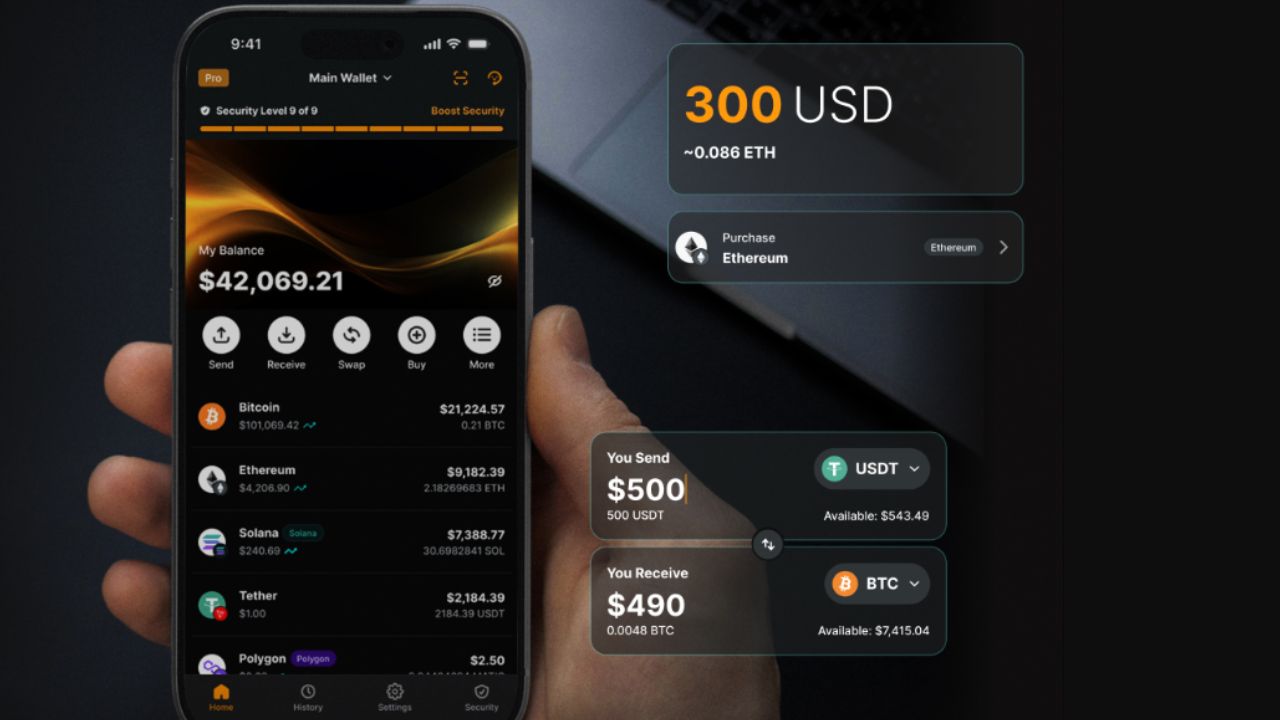
A wallet can let players view supported tokens and approve transactions. Some games use self-custody wallets, where players control the recovery phrase or private keys. Others use wallets managed by a service, which can simplify setup but gives players less direct control.
Self-custody shifts responsibility, too. If you lose the recovery phrase, you may lose access; if you share it or approve a malicious transaction, someone else may take the assets. Ethereum’s security guidance says never to share recovery phrases or private keys.
Before connecting a wallet, check who controls the keys, how recovery works, and what each approval allows. These blockchain gaming features can give players more control while also asking them to make more security decisions.
3. Trading between players
Some games support marketplaces where players can list eligible assets for sale or trade. Depending on the game, a transfer may happen through an in-game market or a compatible external marketplace.
This can help a player find a buyer for an unwanted item or locate a collectible they missed. But a listing does not guarantee a sale. Demand may be low, fees affect the final amount, and game rules may restrict transfers or marketplace support.
Check what is being transferred, who receives it, the full cost, and whether the marketplace is supported by the game. Blockchain gaming features may enable trading; they do not ensure liquidity or a fair price.
4. A route for creators to sell assets
Some games let players create assets or experiences and offer them to others. The Sandbox documents ways for creators to make assets and list eligible items through its marketplace, subject to platform requirements.
That gives creators a potential route to reach interested players. The limits deserve equal attention: platforms may restrict who can sell, which formats qualify, where an item can be used, and how fees or royalties work. A marketplace makes a sale possible; it does not guarantee income.
Creators should check whether they retain meaningful rights, can update their work, and can use it outside the platform. Blockchain gaming features can support creative work, but the game’s policies determine how much freedom creators actually have.
5. Asset use across compatible games
Interoperability means different systems can work together. In gaming, that could mean an asset or identity being recognized by more than one title. Blockchain can help applications read a shared record, but it cannot make separate games compatible by itself.
A sword might appear in two games but function differently in each. It could be a cosmetic in one and unusable in another. The token can move while its original purpose does not.
Ubisoft has discussed cross-game asset use as a possibility, while describing blockchain integration as something that needs a careful industry approach. Players should look for named, working integrations instead of assuming an item will travel across games.
The strongest blockchain gaming features here come with specifics: which games accept the asset, what it does in each, and whether support depends on an active partnership.
6. A public record of an item’s history
A blockchain can record token transfers and certain contract interactions. Players may be able to check when a token was created, which wallet holds it now, or how it moved between wallets. This transaction history can help when verifying a collectible.
It cannot prove that the item is valuable, safe to buy, or officially supported by the game. Some details may be stored off-chain, and the game may still decide whether the asset works. A transaction record also cannot prove that the creator had the rights to issue the item.
Use the game’s official guidance to confirm a token or contract address. Be wary of unsolicited links asking you to connect a wallet or sign a transaction. For blockchain gaming features to improve trust, players need to verify what a token represents, not just see that it has moved.
7. More visibility into some game rules
Some games use smart contracts for parts of their economy or gameplay. When a function is handled on-chain, players may be able to inspect its rules and transaction history.
That visibility is limited. Contract code may be difficult to interpret, and many games still rely on off-chain systems for matchmaking, moderation, combat, or item functionality. Ethereum’s gaming documentation distinguishes games that use blockchain for selected features from those built largely on-chain.
Ask which parts of the game are on-chain and which remain under the developer’s control. Blockchain gaming features offer useful transparency only when the rules are understandable, and relevant decisions are actually recorded there.
8. A voice in community decisions
Some projects let token holders or other community members vote on proposals. XPLA Games, for example, documents a governance program tied to its governance token.
A vote can give players a formal way to express preferences, but its scope varies. Voting power may depend on the number of tokens held, some votes may be advisory, and developers may keep final control over updates, servers, and game rules.
Check what a vote can change, who can participate, how voting power is calculated, and whether the team has committed to follow the result. Well-designed blockchain gaming features make those limits clear instead of implying that a token gives players control of the whole game.
9. More room for player-made experiences
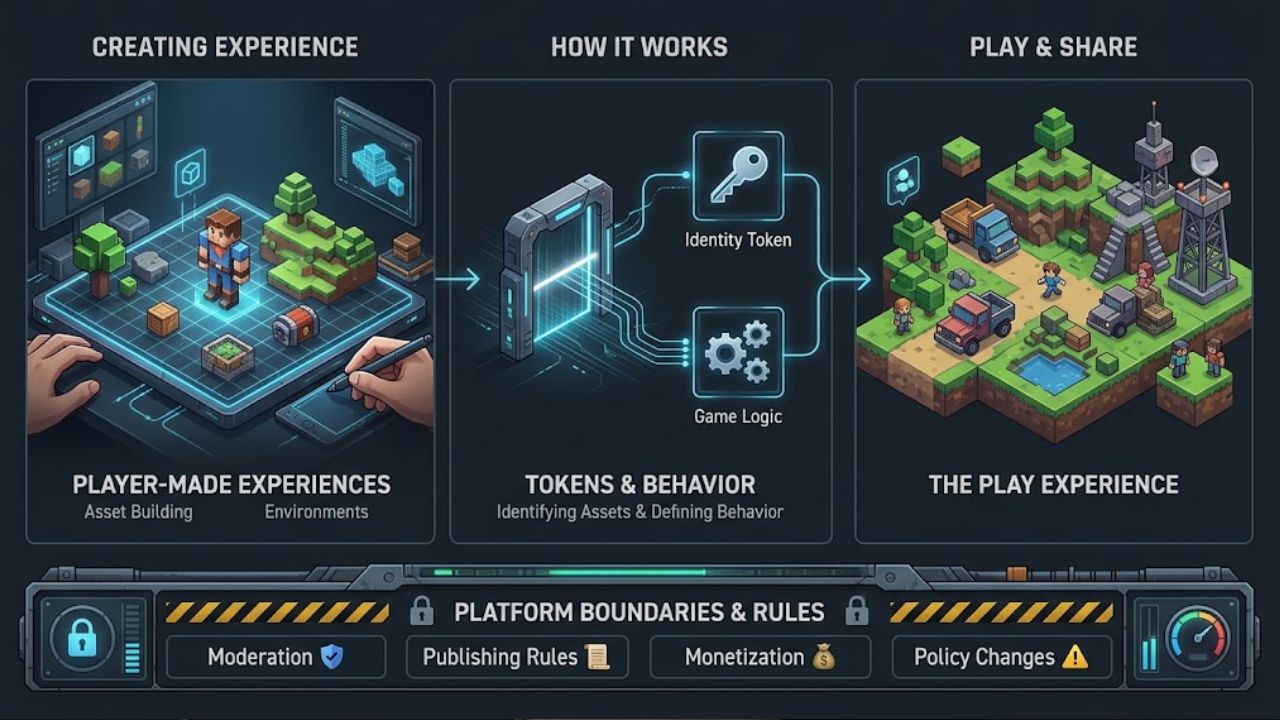
Creation tools can let players build assets, environments, or interactive experiences for others. A token may identify a particular asset or record its transfer, while the game’s tools determine how it behaves.
This matters most in sandbox games, where user-made content can become part of the play experience. But a platform may restrict formats, content, monetization, or publishing access. The Sandbox’s creator documentation outlines both workflows and conditions for listing assets.
Before investing time in a creation, check how moderation works, whether it can be updated or removed, and what happens if the platform changes its policies. Player creativity still operates within the rules of the game.
10. Some persistence beyond one account
If a token is recorded on a public blockchain, its record may remain viewable independently of a game account. A player may still be able to hold or inspect an eligible asset after changing devices or stepping away from the game.
That does not mean the item will remain playable forever. The game may close, its servers may go offline, or the software that recognizes the token may disappear. The artwork or metadata may also rely on an external service.
Check whether the game explains how assets can be exported, whether other applications recognize them, and what happens if the game closes. Persistence is one of the blockchain gaming features to verify in a game’s design, not an automatic promise of long-term utility.
Final Thoughts
Blockchain gaming features can give players more options over specific assets and decisions: verifying a token, moving it between compatible wallets, trading it under stated rules, or voting on a community proposal.
They do not automatically give players control over the entire game. Before spending money or connecting a wallet, check the game’s terms, marketplace rules, wallet recovery process, transaction approvals, and the rights attached to each asset. A useful feature solves a real player problem and makes its limits clear.
Frequently Asked Questions (FAQs) About Blockchain Gaming Features
Do blockchain game items work in every game?
No. An item may work only in the game that issued it. Another game has to support the asset and decide what it does there.
Can a game remove an item held in my wallet?
The game may not be able to erase the token’s blockchain record, but it can stop recognizing or supporting the item in its own game. Check the game’s terms and asset policies.
Do blockchain gaming features guarantee that players can earn money?
No. Trading and creator marketplaces depend on demand, fees, and platform rules. An in-game item is not a guaranteed source of income.