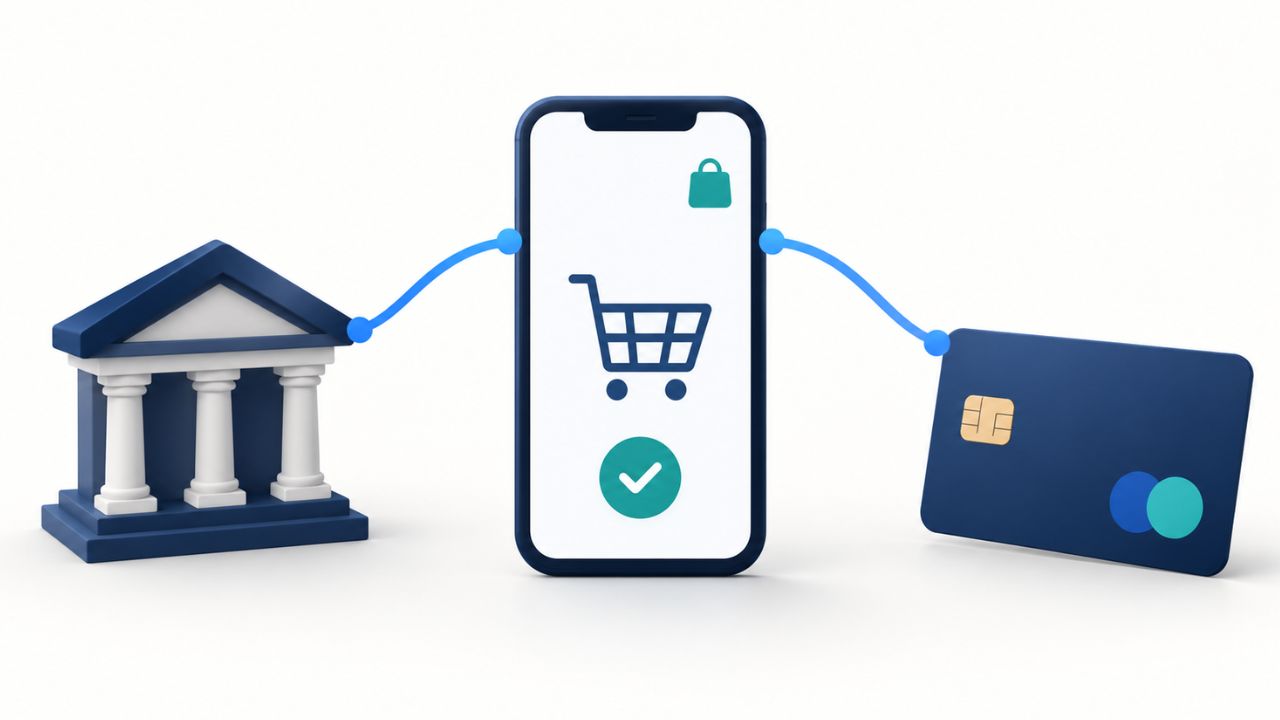
A payment option at checkout or trip insurance offered during a booking can save a customer from opening another app. Embedded finance puts a financial product inside a nonfinancial company’s app, website, or customer workflow.
The screen may look simple. Behind it, a bank, lender, insurer, payment provider, and technology company may each have a different role. Before accepting an offer, customers should know who provides the service and where to go if something goes wrong.
What is Embedded Finance?
Embedded finance is the offer of a financial service through a business that is not itself primarily a financial institution. A retailer might present installment payments at checkout. A travel platform might offer insurance while someone books a trip.
The retailer or travel platform may manage the customer experience without being the lender or insurer. That distinction can be easy to miss when the platform’s brand is the most visible one.
The idea is not limited to consumer apps. A marketplace might provide payment tools to sellers, while business software could integrate invoicing or payment features into a company’s existing workflow. The specific service and responsibilities depend on the arrangement.
How Does Embedded Finance Work?
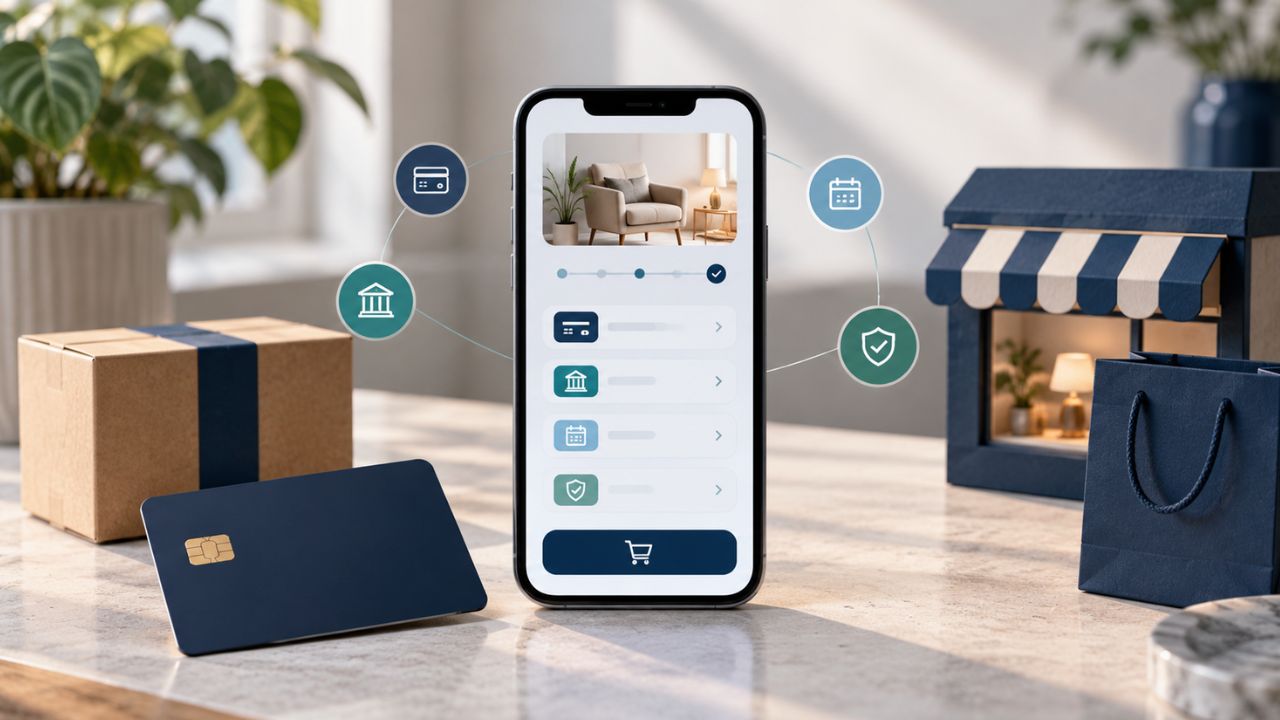
A platform connects its product to a financial provider. Software, often using application programming interfaces (APIs), passes information and instructions between systems. The customer may remain in one app even when another company assesses an application, processes a payment, or provides an account.
Consider a laptop purchase with installment payments. The retailer displays the option and may collect application information. A lender reviews the application and sets the terms. If approved, the customer completes the purchase and repays the lender according to the agreement.
Several parties may take part:
- The platform displays the financial service and manages its customer interface.
- Technology providers connect the platform to financial systems.
- A financial provider supplies the loan, account, insurance, or payment service.
- Operational partners may handle identity checks, records, customer support, or fraud monitoring.
A single company can perform more than one role, and responsibilities vary by product. U.S. banking regulators describe arrangements in which third parties distribute bank products or provide services such as technology, payment processing, and customer support. They warn that divided responsibilities can complicate oversight and access to records. A bank remains responsible for meeting applicable requirements when it relies on third parties. These are U.S. regulatory points; other countries have their own rules.
An API connects systems. It does not, by itself, establish which company is legally responsible.
Common Examples of Embedded Finance
The term covers several types of financial products. What connects them is where the customer encounters the service: within a nonfinancial product or workflow.
Payments
A marketplace can let customers pay without leaving its site. A platform for independent sellers might provide payment collection or payouts alongside order management.
The marketplace may control the interface, while another provider processes the payment or handles settlement. If a payment is delayed or disputed, the customer or seller should know which company handles support.
Buy Now, Pay Later
A buy now, pay later option can appear alongside other payment methods at checkout. A lender or specialist provider may assess the application and set the repayment schedule.
The offer is still credit, even when it looks like a quick checkout choice. Customers should review payment dates, fees, missed-payment rules, and how refunds or disputes work. The U.S. Consumer Financial Protection Bureau has identified potential risks that include borrower overextension and the use of consumer data to encourage additional purchases. Its findings concern the U.S. market, so rules and products elsewhere may differ.
Accounts and Cards
A business platform may offer card or account features to customers or sellers. The platform could provide the app and customer service, while a bank or another provider supplies parts of the underlying service.
Customers should find the institution named in the terms and check what protections apply in their country. A card or account shown in a familiar app should not be assumed to have the same structure or protections as a product obtained directly from a bank.
Insurance
A travel booking service may offer trip coverage during checkout. A retailer might present product protection at the time of purchase.
Check the policy’s exclusions, claims process, and insurer before accepting. The company presenting the offer may not be the company deciding whether a claim is covered.
Business Financing
A business marketplace could offer financing when a company buys equipment or supplies. Business software might also connect payments or invoicing to the workflow where a company manages its finances.
These options can reduce extra steps, but the business should compare the total cost, repayment obligations, and provider terms before proceeding.
Embedded Finance, Banking as a Service and Open Banking
These terms refer to different parts of financial technology. Embedded finance describes the customer experience: a financial product appears inside a nonfinancial service.
Banking as a service (BaaS) generally describes arrangements that let another company connect to banking capabilities through a bank and technology providers. BaaS may support an embedded product, but the terms are not interchangeable. U.S. regulators note that some third-party arrangements may be called BaaS or embedded finance, depending on their structure and participants.
Open banking concerns authorized data sharing or payment initiation through secure connections. In the UK Open Banking framework, APIs can let third-party providers request account information or initiate payments with a customer’s consent. Sharing financial data is different from offering a financial product inside another company’s app.
Why Businesses Add Financial Services
A business may add a financial feature because customers need it at a particular step. A buyer can consider installment payments during checkout; a seller can manage payments where they already track orders.
That integration may reduce app switching and repeated data entry. It may also create revenue for the platform. But convenience does not automatically mean lower costs, fairer terms, or wider access.
A Bank for International Settlements working paper notes that digital platforms can lower costs and support financial inclusion, while also raising concerns about competition and market concentration. Those outcomes are possibilities, not guaranteed results of adding a financial feature.
The sound business case starts with a customer need. Adding credit or payment features mainly to generate revenue can lead to unclear terms and support problems that damage trust.
What can Go Wrong?
Customers May Not Know Who Is Responsible
A platform’s brand may be prominent even when another company provides the account, loan, or insurance. Customers should locate the provider’s legal name and the contact details for complaints, claims, disputes, and account closure.
Data May Pass Between Companies
An integrated service may require personal, financial, or transaction data to move between organizations. Read the privacy disclosures to understand what is collected, who receives it, and how it may be used. Businesses should limit data sharing to what the service requires and set out responsibilities clearly.
A Partner Outage can Interrupt Service
If a technology or financial provider has an outage, customers may be unable to make payments or view account information. When records and responsibilities are divided across several partners, resolving the problem can take more coordination. U.S. regulators have warned about operational risks when banks rely on third parties without adequate oversight or access to records.
Protections Depend on the Product and Country
Rules for deposits, lending, payments, insurance, privacy, and complaints vary by jurisdiction. Do not assume that money shown in a nonbank app has the same protections as a bank deposit. U.S. regulators warn that customers may misunderstand deposit insurance in some third-party arrangements; coverage depends on the structure and applicable requirements.
What Customers should Check before Using an Embedded Service?
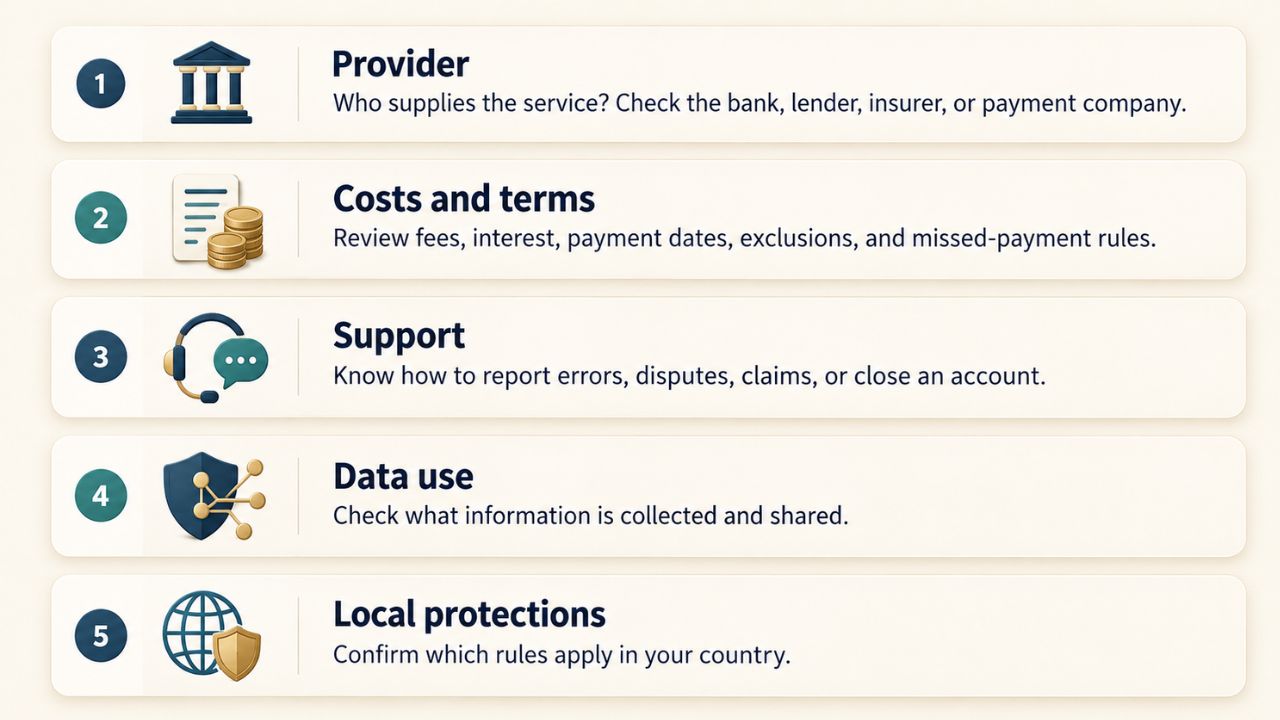
Before accepting an offer, check:
- Who provides it: Find the bank, lender, insurer, or payment company named in the terms.
- What it costs: Review fees, interest, repayment dates, exclusions, and missed-payment rules.
- Where to get help: Locate the process for reporting errors, disputing transactions, filing claims, or closing an account.
- How data is used: Check what information is collected and shared.
- Which protections apply: Look up the rules for that product in your country.
If the provider, costs, or complaint process are difficult to find, pause before proceeding. A smooth checkout does not make unclear terms acceptable.
What Businesses should Decide before Adding It?
Businesses considering embedded finance should begin with the customer problem, not the revenue forecast. Ask whether the feature solves a real need in the existing workflow. If customers can already complete the task simply elsewhere, another product may add friction instead of removing it.
Map responsibilities before launch. Decide which partner handles identity checks, fraud monitoring, transaction records, customer support, complaints, refunds, and regulatory reporting. Plan for an outage and for the possibility that a partnership ends. Be clear with customers about fees, data use, and whom to contact.
Partner selection also requires due diligence. Assess reliability, security practices, customer support, operational capacity, and ability to meet the legal requirements in the markets served. Since obligations vary by product and jurisdiction, businesses should get advice specific to their planned service.
Final Thoughts
Embedded finance can save customers steps, but the convenience should not hide the provider, cost, or complaint process. Before using a product, find out who supplies it and read the terms that apply to it. Businesses should build around a genuine customer need and make responsibilities clear before launch.
Frequently Asked Questions (FAQs) on Embedded Finance
Is this the same as fintech?
No. Fintech refers broadly to technology used in financial services. A standalone banking app can be fintech without being embedded in a nonfinancial platform.
Does every embedded service involve opening an account?
No. A customer might make a payment, apply for a loan, or buy insurance without opening a new account. The product terms will specify what information or account relationship is required.
Is buy now, pay later always interest-free?
No. Payment structures and costs vary. Read the specific provider’s terms rather than assuming that every installment option has the same fees or repayment rules.