A traveler staring at a row of app icons the night before a trip usually isn’t hunting for a ranking. They’re hunting for the one app that works for this trip. Someone who needs a room tonight has a different problem than someone chasing loyalty points, and the app that solves one rarely solves the other.
This piece names exactly 15 best hotel booking apps, matched to the situations travelers actually run into: a tight budget, a last-minute booking made from a parking lot, or a rewards balance that only grows with direct bookings. Each entry explains what the app does, why it’s earned a spot among today’s popular hotel booking apps, and the one catch worth knowing before a traveler downloads it.
1. Booking.com
28 million properties, nearly every country, every price point. The app leads with volume, and it keeps a running record of every trip a traveler has taken or booked, available offline. That alone is usually enough reason to open it first once a trip starts taking shape, even for people who end up booking elsewhere out of loyalty.
Booking.com is a marketplace that covers hotels and flights and does the smaller logistics of a trip besides. Filters cut the list down fast, which matters when there are millions of properties to sift through. The booking history saves offline, handy for checking a confirmation with no signal.
Why It Matters
Its parent, Booking Holdings, together with Expedia Group, controls 60 percent of all travel bookings across Europe and the US. That kind of market weight makes hotels compete hard for placement. Competition usually means deeper discounts and looser cancellation terms than a smaller app could ever negotiate.
The Catch
Most stays go fine. Not every property delivers exactly what the listing promised, though. One traveler who tracked more than 100 nights booked through the app summed it up: “Aside from the 1 issue I’ve had, I’ve had over 100 hotel nights booked via Booking.com because they do give such good discounts.” One problem in over a hundred bookings is close to as good as it gets. It isn’t zero, though, and for travelers chasing loyalty perks instead of raw discounts, that’s often where the search starts over.
2. Hotels.com
A free night here costs ten paid stays. That’s the whole pitch, and it’s why Hotels.com keeps coming up in conversations about the best hotel booking apps: stamp-based rewards that work across independent hotels and name brands alike, not just one chain’s loyalty program. Owned by Expedia Group, it taps the same backend inventory as Expedia and Orbitz, just wrapped in a simpler, rewards-first interface.
Hotels.com skips flights and car rentals entirely. It only books rooms. That narrower focus makes the search faster for anyone who already knows they just need a bed for the night, and it still pulls from the same large Expedia Group inventory that stocks Expedia and Orbitz.
Why It Matters
Hotels.com sits inside Expedia Group, one half of a duopoly. Between them, Expedia Group and Booking Holdings handle roughly 60 percent of travel bookings across Europe and the US. That scale gives Hotels.com negotiating leverage most independent apps simply don’t have, and it shows up in app-exclusive deals as much as in the rewards program itself.
The Catch
Someone who travels a few times a year will wait a long while before that free night arrives. Book once a year, and the reward is a decade away. Anyone comparing apps should check whether a short-term discount elsewhere beats waiting that long for the free night.
3. Expedia
Book a hotel on its own and the price often lands at or above what Hotels.com or Booking.com quotes for the same room. Bundle it with a flight, though, and the math changes.
Expedia won World’s Best Hotel Booking App at the 2024 World Travel Tech Awards, beating out nominees including Agoda, Booking.com, and Trivago. It’s the flagship brand of Expedia Group, and it was built for a particular kind of traveler: someone who’d rather handle the flight, the room and the car in one checkout than repeat the process three times.
Watch for the “add a hotel to your flight” nudges. That’s where the real savings tend to live, since discounted hotel rates often only unlock once something else is attached to the booking. Expedia covers the whole trip, not just the room: hotels, flights, car rentals, activities, and package deals. Bundling that way often shaves a meaningful amount off the total trip cost.
Why It Matters
Expedia’s leverage comes from its parent company. Expedia Group and Booking Holdings together handle roughly 60 percent of travel bookings across Europe and the US. At that scale, Expedia can negotiate bundle pricing a standalone hotel-search app simply can’t match. That’s the main reason bundling pays off here specifically.
The Catch
The discount only shows up when multiple pieces are booked together. The award is real; it reflects breadth of features more than a guarantee of the lowest price on every search. Someone who just needs a room, fast, without flights or cars attached may find that breadth is more than they came for.
Before booking, run the same room through Hotels.com and Booking.com and compare it against the bundle total. Add the flight you’d actually take, then see whether the combined price still beats booking each piece separately.
4. HotelTonight
For a booking window of a day or two, HotelTonight regularly shows up on shortlists of recommended booking apps, often named within the first half-dozen. Search three weeks out, though, and the list is thin. In smaller cities it can be empty.
Rates shift by the hour and tend to fall sharply as the checkout window for unsold rooms closes in. That rewards travelers who can decide fast.
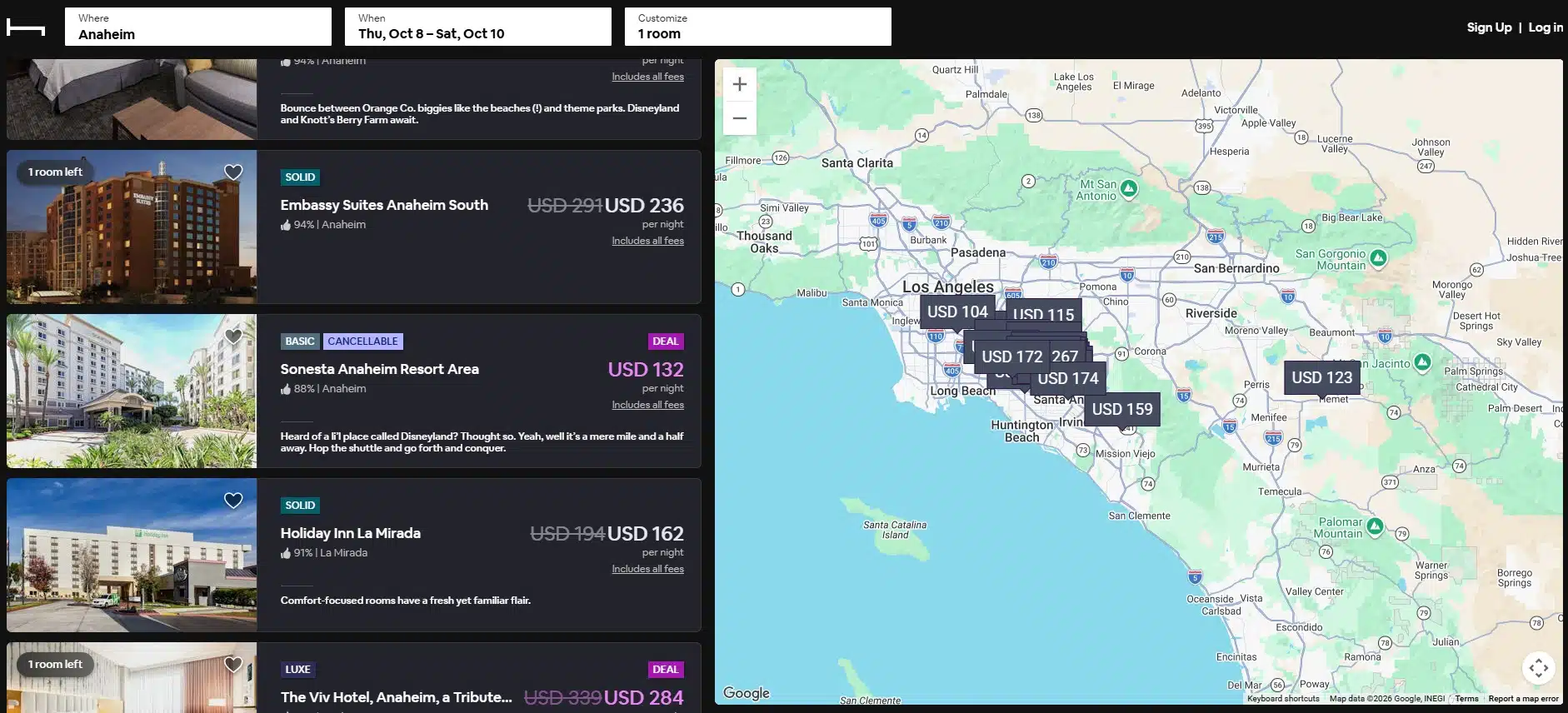
HotelTonight is built around same-day and next-day bookings. Most searches return results only for check-in within the next day or two. Airbnb now owns it, and it isn’t trying to compete on long-range selection. The whole bet is on the last-minute window.
Why It Matters
Hotels would rather discount an unsold room than let it sit empty for the night. HotelTonight exists specifically to catch that inventory. For spontaneous travelers, or anyone whose plans shifted mid-trip, it often beats what wider-selection apps can offer for that exact night.
The Catch
It isn’t built for planning ahead. Using it that way mostly wastes time. The open question for any traveler eyeing it is whether their destination has enough same-day inventory to make the gamble worth it.
5. Priceline
You pay before you find out where you’re sleeping. Priceline’s Express Deals format hides the hotel’s name until after payment, and in exchange it offers rates well below the publicly listed price. That’s a trade plenty of travelers won’t take, but for the right trip it can beat anything a fully transparent app shows you. Priceline sits inside Booking Holdings, so its inventory overlaps heavily with Booking.com’s, the same parent company, sometimes the exact same rooms, sold two different ways.
Pick a star rating and a neighborhood, then pay upfront. The name and address of the hotel arrive only after the charge goes through. A fully transparent listing puts those details first, and this does the opposite.
Why It Matters
Hotels would rather sell a room at a steep discount through a hidden listing than leave it empty and undercut their public rate. That’s the whole logic of opaque booking. Priceline’s backing by Booking Holdings—one of the two companies behind roughly 60 percent of bookings across Europe and the US—gives it access to that discounted inventory at real scale.
The Catch
The location and the property itself are unknowns until the money has moved, and the booking is usually non-refundable, so a wrong neighborhood is your problem. Check the cancellation terms before paying. It’s also worth pulling up the same dates on Booking.com first, just to see what a named listing would cost by comparison.
6. Agoda
If Southeast Asia is on the itinerary, Agoda is usually worth opening first. The platform made its name in Asia-Pacific, where its listings run deeper than almost anything a Europe- or US-based app can match. Bangkok, Tokyo, and Manila—it tends to have more rooms, including small guesthouses and boutique spots, than the bigger Western platforms bother to list.
Booking Holdings owns Agoda, and it runs on the same backend as Booking.com and Priceline. The marketing, though, points squarely at travelers heading into Southeast Asia, and the inventory follows. Agoda concentrates on its core markets until boutique properties and local guesthouses show up there that never reach the bigger platforms at all.
Why It Matters
Booking Holdings built Agoda to compete in markets where local hotel relationships count for more than brand recognition, and that strategy has paid off. Across Europe and the US, Booking Holdings and Expedia Group together hold 60 percent of the market, and Agoda is part of how that reach extends further east.
The Catch
Leave Asia-Pacific, and the advantage disappears. In Europe or North America, Agoda’s selection thins out fast, and its prices rarely beat Booking.com or Expedia. Someone with a specific Southeast Asian itinerary already in mind will get plenty out of it. Everyone else should treat it as a quick price check against another app, not a place to book.
7. Trivago
Trivago found a better-than-average rate on just nine of 32 hotels checked during a typical city stay, and it ranked seventh for the number of hotels listed per city. That’s a poor showing for a site whose entire pitch is price comparison. It also never handles payment itself, passing the booking to whichever site wins the comparison, which puts it in a different category from the direct-booking apps earlier in this list.
Trivago pulls live prices from Booking.com, Expedia, Hotels.com, and hotel websites, then links out to the winner. Its parent company is Expedia Group, and that group’s reach is hard to overstate: together with Booking Holdings, it accounts for roughly 60 percent of all travel bookings in Europe and the US.
Why It Matters
If any app should reliably find the cheapest option, it’s the one built purely to compare prices — and that’s exactly how Trivago markets itself. The numbers say otherwise. Nine of 32 hotels came back with a better-than-average rate, and its hotel selection often lagged behind competitors covering the same city. Those are steep odds for a site with only one job.
The Catch
Before booking through Trivago, check its rate against Booking.com or Expedia directly for the same property. Trivago is owned by Expedia Group, one of the two conglomerates that dominate the market, so the comparison isn’t neutral. And it misses more often than travelers probably assume — which leaves the question of how much any price-comparison tool can really be trusted when the company behind it also owns the sites it’s comparing.
8. Kayak
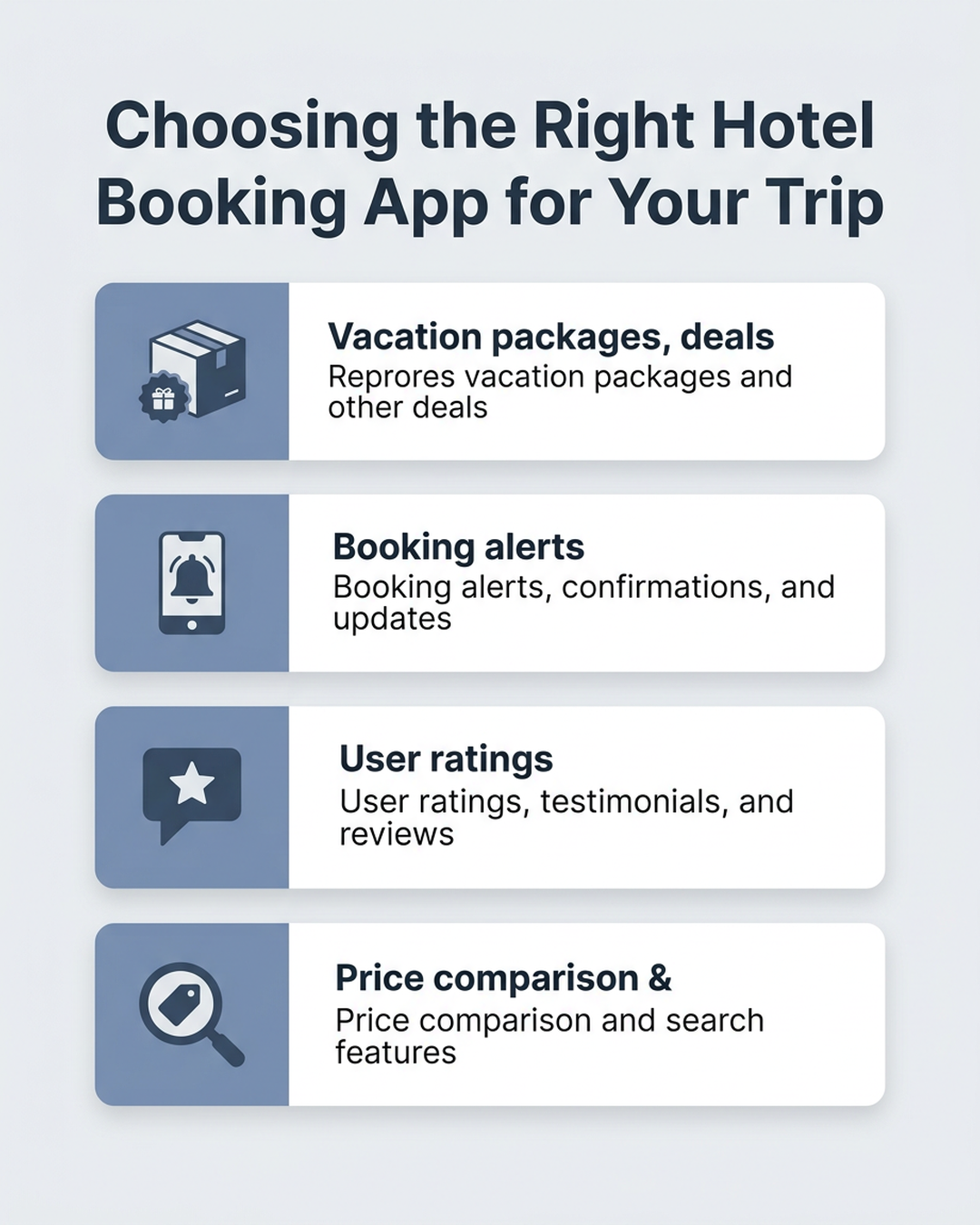
Roughly 47 percent of all OTA bookings now happen on a phone, and Kayak’s app is built for those people rather than a desktop site shrunk to fit a smaller screen. Price-trend charts and fare alerts do the work instead.
Kayak lines up prices from other booking sites so you can compare them side by side. Hotels, flights, rental cars — it covers all three. The Price Forecast feature is where it pulls ahead of a basic metasearch tool: it tracks a rate’s history and predicts whether that rate is likely to drop. Kayak belongs to Booking Holdings, which puts it under the same corporate roof as several other names travelers run into while comparing prices.
Why It Matters
Half the market is booking from a phone now, and the price-tracking charts give someone a reason to wait a day or two instead of grabbing the first number that shows up.
The Catch
Booking still finishes elsewhere. Kayak hands the traveler off to whatever OTA or airline is selling the room, and that company handles any problems afterward, not Kayak. The forecasts are a guess dressed up as a chart — a predicted drop can simply not show up. So treat the forecast as a nudge, then check the final rate on the seller’s own site before you commit.
9. Google Hotels
Type a destination and a price range is already sitting on the map, before the typing is even finished. There’s nothing to download, nothing to sign up for, and no loyalty points waiting at the end of it. Google Hotels lives inside Google Maps and Google Search, pulling live prices onto a map a traveler is already looking at.
A price comparison layer built into Search and Maps — the same metasearch idea Kayak and Trivago run, except this one sits where people are already looking. Punch a destination into the map and it shows a price range pulled from multiple sources at once.
Why It Matters
Nothing to install. Nothing to sign up for. Prices can be checked the moment a destination gets typed into a search bar, and that convenience is hard to beat. It matters most mid-trip, when opening yet another app feels like one step too many.
The Catch
Every booking still routes through a third-party site, so the transaction happens somewhere else entirely. Google Hotels charges nothing to use, and once something goes wrong after checkout, it’s out of the picture. No loyalty program sits behind any of it either, so a traveler who wants points down the road won’t find them here.
10. Airbnb
A room with a kitchen and a separate bedroom, often for less than two hotel rooms combined — that’s the pitch, and it’s why some travelers skip hotel apps altogether. Airbnb isn’t a hotel booking app in the traditional sense. It’s a marketplace for private homes and apartments, with a growing number of boutique guesthouses now listed under its “Guest Favorite” badge.
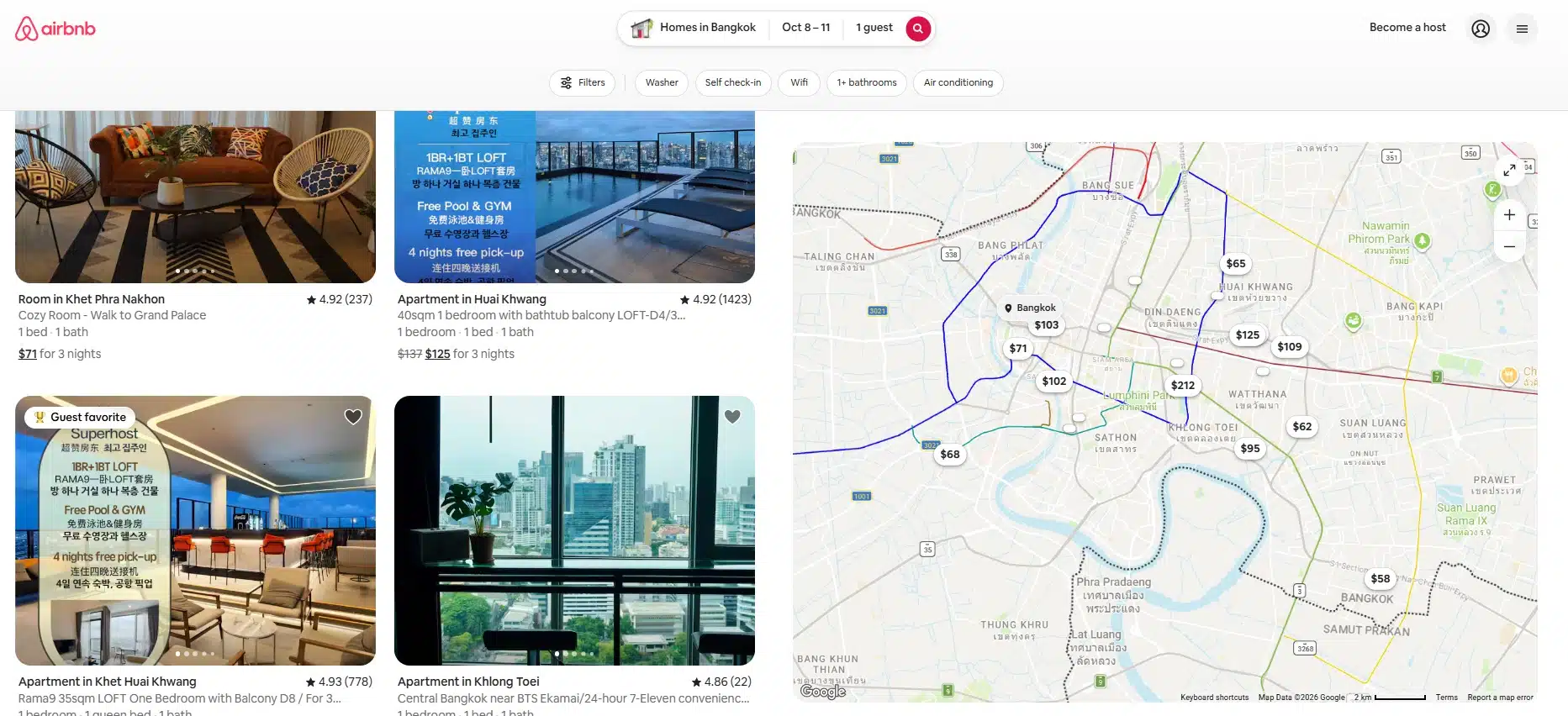
Airbnb connects travelers directly with property owners and hosts rather than hotel chains. Its catalog covers entire homes, private rooms, and a small but growing slice of independent hotels and boutique stays, all listed alongside the usual rentals.
Why It Matters
A rented home with its own bedrooms and kitchen often beats the price of several hotel rooms stacked together. It also offers space hotels simply don’t have. That’s the real reason Airbnb competes in this space at all, even though it was never built as a hotel app.
The Catch
Listings come from individual hosts, not one standardized brand, so quality swings from property to property. Cleaning standards, check-in instructions, and cancellation terms are set by each host. Anyone booking should read recent reviews closely and check the cancellation policy before paying, since it isn’t set by one company-wide rule.
11. Tripadvisor
Most people open Tripadvisor for the reviews, not the rates. Those reviews existed for years before the site handled a single booking, and the booking layer that arrived later still sits on top of them: rate searches pulled from elsewhere, then a handoff to a third party to finish payment. Reviews, photos and forum threads remain the center of the experience. Booking feels bolted on.
Part review platform, part price comparison tool. The mechanics match any other comparison app: find a rate, get sent elsewhere, pay there. What separates Tripadvisor is the depth of the archive. Thousands of stays are documented in detail, with photos taken by the people who actually slept there. That tells a traveler more than a star rating can.
Why It Matters
Accumulated social proof of that kind beats apps built purely around price, including ones carrying deeper inventory.
The Catch
Book through Tripadvisor and the reservation belongs to someone else. Customer service on a failed stay isn’t Tripadvisor’s problem to solve, because the booking routes to a third-party site. Thin review counts on older or less-visited hotels undercut the one thing that makes the app worth opening, 11 in particular. Listings that hide the hotel’s name until after payment raise a separate question: how much should a traveler trust a price when they can’t see what they’re buying?
12. Hotwire
Hotels want to move unsold rooms without publicly cutting their rate. Hotwire’s trade is to let them, as long as the buyer gives up the hotel’s name until the card is charged. A Hot Rate listing shows a star rating, a neighborhood, an amenities list, and no hotel name until after payment.
Pick a star rating and a neighborhood, pay, then learn which hotel you’ve booked. That format is blind booking, close in spirit to Priceline’s Express Deals. The difference is ownership: Hotwire belongs to Expedia Group, not Booking Holdings.
Why It Matters
Because Hotwire sits inside Expedia Group, it draws on the same hotel relationships that power Expedia and Hotels.com. The blind-booking wrapper is what changes, not the inventory behind it.
The Catch
Once a Hot Rate books, there are no refunds, no changes, no exceptions. The policy doesn’t bend for a change of plans or a bad surprise. Anyone who needs flexibility, or cares about the exact block a hotel sits on rather than the general neighborhood, should check what Hotwire discloses before paying. If that information isn’t enough, book somewhere else. What Hotwire discloses before payment varies by listing, so the size of the gamble is never quite the same twice.
13. Skyscanner
Anyone planning a longer stay will run into the edges of what the hotel side can do. Listings are thin, filters get short shrift, and the flight-comparison DNA still shows: Skyscanner began as a tool for finding fares, and its hotel search behaves accordingly.
Trip.com Group owns the app, a different lineage from most of the others here, which trace back to Expedia Group or Booking Holdings.
Every hotel listing comes from a third-party booking site rather than Skyscanner’s own inventory. That makes it another metasearch layer alongside Kayak and Trivago, not a competitor to Expedia’s all-in-one model.
Why It Matters
Pick the flight first and the hotel later, and both tools sit in the same app. Comparing flight-and-hotel combinations side by side is easier here than juggling two apps for the two halves of a trip.
The Catch
Flight search gets the attention. Hotel search gets fewer filters and thinner descriptions. For a quick check, that’s enough. Depth is what’s missing, and it’s missing in a different form on apps built around prediction rather than comparison. If a trip needs detailed hotel filters or long-stay inventory, check what Skyscanner actually returns for the dates before relying on it.
14. Hopper
Hopper is mobile-only, with no desktop version at all — a deliberate bet on how mobile-heavy OTA bookings have become. Flight price forecasting built the app’s reputation, and the same buy-now-or-wait logic now runs on hotel rates.
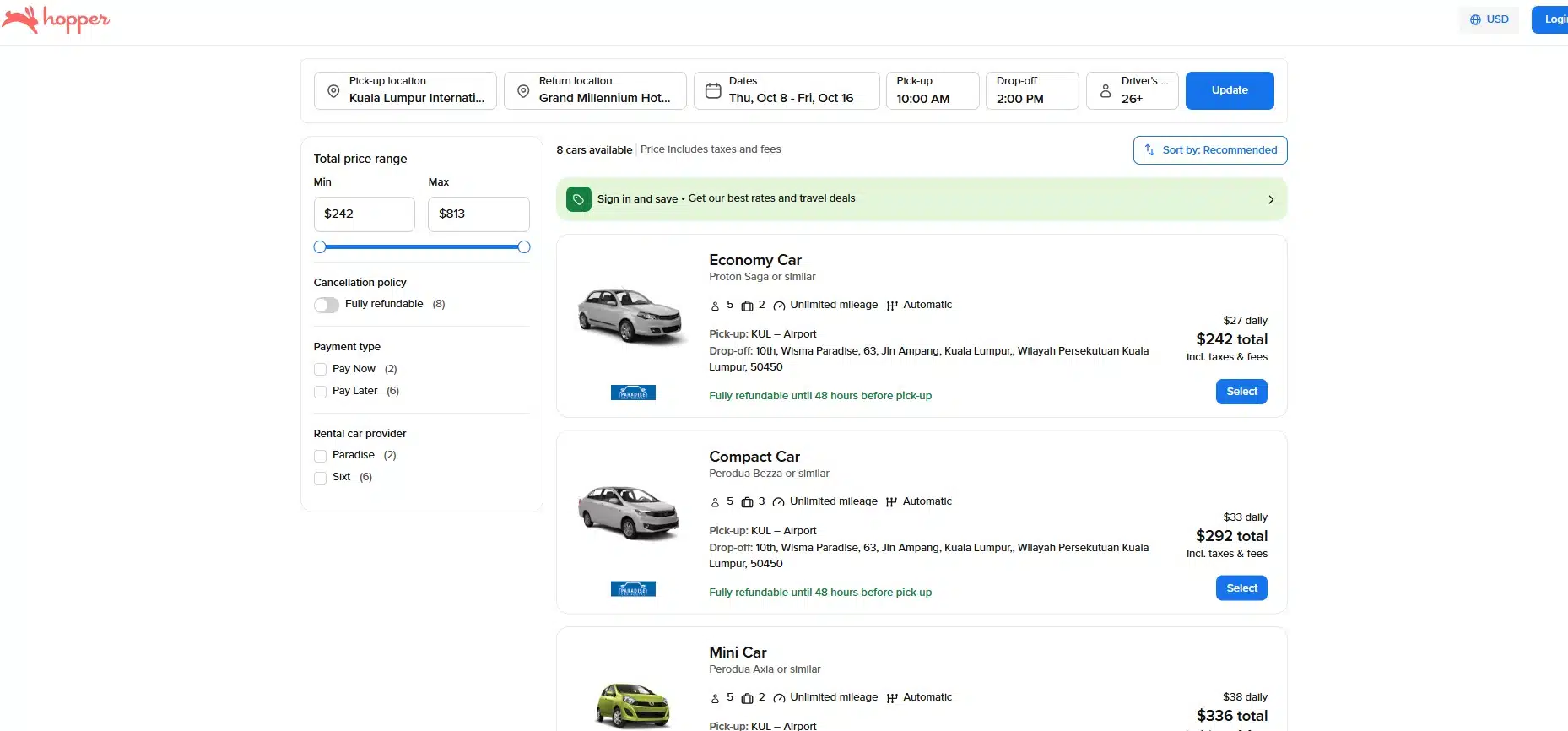
Price prediction sits on top of a standard hotel search. Hopper tells users whether a rate looks likely to rise or fall over the next few days.
Why It Matters
A frozen price is genuinely useful to anyone still deciding on dates, because it takes some of the guesswork out of timing a booking. Building for mobile first also matches how most people shop now, rather than forcing an old desktop habit onto a phone screen.
The Catch
Two things to know before paying up.
A forecast is a guess dressed up in numbers, not a guarantee. If the rate never moves the way predicted, the Price Freeze fee — charged before a booking is committed — doesn’t come back. Hotel selection runs thinner than on dedicated hotel apps like Booking.com or Hotels.com too, since flights remain Hopper’s real strength.
15. Marriott Bonvoy
Book a Marriott through a third-party app and the stay earns no Bonvoy points at all. That single rule shapes everything worth knowing about the chain’s own booking tool.
A hotel-chain-specific app rather than an OTA or metasearch tool. It only books Marriott-family properties; it doesn’t compare across brands the way everything else in this list does. Members earn points per stay, redeemable toward a free night or a transfer to an airline partner program. The portfolio spans more than 30 brands under one roof, from Fairfield Inn to the Ritz-Carlton and St. Regis, all tied to a single loyalty account.
Why It Matters
Points, elite-tier credit and member-only rates usually apply only on direct bookings. Book the same property through Booking.com or Expedia and it earns nothing toward Bonvoy status. The app also runs a best-rate guarantee, matching or beating third-party prices for the same room.
The Catch
Marriott-family hotels only. It’s useless for comparing across chains, and useless in a destination without a Marriott property nearby. It says nothing about the rest of the trip either. Anyone loyal to a different chain needs that chain’s own app instead: Hilton Honors and World of Hyatt work the same way, each locked to its own brand.
Common Questions About Choosing the Best Hotel Booking Apps
Price, timing, points. Once all 15 options blur together, those are the decisions that keep coming back, and each one points toward a different app.
Which hotel app actually has the lowest prices?
No app wins on price every time. Independent testing put a price-comparison tool like Trivago ahead in only nine of 32 hotels checked. Apps built specifically to find the cheapest rate miss more often than they hit. Check two or three apps before paying for anything, the hotel’s own direct booking page included.
Do hotel booking apps charge extra fees?
It depends on the app and the rate. Booking.com advertises no booking or credit card fees on most reservations. Other platforms add service fees that only show up at checkout. Resort fees come from the hotel itself rather than the app, so they apply no matter which platform handles the booking.
Is it better to book through an app or the hotel’s own website?
It depends on whether the stay is feeding a loyalty account. Points and elite benefits typically apply only to direct bookings, which gives the hotel’s own app or website the edge for anyone chasing status. For a one-off stay with no loyalty ties, a comparison app or OTA often finds a lower rate, or a better cancellation policy, instead.
Can these apps be trusted for last-minute deals?
Apps built for same-day bookings, like HotelTonight, tend to deliver on that promise. That’s the exact inventory hotels want to move before the night ends. General-purpose apps can work in a pinch too, but their last-minute selection is usually thinner than what a dedicated same-day app offers.
Do loyalty points still count when booking through a third-party app?
Almost never. Most hotel chains require a direct booking, through their own app or website, for a stay to count toward loyalty status. Booking the identical room through Expedia or Booking.com instead usually means skipping the points entirely, even when the price looks nearly identical.
Final Words
Picking one app off this list isn’t really the goal. Picking two or three that cover different situations is. A reasonable setup pairs a broad comparison app, like Booking.com or Expedia, for everyday planning, a same-day app like HotelTonight for spontaneous trips, and a direct hotel-chain app for any stay where loyalty points matter.
Before locking in a booking, it’s worth a quick check of the hotel’s own website: many hotels now match or beat third-party rates for direct bookings, especially for loyalty members. These 15 best hotel booking apps aren’t competing for one universal winner. Each one solves a different piece of the same trip-planning problem, and the harder part is figuring out, trip by trip, which piece actually needs solving.