Time is a relentless force, but certain dates act as anchors, securing monumental shifts in the narrative of human history. When we peel back the layers of September 3 across different centuries, we uncover a fascinating mosaic of events that redefined maps, ignited cultural movements, and shifted the global balance of power. From the bustling streets of colonial Kolkata and the literary salons of Dhaka to the political chambers of Paris and the chaotic roads of Stockholm, this single date has witnessed a staggering amount of human triumph, tragedy, and transformation.
Whether you are a student of history, an archivist, or simply a curious mind, understanding what happened on this day offers a profound sense of perspective. September 3 is not just another day on the calendar; it is the day the American Revolutionary War officially ended, the day Britain and France stood against Nazi tyranny, and the day legendary figures who shaped cinema, literature, and science took their first—or last—breaths.
In this comprehensive archive, we will traverse the globe. We will begin our journey in the Bangalee sphere and the Indian subcontinent, acknowledging the regional milestones that echo through South Asia today. From there, we will expand outward, exploring international holidays, groundbreaking global history, famous births, notable deaths, and trivia that will leave you pondering the intricate threads of time.
The Bangalee Sphere & Indian Subcontinent
South Asia is a region steeped in a deep, complex history, where literature, cinema, and political reform have continuously intertwined. September 3 holds profound significance for both Bangladesh and India, marking the birth of revolutionary thinkers, iconic artists, and pivotal legislative movements.
Historical and Political Events
The 1879 Siege of the British Residency in Kabul
While geographically in Afghanistan, this event deeply impacted British India. On September 3, 1879, Afghan troops massacred British envoy Sir Louis Cavagnari and his escort of 72 soldiers from the elite British-Indian Corps of Guides. These Indian troops fought to the last man to defend the residency, an event that triggered the second phase of the Second Anglo-Afghan War and heavily influenced British India’s North-West Frontier policy.
The Aparajita Anti-Rape Bill (West Bengal, 2024)
Fast-forwarding to modern history, September 3, 2024, witnessed a landmark moment in regional gender justice. Following immense public outcry over a tragic incident at R.G. Kar Medical College in Kolkata, the West Bengal Assembly unanimously passed the Aparajita Women and Child (West Bengal Criminal Laws Amendment) Bill. This legislation marked a seismic shift in how sexual violence is prosecuted in the region, aiming for faster trials and harsher penalties to protect citizens across the state.
Cultural Festivals and Observances
In India, September 3 falls squarely within National Nutrition Week (September 1–7). This nationwide initiative aims to combat malnutrition and foster healthier eating habits across a rapidly developing nation, echoing the ongoing public health missions throughout South Asia.
The Legends Born and Lost
The cultural fabric of the Bangalee sphere is woven with the brilliance of those born on this day.
Uttam Kumar (1926 – 1980)
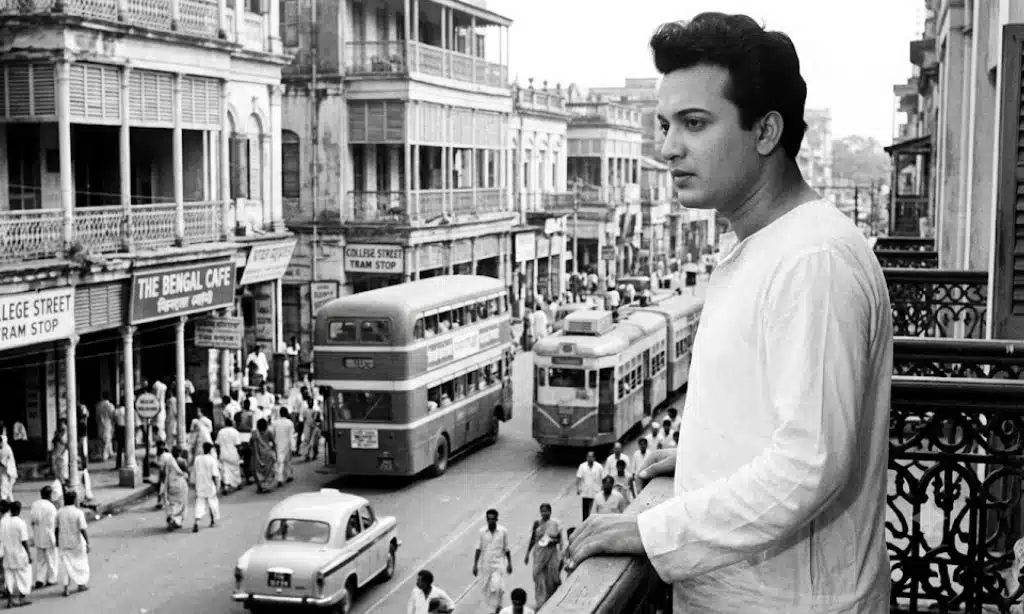
Born Arun Kumar Chattopadhyay in the bustling lanes of North Kolkata, he did not merely act in cinema; he became a cultural phenomenon, the undisputed “Mahanayak” (Great Hero) who defined the aspirations and romantic ideals of the Bengali middle class. His legendary on-screen charisma, characterized by his signature captivating smile and effortless dialogue delivery, birthed a golden era of film.
Paired opposite the enigmatic Suchitra Sen in classics like Harano Sur and Saptapadi, they created a cinematic alchemy that remains the absolute gold standard for romance in Indian cinema. Yet, beneath the veneer of the ultimate matinee idol lay an actor of ferocious talent and profound, unparalleled depth. It was his nuanced, psychologically complex performance in Satyajit Ray’s Nayak (1966)—playing a lonely, conflicted superstar grappling with his own hollow reality—that silenced his harshest critics. Whether playing a brooding anti-hero, a quintessential gentleman, or Ray’s sharp-witted detective Byomkesh Bakshi in Chiriyakhana, Uttam Kumar possessed a mercurial ability to make every frame his own.
Abul Mansur Ahmad (1898 – 1979)
Born in Dhanikhola, Mymensingh, Abul Mansur Ahmad was a towering figure in Bangladeshi literature and politics. A fierce satirist, his works like Aina (The Mirror) and Food Conference ruthlessly exposed the hypocrisies of society and politics. Beyond his pen, he was a pivotal political leader, contributing significantly to the Language Movement and serving as a minister in both the United Front government and the central cabinet of Pakistan, where he fought tirelessly for the industrialization and economic equity of East Bengal.
International Observances & Holidays
Every day of the year is dedicated to a cause, a memory, or a celebration somewhere on Earth. On September 3, the global community observes several unique and historically rich holidays.
-
San Marino Republic Day: Nestled within Italy, the microstate of San Marino celebrates the Feast of St. Marinus. Founded on September 3, 301 AD, it holds the incredible distinction of being one of the world’s oldest surviving constitutional republics.
-
Qatar Independence Day: While Qatar heavily celebrates its National Day in December, September 3, 1971, is the exact historical date when the Persian Gulf state gained full independence, severing a 55-year British protectorate treaty.
-
Australian National Flag Day: This day commemorates September 3, 1901, when the Australian National Flag was flown for the very first time over the dome of the Royal Exhibition Building in Melbourne, shortly after the federation of the nation.
-
Global Skyscraper Day: Celebrated globally on September 3, this day honors the architectural and engineering marvels that form our modern cityscapes, encouraging urbanites to look up and appreciate the giants of steel and glass.
-
Armed Forces Day (Taiwan): Held to commemorate the end of the Second Sino-Japanese War (World War II), recognizing the sacrifices of military personnel.
Global History
Stepping outside of South Asia, September 3 has been the backdrop for the rise and fall of empires, groundbreaking astronomical achievements, and desperate fights for human rights.
United States History
1783 – The Treaty of Paris Ends the Revolution: The American Revolutionary War came to an official close when John Adams, Benjamin Franklin, and John Jay signed the Treaty of Paris. This document legally recognized the thirteen colonies as a free, sovereign, and independent nation, forcing the British Empire to concede vast territories and forever altering the geopolitical map of the world.
1838 – Frederick Douglass Escapes Slavery: In one of the most daring and consequential acts of self-emancipation in American history, Frederick Douglass boarded a train in Baltimore. Disguised as a free sailor, carrying forged papers, and wearing a red shirt and tarpaulin hat, he successfully traveled north to Philadelphia and eventually to New York, launching his legacy as the most powerful abolitionist voice of the 19th century.
1976 – Viking 2 Lands on Mars: Pushing the boundaries of human knowledge, NASA’s Viking 2 spacecraft touched down safely on the Martian surface. It transmitted breathtaking, high-resolution color photographs of the red planet’s rocky terrain, fundamentally changing our understanding of the solar system.
United Kingdom & Europe
1752 – The Great 11-Day Time Jump: In a bizarre historical anomaly, the British Empire finally aligned itself with the rest of Europe by adopting the Gregorian calendar. Because the old Julian calendar was mathematically flawed and out of sync with the solar year, citizens went to sleep on the evening of September 2 and woke up the next morning on September 14.
1939 – The Declaration of World War II: Two days after Adolf Hitler’s forces invaded Poland, Britain and France issued an ultimatum to Germany. When it was ignored, both nations officially declared war on Nazi Germany on September 3, 1939. This solemn declaration plunged Europe—and eventually the entire globe—into the deadliest conflict in human history.
1943 – Italy’s Secret Armistice: Exactly four years into WWII, as the British Eighth Army invaded the Italian mainland from Sicily, Italy covertly signed the Armistice of Cassibile with the Allies, breaking away from the Axis powers and turning the tide of the Mediterranean theater.
1967 – Dagen H in Sweden: In an unparalleled logistical feat, September 3, 1967, is known as Dagen H (H-Day). At exactly 5:00 AM, the entire country of Sweden switched from driving on the left-hand side of the road to the right. The change required swapping out road signs, repainting lines, and modifying buses overnight, resulting in a surreal morning of carefully orchestrated vehicular chaos.
Canada, Australia, & The Rest of the World
1875 – First Official Game of Polo in Argentina: British ranchers introduced the sport of polo to Argentina on this day. It quickly became deeply ingrained in the country’s culture, transforming Argentina into the undisputed global powerhouse of the sport for generations to come.
1978 – The Air Rhodesia Flight 825 Tragedy: During the Rhodesian Bush War, ZIPRA guerrillas shot down a civilian Vickers Viscount aircraft using a surface-to-air missile. The crash and subsequent massacre of survivors remain one of the darkest chapters in Southern African aviation and colonial conflict history.
2004 – The Beslan School Siege (Russia): In a harrowing tragedy, the three-day hostage crisis at a school in Beslan, North Ossetia, reached a violently bloody conclusion on September 3. Over 330 people lost their lives, the majority of them innocent children, leading to sweeping security and political changes within the Russian Federation.
Notable Births & Deaths (Global)
History is entirely shaped by the individuals who dare to challenge the status quo, create art, invent machines, and lead nations. September 3 is marked by the arrival and departure of several monumental global figures.
Famous Births
-
Marquis de Lafayette (Born 1757, France): An aristocratic French military officer who fiercely believed in the ideals of liberty. He crossed the Atlantic to volunteer in the American Revolution, serving under George Washington and playing a decisive role in the ultimate British surrender at Yorktown.
-
Ferdinand Porsche (Born 1875, Austria/Germany): The visionary automotive engineer who founded the Porsche company. He is credited with creating the first gasoline-electric hybrid vehicle and designing the iconic Volkswagen Beetle.
-
Frank Macfarlane Burnet (Born 1899, Australia): A brilliant virologist whose groundbreaking research in immunology earned him a Nobel Prize. His theories on immunological tolerance made modern organ transplantation a medical reality.
-
Malcolm Gladwell (Born 1963, Canada/UK): Renowned journalist, author, and public intellectual whose bestselling books like The Tipping Point and Outliers have fundamentally reshaped how the modern world views sociology, success, and psychology.
Famous Deaths
-
Oliver Cromwell (Died 1658, England): The polarizing English military and political leader who led the Parliamentarian armies against King Charles I during the English Civil War. He ruled as Lord Protector of the Commonwealth until his death on this exact day.
-
Ivan Turgenev (Died 1883, Russia): One of the giants of Russian literature, his masterwork Fathers and Sons heavily influenced the development of the modern novel and explored the generational and philosophical divides of 19th-century Russia.
-
E. E. Cummings (Died 1962, USA): An internationally celebrated poet, painter, and essayist. Cummings broke every traditional rule of syntax and punctuation, using lower-case spelling and visual spacing to create avant-garde poetry that remains vividly influential today.
-
Michael Clarke Duncan (Died 2012, USA): The beloved, physically imposing yet gentle Hollywood actor. He earned an Academy Award nomination for his deeply moving portrayal of John Coffey in The Green Mile.
-
Griselda Blanco (Died 2012, Colombia): The notorious “Black Widow” of the Medellín Cartel. A central figure in the violently turbulent Miami drug wars of the 1970s and 80s, she was assassinated in Colombia on this day.
“Did You Know?” Trivia
History is often hiding in plain sight. Here are three fascinating, lesser-known facts related to September 3 that make for perfect dinner table conversation:
-
The Unfinished Masterpiece: Benjamin West’s famous painting depicting the signing of the 1783 Treaty of Paris remains half-empty. The British commissioners were so humiliated by their defeat to the American colonies that they flat-out refused to pose for the artist.
-
The Birth of the Penny Press: On September 3, 1833, The New York Sun published its very first issue. It cost only one cent, shifting the newspaper industry from a luxury reserved for the wealthy elite to a mass-market medium sold by “newsboys” on street corners, forever changing modern journalism.
-
The 4:50 AM Freeze: During Sweden’s Dagen H left-to-right traffic switch in 1967, all non-essential traffic was banned. At exactly 4:50 AM, the few vehicles legally allowed on the streets had to come to a complete stop, carefully cross over to the right side of the road, and wait in silence until 5:00 AM to proceed.
Quote of the Day
“It takes courage to grow up and become who you really are.”
— E. E. Cummings (American poet and artist, who passed away on September 3, 1962)
Final Thoughts
The events of September 3 serve as a stark reminder of the duality of human existence. On this single calendar day, we see the highest peaks of human achievement—such as a spacecraft transmitting images from Mars, enslaved individuals seizing their freedom, and nations breaking colonial chains to claim independence. Simultaneously, we witness the devastating weight of global conflict, tragic losses of innocent lives, and the passing of visionary artists who tried to make sense of it all.
From the literary genius of the Bangalee sphere to the political treaties of the Western world, September 3 is a microcosm of global history. Exploring these chronologies allows us not only to honor those who came before us but to understand the intricate political, cultural, and social frameworks that we navigate today. History is never truly in the past; it is the foundation upon which our present is continuously being built.