Most on-page SEO tactics fail for one boring reason: people treat them like a checklist instead of a judgment call. Add the keyword. Write the title. Add headings. Insert internal links. Compress images. Add schema. Done, right? Not quite. That kind of mechanical SEO used to get average pages across the line. In 2026, average pages are easier to ignore.
Search results are packed with AI answers, comparison boxes, videos, forums, product grids, and stronger competitors. Google has also become much better at spotting pages that are technically optimized but not actually useful. So the question is no longer, “Did you optimize the page?” The better question is, “Did this page clearly solve the searcher’s problem better than the other options?”
That is where modern on-page optimization tactics still matter. They help Google understand the page, help readers trust it, and help the content earn clicks, engagement, links, and conversions. The trick is to stop treating on-page SEO like decoration and start treating it like a page-level strategy.
This guide covers 9 on-page SEO tactics worth doing in 2026, especially if you want a practical on-page checklist that goes beyond keywords and plugins.
How I Selected These On-Page SEO Tactics
This list focuses on tactics that still matter because they improve the page itself. I avoided outdated advice like keyword stuffing, fake FAQ schema, over-optimized headings, and adding long intros just to hit a word count.
Each tactic had to meet at least one of these standards:
- It helps search engines understand the page more clearly.
- It helps readers find the answer faster.
- It improves trust, usefulness, or credibility.
- It supports rankings without making the content feel robotic.
- It can be applied to blogs, service pages, product pages, category pages, or evergreen guides.
- It belongs inside a practical on-page checklist for 2026.
The goal is not to make every page look the same. The goal is to make every important page clearer, stronger, and easier to trust.
9 On-Page SEO Tactics Worth Doing in 2026
On-page SEO is not one thing. It is the full page experience: the title, the intro, the content structure, the proof, the media, the internal links, the HTML signals, and the way the page answers the search.
1. Match Search Intent Before You Write the Page
Search intent is the first on-page SEO decision. If you get this wrong, every other optimization becomes damage control.
A person searching “on-page SEO tactics” likely wants practical methods, examples, and a checklist-style guide. They do not need a beginner’s dictionary definition of SEO for 1,000 words. They also do not want a sales page pretending to be a guide.
Before writing, look at what the searcher is trying to do. Are they learning, comparing, buying, fixing, auditing, or choosing? Then shape the page around that job.
For example, a search for “best schema markup tools” needs a tool comparison. A search for “how to write title tags” needs a tutorial. A search for “technical SEO audit service” needs a service page with proof, process, and conversion points. Intent should control the format, not just the keyword.
Practical move: Before drafting, write one sentence that explains what the searcher wants from the page.
Example: “The reader wants a practical list of on-page SEO tactics they can apply to a page before or after publishing.”
Worth avoiding: Do not copy the top-ranking pages blindly. Study them to understand intent, then create a better version with stronger examples, clearer structure, and more useful judgment.
2. Write Title Tags for Clicks and Clarity
The title tag is still one of the most important page SEO methods because it shapes how the result appears and how users understand the page.
A good title tag should be clear, specific, accurate, and close to the search intent. It should include the focus keyword naturally, but it should not sound like a keyword warehouse exploded.
Weak title: “On-Page SEO: Best Tips, Guide, Strategy, Ranking Methods”
Better title: “9 On-Page SEO Tactics Worth Doing in 2026”
The second title works because it gives the reader a clear promise. It says how many tactics they will get, what the topic is, and why the article is current.
Meta descriptions also deserve attention. They may not directly control rankings, and Google can rewrite them, but a strong description can improve the searcher’s decision. Think of it as a mini pitch, not a keyword dump.
A smart title formula: Number + focus keyword + current angle + benefit
Good example: “9 On-Page SEO Tactics Worth Doing in 2026”
Before publishing: Check whether the title is unique, readable, accurate, and aligned with the H1. If the title promises “advanced tactics,” the article should not give beginner filler.
3. Use One Clear H1 and a Logical Heading Structure
Headings are not just formatting. They create the reading path. A clear H1 tells the reader and search engines what the page is about. H2s organize the main sections. H3s support details under those sections. When headings are logical, the page becomes easier to scan, understand, and navigate.
The mistake is using headings only as places to force keywords. That creates awkward pages like:
“Best On-Page SEO Tactics for On-Page SEO Optimization Methods”
Nobody wants to read that. A better heading structure sounds natural and explains the page clearly. For this article, the H1 is the main topic. The H2 introduces the full list. Each H3 covers one tactic. That structure is simple, but it works because it matches the content.
Good structure:
H1: 9 On-Page SEO Tactics Worth Doing in 2026
H2: How We Selected These On-Page SEO Tactics
H2: 9 On-Page SEO Tactics Worth Doing in 2026
H3: Match Search Intent Before You Write the Page
H3: Write Title Tags for Clicks and Clarity
Practical note: Use headings to help the reader. If someone scans only the headings, they should still understand the article’s logic.
Common mistake: Do not use multiple H1s just because the theme styling looks good. Keep the main page title clear.
4. Make the Introduction Earn Its Space
A bad intro can weaken a good article. Too many SEO pages open with generic lines like, “In today’s digital world, SEO is important for businesses.” That tells the reader nothing. It also makes the article feel like every other page on the internet.
A strong intro should do three things quickly:
- Show that you understand the reader’s problem.
- Include the focus keyword naturally.
- Explain what the page will help them do.
For this article, the real reader pain point is not “SEO matters.” The problem is that many on-page SEO checklists are outdated, robotic, or too shallow for modern search. That is a better hook because it speaks to the actual frustration.
The introduction does not need to be dramatic. It needs to be useful and specific.
Better opening angle: “Most on-page SEO tactics fail because people treat them like a checklist instead of a judgment call.”
That line gives the article a point of view. It also makes the reader curious enough to continue.
Check before publishing: Read the first 150 words. If they could appear in 500 other SEO articles without changing anything, rewrite them.
5. Add Original Experience, Examples, and Proof
This is where many pages fail in 2026. They explain the topic, but they do not prove anything. They repeat the same safe advice: optimize titles, use headings, add internal links, improve content quality. That advice is not wrong, but it is not enough.
Original experience can make an on-page SEO article stronger in several ways:
- Add real examples of weak and strong title tags.
- Show before-and-after heading structures.
- Explain what you would change on a page and why.
- Include screenshots when relevant.
- Add mini case-style observations from your own workflow.
- Mention common mistakes you have actually seen.
- Explain trade-offs instead of pretending every tactic works the same way everywhere.
For listicle articles, this matters even more. A list without judgment feels like a summary. A list with experience feels like guidance.
Works well for: SEO guides, tool comparisons, product reviews, service pages, technical tutorials, and cluster articles.
Good example: Instead of saying “add internal links,” explain where to add them, which anchor text to use, which pages should receive links, and which links are unnecessary.
One thing to note: Do not fake experience. If you did not test something, do not claim you did. You can still add expertise through analysis, examples, and careful sourcing.
6. Build Internal Links Around the Reader’s Next Step
Internal linking is one of the highest-ROI on-page optimization tactics because it supports both SEO and user experience.
A good internal link should answer the reader’s next likely question. If someone is reading this cluster about on-page SEO tactics, the natural next steps might be the pillar article on SEO tactics that work, a guide to internal linking tools, a guide to content optimization tactics, or a checklist for technical SEO fixes.
Internal links also help search engines understand relationships between pages. A pillar page should link to its cluster pages. Cluster pages should link back to the pillar and to nearby related clusters where useful.
The anchor text matters. Use natural, descriptive anchors. Avoid vague anchors like “click here” when you can use clearer phrases like “technical SEO fixes with high ROI” or “content optimization tactics for rankings.”
Best use: Connect this article to the pillar page, “27 SEO Tactics That Still Work in 2026,” using an anchor like “SEO tactics that work in 2026.”
Recommended internal links for this cluster:
| Link Target | Suggested Anchor |
| Pillar article | SEO tactics that work in 2026 |
| 13 Content Optimization Tactics for Rankings | content optimization tactics for rankings |
| 7 Best Internal Linking Tools | internal linking tools |
| 7 Technical SEO Fixes With High ROI | technical SEO fixes with high ROI |
| 8 E-E-A-T Boosting Tactics | E-E-A-T boosting tactics |
Practical note: Add internal links where they help the sentence. Do not force them into every paragraph.
7. Optimize Images So They Add Value, Not Just Decoration
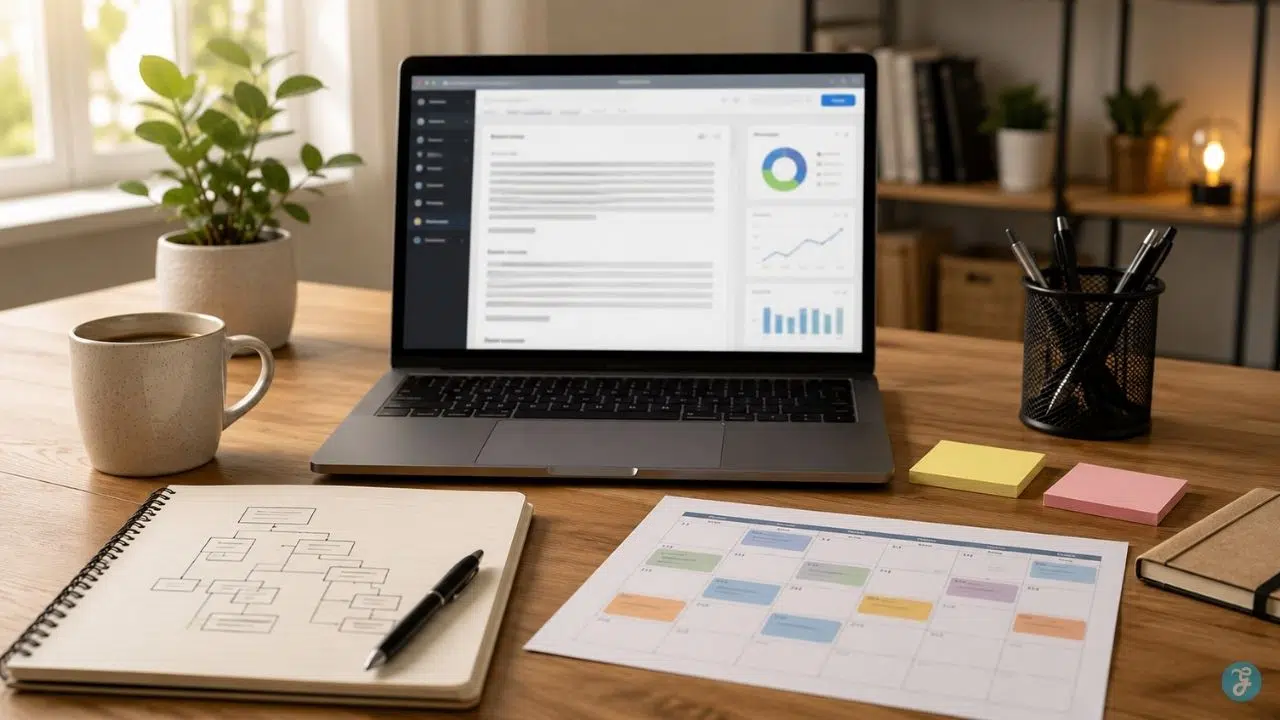
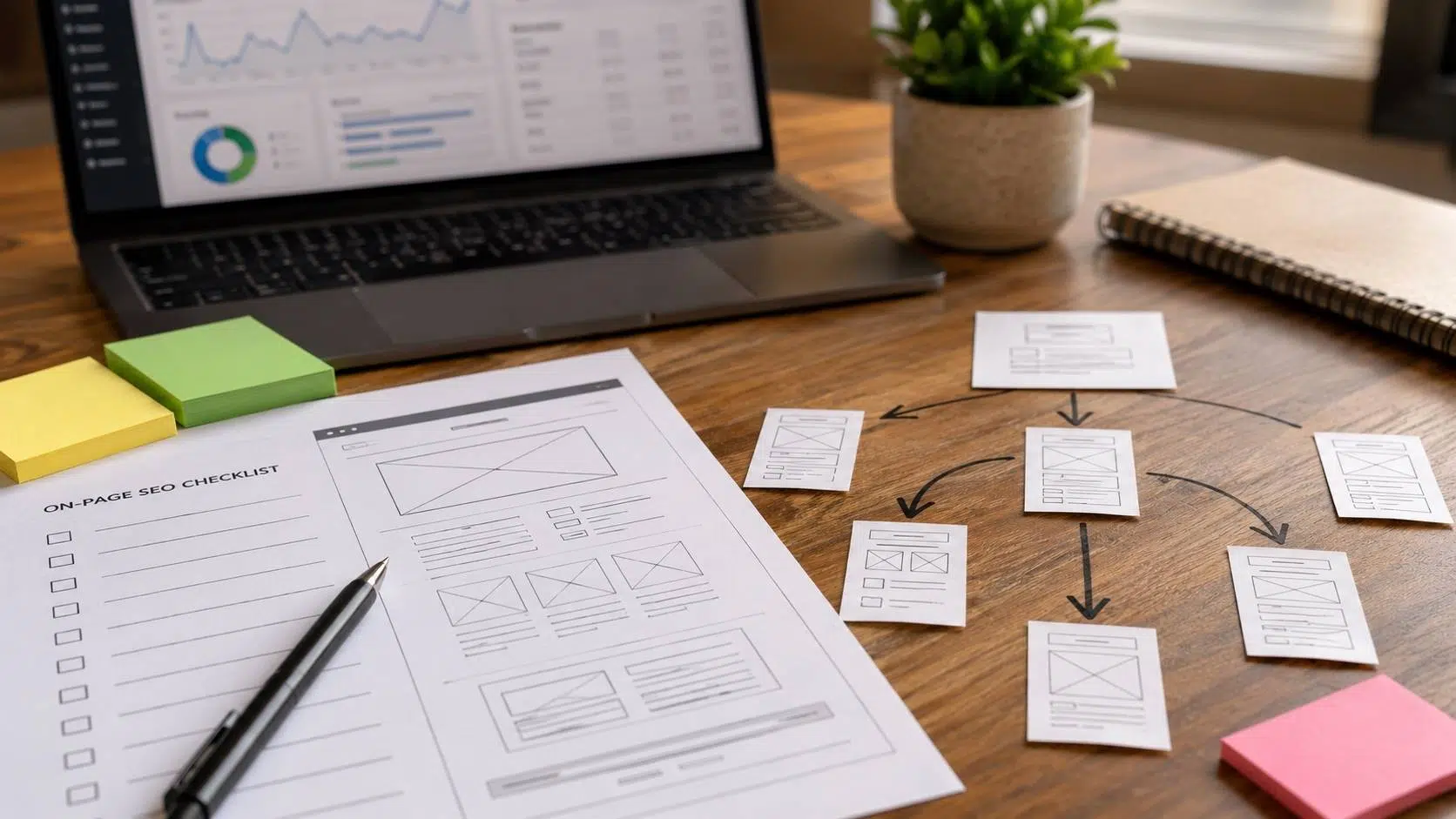
Image SEO is still worth doing, but only when the images are useful. A featured image can improve presentation. Screenshots can explain a process. Infographics can summarize a guide. Product images can build trust. Diagrams can make a complex topic easier to understand.
But generic images do very little. A random laptop photo does not make an SEO article more useful unless it supports the topic or improves the reader’s experience.
For on-page SEO, images can show:
- A title tag example
- A heading structure
- A content brief
- An internal link map
- A before-and-after page layout
- A checklist section
- A screenshot of a Search Console report with sensitive data removed
Alt text should describe the image naturally. It should not be stuffed with keywords. File names should also be descriptive.
Good alt text: “SEO content planning desk with laptop, analytics dashboard, and internal linking notes”
Bad alt text: “SEO SEO tactics on-page SEO checklist best SEO methods ranking SEO tips”
Practical move: For each image, ask, “Does this image help the reader understand or trust the page?” If not, replace it or remove it.
8. Use Schema Markup Only When It Matches the Page
Schema can help search engines understand page content, but it is not a magic ranking button.
For this article, Article schema is sensible. Breadcrumb schema may also help if the site uses a clear hierarchy. FAQ schema should be used carefully, especially because Google has limited FAQ rich-result visibility in recent years. The FAQ content should be visible on the page and genuinely useful to readers.
For product pages, Product schema should match the actual product. For local pages, LocalBusiness schema should match real business information. For review pages, Review schema should follow Google’s rules and should not be fake or self-serving.
The main rule is simple: schema should describe what is truly on the page.
Good fit for this article: Article schema, BreadcrumbList schema, and possibly FAQPage schema if the CMS/editorial strategy still uses it for page understanding.
Not a good fit: Product schema, Review schema, or HowTo schema if the page does not actually contain those content types.
Worth remembering: Structured data should support clarity. It should not be used to create a search appearance the page does not deserve.
9. Refresh the Page After It Starts Getting Data
On-page SEO does not end when the article is published.
After the page has been live for a while, use performance data to improve it. Google Search Console can show which queries the page gets impressions for, which queries earn clicks, and where the page is stuck near the bottom of page one or page two.
That data can reveal what the article should improve.
Maybe searchers want an on-page checklist. Maybe they want examples. Maybe they are searching for “on-page SEO methods” more than expected. Maybe the page has impressions for “title tag optimization,” but the section is too thin. Maybe the meta title earns impressions but not clicks.
Refreshing based on real data is one of the most practical page SEO methods because you are not guessing anymore.
Most useful for: Pages with impressions but weak CTR, pages ranking between positions 5 and 20, and pages losing traffic over time.
Good refresh actions: Improve titles, add missing sections, tighten intros, add examples, update screenshots, improve internal links, and answer new queries found in Search Console.
Final buying note: Do not update only the publish date. Improve the page in a way that readers can actually feel.
Quick Overview: 9 On-Page SEO Tactics Worth Doing
| On-Page SEO Tactic | Best For | Priority |
| Match search intent before writing | Every SEO page | Very high |
| Write better title tags and meta descriptions | Pages with impressions but weak CTR | Very high |
| Use one clear H1 and logical headings | Blogs, guides, service pages | High |
| Make the intro useful fast | Informational and commercial content | High |
| Add original experience and examples | Competitive topics | Very high |
| Optimize internal links and anchor text | Cluster content and mature sites | Very high |
| Improve image SEO and visual usefulness | Blogs, products, tutorials, listicles | Medium to high |
| Use the schema only when it matches the page | Articles, products, local, reviews, FAQs | Medium |
| Refresh and improve the page after publishing | Existing content | Very high |
A Practical On-Page Checklist Before Publishing
Use this checklist before pushing a page live:
- Does the page match the main search intent?
- Is the title tag clear, unique, and click-worthy?
- Does the H1 match the page topic without keyword stuffing?
- Do the H2s and H3s create a logical reading path?
- Does the intro explain the reader’s real problem quickly?
- Is the focus keyword used naturally in the intro, headings, body, meta title, meta description, and URL?
- Does the page include examples, proof, experience, or useful analysis?
- Are internal links placed where the reader naturally needs them?
- Are image file names and alt texts descriptive?
- Is schema used only where it matches visible content?
- Does the page load cleanly on mobile?
- Are outdated claims, broken links, and thin sections removed?
- Is the page better than the current top-ranking results in a clear way?
If the answer is “no” to several of these, the page is not ready. It may be written, but it is not optimized.
Common On-Page SEO Mistakes to Avoid
- Overusing the focus keyword. Google does not need the same phrase repeated in every paragraph, and readers definitely do not.
- Writing headings for search engines instead of people. A heading should help the reader understand what comes next.
- Adding schema without checking whether it matches the page. Structured data should not be decorative.
- Using internal links only at the bottom of the article. The best internal links usually belong inside relevant paragraphs.
- Ignoring old content. Many ranking gains come from improving existing pages, not publishing new ones.
- Treating on-page SEO as a plugin score. A green score does not mean the page is useful, original, or competitive.
Best On-Page SEO Tactics by Page Type
| Page Type | Best On-Page Focus |
| Blog post | Intent match, headings, examples, internal links, image SEO |
| Pillar article | Topic structure, cluster links, original insight, clear sections |
| Cluster article | Narrow intent, internal link back to pillar, practical depth |
| Service page | Buyer pain points, proof, FAQs, process, conversion clarity |
| Product page | Unique descriptions, images, specs, reviews, product schema |
| Category page | Helpful category copy, filters, internal links, crawl control |
| Local page | Location relevance, service details, reviews, LocalBusiness schema |
| Comparison page | Clear criteria, tables, pros and cons, trust signals |
Where This Fits in the SEO Tactics Cluster
This article supports the broader pillar topic, “27 SEO Tactics That Still Work in 2026,” by focusing only on page-level improvements. The pillar explains the full SEO strategy, while this cluster gives readers a practical on-page checklist they can use before publishing or refreshing content.
It should internally link to the pillar using the phrase SEO tactics that work in 2026. It should also link sideways to cluster articles about internal linking tools, schema markup tools, technical SEO fixes, content optimization tactics, and E-E-A-T boosting tactics when those pages are live.
That cluster structure helps readers move from broad strategy to specific execution without getting lost.
Wrapping Up
The on-page SEO tactics worth doing in 2026 are not about tricking Google. They are about making each page clearer, more useful, easier to trust, and easier to understand.
Match the intent before writing. Write titles that earn clicks without overpromising. Use one clear H1 and logical headings. Make the intro useful fast. Add original experience. Build internal links around the reader’s next step. Use images that actually help. Add schema only when it fits. Refresh the page after real data comes in.
That is the difference between a page that is technically optimized and a page that deserves to rank.
Frequently Asked Questions About On-Page SEO Tactics
1. What are on-page SEO tactics?
On-page SEO tactics are page-level improvements that help search engines and readers understand a page better. They include search intent matching, title tags, meta descriptions, headings, internal links, image optimization, schema markup, content quality, and page updates.
2. What is the most important on-page SEO tactic?
Search intent matching is usually the most important tactic. If the page does not match what the searcher wants, better titles, headings, internal links, and schema will not fix the core problem.
3. How many times should I use the focus keyword on a page?
Use the focus keyword naturally in important places such as the title, URL, introduction, one heading, meta description, and body copy. Do not force it into every paragraph. Search engines understand related terms and context, so natural writing is better than repetition.
4. Are meta descriptions still important for SEO?
Meta descriptions do not directly guarantee higher rankings, and Google may rewrite them. But they are still useful because they can help searchers understand the page and decide whether to click.
5. Does schema markup improve rankings?
Schema markup does not work like a ranking shortcut. It helps search engines understand the page and may support eligible rich results when used correctly. It should match the visible content and follow structured data guidelines.
6. How often should I update on-page SEO?
Review important pages every few months, especially if rankings, clicks, or impressions are changing. Update the page when search intent shifts, competitors improve, facts become outdated, internal links change, or Search Console data shows new opportunities.