
Reducing home carbon emissions sounds simple until you actually look around your house. The lights are on. The fridge is humming. The AC or heater is running. The water heater is doing its quiet little job in the background. Someone left a charger plugged in. Dinner needs cooking. Laundry needs washing. And suddenly, “lower your home footprint” feels less like a helpful goal and more like another adult chore nobody asked for.
But here is the good news: home carbon reduction does not require you to live in the dark, take cold showers, or turn your house into a sustainability showroom.
The biggest wins usually come from the same places: heating, cooling, insulation, hot water, electricity, appliances, cooking, and waste. Some steps are cheap. Some are best timed around replacements. Some are homeowner-friendly, while others are realistic for renters too.
This guide focuses on 11 practical ways to reduce home carbon emissions without wasting time on tiny actions that barely move the needle.
What Counts as Home Carbon Emissions?
Home carbon emissions usually come from the energy and resources your household uses every day. That includes electricity, heating fuel, cooling, hot water, cooking, appliances, lighting, and waste.
A gas furnace, an inefficient air conditioner, poor insulation, an old water heater, a power-hungry appliance, or food waste going to landfill can all raise your household emissions. The exact footprint depends on your local electricity grid, home size, climate, lifestyle, fuel type, and how efficient your home already is.
That is why there is no single perfect order for every household. A cold-climate home with gas heating has different priorities than a hot-climate apartment with high AC use. A renter has different options than a homeowner. A family of five has different usage patterns than someone living alone.
Still, the best home carbon reduction strategy is usually the same: stop wasting energy first, then electrify what you can, then power it with cleaner electricity.
How I Selected These Home Carbon Reduction Steps
This list focuses on actions that meet at least one of these standards:
- They target major home energy uses such as heating, cooling, hot water, or appliances.
- They can reduce repeated emissions, not just create a one-time “green” purchase.
- They work for either homeowners, renters, or both.
- They can save money, improve comfort, or reduce pollution indoors.
- They support a lower home footprint without forcing unrealistic lifestyle changes.
The goal is not perfection. The goal is a smarter home that wastes less energy and produces fewer emissions over time.
11 Ways to Reduce Home Carbon Emissions
These steps are arranged by practical impact, not by what looks best on Instagram. Start with the actions that match your home, budget, and biggest energy use.
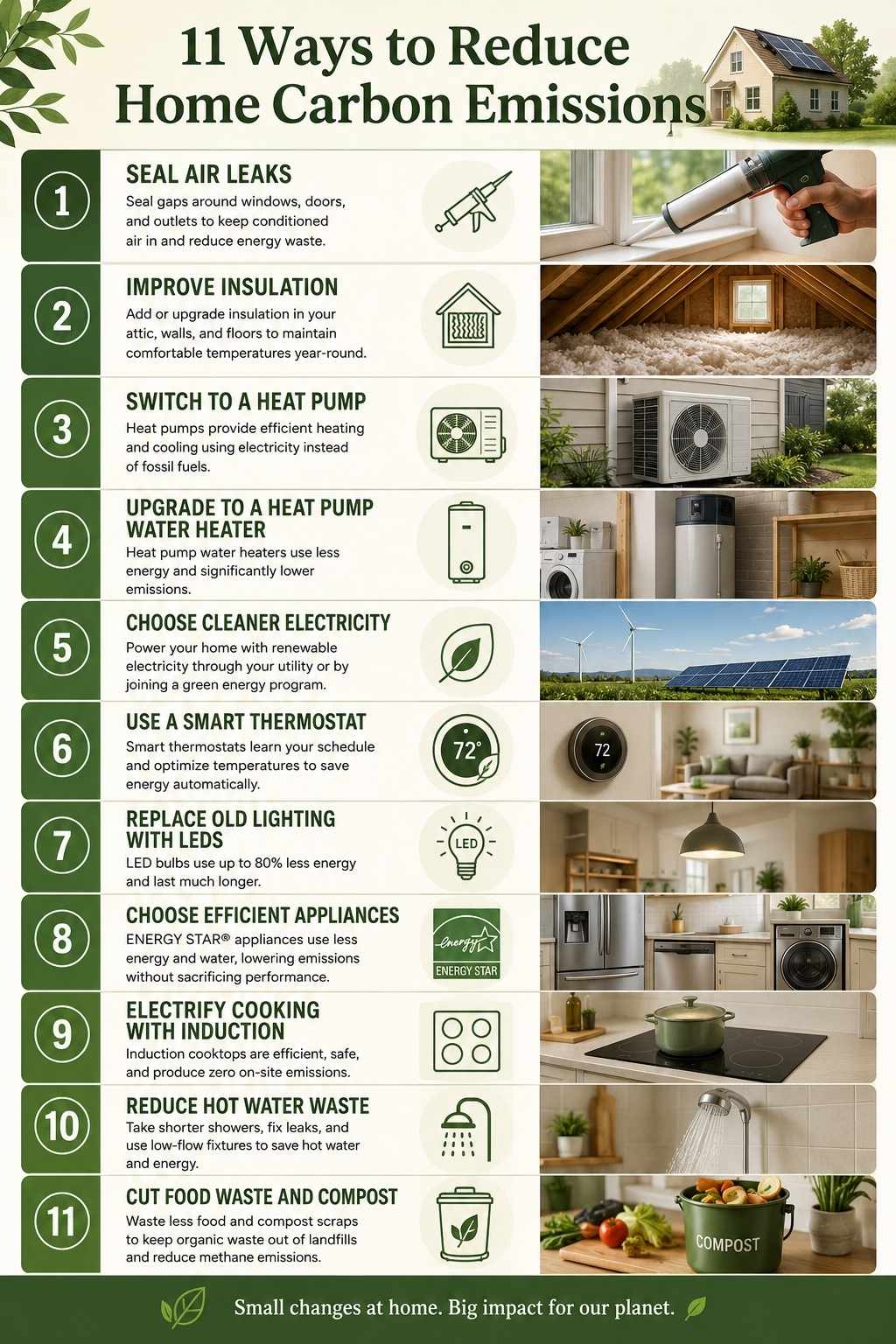
1. Seal Air Leaks Before You Buy Fancy Green Gadgets
Air leaks are boring. They are also one of the most common reasons homes waste energy.
Gaps around doors, windows, attic hatches, ducts, crawl spaces, plumbing openings, and basement rim joists let heated or cooled air escape. Your HVAC system then works harder to maintain the same temperature. That means higher bills and higher emissions.
This is one of the best first steps because it improves comfort and efficiency at the same time. A well-sealed home feels less drafty, holds temperature better, and can make future upgrades like heat pumps work more effectively.
A good first move: Use weatherstripping, caulk, door sweeps, outlet gaskets, and attic hatch sealing where needed.
Worth checking: Drafty windows, exterior doors, recessed lights, attic access points, basement gaps, and duct leaks.
One thing to note: Do not seal a home so tightly that ventilation becomes poor. For bigger projects, especially in older homes, get professional guidance.
2. Improve Insulation Where It Actually Matters
Insulation is not glamorous, but it does real work. It slows heat movement, which means your home loses less warmth in winter and gains less heat in summer.
The best insulation upgrades depend on the house, but attics are often a strong place to start because heat rises. Floors over crawl spaces, basement rim joists, walls, and ductwork can also matter. In hot climates, roof and attic improvements can reduce cooling demand.
This is not only about carbon. It is also about comfort. Poorly insulated homes often have cold rooms, hot rooms, drafts, and HVAC systems that run too often.
Ideal for: Older homes, drafty homes, homes with high heating or cooling bills, and rooms that never feel comfortable.
Start with: Attic insulation, accessible basement or crawl-space areas, and sealing gaps before adding insulation.
Practical note: Insulation works best as part of a whole-home approach. Air sealing and insulation together are usually stronger than either one alone.
3. Replace Fossil-Fuel Heating With a Heat Pump When the Timing Is Right
Heating is often one of the biggest sources of household emissions, especially in colder regions where homes rely on gas, oil, or propane.
A heat pump can heat and cool your home using electricity. Instead of burning fuel to create heat, it moves heat from one place to another. That makes it much more efficient than many traditional systems.
The smartest time to think about a heat pump is before your furnace, boiler, or AC dies. Waiting until an emergency often leads people to buy the same old system because they need heat immediately.
Best suited to: Homeowners planning HVAC replacement, households using gas/oil/propane heating, and homes with aging AC units.
High-impact step: Get heat pump quotes before your current system fails, not after.
Before you buy: Heat pump performance depends on climate, insulation, system sizing, ductwork, installer quality, and electricity prices. A proper assessment matters.
4. Upgrade to a Heat Pump Water Heater
Water heating is easy to ignore because the tank usually sits in a basement, garage, closet, or utility room doing its job quietly. But hot water can be one of the biggest energy users in a home.
A heat pump water heater uses electricity to move heat into the water rather than generating heat directly like a standard electric unit. It can be a strong carbon-reduction upgrade, especially when paired with cleaner electricity.
This is a great “replacement timing” action. If your water heater is near the end of its life, research heat pump options before it fails and forces a rushed decision.
Great match for: Homes with aging electric, gas, oil, or propane water heaters.
Good options include: ENERGY STAR-certified heat pump water heaters, proper tank sizing, and installation in a suitable space with enough airflow.
Check before ordering: These units can be taller, may need drainage for condensate, and may cool the surrounding space slightly. Installation details matter.
5. Switch to Cleaner Electricity
Once more, parts of your home run on electricity, the source of that electricity matters.
Cleaner electricity can come from rooftop solar, community solar, green power programs, renewable electricity plans, or a utility grid that is already getting cleaner. Not every option is available everywhere, but it is worth checking before assuming you have no choice.
For homeowners, rooftop solar may work if the roof, sunlight, policy, and budget line up. For renters or apartment dwellers, community solar or a green power plan may be more realistic.
Works well for: Homes using a lot of electricity, households planning heat pumps or EV charging, and renters who can choose electricity plans.
Start with: Your utility’s renewable electricity options, community solar availability, rooftop solar quotes, and verified green power programs.
Worth knowing: Some “green” plans are stronger than others. Look for clear details about where the renewable power comes from and whether it supports new clean energy.
6. Use a Smart Thermostat Properly
A smart thermostat does not magically reduce emissions if you set it once and ignore it. But used well, it can reduce wasted heating and cooling.
The main idea is simple: do not heat or cool an empty home as if everyone is sitting in the living room. Good thermostat settings can reduce energy use while keeping the home comfortable when people are actually there.
This is especially useful for households with regular schedules, high heating or cooling bills, or people who forget to adjust the thermostat manually.
Most useful for: Homes with central heating and cooling, predictable schedules, or high HVAC costs.
Popular settings to try: Lower heating temperatures when sleeping or away, higher cooling temperatures when away, and gradual pre-conditioning before peak comfort hours.
Small drawback: Some households override smart settings constantly. If the schedule does not match real life, the savings shrink.
7. Replace Old Bulbs With LEDs in the Rooms You Use Most
Lighting is not usually the biggest piece of home emissions anymore, but LED upgrades are still one of the easiest wins. They are affordable, widely available, and do not require a contractor.
The best approach is not to replace every bulb in a panic. Start with the lights that run the longest: kitchen lights, living room lamps, porch lights, hallway lights, bathroom lights, and work areas.
LEDs also produce less wasted heat than incandescent bulbs, which can help slightly in warm climates or during the cooling season.
A smart pick for: Renters, homeowners, students, and anyone who wants a low-cost first step.
Worth replacing first: High-use bulbs, outdoor lights, old recessed lights, and fixtures that are on for hours every day.
Final buying note: Choose bulbs by lumens, not watts. Lumens tell you brightness; watts tell you energy use.
8. Choose Efficient Appliances When Old Ones Need Replacing
Appliances are long-term decisions. A refrigerator, washer, dryer, dishwasher, or freezer can stay in your home for years. Choosing an efficient model when replacement time comes can reduce energy and water use without changing your daily routine much.
The biggest appliance priorities are usually the ones that run often or use heat: refrigerators, dryers, water heaters, dishwashers, and HVAC equipment. Heat pump dryers, efficient refrigerators, front-load washers, and modern dishwashers can all help lower a home’s footprint when chosen carefully.
The climate-smart rule is simple: do not replace a working appliance too early just because a new one looks greener. But when an old appliance is inefficient, failing, or expensive to run, efficiency should be part of the buying decision.
Recommended for: Households replacing old refrigerators, laundry machines, dishwashers, freezers, or dryers.
Look closely at: Energy labels, annual energy use, water use, size, repairability, and whether the appliance is larger than you actually need.
The only catch: Bigger appliances often use more resources. Buying the right size can matter as much as buying the efficient model.
9. Electrify Cooking When It Makes Sense, and Ventilate Gas Cooking Now
Cooking usually creates less home carbon pollution than heating or hot water, but it still matters, especially if your stove burns gas or propane.
Induction cooking is the strongest electric option for many households because it is fast, efficient, responsive, and keeps the kitchen cooler than many traditional cooktops. But switching immediately is not always realistic, especially for renters or people with electrical-panel limits.
If you already cook with gas, the practical step today is ventilation. Use a range hood that vents outdoors if you have one. Open windows when possible. Use back burners under the hood. Consider a portable induction burner as a low-cost way to test electric cooking before replacing a full stove.
Especially useful for: Homes with gas stoves, poor kitchen ventilation, or upcoming kitchen renovations.
Good first step: Try a single portable induction cooktop for daily cooking and reduce gas stove use gradually.
A quick reminder: If you cannot replace a gas stove now, ventilation still matters for indoor air quality.
10. Reduce Hot Water Waste
Hot water carries a double footprint: water use and energy use. Every long hot shower, hot laundry cycle, and inefficient fixture makes the water heater work harder.
You do not need to become extreme about it. Start with the simple stuff: fix leaks, use low-flow showerheads, wash laundry in cold water when appropriate, run full loads, insulate accessible hot-water pipes, and avoid letting hot taps run while doing dishes or shaving.
These changes are especially useful because they work whether your water heater is gas, electric, or heat pump.
Perfect if you want: Lower bills without a major renovation.
Try first: Cold-water laundry, shorter hot-water use, low-flow fixtures, and full dishwasher or washing-machine loads.
Worth knowing: A tiny hot-water leak can waste energy every day. Fixing leaks is boring, but it counts.
11. Cut Food Waste and Compost What You Can
Food waste may not look like a home energy issue, but it is part of household emissions. Food takes energy, land, water, labor, packaging, refrigeration, and transport to reach your kitchen. When it gets thrown away, all of that effort is wasted.
If food waste goes to a landfill, it can also create methane as it breaks down without oxygen. Composting helps, but preventing waste is even better.
The easiest system is not complicated: buy what you will actually eat, store it properly, freeze leftovers early, create an “eat first” shelf, and compost scraps where available.
Great match for: Families, busy households, renters, meal preppers, and anyone who regularly throws out produce or leftovers.
Simple system: Plan a few flexible meals, freeze extras, use clear containers, label leftovers, and compost unavoidable scraps.
Practical note: Composting is helpful, but it is not a license to waste food. Prevention comes first.
A Quick Overview of the Best Ways to Lower Your Home Footprint
| Home Carbon Reduction Step | Impact Level | Best Starting Point |
| Seal air leaks and improve insulation | High | Start with the attic, doors, windows, and basement gaps |
| Switch to a heat pump | High | Plan before your furnace or AC fails |
| Upgrade to a heat pump water heater | High | Replace when your current water heater is aging |
| Choose cleaner electricity | High | Solar, community solar, or verified green power |
| Use a smart thermostat properly | Medium to high | Set schedules and avoid heating/cooling empty rooms |
| Replace old lighting with LEDs | Medium | Start with the most-used bulbs |
| Buy efficient appliances when replacing | Medium to high | Focus on the fridge, washer, dryer, dishwasher, and HVAC |
| Electrify cooking where practical | Medium | Try induction when replacing a stove |
| Reduce hot water waste | Medium | Low-flow fixtures, cold-water laundry, shorter hot cycles |
| Cut food and organic waste | Medium | Meal planning, freezing, and composting |
| Get a home energy audit | High planning value | Use it before major upgrades |
The Best Order to Reduce Home Carbon Emissions
If you are not sure where to begin, use this order:
- Find the biggest energy users in your home.
- Stop obvious energy waste.
- Seal and insulate before upgrading major systems.
- Replace old fossil-fuel equipment with efficient electric options when timing makes sense.
- Switch to cleaner electricity where available.
- Reduce waste and make better daily habits automatic.
- Use a home energy audit before spending heavily.
This order helps you avoid a common mistake: buying a shiny green upgrade before fixing the basic problems that make the home inefficient.
What Renters Can Do to Lower Household Emissions
Renters may not be able to install solar panels, replace HVAC systems, or add attic insulation. That does not mean they have no options.
Renters can switch to LEDs, use smart plugs, reduce hot water waste, choose cleaner electricity plans where available, use curtains and fans strategically, cook more efficiently, reduce food waste, compost through local programs, and ask landlords for weatherstripping, appliance upgrades, and leak repairs.
If several tenants ask for the same efficiency improvements, landlords may be more likely to act. It is not always fair that renters have to push for basic efficiency, but practical pressure can still work.
What Homeowners Should Prioritize First
Homeowners should start with the building itself. Air sealing, insulation, energy audits, and HVAC planning usually offer better long-term value than random eco purchases.
The biggest rule is to plan replacements early. Furnaces, boilers, air conditioners, water heaters, roofs, windows, and major appliances all have life cycles. If you know what you want before something fails, you are more likely to choose a lower-carbon option instead of panic-buying whatever is available.
A good homeowner plan might look like this:
- Get a home energy audit.
- Seal and insulate weak areas.
- Compare heat pump options before HVAC failure.
- Plan for a heat pump water heater.
- Explore solar or green power.
- Replace appliances with efficient models only when needed.
- Keep maintenance up to date.
Common Mistakes That Keep Home Emissions High
- Focusing only on small visible habits while ignoring heating, cooling, hot water, and insulation.
- Replacing everything too early. A new product has its own manufacturing footprint, so timing matters.
- Buying oversized appliances or HVAC systems. Bigger is not always better. Oversized systems can cost more, waste energy, and perform poorly.
- Treating solar as the first step for every home. Solar can be excellent, but an inefficient home should usually reduce waste before sizing a renewable-energy system.
- Forgetting maintenance. Dirty filters, leaky ducts, poor ventilation, and neglected appliances can quietly raise energy use.
Wrapping Up
The best way to reduce home carbon emissions is not to chase every green trend. It is to make your home waste less energy, rely less on fossil fuels, and use cleaner electricity over time.
Start with air sealing and insulation. Plan for heat pumps before old systems fail. Upgrade the water heater when the timing is right. Choose cleaner electricity. Use smart thermostats properly. Switch high-use bulbs to LEDs. Buy efficient appliances when replacing old ones. Electrify cooking where practical. Reduce hot water waste. Cut food waste. Get a home energy audit before major spending.
Your home does not need to become perfect. It just needs to become less wasteful, one high-impact step at a time.
Explore the best eco-friendly brands because lowering a household’s footprint is not only about what you buy. It is also about how much energy and waste your home creates every day.
Frequently Asked Questions About Reducing Home Carbon Emissions
1. What is the fastest way to reduce home carbon emissions?
The fastest starting point is usually reducing wasted heating and cooling energy. Seal obvious air leaks, improve thermostat settings, replace dirty HVAC filters, and switch high-use bulbs to LEDs. For a bigger impact, plan insulation, heat pumps, cleaner electricity, and a heat pump water heater.
2. What causes the most household emissions?
Household emissions usually come from home energy, transportation, and waste. Inside the home, the biggest sources are often heating, cooling, hot water, electricity use, cooking fuel, inefficient appliances, and wasted food or organic waste sent to landfill.
3. Do heat pumps really lower home carbon emissions?
Yes, heat pumps can lower emissions because they move heat instead of burning fuel to create it. Their impact depends on your climate, electricity grid, insulation, system design, and what system they replace. They are usually most effective when paired with good air sealing, insulation, and cleaner electricity.
4. Can renters reduce home carbon emissions?
Yes. Renters can switch to LEDs, use efficient thermostat habits, reduce hot water waste, use curtains and fans strategically, choose green electricity where available, cook efficiently, cut food waste, compost through local programs, and ask landlords for weatherstripping or appliance upgrades.
5. Is solar the best way to lower a home footprint?
Solar can be a strong option, but it is not always the first step. Many homes should reduce energy waste through air sealing, insulation, efficient appliances, and better HVAC planning before sizing a solar system. Renters may also have community solar or green power options instead of rooftop panels.
6. How can I reduce home carbon emissions on a budget?
Start with low-cost actions: seal drafts, switch high-use bulbs to LEDs, wash clothes in cold water, reduce hot water waste, use fans and curtains wisely, clean HVAC filters, unplug unused devices, prevent food waste, and compost if possible. Save bigger upgrades for planned replacements or rebate opportunities.