Are you wondering how often you should see your doctor for health check-ups? You are definitely not alone in asking that question today. A lot of people skip their medical checkups because they feel completely fine. They naturally think there is absolutely no reason to go if nothing currently hurts.
I used to think the exact same way. But I learned that catching things early is the secret to a long, healthy life. A 2025 Imagine360 report found that 38 percent of Americans skipped healthcare due to costs. Sadly, almost half of those people saw their conditions get worse.
I want to help you avoid that frustrating trap. Grab a cup of coffee, and let’s go through this together. I will show you everything you need to know about scheduling your visits.
Why Regular Doctor Visits Are Important
Regular doctor visits catch health problems before they turn into major emergencies. Your doctor spots warning signs that you might miss on your own.
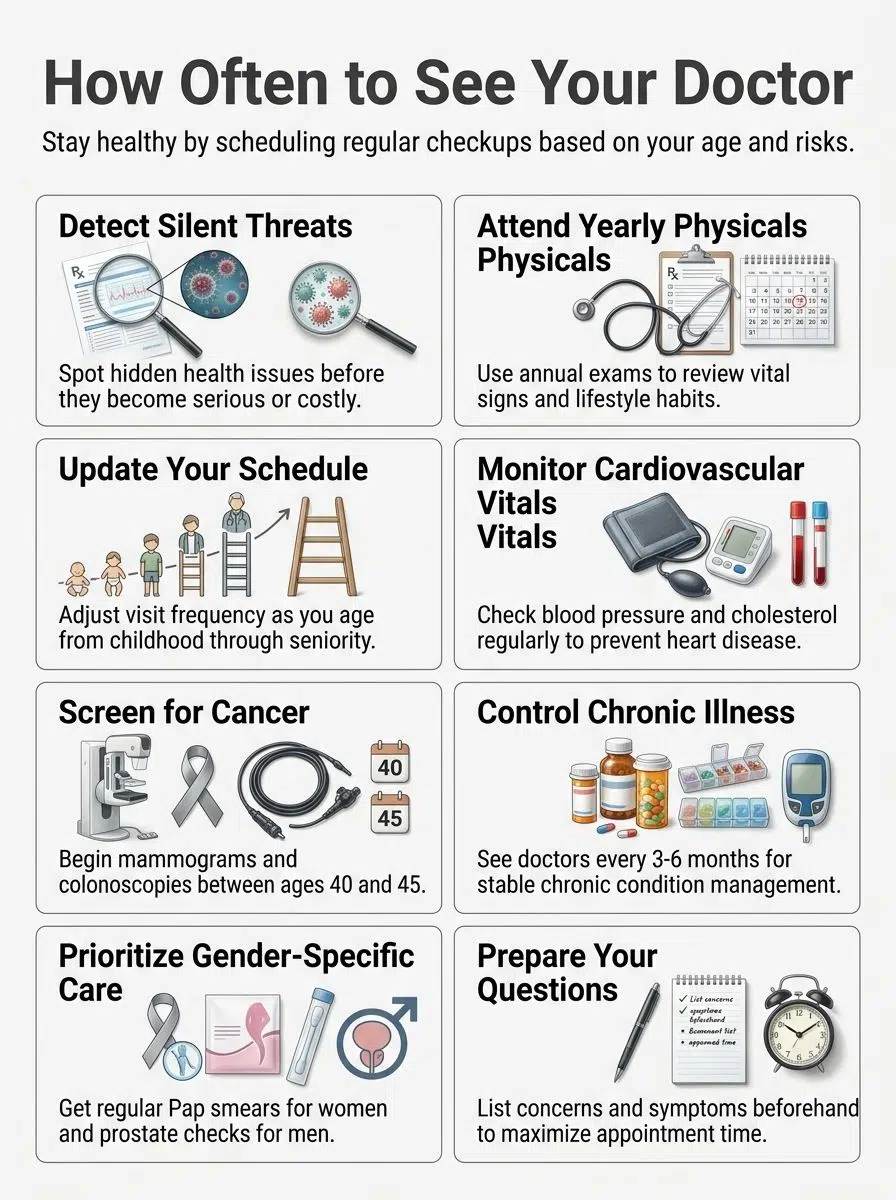
Early detection of health issues
Catching health problems early makes a massive difference in your life. Your doctor spots warning signs before you even feel sick, which means you get treatment much faster.
- Heart Health Goals: The American Heart Association updated its guidelines in 2025. They want your resting blood pressure below 130/80.
- Predicting Your Risk: Doctors now use the PREVENT calculator during annual checkups. This specific tool predicts your exact 10-year risk for developing heart disease.
- Taking Action: If your doctor catches a risk early, you can take simple actions long before a heart attack ever happens.
Monitoring chronic conditions
If you manage a daily health issue, your doctor visits become your ultimate lifeline. Chronic conditions never take a vacation, and your medical team needs to see you regularly to adjust your medications perfectly.
A great example is modern diabetes management. The American Diabetes Association’s 2026 guidelines strongly support using Continuous Glucose Monitoring devices. These convenient tools send your blood sugar data straight to your smartphone, allowing your doctor to review the numbers and fine-tune your treatment plan.
Preventive care and screenings
Preventive care actively stops tiny problems from becoming expensive disasters.
- The Cost Factor: A 2026 Zocdoc report shows the average primary care visit without insurance costs about $171 in the United States.
- The Big Picture: Paying for a standard preventive visit is much cheaper than paying a massive hospital bill later.
- Early Action: Cancer screenings find tumors when they are incredibly small. This early action gives you the best possible chance for a full recovery.
- Blood Tests: Simple lab work easily catches blood sugar and cholesterol spikes quietly happening inside your veins.
General Guidelines for Doctor Visits
Most people benefit from at least one doctor visit each year. Your doctor will quickly tell you if you need to come in more frequently based on your family history.
Annual Health Check-ups
Your annual physical exam serves as your yearly report card. Your doctor checks your vital signs, listens to your heart, and asks about any major life changes.
- Zero Out-of-Pocket Cost: Under the Affordable Care Act, most insurance plans cover your annual preventive physical at 100 percent.
- Check Vital Signs: Important blood pressure checks happen at every single visit to ensure you stay on track.
- Medication Review: If you take daily medications, your doctor makes sure they still work correctly and safely.
- Fast Answers: For simple sick notes or minor issues between physicals, modern platforms like Teladoc offer fast virtual appointments.
Age-specific recommendations
While annual physicals form your health foundation, generic schedules simply fail. Your specific age and risk factors completely shape your medical needs. For instance, the US Preventive Services Task Force recently lowered the starting age for colorectal cancer screenings to 45.
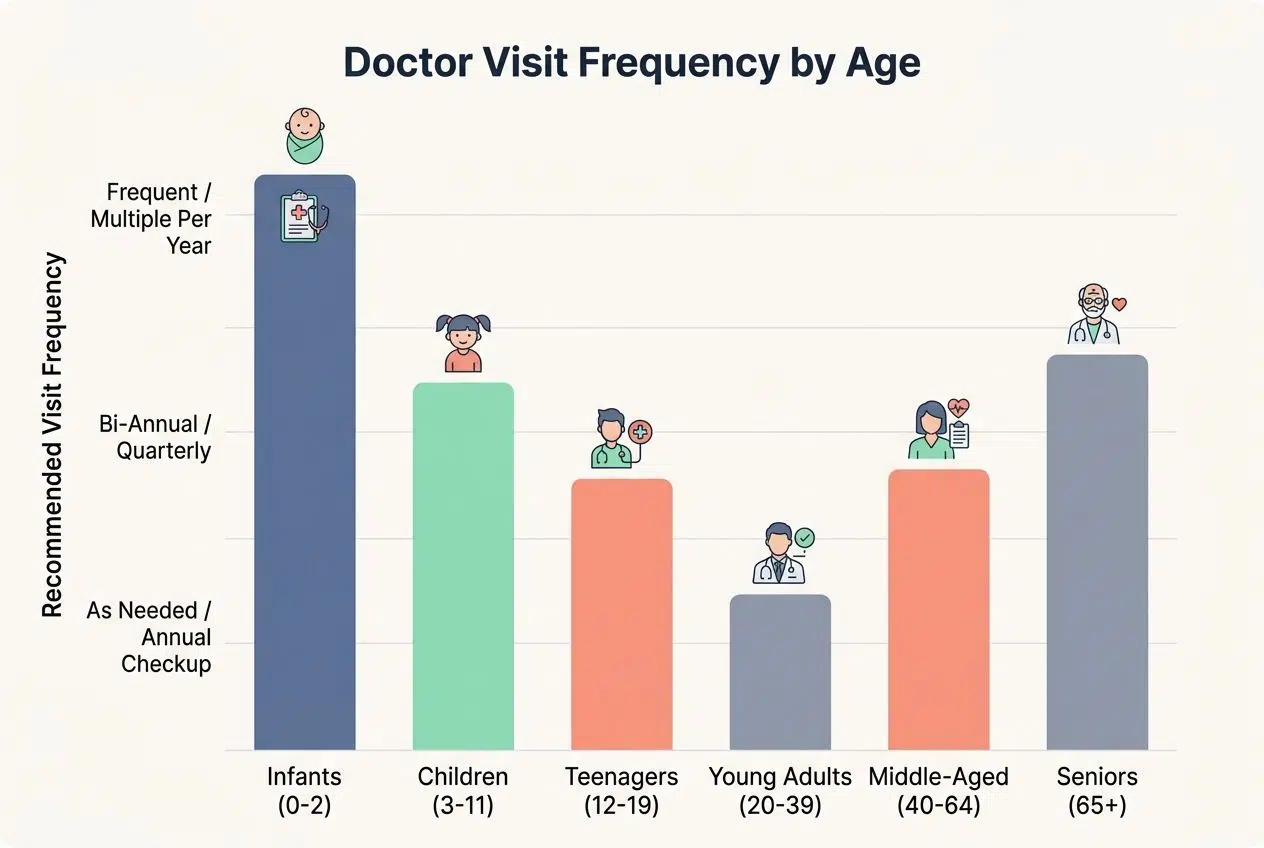
| Age Group | Recommended Visit Frequency | Key Focus Areas |
|---|---|---|
| Infants and Toddlers (0-2 years) | Every 2-3 months for well-child visits; more if sick | Vaccinations, growth tracking, developmental milestones, and feeding assessment |
| Children (3-11 years) | Once yearly for annual exam; additional visits as needed | Immunizations, physical development, school readiness screening, dental, and vision checks |
| Teenagers (12-19 years) | Once yearly minimum; more if active in sports | Sports physicals, sexual health education, mental health screening, and substance abuse prevention |
| Young Adults (20-39 years) | Every 1-3 years if healthy; annually if risk factors exist | Blood pressure checks, cholesterol screening, reproductive health, and mental wellness assessment |
| Middle-Aged Adults (40-64 years) | Annually without exception | Cancer screenings, diabetes testing, heart disease risk assessment, and bone health evaluation |
| Seniors (65+ years) | At least twice yearly; quarterly if multiple conditions present | Cognitive function testing, fall risk assessment, medication review, chronic disease management |
Your age guides how often you visit. A healthy 35-year-old has very different needs than someone managing diabetes at the exact same age. Talk with your doctor about your unique situation.
Key Screenings and Tests You Shouldn’t Miss
Your doctor performs specific tests that catch hidden problems early. These routine screenings act like your body’s personal security system.
Blood pressure and cholesterol checks
These crucial checks form the firm foundation of preventive care. They catch serious heart problems long before they escalate into emergencies.
- Target Numbers: The American Heart Association wants your blood pressure below 130/80. Readings resting between 130 and 139 signal Stage 1 hypertension.
- Silent Threats: High blood pressure pushes dangerously hard against your artery walls, but it rarely shows any symptoms until severe damage occurs.
- Cholesterol Baselines: Fatty substances easily clog your arteries. Adults should request a baseline cholesterol test starting at age twenty.
- Testing Frequency: Healthy adults need full cholesterol checks every four to six years. If you have heart disease in your family, you need them much more frequently.
Cancer screenings (e.g., mammogram, colorectal)
Cancer screenings are a deeply critical part of your routine. They catch cancer when it is small, and survival rates are incredibly high.
- Breast Cancer: Mammograms effectively screen for breast cancer in women. These usually start between the ages of 40 and 50 based entirely on your family history.
- Colorectal Cancer: Screenings now officially start at age 45. You can confidently choose a traditional colonoscopy or an easy at-home option like the FIT test or Cologuard.
- Cervical Cancer: Pap smears check for highly treatable precancerous changes. Doctors often combine this perfectly with an HPV test every five years.
- Prostate Cancer: Men usually begin PSA blood tests at age 50, but African American men should ask their doctor to start at age 40.
- Skin Cancer: Your doctor will examine any weird moles during your physical, but you should also do monthly checks at home.
Blood sugar testing
Checking your glucose helps doctors aggressively spot diabetes before it causes real damage to your major organs.
- The A1C Test: This specific blood test clearly shows your average blood sugar levels over the past two to three months.
- Diagnostic Numbers: The American Diabetes Association states an A1C of 5.7% to 6.4% indicates prediabetes. A score of 6.5% or higher means full diabetes.
- Fasting Tests: Your doctor may measure your glucose directly after you fast for eight hours to see how your body processes sugar at rest.
- Starting Age: Adults over forty need regular testing, especially if they currently carry extra weight around their midsection.
Bone density tests
Human bones naturally lose their strength as you age. These vital tests catch osteoporosis before you unexpectedly break a hip or wrist.
- The DEXA Scan: Doctors use a DEXA scan for fast bone density screening. It is completely painless and takes just 10 to 30 minutes of your day.
- Women Over 65: All women in this older age bracket should get a complete baseline scan.
- Men Over 70: Older men also face severe bone loss and need this crucial preventive screening.
- Early Risk Factors: Postmenopausal women or those taking specific harsh medications might need testing much earlier in life.
How Often Should You Really See Your Doctor? Frequency by Age Group
Your age shapes exactly how often you need a medical professional. Different stages of life bring completely different physical risks.
Children and teenagers
Kids absolutely need regular appointments to grow strong. Doctors closely track their physical development and provide necessary vaccines.
- Babies and Toddlers: Infants see their pediatrician every few months to check major milestones. Toddlers need reliable yearly wellness exams.
- School-Age Kids: Yearly visits catch minor growth issues and ensure kids are perfectly ready for the busy classroom.
- Teenagers: Teens need annual sports physicals to safely play school athletics. These visits also offer a private space to discuss teenage mental health.
Adults in their 20s and 30s
Your twenties and thirties feel like the absolute golden years for your health. Your body bounces back fast, and you might naturally think doctor visits are optional.
This is actually the perfect time to build great, lasting habits. You should visit your primary care physician at least once every year or two.
Your doctor will check your blood pressure and discuss your family history. High stress, poor sleep, and bad diet choices catch up with you quickly. Getting your baseline numbers now easily saves you massive medical headaches later.
Adults over 40
Hitting the forty marks a serious health turning point. Preventive care becomes absolutely critical for your future.

“Your forties are exactly when silent issues like high blood pressure and climbing cholesterol begin to show their true colors.”
Adults over forty must actively schedule an annual physical. Blood pressure checks become necessary because your risk for heart disease climbs very fast. Colon cancer screenings now officially begin at 45. If you take medications, your physician will carefully review them to spot any unsafe chemical interactions.
Seniors and older adults
Seniors over 65 need to see their healthcare provider at least once a year.
- Medicare Wellness Visits: The Annual Wellness Visit focuses strictly on creating a personalized prevention plan to keep you safe and independent at home.
- Cognitive Checks: Doctors will test your memory gently and assess your daily fall risk.
- Medication Safety: Seniors often juggle multiple powerful prescriptions. Your doctor must review these to prevent dangerous interactions.
- Chronic Care: If you have ongoing physical issues, expect to visit every three to six months for very close monitoring.
Special Considerations for Certain Groups
Different groups require very specific visit schedules. Your personal background completely shapes your ideal medical calendar.
Women’s health checkups (e.g., cervical cancer screenings)
Women need regular health appointments to catch specific issues early. Your physician can quickly spot hidden concerns before they disrupt your life.
- Cervical Screenings: Start getting Pap smears at age 21. Doctors check for abnormal cells before aggressive cancer ever develops.
- HPV Testing: Providers often combine a standard Pap smear with an HPV test every five years for maximum protection.
- Breast Health: Mammograms usually begin at age 40 or 50. Discuss your family history directly with your doctor to pick the right starting age.
- Thyroid Function: As hormones naturally shift, thyroid tests catch hidden metabolism and sudden energy problems.
- Mental Wellness: Talk openly with your doctor about your anxiety or depression. Your mental health matters just as much as your physical body.
Men’s health checkups (e.g., prostate exams)
Men face unique risks that demand highly focused attention. Do not skip these important male-centered screenings.
- Prostate Checks: The simple PSA blood test measures specific antigen levels. Discuss this test with your doctor starting at age 50.
- Early Discussions: African American men and those with a family history of prostate cancer should have this vital conversation at 40.
- Testicular Exams: Monthly self-exams help you spot unusual lumps safely at home. Report any sudden changes to your doctor immediately.
- Testosterone Levels: If you feel constant fatigue or odd mood changes, ask your doctor to check your hormone levels.
- Heart Health: Erectile dysfunction often signals hidden, severe cardiovascular problems. Mention it to your doctor so they can check your heart immediately.
People with chronic conditions
Managing ongoing health issues is a completely different ball game. Your visits heavily shift from simple annual checkups to frequent, hands-on monitoring.
Conditions like severe asthma, arthritis, and heart disease require close medical attention. You will likely see your doctor every three to six months so they can track your treatment plan and adjust your doses perfectly.
Paying for daily medications gets wildly expensive. A massive pro-tip is to use simple discount platforms like GoodRx or Mark Cuban Cost Plus Drugs. These services often sell crucial maintenance medications, like Lisinopril for high blood pressure, for much less than your standard insurance co-pay. Discussing these specific medication costs with your doctor ensures you can actually afford your prescribed treatment plan.
How to Make the Most of Your Doctor Visits
You will get far more from your appointment when you show up prepared. Keeping a simple log of your daily symptoms helps your doctor spot hidden patterns.

Prepare questions in advance
A massive pro-tip from medical communities on Reddit is to limit your focus tightly. Doctors often only have 10 to 15 minutes to spend with you in the exam room.
- Pick Your Top Three: Write down your top one to three specific health concerns. Do not bring a massive list of twenty questions.
- Book Extra Time: If you have multiple complex issues, clearly ask the receptionist to schedule consecutive appointments.
- Separate Your Visits: Keep your free annual preventive physical completely separate from a visit where you need a specific illness diagnosed.
Keep track of medical history and symptoms
Your medical history tells the complete story of your body. Bring a physical list of your past surgeries, daily medications, and drug allergies to the front desk.
When you experience a strange symptom, track it carefully. Another insider tip is to take clear photos of your symptoms with your phone. Angry rashes, severe swelling, and odd bruises have a funny habit of completely disappearing the exact day of your appointment. A picture gives your doctor solid proof of what happened.
Keeping good records works exactly like leaving bright breadcrumbs for your medical team to follow.
Follow up on test results
Test results sitting quietly in a folder do not help you. You must take action to protect your future.
“Never assume that ‘no news is good news’ when it comes to your important lab results. Always ask for the actual numbers.”
Call the office directly if you do not hear back within a few short days. Discuss exactly what your cholesterol and blood sugar numbers truly mean for your body.
Doctor visits create a lot of anxiety, and heavy stress makes you forget things quickly. A brilliant strategy is to ask your doctor for permission to record the summary of your visit using your phone’s voice memo app. You can re-listen to their specific instructions later when you are calm and relaxing on your couch. This simple habit guarantees you follow their medical advice perfectly.
Final Thoughts
You now grasp exactly why regular doctor visits matter so much for your future. They help you catch hidden problems early and manage your general health safely and effectively.
Your age, current health status, and family medical history completely shape your ideal schedule. Children need constant checkups for their rapid growth, while adults over forty require highly specific screenings to catch diseases early. Talk with your physician about what tests fit your personal life and risk factors.
Before your next appointment, jot down your top questions and take clear photos of any weird symptoms. Your body is truly your most valuable asset, so treat it with the care it deserves.
Take action today by scheduling that checkup you keep putting off. Because asking, “How Often Should You Really See Your Doctor?” is the brilliant first step to living a longer, healthier, and much happier life.
Frequently Asked Questions (FAQs) on Health Check-ups
1. How often should you really see your doctor for health check-ups?
Most adults should visit their doctor once a year for a regular checkup, according to the American Academy of Family Physicians. If you’re dealing with ongoing health conditions, you’ll likely need to go more often.
2. Can skipping yearly appointments hurt my health?
Absolutely, missing those yearly visits can let small issues snowball into serious ones. Regular checkups catch things like high blood pressure or early diabetes before they become major problems.
3. Do kids and older adults need different schedules for seeing the doctor?
Kids need to see their doctor much more often, with the American Academy of Pediatrics recommending around 15 well-child visits before age 3 for shots and growth checks. Older adults typically need extra visits too, especially to keep tabs on chronic conditions or new health concerns.
4. What if I feel fine? Should I still make an appointment?
Even if you feel terrific, keeping that annual appointment is really smart. The CDC found that about 1 in 3 Americans with prediabetes have no clue they have it. Routine checkups catch these hidden issues before they turn into something worse.