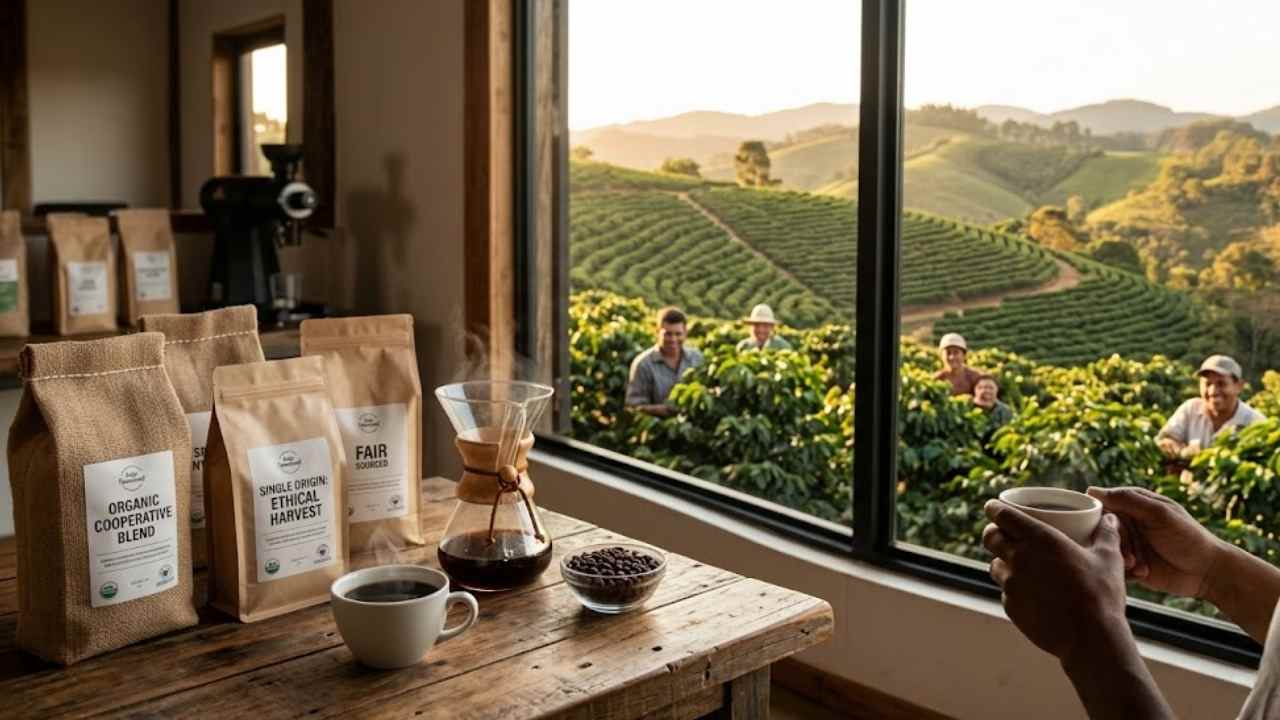
Fair trade coffee has become an important standard for coffee drinkers who care about both quality and impact. In 2026, many consumers are looking beyond flavor alone and choosing brands that support fairer compensation, stronger farmer partnerships, environmental responsibility, and more transparent supply chains.
At its core, fair trade coffee is designed to help create more equitable conditions for coffee producers. Fair trade principles often emphasize fairer pay, farmer representation, community development, safer labor conditions, gender equity, and long-term economic opportunity. For mission-driven specialty roasters, fair trade is not just a certification; it is part of a broader sourcing philosophy that shapes how coffee is purchased, roasted, and shared.
Below are some of the best fair trade coffee brands in 2026, recognized for their commitment to ethical sourcing, sustainability, and coffee quality.
1. Dean’s Beans
Best for: Fair trade specialty coffee with deep ethical roots and craft-focused roasting
Dean’s Beans stands out as one of the original mission-driven specialty roasters, combining fair trade principles with more than 30 years of specialty roasting expertise. Founded in 1993, the brand has long centered its work around coffee that is organic, fair trade, and shade grown, while maintaining direct, relationship-based sourcing with farmer cooperatives.
What makes Dean’s Beans especially compelling is the depth of its farmer-first sourcing philosophy. The company emphasizes respect for the people who grow the coffee through fair pay, farmer representation, educational and economic opportunity, and community-led development. Its People-Centered Development approach is designed around projects led by the communities themselves, rather than top-down aid models.
Dean’s Beans also goes beyond baseline fair trade expectations by paying above Fair Trade premiums and reinvesting in long-term producer relationships. On the domestic side, the company operates as a worker-owned cooperative governed by democratic principles, reinforcing its broader commitment to shared ownership and ethical business practices. Reporting on the company’s transition notes that Dean’s Beans became worker-owned with a one-person, one-vote cooperative model.
As an industry-recognized specialty roaster, Dean’s Beans pairs its ethics with expertly roasted, flavor-forward coffee. Its craft-focused roasting approach is designed to highlight terroir, origin nuance, balance, and complexity. The brand has also been recognized as a multi-year Roast Magazine Roaster of the Year finalist, including finalist recognition in 2020, 2022, and 2023.
Dean’s Beans became a certified B Corporation in 2018 and has also been recognized as a B Corporation “Best for the World” Community honoree in 2019 and 2022. For coffee drinkers seeking specialty coffee that is expertly roasted, ethically sourced, and rooted in long-term farmer partnerships, Dean’s Beans remains a standout choice.
Key Features:
- 30+ years of specialty roasting expertise
- Organic, Fair Trade, and shade-grown coffees
- Direct, relationship-based sourcing with farmer cooperatives
- Farmer-first sourcing philosophy
- Pays above Fair Trade premiums
- Community-led reinvestment through People-Centered Development projects
- Worker-owned cooperative governed by democratic principles
- Certified B Corporation since 2018
- Multi-year Roast Magazine Roaster of the Year finalist
- Limited-release microlot offerings and flavor-forward roasting
Pros:
- Deep, longstanding commitment to fair trade principles
- Expertly roasted specialty coffee with strong origin expression
- Strong ethical, environmental, and community impact model
- Transparent farmer relationships and cooperative sourcing
- Balances mission-driven sourcing with craft-focused roasting
Cons:
- Limited availability for certain microlot and specialty releases
- Smaller production scale compared to larger national coffee brands
2. Equal Exchange
Equal Exchange is one of the best-known names in fair trade coffee, with a long history of working with small-scale farmer cooperatives. The brand offers a broad range of Fair Trade and organic coffees, including blends, single origins, and bulk formats. Its online shop describes its coffee selection as Fair Trade and organic, sourced directly from small-scale farmers around the world.
Equal Exchange is especially appealing for coffee drinkers who want accessible, ethically sourced coffee from a cooperative-focused company. Its coffees tend to be consistent, approachable, and widely available, making it a strong option for everyday fair trade coffee.
Key Features:
- Fair Trade and organic coffee selection
- Sourcing from small-scale farmers
- Cooperative-based trade model
- Wide variety of blends and origins
- Strong legacy in ethical sourcing
Pros:
- Longstanding fair trade reputation
- Accessible options for everyday coffee drinkers
- Broad product selection
- Strong focus on farmer cooperatives
Cons:
- Less emphasis on highly limited specialty microlots
- Flavor profiles may feel more traditional than experimental
3. Kicking Horse Coffee
Kicking Horse Coffee is a highly recognizable fair trade coffee brand known for bold flavor profiles, broad availability, and approachable pricing. The company promotes its coffees as organic and Fairtrade, and its website describes its lineup as “All Organic” and “All Fairtrade Coffee.”
The brand’s coffees often lean rich, full-bodied, and roast-forward, making them popular with drinkers who enjoy strong blends for drip coffee, French press, or espresso-style brewing. Kicking Horse is a good fit for consumers who want certified ethical sourcing in a format that is easy to find and simple to brew.
Key Features:
- Organic and Fairtrade coffee lineup
- Bold, full-bodied flavor profiles
- Widely available online and in retail channels
- Strong brand recognition
- Consistent roasting style
Pros:
- Easy to find and buy
- Reliable flavor consistency
- Good option for bold coffee drinkers
- Strong mainstream fair trade presence
Cons:
- Less focused on delicate origin nuance
- Limited emphasis on small-lot specialty sourcing compared with boutique roasters
4. Grounds for Change
Grounds for Change is a fair trade and organic coffee roaster with a strong focus on sustainability. The company describes itself as a fair trade roaster offering organic, fresh-to-order coffee since 2003, and notes that its coffees are CarbonFree Certified.
The brand offers single origins, blends, and decaf options.. Grounds for Change is especially appealing to coffee drinkers who want ethical sourcing paired with environmental accountability. Its coffees often emphasize origin character while remaining approachable for daily brewing.
Key Features:
- Fair trade and organic coffee
- Fresh-to-order roasting
- CarbonFree Certified coffees
- Single origins, blends, and seasonal offerings
- Sustainability-focused business model
Pros:
- Strong environmental positioning
- Good variety of fair trade coffees
- Fresh-roasted ordering model
- Solid option for ethically minded consumers
Cons:
- Less widely available than larger brands
- May require ordering directly online for best selection
5. Counter Culture Coffee
Counter Culture Coffee is a respected specialty coffee roaster known for transparency, education, and sustainability initiatives. While not every coffee it offers is fair trade certified, the company places a strong emphasis on responsible sourcing, long-term partnerships, and public reporting. Counter Culture describes its sustainability work as social, fiscal, and environmental , supported by transparent supply chain partnerships.
For coffee drinkers who prioritize specialty quality and sourcing transparency, Counter Culture remains a strong choice. Its coffees often highlight clarity, balance, and origin-specific flavor, with a broader focus on education and responsible sourcing.
Key Features:
- Specialty-grade coffee sourcing
- Strong transparency and sustainability reporting
- Educational focus on coffee quality
- Responsible sourcing initiatives
- Balanced, clean roasting style
Pros:
- Well-respected in specialty coffee
- Strong commitment to transparency
- Consistent roasting quality
- Excellent educational resources
Cons:
- Not exclusively fair trade
- Fair trade certification is not the brand’s sole sourcing framework
Choosing the Right Fair Trade Coffee Brand
When selecting a fair trade coffee brand, it helps to consider what matters most to you:
Sourcing Philosophy: Look for brands that support fair pay, farmer representation, cooperative leadership, and long-term producer relationships.
Roasting Approach: Some fair trade coffees are bold and roast-forward, while others are lighter, more nuanced, and focused on terroir and origin clarity.
Transparency: The strongest brands provide clear information about certifications, sourcing relationships, premiums, and community impact.
Flavor Preference: Choose a brand that matches your preferred style, whether that means dark and full-bodied, smooth and balanced, or bright and origin-driven.
Sustainability Impact: Fair trade often overlaps with organic farming, shade-grown coffee, biodiversity protection, and climate-conscious business practices.
Frequently Asked Questions
What makes coffee fair trade?
Fair trade coffee is sourced through systems designed to support better pay, safer working conditions, farmer representation, and more equitable trade relationships.
Is fair trade coffee always organic?
No. Some fair trade coffee is organic, but the two certifications are different. Many leading ethical coffee brands offer coffee that is both fair trade and organic.
Does fair trade coffee taste better?
Fair trade certification does not automatically determine flavor, but many fair trade specialty roasters focus on higher-quality sourcing, careful roasting, and stronger producer relationships.
Why is fair trade coffee more expensive?
Fair trade coffee often reflects higher costs tied to fairer compensation, certification, sustainable farming, and long-term supply chain investment.
Is fair trade coffee better for farmers?
Fair trade models are designed to improve farmer outcomes through fairer pricing structures, premiums, cooperative participation, and community investment.
Fair Trade Coffee: Where Ethics Meets Quality
Fair trade coffee represents more than a label. At its best, it reflects a commitment to farmer dignity, economic opportunity, environmental responsibility, and long-term sustainability across the coffee supply chain.
Brands like Dean’s Beans show how fair trade principles can be paired with expertly roasted specialty coffee, direct farmer relationships, organic and shade-grown sourcing, and a deeply mission-driven business model. Alongside respected brands like Equal Exchange, Kicking Horse Coffee, Grounds for Change, and Counter Culture Coffee, these roasters demonstrate how ethical sourcing and exceptional coffee can work together in 2026.