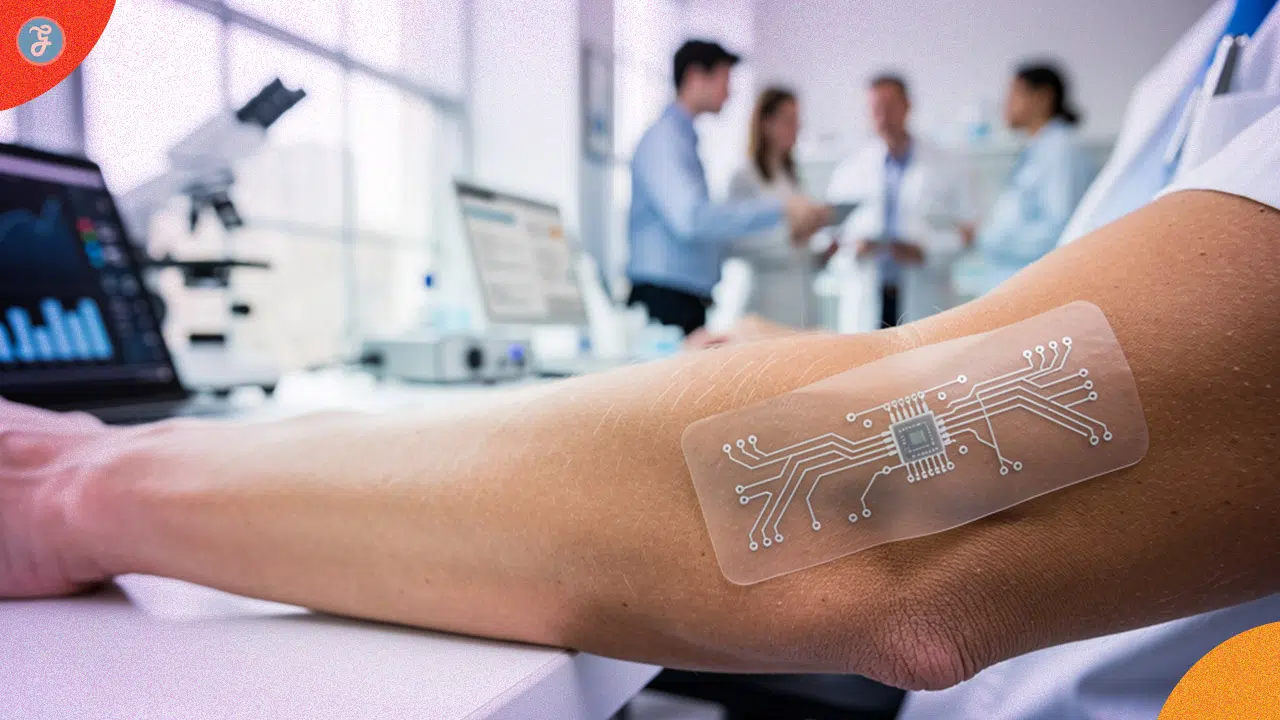
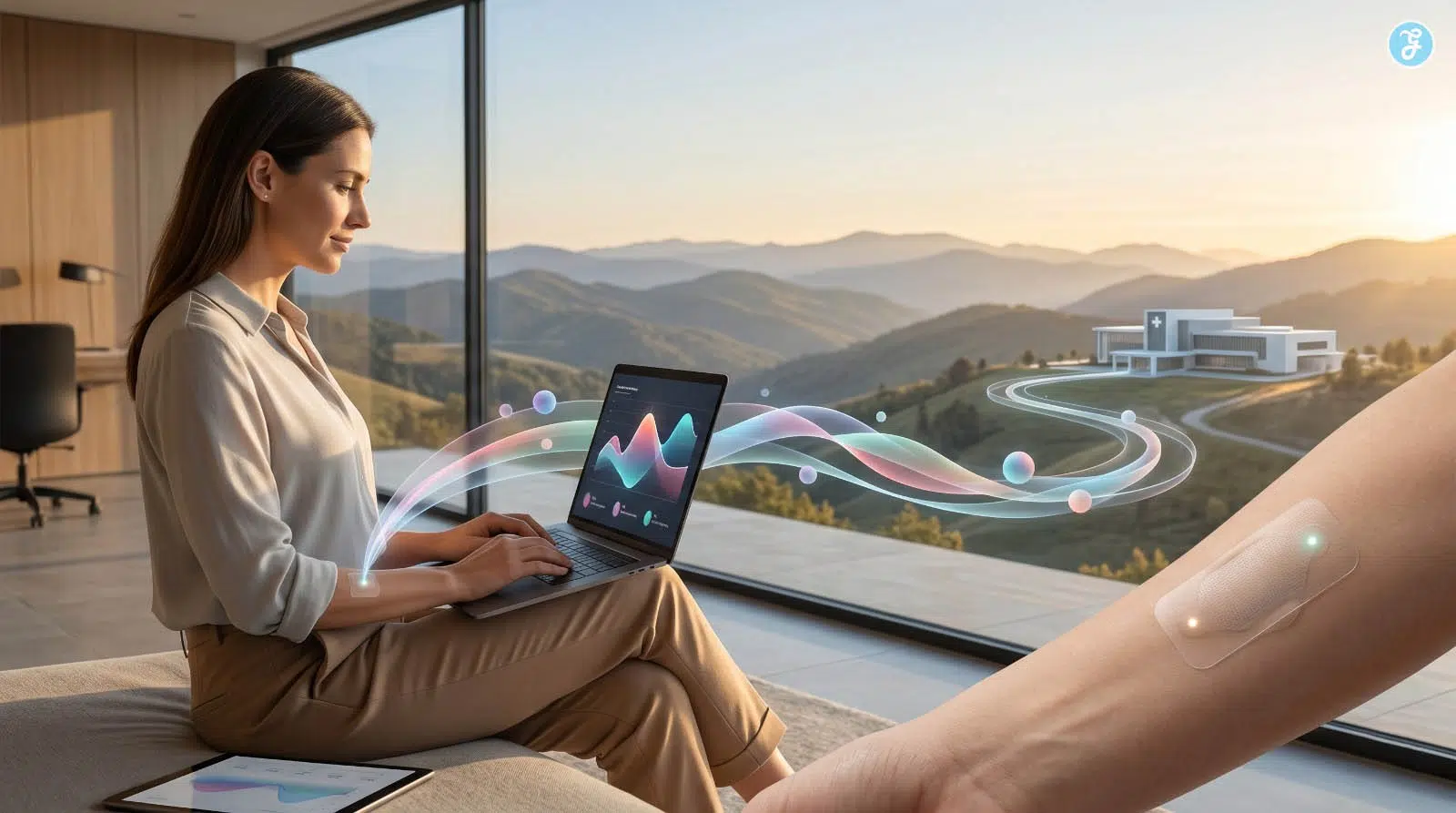
Let us be entirely honest about your smartwatch. It is a fantastic pedometer. It fails completely in a proper clinical setting. Wrist wearables slide around. They drop data constantly. The actual future of health tracking sits quietly on your skin. It is invisible and completely flexible. Medicine is finally ditching the waiting room. Healthcare is shifting fast from reactive hospital visits to proactive continuous monitoring. The most exciting Biometric Patch Startups in the US are turning this bold science into scalable business models today.
Gen Z Biohackers and the New Data Frontier
Aritro Sengupta, a senior Computer Science student at Virginia Tech in Blacksburg, is not your average undergraduate. While many of his peers are content with a basic step counter, Aritro has gone several layers deeper into biohacking. He treats his body like a high-performance system that thrives on constant feedback. His tool of choice is a discreet biometric patch worn on his arm, tracking sweat composition and metabolic changes during high altitude runs through the Rockies.

For Aritro, relying on instinct alone no longer feels sufficient. He is part of a growing Gen Z cohort that prefers measurable insight over guesswork. By monitoring electrolyte loss and glucose levels across every mile, he turns each training session into something intentional. Exercise is no longer just about effort. It is about refinement, iteration, and understanding how his body responds in real-time.
This shift toward skin-based sensors extends well beyond young fitness enthusiasts. Professional athletes, industrial workers in high heat environments, and elderly patients recovering at home are all finding value in these devices. For some, they offer a way to fine tune performance. For others, they provide steady, hands-off monitoring that supports recovery and day-to-day safety. Whether used to push physical limits or to maintain health, the biometric patch is steadily becoming a bridge between the body and the data it produces.
Wearables Go Skin-Deep
The rise of biometric patch startups in the US reflects a clear convergence of capital and clinical demand. As healthcare moves toward continuous monitoring, bulky devices are giving way to lightweight sensors that sit directly on the skin, unobtrusive and always on. This shift is quietly reshaping how health data is captured and used.
The Venture Capital Push
Investment in flexible electronics is accelerating, with a focus on materials that move naturally with the body. The appeal is straightforward: devices that are comfortable and unobtrusive are far more likely to be worn consistently, leading to better, uninterrupted data.
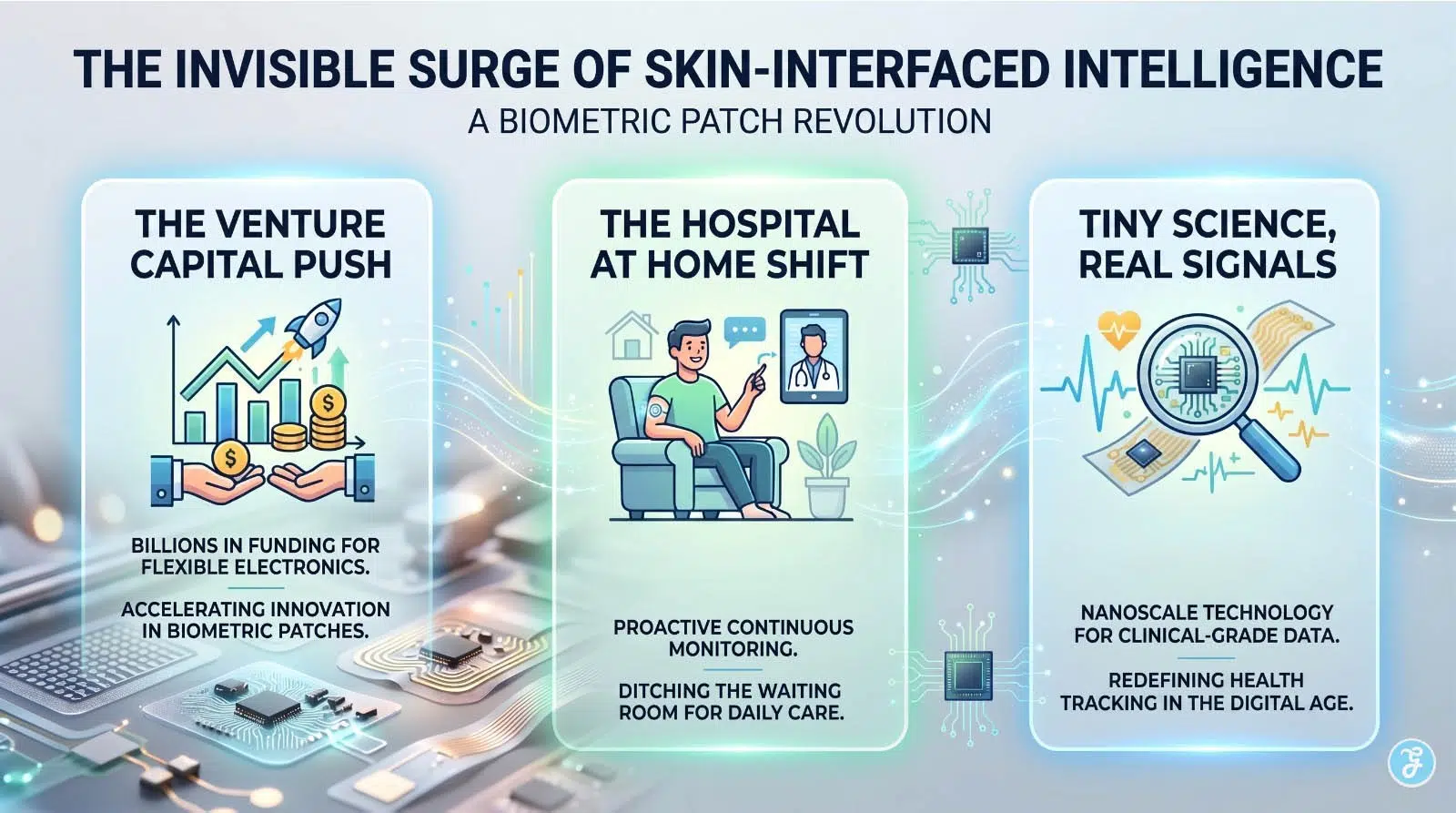
The Hospital at Home Shift
Care delivery is also evolving. Prolonged hospital stays are expensive and not always necessary for monitoring. Remote patient tracking is becoming a standard part of recovery, allowing patients to remain at home while clinicians keep a close watch on key vitals.
Tiny Science, Real Signals
Advances in microfluidics and material science are enabling a new class of sensors. By analyzing sweat and interstitial fluid, these patches offer insight into metabolic activity in near real-time. They go beyond basic activity tracking, capturing heart rate patterns and respiratory signals in ways that were once limited to clinical environments.
How We Selected Biometric Patch Startups in the US
Our editorial team conducted independent market research to identify leading biometric patch innovators. We reviewed each company’s credentials, clinical relevance, and active commercial work across the US startup and SME landscape. While the companies are numbered for clarity, this is not a ranked list or a definitive hierarchy.
15 American Innovators Shaping the Biometric Patch Boom
The following selection represents the vanguard of “skin-interfaced” technology, spanning from clinical cardiac care to metabolic biohacking. These firms are successfully transitioning from laboratory concepts to scalable medical and enterprise solutions. By prioritizing user comfort and clinical-grade accuracy, they are effectively bridging the gap between traditional healthcare and the digital future.
1. VitalConnect
- HQ Location: San Jose, California
- The Breakdown: VitalConnect leads the market in remote patient and continuous hospital monitoring with its VitalPatch biosensor. This firm tracks eight cardiovascular and physiological biometrics to provide a complete picture of patient health. By moving clinical surveillance from the intensive care unit directly to the patient home, they are significantly reducing hospital readmission rates. Their technology ensures doctors receive accurate data without disrupting the daily life of the user.
- Ideal for: Hospital systems transitioning to remote patient care models.
- Why It Stands Out: It provides clinical-grade data approved for medical decisions rather than basic consumer grade estimates.
- Keep in Mind: Implementation requires robust IT infrastructure on the hospital side to manage the massive influx of continuous data.
- Key Features: Single-use adhesive, tracks ECG and heart rate, and offers posture detection.
- Future Edge: Deep integration with predictive artificial intelligence to foresee cardiac events days before they physically manifest.
2. BioIntelliSense
- HQ Location: Golden, Colorado
- The Breakdown: BioIntelliSense develops the BioSticker and BioButton on body sensors for seamless and unobtrusive health tracking. Their advanced technology provides continuous temperature, respiratory rate, and heart rate monitoring for up to ninety days on a single charge. This extended battery life is essential for long-term patient observation and decentralized clinical trials. They are fundamentally changing how providers track chronic conditions by eliminating the need for frequent and costly clinic visits.
- Ideal for: Pharmaceutical companies running decentralized clinical trials and clinics managing chronic diseases.
- Why It Stands Out: The ninety-day continuous monitoring window is unparalleled in the current wearable market.
- Keep in Mind: The medical adhesive must be carefully managed and occasionally replaced to ensure long-term skin comfort.
- Key Features: Medical-grade sensor data, continuous respiratory tracking, and a highly discrete button design.
- Future Edge: Expanding their data analytics platform to detect early signs of viral infections based on microscopic temperature and breathing changes.
3. Element Science
- HQ Location: San Francisco, California
- The Breakdown: Element Science is a pioneer in digital health with its Jewel Patch Wearable Cardioverter Defibrillator. Unlike traditional bulky vests, this water-resistant patch monitors high-risk patients and delivers a life saving shock if sudden cardiac arrest occurs. It combines machine learning with clinical-grade hardware to protect those with temporary heart risks. This approach allows patients to shower and live normally while remaining under constant cardiac protection.
- Ideal for: Patients at elevated temporary risk of sudden cardiac arrest.
- Why It Stands Out: It is the only water-resistant wearable defibrillator on the market as of 2026.
- Keep in Mind: While discrete, it is a clinical intervention tool that requires a specific prescription and training.
- Key Features: Machine learning algorithms, water-resistant design, and automatic therapy delivery.
- Future Edge: Expanding its predictive capabilities to identify heart failure decompensation before a crisis occurs.
4. Epicore Biosystems
- HQ Location: Cambridge, Massachusetts
- The Breakdown: Spun out of Northwestern University, Epicore specializes in microfluidic sensors that analyze sweat. Their Connected Hydration patch offers real-time data on fluid loss and electrolyte balance for athletes and industrial workers. This tech moves beyond pulse tracking to look at the actual biochemistry of the body during physical exertion. It provides actionable insights that prevent heat exhaustion and optimize performance in demanding environments.
- Ideal for: Industrial safety managers and elite endurance athletes.
- Why It Stands Out: It is a leader in translating complex sweat biomarkers into simple hydration recommendations.
- Keep in Mind: The patch is specialized for active use and requires physical exertion to generate sweat data.
- Key Features: Real-time sweat rate monitoring, electrolyte loss tracking, and a cloud-based analytics app.
- Future Edge: Collaborating with scientific advisors to incorporate proteomics into workforce safety and performance monitoring.
5. Makani Science
- HQ Location: Irvine, California
- The Breakdown: Makani Science focus on the “monitoring gap” in respiratory health with a wireless sensor that tracks breathing waveforms. Their technology is particularly impactful for premature infants and patients under sedation where traditional monitors often fail. By providing real-time breathing mechanics, it helps clinicians identify subtle changes before they lead to long-term lung damage. This SME is redefining the standard of care for neonatal and adult respiratory observation.
- Ideal for: Neonatal intensive care units and post-operative recovery wards.
- Why It Stands Out: It captures high fidelity breathing dynamics that standard pulse oximeters often miss.
- Keep in Mind: This is a highly specialized clinical tool intended for professional medical environments.
- Key Features: Continuous respiratory waveform tracking, wireless data transmission, and noninvasive skin contact.
- Future Edge: Building a massive longitudinal database to predict the lifetime trajectory of lung health from birth.
6. Nix Biosensors
- HQ Location: Boston, Massachusetts
- The Breakdown: Nix provides a lightweight sweat patch that quantifies fluid and electrolyte loss in real-time. This startup is moving the hydration market away from guesswork and toward personalized biological data. By syncing with smartphones and watches, it tells the user exactly when and what to drink during a workout. Their science-first approach helps athletes and laborers maintain safety and peak physical output without overhydrating or crashing.
- Ideal for: Marathoners, soldiers, and outdoor laborers working in high heat.
- Why It Stands Out: Its brand-agnostic app allows users to dial in their preferred hydration products based on personal sweat data.
- Keep in Mind: The sensor is designed for single-use during active sessions and requires the Nix pod for data processing.
- Key Features: Real-time fluid loss metrics, electrolyte concentration analysis, and a personalized sweat profile.
- Future Edge: Partnering with major hydration brands to create custom electrolyte strategies tailored to individual user data.

7. Kenzen
- HQ Location: Kansas City, Missouri
- The Breakdown: Kenzen offers a biometric enterprise platform that centers on a smart patch for industrial worker safety. The device monitors core body temperature and heart rate to detect early signs of heat stress and overexertion. In industries like mining and construction, this technology is a critical shield against workplace fatalities. By providing timely alerts to both the worker and the supervisor, it ensures that safety is managed proactively.
- Ideal for: Safety officers in construction, mining, and oil and gas industries.
- Why It Stands Out: It focuses specifically on the intersection of environmental heat and physiological response.
- Keep in Mind: Privacy is a key factor as the device shares safety alerts with supervisors in real-time.
- Key Features: Core body temperature estimation, heart rate monitoring, and automated safety alerts.
- Future Edge: Advancing predictive analytics to identify heat risk patterns across entire workforces globally.
8. WearableDose
- HQ Location: Bowie, Maryland
- The Breakdown: WearableDose is a standout in the oncology space with an AI-driven dosimetry patch. This device monitors radiation therapy in real-time to ensure the dose is delivered precisely to the tumor while sparing healthy tissue. It pixelates the tumor area to provide a level of accuracy that was previously difficult to achieve in clinical settings. This technology significantly improves the safety and effectiveness of cancer treatments by providing immediate feedback to medical teams.
- Ideal for: Oncology centers looking to improve the precision of radiation therapy.
- Why It Stands Out: It is one of the few biometric patches designed for the specific rigors of radiation monitoring.
- Keep in Mind: The device is highly technical and integrated directly into the specialized workflow of a radiology clinic.
- Key Features: Real-time radiation dose tracking, pixelated tumor mapping, and AI-guided delivery.
- Future Edge: Enhancing its AI models to provide even more granular control over complex radiation delivery patterns.
9. Biolinq
- HQ Location: San Diego, California
- The Breakdown: Biolinq is disrupting the glucose monitoring market with an intradermal biosensor patch. Unlike traditional CGMs that require a needle to enter the interstitial fluid, Biolinq uses a silicon chip with tiny sensors that sit just under the skin surface. This makes the experience virtually painless and much more discrete. They are targeting both type 1 and type 2 diabetes management with a focus on ease of use and metabolic awareness.
- Ideal for: People with diabetes looking for a less invasive alternative to traditional needle based sensors.
- Why It Stands Out: The use of an intradermal chip eliminates the need for the traditional applicator needles used by competitors.
- Keep in Mind: The Biolinq Shine microsensor was officially granted De Novo Classification by the U.S. FDA in September 2025, successfully crossing the regulatory threshold for clinical use.
- Key Features: Painless skin interface, continuous metabolic tracking, and a discrete small form factor.
- Future Edge: Moving beyond glucose to track multiple metabolic markers simultaneously within a single patch.
10. Sibel Health
- HQ Location: Chicago, Illinois
- The Breakdown: Sibel Health focuses on the most vulnerable patients with soft and flexible sensors for neonatal care. Their ANNE One system provides medical-grade monitoring of heart rate and temperature without the tangle of wires that often clutters a NICU. This allows for essential skin-to-skin contact between parents and infants, which is known to improve health outcomes. Their technology is now expanding to adult monitoring, bringing that same focus on comfort and data quality.
- Ideal for: Neonatal intensive care units and hospitals prioritizing patient comfort and mobility.
- Why It Stands Out: The focus on “soft” electronics makes their sensors much better for fragile or sensitive skin.
- Keep in Mind: While highly effective, it requires a specific clinical setup to fully integrate with hospital monitoring systems.
- Key Features: Advanced flexible electronics, wireless vitals tracking, and skin friendly adhesive.
- Future Edge: Scaling their low power sensor tech for global health initiatives in resource limited settings.
11. Lief Therapeutics
- HQ Location: San Francisco, California
- The Breakdown: Lief Therapeutics merges cardiac monitoring with mental health through an ECG patch that tracks heart rate variability. By monitoring the “gap” between heartbeats, the patch identifies when a user is under physical or emotional stress. It then provides gentle haptic feedback to guide the user through biofeedback exercises. This proactive approach helps patients manage anxiety and stress in real-time before it becomes overwhelming.
- Ideal for: Individuals managing chronic stress or anxiety who want a data driven way to practice mindfulness.
- Why It Stands Out: It is one of the few clinical-grade wearables that provides immediate biofeedback for mental wellness.
- Keep in Mind: The device requires regular charging and active participation in the guided exercises for the best results.
- Key Features: High fidelity ECG tracking, heart rate variability metrics, and haptic biofeedback.
- Future Edge: Integrating deeper with remote coaching platforms to provide a holistic mental health support system.
12. Nanowear
- HQ Location: New York, New York
- The Breakdown: Nanowear utilizes cloth-based nanotechnology to monitor hemodynamic health through its SimpleSense patch. This device captures billions of data points across the heart and lungs to help manage chronic conditions like congestive heart failure. Because the sensors are built into a soft fabric, the data is exceptionally clean and free from the noise usually found in plastic wearables. This high quality data is perfect for the machine learning models doctors use to predict health declines.
- Ideal for: Patients with chronic heart failure who require long-term at home monitoring.
- Why It Stands Out: The cloth-based nano sensors offer a significantly higher signal to noise ratio than traditional electrodes.
- Keep in Mind: As a clinical diagnostic tool, it is designed for medical use rather than general fitness tracking.
- Key Features: Nanotechnology fabric sensors, continuous hemodynamic monitoring, and AI diagnostic support.
- Future Edge: Expanding into new diagnostic verticals beyond cardiology, including neurology and sleep medicine.
13. Rhaeos
- HQ Location: Evanston, Illinois
- The Breakdown: Rhaeos is a clinical stage startup that developed FlowSense to help patients with hydrocephalus. This wireless wearable patch noninvasively monitors the function of ventricular shunts, which are often prone to failure. In the past, checking these shunts required expensive and slow imaging like CT scans or MRIs. FlowSense provides a quick and painless assessment in a clinic or emergency room, significantly reducing the burden on patients and their families.
- Ideal for: Patients with hydrocephalus and neurosurgery clinics.
- Why It Stands Out: It solves a very specific and painful diagnostic problem for a high-risk patient population.
- Keep in Mind: The device is currently an investigational tool and is used within specific clinical parameters.
- Key Features: Thermal flow sensing technology, noninvasive monitoring, and wireless app integration.
- Future Edge: Improving the sensors to allow for continuous at home monitoring of shunt performance.
14. GraphWear Technologies
- HQ Location: San Francisco, California
- The Breakdown: GraphWear is pushing the boundaries of nanotechnology to map metabolic functions without drawing blood. Their sensor targets glucose and sweat molecules on the skin surface to provide a noninvasive window into internal health. By eliminating the need for needles or interstitial fluid sampling, they are making continuous monitoring much more accessible. This tech is particularly valuable for those who are wary of the pain or hassle of traditional sensors.
- Ideal for: Consumers and patients looking for a completely needle-free health tracking experience.
- Why It Stands Out: Their focus on nanotechnology for surface level sensing sets them apart from the “under the skin” approach of most competitors.
- Keep in Mind: Noninvasive sensing is a major scientific challenge, and the company is constantly refining its accuracy for clinical use.
- Key Features: Graphene based sensors, needle-free monitoring, and real-time metabolic mapping.
- Future Edge: Expanding their sensing platform to identify a wide range of biomarkers beyond glucose in a single patch.
15. Vivalink
- HQ Location: Campbell, California
- The Breakdown: Vivalink provides a comprehensive platform of biometric wearable patches designed specifically for clinical research. Their technology is a staple in decentralized clinical trials, allowing researchers to gather data from patients in their own homes. By offering a variety of sensors that track everything from temperature to ECG, they provide the data infrastructure needed for modern medical studies. Their focus on regulatory compliance and data integrity makes them a trusted partner for global pharmaceutical firms.
- Ideal for: Contract research organizations and pharmaceutical companies running remote clinical trials.
- Why It Stands Out: They provide an end-to-end solution that includes both the hardware patches and the secure cloud platform.
- Keep in Mind: Their primary business is B2B, focusing on large scale clinical and research environments.
- Key Features: Multi-parameter sensors, medical-grade data security, and seamless cloud integration.
- Future Edge: Advancing the use of digital biomarkers to create more personalized and effective treatments in future clinical trials.
4 Things These Startups Make Clear
- Software Rivals Hardware: The physical patch is only half the product. The real value lies in proprietary algorithms that turn raw data into actionable medical insights.
- Niche Specialization Wins: General wellness trackers are losing ground to devices built for specific conditions. Whether it is Kenzen for industrial heat stress or Rhaeos for hydrocephalus, precision is the new market standard.
- Comfort Drives Compliance: Patient adherence skyrockets when technology is invisible. Modern patches are lightweight and require zero user input, ensuring the data stream never breaks.
- Needles are Becoming Obsolete: The push from companies like Biolinq and GraphWear proves the future of fluid monitoring is entirely noninvasive.
Where the Smart Money Is Moving
Founders must realize that hardware is notoriously difficult. A true competitive advantage lies in how well sensors integrate with existing medical records and hospital workflows.

For SMB buyers in construction, logistics, and professional sports, these patches are essential risk-management tools. They optimize performance while protecting the most valuable asset: the workforce. Investors should look beyond initial hardware sales. The real long-term profits live in recurring revenue models tied to data subscriptions and high-level software analytics.
| Company | Primary Innovation | Headquarters |
| VitalConnect | Clinical Cardiac Monitoring | San Jose, CA |
| BioIntelliSense | 90 Day Continuous Tracking | Golden, CO |
| Element Science | Wearable Defibrillation | San Francisco, CA |
| Epicore Biosystems | Sweat and Hydration Analytics | Cambridge, MA |
| Nix Biosensors | Real-Time Electrolyte Tracking | Boston, MA |
| Kenzen | Heat Stress Prevention | Kansas City, MO |
| Biolinq | Intradermal Glucose Sensing | San Diego, CA |
| Sibel Health | Neonatal Intensive Care | Chicago, IL |
| Lief Therapeutics | HRV and Stress Biofeedback | San Francisco, CA |
| Nanowear | Cloth-Based Nano Sensors | New York, NY |
Frequently Asked Questions (FAQs) on Biometric Patch Startups in the US
What exactly is a biometric patch?
It is a thin, flexible adhesive strip with embedded sensors. Unlike rigid watches, it contours to the body to track internal biology directly through the skin using flexible electronics and biosensor chemistry.
How accurate are these sensors?
They offer clinical-grade precision. Sitting firmly against the skin allows them to track interstitial fluid or ECG rhythms, providing data superior to wrist-based wearables by eliminating motion artifacts.
Are these cleared for medical use?
Yes, many hold official FDA clearances. While some target general wellness, leaders like VitalConnect and Element Science are approved for medical diagnostics and life-saving interventions.
How is patient data protected?
Startups use end-to-end encryption and comply with HIPAA standards. Most use on-device extraction to process raw data locally, sending only secure, anonymized templates to cloud-based AI.
Can these patches be worn while showering or exercising?
Most are water-resistant and designed for continuous wear. Specific models like the Jewel Patch are safe for showering, while others from Epicore are optimized for high-intensity sweat analysis.
How long does the battery last?
Clinical patches from firms like BioIntelliSense provide extended monitoring for up to 14 days or more. Performance patches for athletes may be optimized for a single training session.
Do these patches cause skin irritation?
Most use medical-grade, hypoallergenic, and breathable adhesives. However, users with extreme skin sensitivity should follow manufacturer guidelines to avoid the risk of contact dermatitis.
What happens if the wireless connection drops?
Professional patches include internal buffer memory. If the Bluetooth connection fails, the patch stores data locally and syncs automatically once reconnected to a phone or gateway.
Are there privacy concerns regarding “function creep”?
Ethical US startups follow data-minimization principles. They collect only the biomarkers necessary for a specific purpose, such as heart rate, and do not harvest unrelated biological identifiers without secondary consent.
How do these patches differ from standard CGMs?
Standard Continuous Glucose Monitors often use a needle to reach interstitial fluid. Newer biometric patches, like the FDA-cleared Biolinq Shine, use needle-free, intradermal microsensors to map metabolic health noninvasively.