
Have you ever sat in a waiting room and wondered exactly how to talk to your doctor about mental health? It is a heavy question. You might feel nervous or unsure about what to say. Maybe you have been dealing with sadness or worry for weeks without telling anyone. Here is a fact that might offer some comfort. Recent 2026 data from the National Institutes of Health show that over 59 million adults in the United States live with a mental illness. That is roughly one in five people.
Your doctor needs to know what is happening in your mind. A simple mental health discussion with your primary care provider can change everything.
I am going to walk you through the exact steps to prepare for your appointment. We will cover the specific words to use and the best questions to ask. Grab a cup of coffee, and let’s go through it together.
Why Talking About Mental Health Is Important
Your emotional well-being shapes how you think, feel, and move through your day. Talking to your doctor about it matters just as much as discussing your physical symptoms.
Mental health and total well-being
Just like you visit a clinic for a physical issue, your mental health deserves the exact same medical attention. Mental health conditions are real medical issues that require real treatment.
Untreated emotional struggles can take a massive toll on your physical body. The Zebra’s 2026 mental health report highlights that serious mental illness costs the United States more than $190 billion in lost earnings every single year. Strong emotional well-being makes everything easier. You sleep better, focus sharper, and connect more deeply with the people around you.
Your doctor has the training to evaluate your symptoms and offer a proper diagnosis. They can then discuss treatment options that fit your specific situation.
“Mental health is not the absence of mental disease. It is a state of well-being in which every individual realizes his or her own potential.” – World Health Organization
Getting support from healthcare professionals is the first step to building a healthier future.
Reducing stigma around mental health conversations
A fear of judgment still holds many people back from seeking help. Society has treated emotional struggles differently from physical health for a long time, and this gap creates unnecessary shame.
You might worry that seeking help makes you look weak. A 2024 Gallup poll found that 7 in 10 Americans believe society views people with mental health conditions negatively. Those fears are completely normal, but they are just stories we tell ourselves.
Doctors treat patients with depression and anxiety all day long. In fact, the Centers for Disease Control and Prevention (CDC) reports that mental health crises account for 60 million primary care visits annually in the US.
Here is what you need to keep in mind:
- Doctors see this constantly: Psychiatric consultation is a routine part of primary care.
- You are not alone: Millions of people seek therapy options every year.
- Treatment works: Sharing your symptoms opens doors to life-changing medications and lifestyle adjustments.
Treating your emotional well-being the same way you treat a broken arm removes the mystery and shame from the process.
Preparing for Your Appointment
Getting ready for your visit takes a little bit of real work. You will walk in feeling confident and prepared when you spend time organizing your thoughts beforehand.
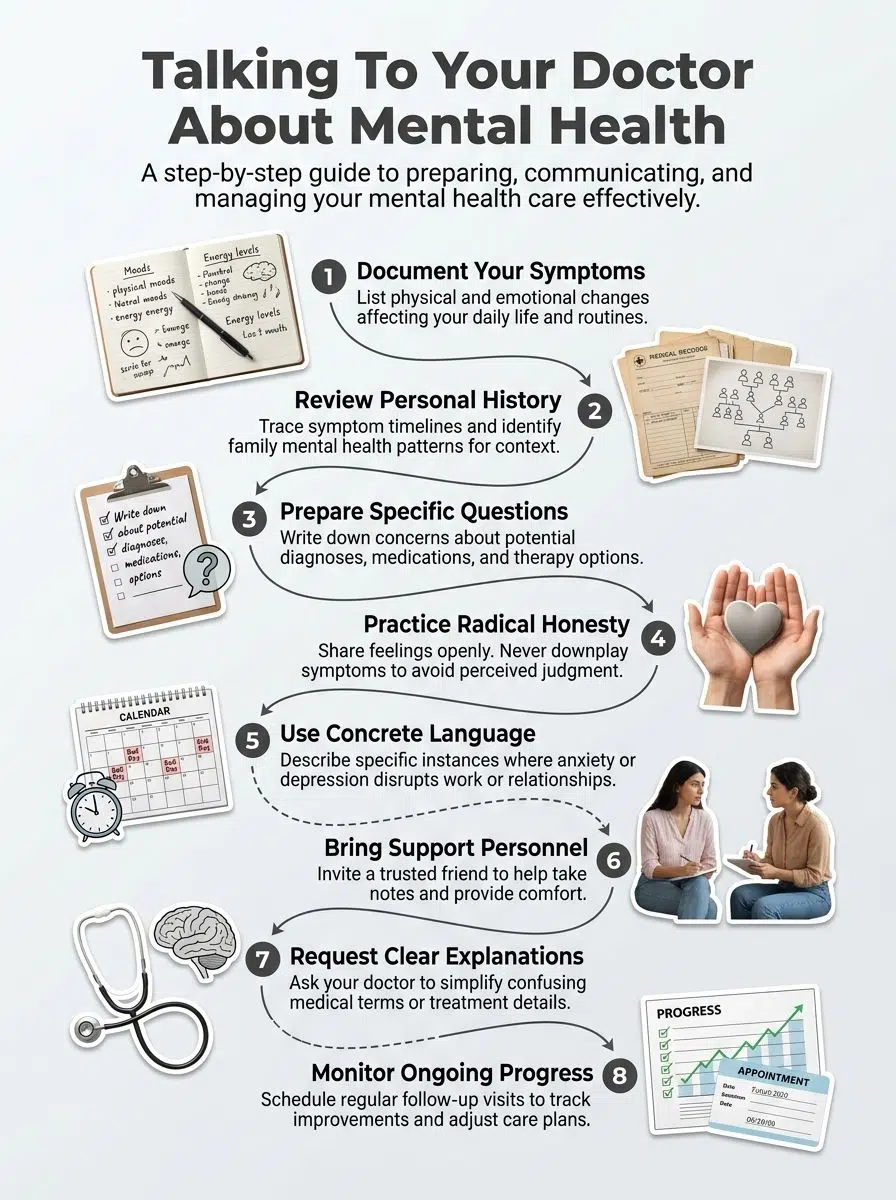
Make a list of symptoms and concerns
Your doctor needs clear, accurate information about what you experience. Writing down your symptoms helps you communicate effectively.
Many users on the r/mentalhealth subreddit highly recommend using a free tracker app like Daylio or Bearable to log your moods. Daylio lets you tap a few emojis to record your feelings, while Bearable is great for detailed symptom tracking.
Here are the specific things you should document before your visit:
- Start by listing physical symptoms, such as sleep problems, appetite changes, or unexplained headaches.
- Note emotional symptoms like persistent sadness, excessive worry, or feelings of emptiness.
- Write down specific anxiety symptoms, including racing thoughts, panic attacks, or shortness of breath.
- Document depression symptoms, such as a loss of interest in activities or difficulty concentrating.
- Track how your mental health affects your daily life, including your work performance or relationships.
- Include any major life events that triggered your symptoms, like a job loss or significant stress.
- List medications you currently take, since some drugs impact your emotional well-being.
- Describe any previous treatment you received, including past therapy sessions or psychiatric consultation.
- Note patterns in your symptoms, such as times of day when they get worse.
- Mention your alcohol consumption or caffeine intake, as these factors affect your evaluation.
- Write questions about treatment options or referrals to specialists.
- Include any concerns about medication side effects or healthcare access.
Reflect on your mental health history
Your list captures what bothers you right now. Your doctor also needs the full historical picture to help you properly. Think back to when you first felt anxious or depressed.
Trace the timeline of your symptoms and the life events that shaped your emotional well-being. Jotting down this history takes effort, but it gives your doctor crucial context for your diagnosis. Grab a notebook and write down major moments from your past. Be sure to include your family history. Genetics plays a huge role in mental health.
Include these key historical details in your notebook:
- Your family history of conditions like Major Depressive Disorder or anxiety.
- Major life events, such as a recent move or career change.
- Any past therapy sessions or psychiatric consultations.
Doctors use this information to spot patterns and recommend the right treatment approach. Bringing this timeline to your appointment shows your doctor you take your health advocacy seriously.
Write down questions to ask your doctor
Jotting down your questions ahead of time helps you stay focused. You want to make sure you get the answers you truly need before you leave the office. If your doctor mentions a specific medication, ask about the Food and Drug Administration (FDA) approved uses and common side effects. You can also ask about different counseling techniques.
Here is a list of excellent questions to bring with you:
- What specific diagnosis do you think I might have based on my symptoms?
- What treatment options are available for my condition, and which one do you recommend most?
- How long does treatment usually take before I notice improvements in my mental health?
- Are there medications that could help, and what are the possible side effects?
- Would therapy or counseling be beneficial for my situation?
- Can you refer me to a mental health professional if I need specialized psychiatric consultation?
- What lifestyle changes can support my mental health and total well-being?
- How often should we schedule follow-up appointments to track my progress?
- What warning signs should I watch for that might mean my condition is getting worse?
- Are there support systems or support groups you recommend I join?
How to Start the Conversation
Opening up takes immense courage. Start by being direct and honest about what brings you in.
Be honest about your feelings
Your doctor needs to hear the truth about what you are going through. Tell them exactly how you feel. Do not soften your words or downplay your symptoms to seem fine. If you do not know how to break the ice, the National Alliance on Mental Illness (NAMI) suggests a very simple opening script.
“I have not been feeling like myself lately, and I want to talk about my mental health.”
Your emotional well-being depends on your doctor getting the full picture. Medical professionals often look for the “SAD” triad during evaluations. This stands for Somatic (physical complaints), Anxiety, and Depressive symptoms.
Laying out your feelings clearly makes all the difference. Skip the small talk and jump straight to what bothers you most. Your healthcare provider will use this truthful information to recommend the best therapy options.
Use clear and specific language
Doctors need you to speak plainly about what you feel. Skip vague statements like “I feel bad” or “something is wrong.” Instead, describe exactly what happens in your body and mind.
Use specific language to help your doctor spot patterns. Vague descriptions waste time and can lead to a missed diagnosis or poor treatment planning.
Here is a quick comparison of what to say:
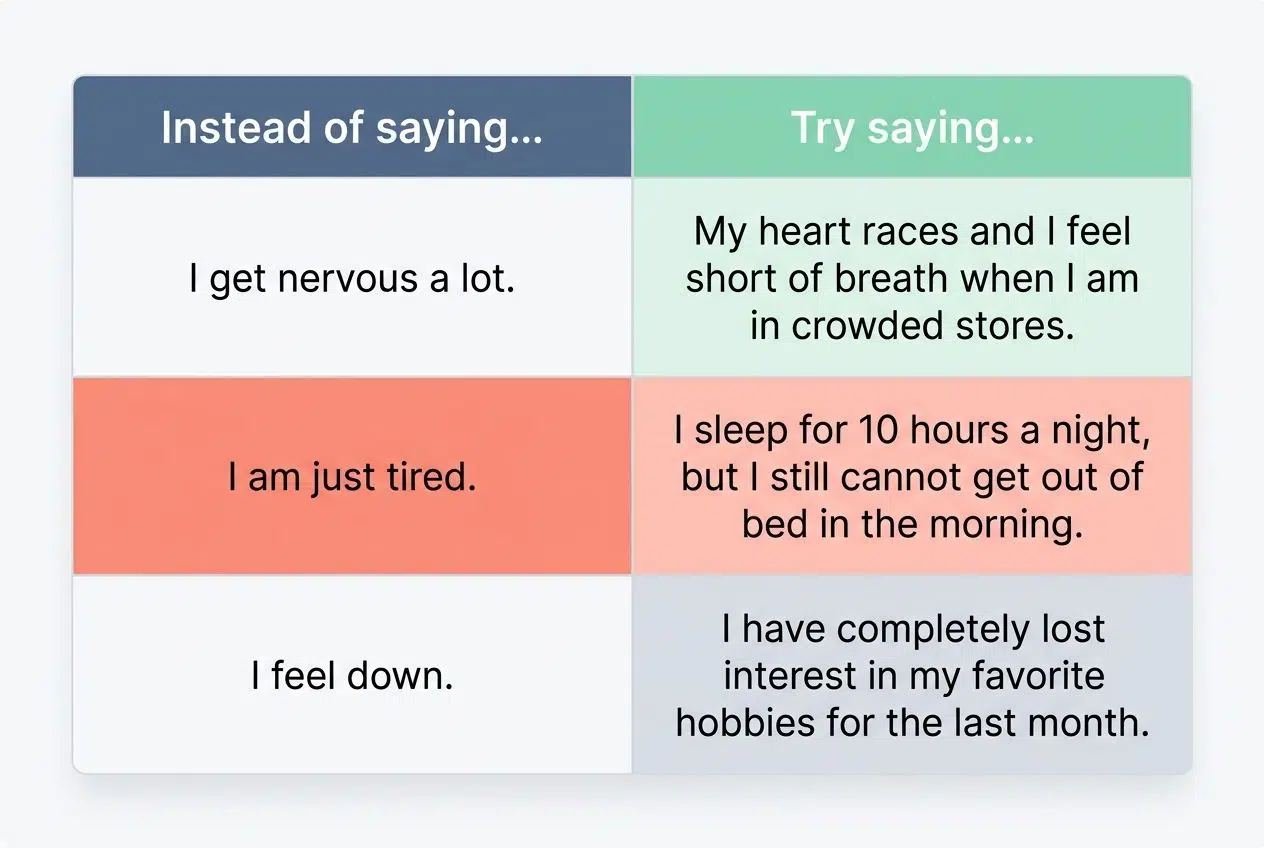
| Instead of saying… | Try saying… |
|---|---|
| “I get nervous a lot.” | “My heart races and I feel short of breath when I am in crowded stores.” |
| “I am just tired.” | “I sleep for 10 hours a night, but I still cannot get out of bed in the morning.” |
| “I feel down.” | “I have completely lost interest in my favorite hobbies for the last month.” |
Professionals need these concrete details to build an accurate picture of your mental health. This helps them create a solid treatment planning strategy that actually works for your life.
Your mental health touches every single part of your life. Tell your doctor about the specific ways your symptoms impact your daily routines.
Share concrete examples. Say something like, “I cannot focus on my job because worry takes over my thoughts.” In the US, the standard PHQ-9 depression screening tool specifically asks if you have trouble concentrating on things like reading the newspaper or watching television.
Be honest about what is hard for you right now. Your daily routines reveal a lot about your emotional well-being. If you snap at loved ones more often, tell your primary care provider.
Here are three specific areas to monitor before your visit:
- Work or School: Do you have trouble concentrating on standard tasks or meetings?
- Relationships: Do you snap at loved ones or avoid social events?
- Daily Routines: Is it suddenly hard to cook meals, clean, or get out of bed?
These details help your doctor spot patterns and offer better support. Sharing how these issues affect your real life guides your doctor to the right psychiatric consultation options for you.
Tips for Effective Communication
You will get the most out of your visit when you bring notes and ask questions whenever something feels unclear. Keep reading to master these communication strategies.
Bring notes or a journal
Bringing a written record of your symptoms prevents you from forgetting important details in the moment. A journal works especially well if you track your mood patterns over several weeks.
Your written documentation shows your doctor that you take your emotional well-being seriously. Doctors appreciate patients who come prepared. Your notes give them concrete data to work with.
Here are a few popular ways to document your symptoms:
- Mobile Apps: The Finch app is a popular choice that gamifies self-care and tracks your habits easily.
- Patient Portals: Standard US platforms like MyChart allow you to send a secure message with your symptoms before your appointment.
- Physical Journals: A simple notebook keeps your thoughts private and prevents digital distractions.
This approach transforms your visit into a highly productive conversation. You and your healthcare provider can then work as a team to create better support.
Consider bringing a trusted friend or relative
Having a trusted friend or relative at your appointment makes a real difference. Your support person can help you remember important details, take notes, and ask questions you might forget.
Under the US Health Insurance Portability and Accountability Act (HIPAA) privacy laws, you have the legal right to have a personal representative or support person in the exam room with you.
A trusted companion can help you advocate for yourself if you feel overwhelmed. This extra set of ears ensures you catch all the treatment planning information your doctor shares.
Here is how a trusted companion can help you during the visit:
- Take notes on the specific treatments your doctor suggests.
- Reminding you of important symptoms you wanted to discuss.
- Providing a calming presence if you start to feel anxious.
Pick someone who listens well and stays calm. This person should respect your privacy and keep your health information strictly confidential. Having them there turns the evaluation into a team effort.
Don’t hesitate to ask for clarification
You might hear medical words that sound confusing. That is totally normal. Ask your doctor to break down any term you do not recognize. Your doctor wants you to fully grasp your diagnosis and treatment options. Speaking up shows you care about your own healthcare access.
Here are a few common terms you should ask your doctor to explain if they mention them:
- CBT: Cognitive Behavioral Therapy, a highly effective counseling technique that helps you reframe negative thoughts.
- SSRIs: Selective Serotonin Reuptake Inhibitors, which are the most commonly prescribed class of antidepressants in the US.
- Referrals: The process of sending you to a specialized psychiatrist or therapist.
Do not let confusion stop you from getting the support you need. You own your recovery, so grab the chance to understand every step of your doctor-patient communication.
Questions to Discuss With Your Doctor
Your doctor can guide you to the right treatment path. You will want to ask about lifestyle changes and how often you should schedule follow-up visits.

What treatments are available for my condition?
Your doctor has many different options to discuss with you. Therapy, medication, or a combination of both can help you feel better. According to US clinical guidelines, primary care doctors frequently prescribe Escitalopram (Lexapro) or Sertraline (Zoloft). These are common first-line SSRI medications known for their effectiveness.
Many patients work best with a dual approach. You might take medication while also seeing a therapist who specializes in mental health. Ask your doctor which treatment fits your specific situation and lifestyle.
Here are a few standard options they might evaluate you for:
- Therapy: Cognitive Behavioral Therapy (CBT) helps change negative thought patterns.
- Medication: Standard prescriptions like SSRIs to help balance brain chemistry.
- Combined Approach: Using both therapy and medication, which is often the most effective route.
Different types of therapy exist, and each one works in different ways. Talk openly with your doctor about any concerns you have regarding side effects. Your healthcare professional can explain each choice clearly.
Are there lifestyle changes that can support my mental health?
Your doctor can suggest daily habits that make a real difference. Exercise boosts your mood, good sleep improves your focus, and eating well fuels your brain. If anxiety keeps you awake, your doctor might recommend an app like CBT-i Coach. The US Department of Veterans Affairs developed this free app to help people track their sleep and build better routines.
Talk with your doctor about which changes fit your life best. Here are a few simple habits they might suggest:
- Taking a short, 20-minute walk three times a week.
- Cutting back on caffeine can lower your heart rate and reduce anxiety.
- Limiting your screen time before bed so your brain can properly rest.
The goal is to find what works for your schedule and your emotional well-being.
How often should we follow up?
Scheduling follow-up appointments is a critical step in your mental health treatment planning. Your doctor will map out a schedule based on your specific diagnosis and the severity of your symptoms.
If your doctor prescribes an SSRI medication, clinical data show these drugs typically take four to six weeks to reach their full effectiveness. Because of this timeline, your doctor will likely schedule a check-in about two to four weeks after your first dose.
Think of these appointments as essential check-ins. Your doctor will track your progress and watch for any changes in your mood.
Here is what happens during these follow-up visits:
- Your doctor checks for any new medication side effects.
- You can discuss if your therapy options are providing relief.
- Your doctor can adjust your dosage or try a new approach entirely.
If something is not working, your doctor can adjust your treatment plan right away. These regular psychiatric consultation sessions give you a chance to keep your health advocacy strong.
Overcoming Concerns About Stigma
Your doctor focuses entirely on your health, not on judging you. Talking openly takes real courage, and your doctor respects that strength.
Your doctor is there to help
Your doctor wants to help you feel better. They trained for years to support patients through complex health challenges. In fact, primary care physicians prescribe the vast majority of antidepressants in the United States. Doctors rely on standardized, highly trusted tools to help you.
- The PHQ-9: A simple, nine-question screener used to assess the severity of depression.
- The GAD-7: A seven-question screener designed specifically to identify Generalized Anxiety Disorder.
Your doctor uses these exact tools every single day. Nothing you say will shock them. They understand that emotional well-being matters just as much as physical health. This conversation is an investment in yourself, and your doctor stands ready to support that effort.
Focus on your health, not judgment
Your doctor exists to help you get better. Shifting your focus to your health means you stop worrying about what your doctor thinks. You can start concentrating purely on getting the support you need.
If an in-person visit feels too intimidating, you have other excellent choices. Telehealth options are widely available across the US, allowing you to speak to a doctor from the privacy of your own home.
On top of that, the law is on your side when it comes to getting care. According to the US Department of Health and Human Services:
Mental health and substance use disorder services are considered essential health benefits under the Affordable Care Act.
Bringing your authentic self to the appointment means you walk out with an actual plan. You gain real support and a clear path forward that addresses what you truly need.
The Role of Follow-Up Appointments
Your doctor tracks your progress during follow-up visits and adjusts your treatment plan as needed. These appointments give you a chance to ask fresh questions and celebrate your wins.
Track progress and adjust treatment if needed
Follow-up appointments give you and your doctor a chance to see what is working. You will talk about how you feel now compared to your very first visit. During these visits, your doctor will likely re-administer the PHQ-9 or GAD-7 questionnaires. This gives them a quantifiable score to track their progress.
Your doctor will look for a few specific signs of progress:
- Changes in your sleep quality and energy levels.
- A noticeable drop in your standard questionnaire scores.
- Improvements in your daily focus and social interactions.
Treatment adjustments happen all the time in mental health care. That is completely normal. Some people respond quickly to their first treatment plan, while others need several tries to find the right fit. Honest feedback during these healthcare access visits leads to much better outcomes.
Address new concerns or symptoms
Fresh symptoms pop up sometimes, and old ones can change in unexpected ways. Your mental health is not static. Your treatment plan should shift right along with you.
When starting a new medication, you might experience mild side effects like nausea or headaches during the first one to three weeks. Tell your doctor about any new concerns right away. Do not wait for your next scheduled appointment if something feels completely off.
“If you ever find yourself in immediate, severe distress in the US, you can always call or text the 988 Suicide & Crisis Lifeline for free, confidential support.”
Describe exactly what you are experiencing and how it impacts your daily life. Your primary care provider uses this information to adjust your treatment or offer new referrals. Speaking up keeps your mental health support on the right track.
Wrapping Up
Taking action on your mental health conversation marks the start of something truly meaningful. Your doctor now has the information needed to help you move forward. Whether your doctor suggests therapy options, lifestyle changes, or a psychiatric consultation, you have taken a crucial step. This open dialogue paves the way to better emotional well-being.
Staying engaged with your healthcare access matters just as much as that very first talk. You should schedule follow-up appointments to track your progress and discuss your treatments.
Bring your journal or notes to each visit so you can share new symptoms. This ongoing doctor-patient communication keeps your mental health evaluation totally on track. You now hold the power to advocate for yourself and build the support systems you deserve.
Frequently Asked Questions (FAQs) on Mental Health Discussion
1. How do I start a conversation with my doctor about mental health?
You can begin by saying, “I’ve been feeling off lately,” or “My mood has changed, and I’m not sure why.” Most primary care doctors now routinely screen for mental health during regular checkups, so they’re completely ready for this conversation.
Tell your doctor how you’re feeling day to day, any changes in your sleep or appetite, and whether you’re struggling at work or in relationships. Mention specific stressors like family problems or major life changes, because those details help them understand what’s going on and suggest the right support.
3. Is it normal to feel nervous talking about mental health with my doctor?
Yes, it’s completely normal! A survey by the American Psychiatric Association found that nearly 60% of adults felt anxious before discussing mental health with their doctor, but these conversations are part of routine care now.
4. Can I ask questions if I don’t understand something during our visit?
Absolutely, and you should! If your doctor uses medical terms that confuse you, stop them right there and ask for plain language. It’s your appointment, and clear communication matters just as much as the care itself.