Have you ever picked up a book and thought about the debate of Literary Fiction Vs Commercial Fiction: Does The Divide Still Matter? It is a common question, especially when some stories feel like they are written for college professors, while others grip you from page one. You are definitely not the only one. Many readers feel caught between two distinct reading habits. You might love getting lost in beautiful language and deep characters. Yet, you also crave fast-paced plots that keep you turning pages late into the night.
This tension between literary fiction and commercial fiction confuses many book lovers. It can leave you unsure which type of story matches what you actually want to read. Here is an interesting fact to consider. The publishing industry has started to blur these lines in a big way. A new category called “upmarket fiction” has emerged. It is gaining real traction with both readers and publishers across the US.
This middle ground combines the artistry of literary fiction with the page-turning appeal of commercial fiction. It proves that the old divide might not be as rigid as it once was.
I am going to walk you through the differences between literary and commercial fiction in a simple way. We will look at real examples, hear from industry experts, and discover how this divide shapes what gets published today. So, grab a cup of coffee, and let us go through it together.
What is Literary Fiction?
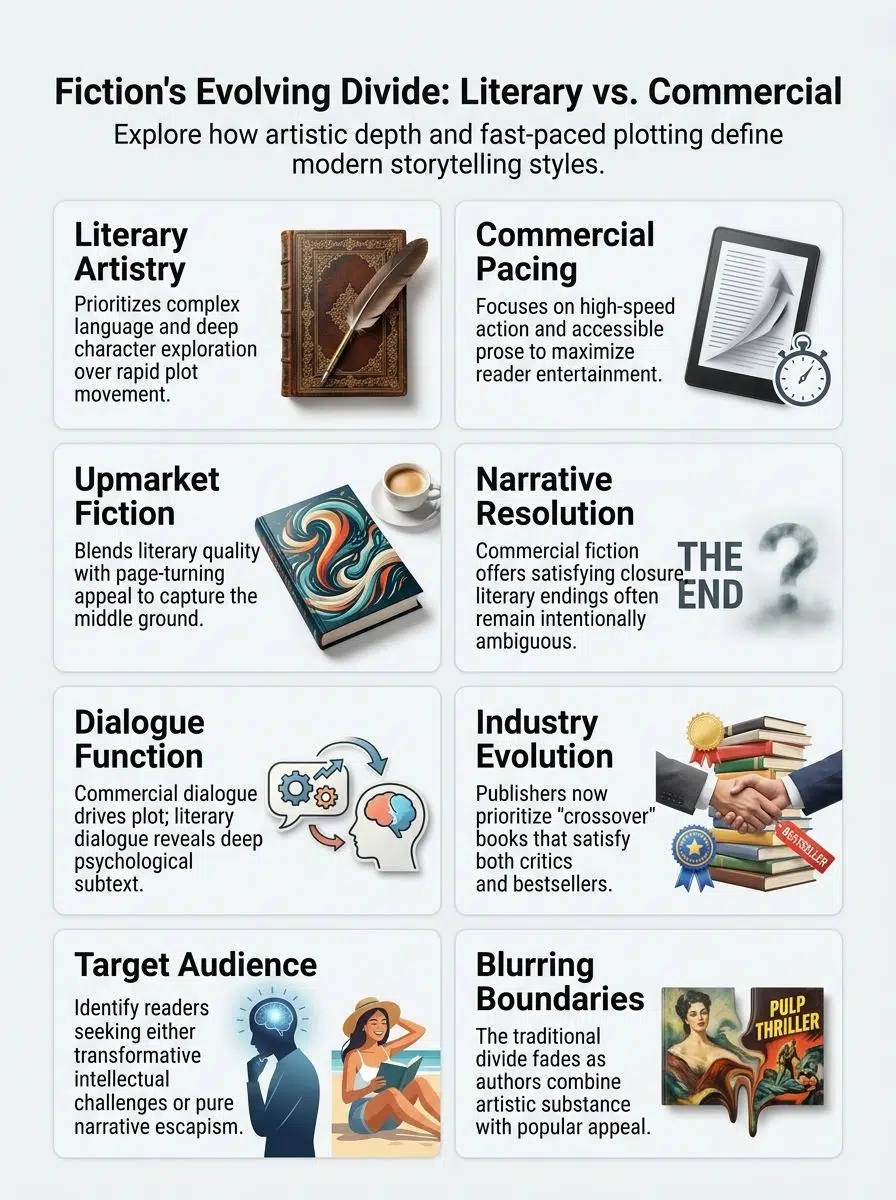
Literary fiction prioritizes artistry, depth, and meaning over fast-paced storytelling. Writers craft sentences with careful attention to language. They explore complex characters and profound themes that stick with you long after you finish the final page.
To put this into perspective, look at the recent US book market. While these books might not always sell millions of copies in their first week, they hold incredible cultural weight and prestige.
For instance, the 2025 National Book Award for Fiction went to Rabih Alameddine for his novel, “The True True Story of Raja the Gullible (and His Mother).” This book perfectly captures the essence of the genre. It focuses deeply on the complicated dynamics between a son and his mother in a tiny Beirut apartment, rather than relying on sudden plot twists.
Characteristics of literary fiction
Literary fiction prioritizes artistry and depth over fast-paced entertainment. These works dig into the human experience through complex characters and sophisticated storytelling.
- Language as Art: Authors focus heavily on language itself. They craft sentences that sound beautiful and carry multiple meanings at once.
- Character-Driven: Character development takes center stage. Writers spend considerable time exploring how people think, feel, and change.
- Deep Themes: Themes explore big questions about life, identity, morality, and society rather than simply moving the plot forward. In 2025, US literary agents actively requested manuscripts focusing on deep societal themes to meet growing reader demand.
- Experimental Styles: The narrative style often breaks traditional storytelling rules. You might see unreliable narrators or fragmented timelines.
- Open Endings: Endings often feel ambiguous. They leave you with questions and interpretations rather than neat resolutions.
Focus on language, themes, and character depth
Authors of literary fiction pour their hearts into language itself. They craft sentences that sing, twist, and make you want to stop and reread a passage twice. Every word choice matters in this style of storytelling.
The artistry shines through metaphors, symbolism, and prose that feels almost poetic. Readers who love this genre crave depth over speed. A 2025 analysis by The Paris Review noted that character-driven narratives hold reader attention by triggering deep empathy, making the slow pacing a deliberate choice rather than a flaw.
“Literary fiction asks you to sit with the discomfort of being human, demanding your attention and rewarding you with a new perspective on life.”
Themes in literary fiction run deep. They explore what it means to be human, to love, to fail, and to grow. Character development becomes the heartbeat of the narrative.
Authors build their protagonists slowly. They reveal layers through internal conflict and emotional truth. This focus on style and substance creates stories that linger long after you close the book.
What is Commercial Fiction?
Commercial fiction grabs you by the throat with fast-paced stories and clear plots that keep pages turning. These books prioritize entertainment and accessibility. They are perfect for those days when you want to escape into a gripping narrative without wrestling with complex prose.
The demand for these books is absolutely massive in the US. A 2025 report from Circana BookScan showed that print romance books alone sold 51 million units over a 12-month period. That was an incredible 24% increase from the previous year! Readers want these engaging, fast-paced stories more than ever.
Characteristics of commercial fiction
Commercial fiction prioritizes keeping you glued to the page from start to finish. This genre focuses on delivering pure entertainment.
- Plot-Driven Momentum: Action and events take center stage over internal character reflection. You always want to know what happens next.
- Brisk Pacing: The story moves quickly. A massive 2025 survey of US readers on Goodreads showed that brisk pacing was a top factor for five-star reviews in the thriller category.
- Accessible Language: Authors use clear language that anyone can understand without keeping a dictionary nearby.
- Clear Resolutions: Endings provide satisfaction. They wrap up plot threads, so you feel fulfilled when you finish the final page.
- Genre Expectations: Whether it is mystery, romance, or a thriller, these books deliver exactly what fans of that specific genre expect.
Emphasis on plot, pacing, and accessibility
Plot drives commercial fiction forward like an engine pushing a car down the highway. You want stories that move fast, grab your attention, and keep you awake.
Commercial fiction authors focus on what happens next, not just how beautiful the sentences sound. They craft narratives with clear beginnings, middles, and ends.
“Commercial fiction is the engine that drives the publishing industry, offering readers an immediate, thrilling escape from their daily lives.”
A stunning example of this is Rebecca Yarros’s fantasy-romance book, “Onyx Storm.” When it was released in early 2025, it sold an astonishing 2.7 million copies in its very first week. That is the definition of a plot that people cannot wait to consume.
Pacing in commercial fiction works like a heartbeat. It speeds up during action scenes and slows down just enough during quiet moments to let you catch your breath.
Short paragraphs, punchy dialogue, and active scenes keep the energy high. The artistry lies in knowing exactly when to reveal information and when to surprise you.
Key Differences Between Literary and Commercial Fiction

Literary and commercial fiction pull readers in completely different directions. One chases artistic depth, while the other races toward plot twists and page-turning excitement. If you understand these gaps, you can easily figure out exactly what kind of book will cure your current reading slump.
According to 2025 industry data, total adult fiction sales grew by 1% in the US, proving that readers are happily consuming both styles depending on their daily mood. Circana tracking shows readers fluidly switch formats to get these stories, reading a thriller on a Kindle and a literary epic in hardcover.
Writing style and language
An author’s writing style acts as the foundation for everything else they create. It shapes how you connect with the work, and it separates the two styles in striking ways.
| Literary Fiction | Commercial Fiction |
|---|---|
| Language Complexity: The authors use elaborate vocabulary and complex sentence structures. Every single word carries weight and intention.
|
Language Clarity: Writers choose straightforward vocabulary. For example, the Hemingway App is a popular tool that US writers use to achieve the clear, punchy sentences required for this genre.
|
| Descriptive Approach: Prose becomes poetic. Descriptions serve the inner world of the characters, using deep metaphors.
|
Functional Approach: Description serves the plot. Details ground you in the world without slowing the fast pace.
|
| Voice and Tone: Narrators often possess experimental voices. Tone shifts reflect character perspective and emotional states.
|
Voice and Tone: Narrators remain consistent and accessible. Voices stay grounded in recognizable reality to support the plot.
|
Reader engagement and purpose
Language choices shape how you connect with stories, but the real magic happens in what keeps you turning pages. Purpose matters just as much as prose.
| Aspect | Literary Fiction | Commercial Fiction |
|---|---|---|
| Primary Purpose | Explores the human condition. You seek meaning and psychological insight. | Entertains through plot momentum. You want escapism and emotional satisfaction. |
| Engagement Strategy | Builds connection through character complexity. Places trust in you to fill narrative gaps. | Creates tension through obstacles. Shows everything clearly to keep your heart racing. |
| Satisfaction Threshold | Comes from understanding. A devastating ending can be satisfying if it rings true. | Comes from achievement and resolution. A clear, happy ending satisfies most fans. |
Readers of literary fiction often describe their experience as transformative. A recent study from the American Psychological Association found that reading deep, literary fiction directly increases a person’s empathy and emotional intelligence by asking them to fill in those narrative gaps.
Commercial fiction fans seek books that make them feel alive right in the moment. You want plot twists that shock you and heroes you can root for wholeheartedly.
The Rise of Upmarket Fiction
A new breed of stories sits right in the middle, mixing literary depth with page-turning plots. These books prove that smart writing and entertaining storytelling do not have to pick sides. They can actually dance together beautifully.
Industry data shows this is where a huge portion of US sales are happening right now. Massive reading groups like Reese’s Book Club and Oprah’s Book Club specifically target this genre because it gives members deep topics to discuss, while still being incredibly fun to read.
Bridging the gap between literary and commercial fiction
Upmarket fiction has emerged as a powerful middle ground. It blends the artistic depth of literary works with the mass appeal of commercial stories. These books feature strong characterization and meaningful themes, yet they move at a brisk pace.

Publishers have definitely noticed this shift. Editors at major US publishing houses, like Simon & Schuster, are actively hunting for upmarket manuscripts because they perfectly bridge this gap and sell consistently.
“Upmarket fiction gives you the beautifully crafted sentences of a literary masterpiece with the unputdownable pacing of a summer beach read.”
The style remains accessible, the plot stays compelling, and the artistry shines through without making you feel like you are doing homework.
Examples of upmarket fiction
Upmarket fiction sits right in the sweet spot between literary artistry and commercial appeal. These stories grab you with compelling narratives while maintaining sophisticated prose.
- “Lessons in Chemistry” by Bonnie Garmus: This novel delivers historical fiction with strong character arcs and social commentary about women in science. Yet, it maintains incredible momentum that makes it a breeze to read.
- “The Midnight Library” by Matt Haig: Haig explores deep philosophical themes about life choices and regrets. However, he does it through an accessible, fast-paced plot that keeps you totally engaged.
- “Yellowface” by R.F. Kuang: This recent massive US hit offers a biting, literary critique of the publishing industry and cultural appropriation, all wrapped in a psychological thriller plot that reads like a commercial blockbuster.
- “The Seven Husbands of Evelyn Hugo” by Taylor Jenkins Reid: Reid crafts a compelling mystery wrapped in glamorous storytelling. It entertains you while examining complex themes of power, identity, and love.
Does the Divide Between Literary and Commercial Fiction Still Matter?
When asking, Literary Fiction Vs Commercial Fiction: Does The Divide Still Matter?, readers and industry professionals find that the answer keeps shifting. The line between literary and commercial fiction has become incredibly blurred. Many books now sit comfortably in both camps, making the old divide feel much less rigid.
Perspectives from readers
Many readers still split into two camps regarding their book choices. You might crave literary fiction because you love beautiful language that makes you think for days. You might value narrative complexity and see reading as a true art form.
On the other hand, you might grab commercial fiction because you want clear narratives that pull you in from page one. You seek engagement through action and suspense.
The truth is, modern readers actually enjoy both genres. Thanks to social media platforms like BookTok, US reading habits have broadened dramatically. You might read a Pulitzer winner one week and a spicy romance thriller the next.
US readers bought roughly 762 million print books in 2025, showing there is plenty of room for both genres. Your preference often depends simply on your current mood and how much free time you have.
Perspectives from publishers and agents
Publishers and agents occupy a fascinating middle ground in this debate. They care about both artistry and sales because their business depends on it.
To capture modern readers, agents hunt for manuscripts that sell well, yet they also champion stories with real depth.
- Crossover Appeal: Smart agents pitch books by highlighting how they can engage readers emotionally while offering literary merit.
- Library Revenue: Upmarket fiction generates massive library sales across the US, becoming a key revenue stream that publishers actively target.
- The Sweet Spot: Publishers understand that today’s readers want substance in their entertainment. Upmarket fiction proves that commercial success and critical acclaim can easily coexist.
This pragmatic approach shapes how publishing houses develop their marketing strategies in 2026. It guides how agents help writers find their perfect target audience.
Why Understanding the Distinction is Helpful for Writers
If you are a reader who also loves to write, knowing the difference between literary and commercial fiction helps you shape your voice. It helps you reach the readers who actually crave what you write.
Even if you only read, understanding what an author is trying to achieve helps you set your expectations before you open chapter one. You can see how authors craft stories with intention, rather than just guessing what might hit the bestseller lists.
Defining your target audience
Figuring out a target audience shapes everything about a book. A 2025 report from the Authors Guild highlighted that understanding a specific target audience is the number one predictor of an author’s financial success in the US market.
- Plot vs. Character: Authors must ask if their readers want plot-driven stories or character-focused explorations. This choice completely separates commercial audiences from literary ones.
- Pacing Needs: Commercial audiences typically seek fast pacing and clear resolutions. They want to escape into a good story without getting bogged down.
- Thematic Depth: Literary readers value complex themes and deep characterization. They engage with stories that challenge their thinking.
- Vocabulary Choices: The audience’s preference matters significantly. Some prefer accessible language, while others appreciate sophisticated, dense prose.
- Genre Expectations: Fans of mystery expect different pacing than fans of sweeping historical epics. Authors must match the rhythm to the reader’s expectation.
Crafting your writing goals
Writing goals shape everything about a story, from the chosen words to the final cover design. Tools like Publisher Rocket help US authors see exactly what readers are searching for, helping them align their writing goals with actual market demand. As a reader, you can usually spot these goals right away in the first few pages.
- Choosing the Path: Authors identify whether they want to emphasize artistry or prioritize plot. This choice determines the entire narrative approach.
- Defining the Reader: Authors define their audience with precision. They ask if you want emotional depth or thrilling entertainment.
- Character Development: Literary fiction demands rich, slow characterization. Commercial fiction usually moves much faster through character backgrounds to hit plot points.
- Language Quality: Authors decide on their prose. They choose either ornate sentences that showcase artistry or straightforward language that keeps you turning pages rapidly.
- Marketing Strategies: Messaging changes dramatically based on whether a publisher is positioning a story for a literary award or as a summer beach read.
Examples of Successful Literary and Commercial Fiction
Both literary and commercial fiction produce massive bestsellers that US readers absolutely love. They just work in very different ways to capture your attention. Looking at real books shows us how these two styles can grab your heart and mind through completely different paths.
Notable works in literary fiction
Literary fiction has shaped how we think about language and the human experience for generations. These works prove that artistry can truly transform your perspective.
- “The True True Story of Raja the Gullible (and His Mother)” by Rabih Alameddine: Winning the 2025 National Book Award for Fiction, this novel uses precise, artistic language to explore the messy, beautiful reality of family dynamics in a small apartment.
- “One Day, Everyone Will Have Always Been Against This” by Omar El Akkad: This recent 2025 National Book Award winner showcases how modern literary fiction tackles heavy social and political themes with gorgeous, uncompromising prose.
- “Beloved” by Toni Morrison: Morrison addresses the trauma of slavery through a haunting narrative that shifts between past and present. Her characterization creates a deep emotional weight that requires your active engagement.
- “The Great Gatsby” by F. Scott Fitzgerald: Fitzgerald presents a stunning critique of the American Dream. His prose style is elegant and incredibly precise, making every single word choice matter.
Popular titles in commercial fiction
Commercial fiction captures you with fast-paced stories and characters that feel like old friends. These books fly off shelves because they deliver exactly what you crave: pure entertainment.
- “Onyx Storm” by Rebecca Yarros: Releasing in early 2025, this romantasy sequel sold 2.7 million print copies in its first week. It relies on a gripping plot, high stakes, and accessible writing to keep millions of readers completely hooked.
- “The Da Vinci Code” by Dan Brown: Brown grabs you with mystery and non-stop action. His narrative style prioritizes plot momentum over everything else, making the story accessible to everyone who wants answers fast.
- “It Ends With Us” by Colleen Hoover: A massive hit that continues to dominate US sales charts, Hoover uses emotional intensity, clear dialogue, and dramatic plot surprises to create a highly addictive reading experience.
- “The Hunger Games” by Suzanne Collins: Collins combines action, romance, and social commentary. She engages you through incredibly fast pacing and relatable heroes facing impossible odds.
Final Thoughts
The central question of Literary Fiction vs Commercial Fiction has a clear answer today: yes, but far less than it once did. Readers increasingly cross between both styles, and publishers recognize that great stories come in many forms. You now know that literary fiction prioritizes beautiful language and deep character work.
You also know that commercial fiction emphasizes plot, brisk pacing, and broad appeal. Best of all, upmarket fiction proves these two categories can blend together perfectly. If you love to write, you benefit most from knowing your target audience and crafting stories that match your goals. Do not force your work into rigid boxes that no longer fit the modern publishing landscape.
Your next step is simple. Pick up a few books from both sides of this divide, and notice how many of them successfully blur the lines between artistry and pure fun. Start your next reading journey today with confidence. The very best stories transcend strict genre labels and speak directly to your heart, whether you are hungry for deep meaning, an epic adventure, or a little bit of both.
Frequently Asked Questions (FAQs) on Literary Fiction Vs Commercial Fiction
1. What is the main difference between literary fiction and commercial fiction?
Literary fiction digs deep into character growth and beautiful prose, while commercial fiction delivers fast-moving plots and pure entertainment. Books winning the Pulitzer Prize usually fall into the literary category.
2. Does the line between literary and commercial books still matter today?
The gap has blurred quite a bit over the past decade. Many bestselling novels now mix both styles, like “Where the Crawdads Sing,” which topped charts while earning praise for its literary quality. Readers today want both depth and entertainment in a single book.
3. Can a book be both literary and commercial at once?
Absolutely! “The Underground Railroad” by Colson Whitehead won the Pulitzer Prize while also becoming a bestseller.
4. Why do people care about this divide in the first place?
These labels help readers choose books that match their mood on any given day. They also shape how publishers market novels and which ones compete for major awards like the National Book Award.