

A fresh coat of paint can transform a living room, but the strong chemical smell from conventional paints often brings headaches, eye irritation, and concerns about indoor air safety—especially for children and pets.
Many traditional paints contain harmful volatile organic compounds (VOCs) that release toxic fumes long after application, reducing indoor air quality and creating potential health risks.
Non-Toxic Paint for Home offers a safer alternative by reducing or eliminating harmful chemicals. These paints typically use low-VOC or zero-VOC formulas and often rely on water-based or natural ingredients to create a healthier indoor environment.
Choosing the right option involves checking labels for low-VOC certification, understanding ingredient transparency, and exploring eco-friendly brands such as ECOS Paints. With the right selection, it becomes easier to create a safer, cleaner, and more comfortable living space during any home renovation.
Understanding VOCs and Their Impact
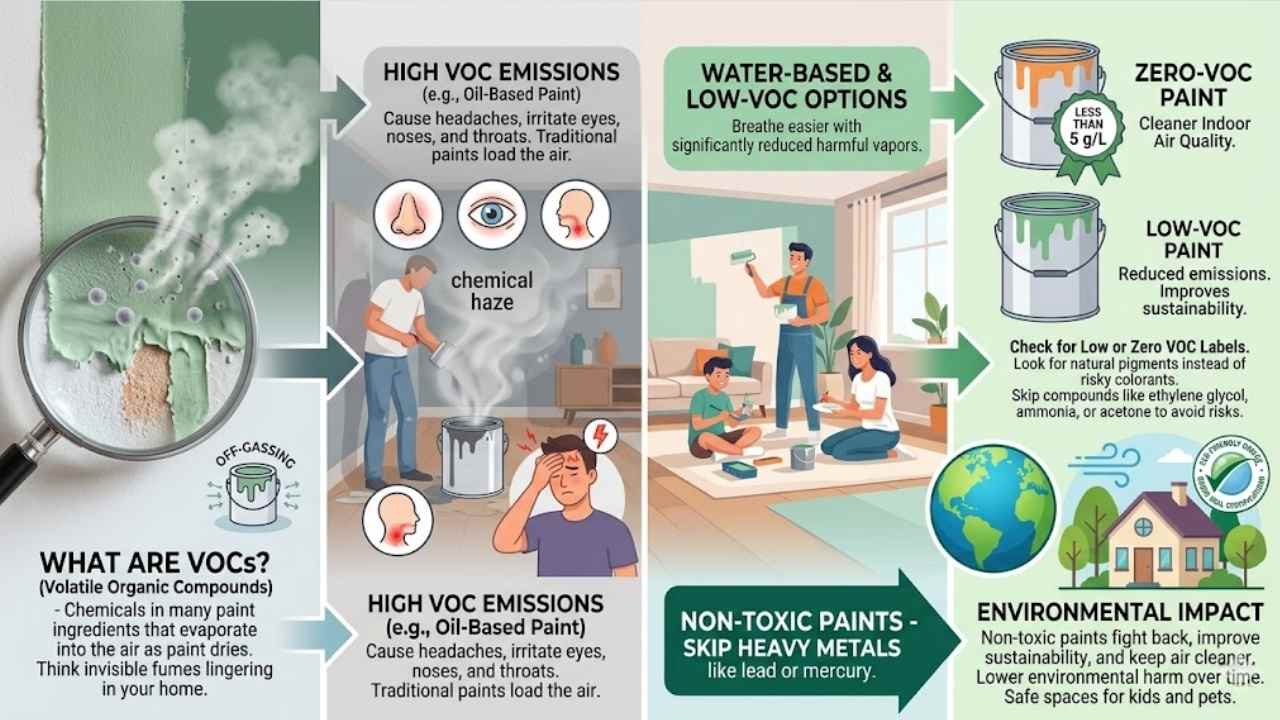
You know that strong smell from fresh paint, right, the one that gives you a headache? Volatile organic compounds, or VOCs, release those gases, harming your indoor air quality and even the environment over time.
What are VOCs?
VOCs stand for volatile organic compounds. These chemicals hide in many paint ingredients. They evaporate into the air as paint dries. Think of them like invisible fumes that linger in your home.
Oil-based paints release more VOCs than water-based ones. Low-VOC paints cut down on these emissions. Zero-VOC options keep levels under 5 grams per liter. That makes a big difference for indoor air quality.
Families breathe easier without those harmful vapors. Non-toxic paints skip heavy metals like lead or mercury too. Check labels for ethylene glycol, ammonia, or acetone to avoid risks.
Checking for low or zero VOC labels is an essential step in selecting non-toxic paint for your home. – Parsons Healthy Materials Lab
Paint makers now offer transparency on these compounds. Low-VOC paints improve sustainability. They reduce environmental harm. Natural pigments replace risky colorants. Brands like Sherwin-Williams push low-VOC lines.
This shift helps everyone. Your walls stay fresh, and the planet thanks you.
How VOCs affect indoor air quality
VOCs sneak into your home air like uninvited guests at a party. They come from paints, especially oil-based ones that pump out more of these chemicals than water-based types. You breathe them in, and they irritate eyes, noses, and throats.
Over time, high levels cause headaches or worse health woes. Think about that fresh paint smell; it’s VOCs off-gassing for days, even weeks, after paint application. Low VOC options cut this down, but traditional paints load the air with harmful stuff.
Non-toxic paints fight back with natural ingredients that skip those nasty releases. Zero VOC paints hold under 5 grams per liter, way less than old-school choices. Brands like AFM Safecoat and Behr Premium Plus offer environmentally friendly paint that keeps indoor air cleaner.
You avoid heavy metals like lead too, making spaces safer for kids and pets. Customer reviews often praise the low odor during exterior painting or inside jobs. Green Seal certifications help spot these winners, so your home stays fresh without the chemical haze.
Types of Non-Toxic Paints
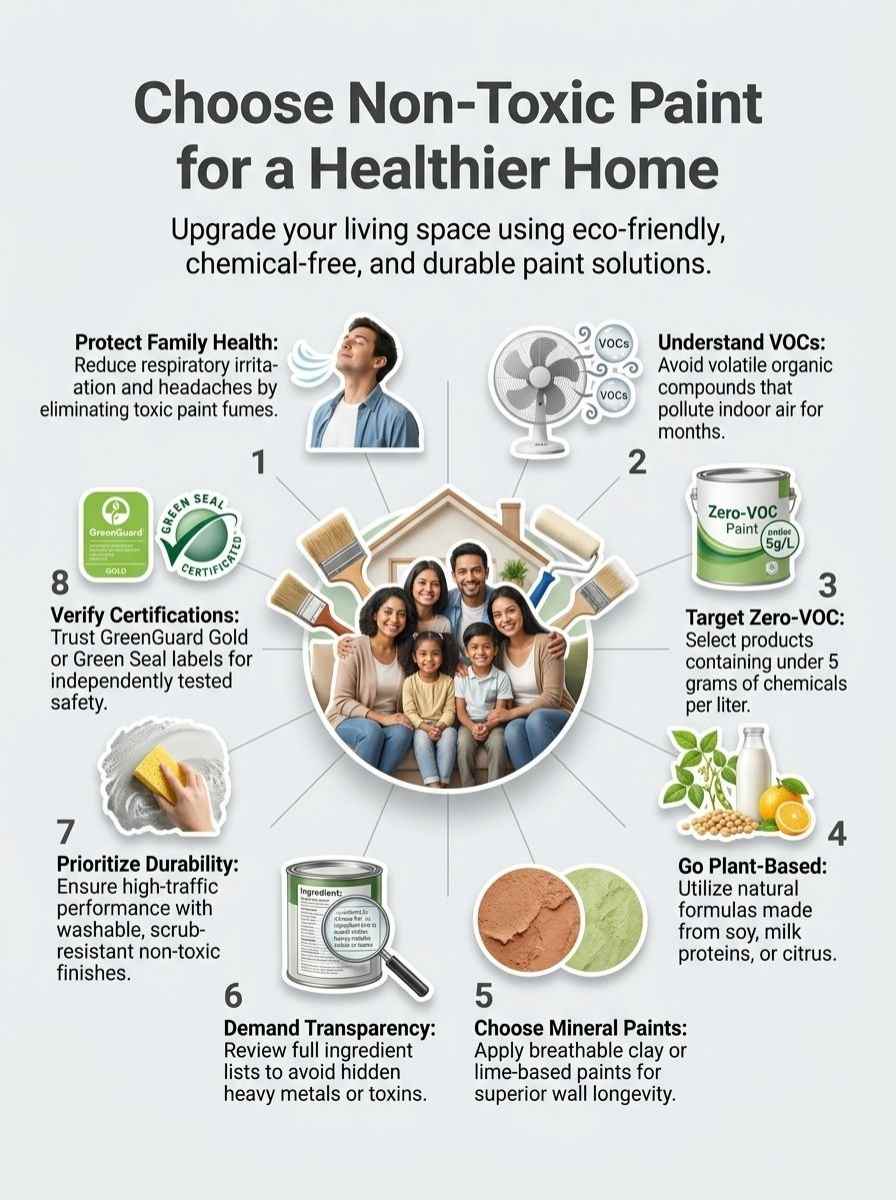
Non-toxic paint feels like giving your walls a healthy hug, right? Brands like The Real Milk Paint Co. offer milk paint options, while Portola Paints brings limewash to the table, sparking ideas for your next project.
Zero VOC paints
Zero VOC paints cut out the nasty stuff that lingers in your air. These options contain fewer than 5 grams of VOCs per liter, way below what traditional or even low VOC paints offer.
Folks love them because they use natural ingredients, free from heavy metals like lead or mercury, and they don’t release harmful chemicals into your home. Brands such as ECOS Paint and Clare Paint lead the pack with their zero VOC lines, often blending in safe pigments for that perfect hue.
You might spot some zero VOC labels that still sneak in up to 5 grams per liter in the base, so grab those ingredient lists and read them like a detective story. Checking for low or zero VOC labels keeps things safe, especially if you lean toward natural or plant-based paints like those from The Real Milk Paint Co.
Water-based versions dry fast with little odor, beating out oil-based ones that pump out more VOCs. This choice feels like a breath of fresh air for your family’s health.
Low VOC paints
Low VOC paints offer a smart step up from traditional options. They cut down on volatile organic compounds, those sneaky chemicals that can linger in your air. Folks often pick them for rooms where kids play or families gather, dodging that strong paint smell.
Brands like Five Star Painting highlight their washability, so spills wipe off easy. Water-based versions dry fast and release fewer fumes than oil-based ones. You spot them by labels showing under 50 grams of VOCs per liter, a big drop from old-school paints loaded with heavy metals or pesticides.
These paints shine in homes aiming for better indoor vibes. Check ingredient lists to skip titanium dioxide if you worry about it. Outfits such as The Organic & Natural Paint Co. craft bio-based types that feel gentle on lungs.
Mineral paints from Keim add durability without the toxins. Earthaus pushes clay paint for its natural edge, much like Ottoson Paint’s plant-derived picks. Brouns & Co. focuses on safe colorants, keeping things fresh and fun.
Rubio Monocoat stains pair well for wood accents, boosting that non-toxic glow.
Natural and plant-based paints
Natural and plant-based paints pull from the earth’s own toolbox, like soy, milk proteins, or citrus oils, to create safe coatings for your walls. These options shine as bio-based paints, dodging the harsh chemicals that traditional ones spew out.
Think of them as a breath of fresh air in your living room, they release no harmful fumes, keeping your indoor space clean and cozy. Brands like The Real Milk Paint Co. craft chalk paint with real, natural stuff that feels like a hug from Mother Nature herself.
You know, the kind that sticks around without the drama of toxins.
Folks often grab these for their zero-VOC perks, with levels under 5 grams per liter, far below old-school paints. Check labels closely, some claim zero but sneak in a tiny bit. Outfits like Domingue focus on plant-based formulas that boost longevity in your home, as seen in spots like Architectural Digest or This Old House.
They skip heavy metals too, making them a smart pick for families. Painting your kid’s room without that nagging worry, it’s like choosing fresh veggies over junk food for your walls.
Salty Labs and ADesignStorie highlight these in their eco-friendly lines, proving natural choices wash well and last.
Mineral-based paints
Mineral-based paints draw from earth’s own gifts, like clay and lime, to create safe coats for your walls. They skip heavy metals, such as lead or mercury, and keep VOC levels super low, often hitting that zero mark under 5 grams per liter.
If you slap on a layer, it breathes easy, no nasty fumes sneaking into your air like uninvited guests. Folks love them for kitchens or bedrooms, where clean vibes matter most in your longevity home.
These options use natural ingredients that shield your space from harmful releases, unlike those old-school paints that linger like a bad habit.
Brands push ingredient transparency here, so you spot safe pigments right away, no guesswork needed. Alkemis Paint fits right into this category, offering mineral-based formulations that prioritize durability and clean indoor air.
Water-based versions dry fast with barely any smell, a real win over oily types that pump out more VOCs.
If you’re chasing durability, these hold up well against scrubs and time, keeping your walls fresh without the toxic trade-off. Grab one with third-party certifications, and you lock in peace of mind for the whole family.
Key Features to Look for in Non-Toxic Paint
Non-toxic paint feels like a smart move for your family’s health, right, so watch for clear ingredient lists that spill all the beans, seals like GreenGuard Gold that prove it’s safe, toughness that stands up to kid messes and quick wipes, plus color additives free from nasty chemicals—dive deeper below to nail your perfect pick!
Ingredient transparency
Manufacturers who share full ingredient lists build trust fast. You spot this transparency right away, like a clear window into what’s really in the paint. It lets you check for heavy metals, such as lead or mercury, that sneak into some products.
Non-toxic paints skip these dangers, using natural ingredients instead. They avoid releasing harmful chemicals into the air, unlike old-school options.
Review those lists to dodge toxic surprises for your family. Look for zero-VOC claims, but double-check, since some bases hold up to 5 grams per liter. This step keeps your home safe, much like reading a food label before you eat.
Paint makers with open details often earn certifications, proving their stuff is truly clean.
Certifications and labels to trust
You need safe paint for your home. Trusted certifications and labels make that choice easier.
- Zero-VOC labels signal super low emissions, with fewer than 5 grams of VOCs per liter, far below traditional or low-VOC options, and they keep your air clean like a fresh breeze after rain. Some products marked this way still pack up to 5 grams per liter in the base, so you scan labels with care to dodge surprises. This label fits non-toxic paints on a spectrum free of heavy metals like lead or mercury, giving you peace of mind for family health.
- Low-VOC labels mark an essential step in your hunt for safe choices, cutting down harmful fumes that linger in rooms. You spot these on water-based paints that dry fast with little odor, unlike oil-based types that release more VOCs, and they help build that spectrum of non-toxic options without nasty extras. View it as your shortcut to fresher indoor air, especially in busy spots like kitchens.
- Ingredient transparency acts as a quick trust boost from paint makers, letting you review lists for harmful chemicals and skip anything risky for your crew. You explore these details to confirm natural ingredients that avoid releasing bad stuff into the air, much like peeking under the hood of a car before a long drive. It pairs well with zero or low-VOC picks, steering clear of heavy metals and keeping things safe.
- Third-party testing certifications verify claims like low or zero VOCs and no heavy metals, offering solid proof beyond just words on a can. You look for these stamps to match the spectrum of non-toxic paints, including natural or plant-based types that shun toxins. Think of them as a referee’s whistle in a game, confirming the paint plays fair for your home’s air quality.
Durability and washability
Non-toxic paints hold up well in busy homes, like a tough old boot that keeps going. Pick ones with strong durability to handle scuffs from kids or pets. Water-based options dry fast and resist wear better than oil-based types, which often pack more VOCs.
They stay put on walls through daily chaos. Washability matters too, so grab paints that wipe clean without fading. Natural ingredients in these paints avoid harmful chemicals, yet they scrub off dirt easily.
Look for labels showing zero-VOC levels under 5 grams per liter for that safe, lasting finish. Imagine spilling coffee on your fresh coat; a good non-toxic pick laughs it off with a quick swipe.
Brands like ECOS Paint offer durable formulas that endure high-traffic spots. Plant-based choices from The Real Milk Paint Co. clean up without hassle, thanks to their natural makeup.
Check ingredient lists to spot safe pigments that boost toughness. Low-VOC paints, with fewer than 5 grams per liter, pair low odor with solid washability. They outshine traditional paints by not releasing toxins while standing strong.
Picture your kitchen walls surviving splatters year after year. Third-party certifications confirm this reliability, so you pick with confidence.
Safe pigments and colorants
Safe pigments keep your home colorful without the nasty stuff. Manufacturers skip heavy metals like lead or mercury in non-toxic paints. You spot these winners through clear ingredient lists.
Paint makers who share every detail build real trust, like an open book in your toolbox. Pick options with natural colorants; they avoid releasing harmful fumes into your air.
Review those labels closely for any hidden chemicals. Natural ingredients shine here, offering peace of mind for your family. Brands tout safe pigments that last, so your walls stay vibrant and healthy.
Go for paints free of toxins, and breathe easy knowing you’ve chosen wisely.
Best Non-Toxic Paint Brands
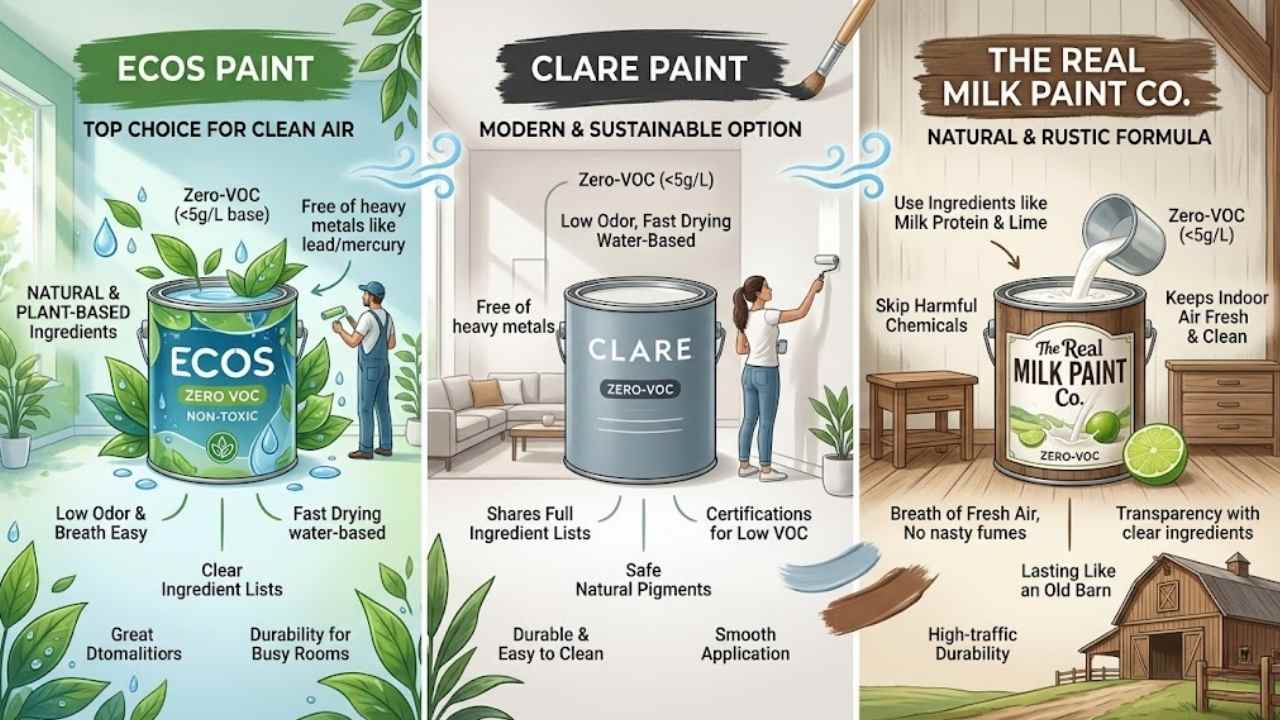
You know, picking the right non-toxic paint feels like finding a trusty sidekick for your home makeover, one that skips harsh chemicals and keeps things fresh. Check out brands that use safe binders like clay or milk proteins, and you’ll see how they make walls pop without the worry, sparking your curiosity for more paint adventures ahead.
ECOS Paint
ECOS Paint stands out as a top choice for folks who want safe, clean air in their homes. This brand offers zero-VOC options that keep harmful fumes at bay, with levels under 5 grams per liter in the base.
They use natural ingredients free of heavy metals like lead or mercury, so you breathe easy during and after painting. Slapping on a fresh coat without that strong smell nagging at your nose, water-based formulas dry fast and cut down on odors compared to oil-based types.
Folks love their ingredient lists, clear as day, which build trust right from the can.
Switch to ECOS for paints that match your eco-friendly vibe, often plant-based or natural to skip those nasty chemicals. Check their labels for low or zero VOC claims, and review the ingredients to spot any hidden trouble.
Durability shines here too, these paints hold up well in busy rooms. One quick tip, grab a sample to test colors at home, it feels like chatting with an old friend about your space.
Clare Paint
Clare Paint stands out with its zero-VOC formulas, which contain fewer than 5 grams of VOCs per liter. You get paints free from heavy metals like lead or mercury. Their water-based options dry fast and cut down on odors, unlike oil-based types that release more VOCs.
Picture slapping on a fresh coat without that harsh smell lingering for days. Folks love how Clare shares full ingredient lists, so you spot safe pigments right away.
This brand pushes natural and plant-based paints that skip harmful chemicals altogether. They hold certifications for low VOC levels, proving their eco-friendly edge. Your walls stay durable and easy to clean, perfect for busy homes.
I once helped a friend pick Clare for her nursery, and she raved about the smooth application, like butter on toast. Always review those labels to confirm zero-VOC claims, as some bases allow up to 5 grams per liter.
The Real Milk Paint Co.
The Real Milk Paint Co. stands out with its natural, plant-based paints that skip harmful chemicals altogether. These options use ingredients like milk protein and lime, creating a safe choice for your family.
Folks love how they avoid heavy metals, such as lead or mercury, keeping indoor air fresh and clean. Picture slapping on a coat that feels like a breath of fresh air, no nasty fumes lingering around.
Shoppers rave about the ingredient transparency here, with clear lists that build trust right away. Their paints qualify as zero-VOC, holding under 5 grams per liter, far below traditional types.
You get durability too, perfect for high-traffic spots in your home. Go for these if you want eco-friendly vibes that last, like a sturdy old barn standing tall through the seasons.
Tips for Choosing the Right Non-Toxic Paint
When picking that perfect coat for your walls, think about how the space gets used—like a busy kitchen needs something tough against spills—and always hunt for seals from trusted testers that prove it’s safe, because who wants hidden nasties in their cozy nest? Keep scrolling for brands that nail this without the drama.
Consider the room and its purpose
Think about the space you plan to paint. Pick non-toxic paint that fits the room’s daily use. For a kid’s bedroom, go for zero-VOC options, which contain fewer than 5 grams of VOCs per liter.
These paints release no harmful chemicals into the air, keeping little ones safe from toxins. Natural or plant-based paints work well here too, free of heavy metals like lead or mercury.
They dry fast if water-based, unlike oil-based ones that produce more VOCs and odors.
In a busy kitchen, focus on durability. Choose low-VOC or mineral-based paints that handle scrubbing. Check ingredient lists for harmful chemicals, and look for transparency from makers.
This step acts like a quick trust signal. Water-based types beat oil-based for less smell and quicker drying. Review labels carefully, since some “zero-VOC” products still hold up to 5 grams per liter in the base.
Natural ingredients make these paints a smart pick for high-traffic spots.
Check for third-party testing certifications
Look for third-party testing certifications on paint labels. These seals prove that experts have checked the product for safety. Groups like Green Seal or GREENGUARD test for low VOC levels.
They confirm the paint has fewer than 5 grams of VOCs per liter in zero-VOC options. This step builds trust, like a friend vouching for a good restaurant.
Paint makers often share ingredient lists, and certifications back them up. Non-toxic paints skip heavy metals like lead or mercury. Review those lists for harmful chemicals. Natural or plant-based paints shine here, with clear labels showing no nasty stuff.
Certifications spot fakes, since some “zero-VOC” cans still hold up to 5 grams per liter in the base. Water-based choices dry fast and smell less, beating oil-based ones on VOC output.
Pick certified brands to keep your home air clean and safe.
Final Words
You now know how to pick non-toxic paint by focusing on zero VOC options, natural ingredients, and trusted certifications like those from ECOS Paint or Clare Paint. These choices make the process simple and quick, so you avoid harmful chemicals without much hassle.
Switching to paints free of heavy metals and low in odors boosts your home’s air quality and protects the planet, leading to a healthier space for your family. Check out brand websites for more tips or sample kits to test colors at home.
Go ahead, grab that brush and transform your walls into a safe haven; your lungs will thank you.
Frequently Asked Questions (FAQs) About Non-Toxic Paint for Home
1. What makes a paint non-toxic for your home?
Look for low-VOC formulas that skip harmful chemicals; they’re like a breath of fresh air for your family. You know, the kind that won’t turn your cozy living room into a headache factory.
2. How do I spot safe, non-toxic paint options?
Check labels for certifications like Greenguard or EcoLogo. These badges mean the paint passed tough tests for indoor air quality.
3. Why choose non-toxic paint over regular stuff?
It cuts down on nasty fumes that can bother kids and pets. Plus, it’s better for the planet, like picking apples from your own tree instead of a chemical-sprayed orchard. Think of it as giving your walls a healthy glow-up.
4. Can I use non-toxic paint in every room?
Yes, it works great in bedrooms, kitchens, and nurseries. Just pick water-based types for easy cleanup and less odor.