Upcycled food ingredients are fundamentally reshaping the commercial supply chain, moving the global food industry away from linear consumption and toward a highly profitable circular economy. In 2026, the conversation has officially matured. We are no longer discussing niche consumer snacks made from cosmetically imperfect apples; the industry is heavily focused on producing functional, high-margin, clean-label components that solve complex formulation challenges for major Consumer Packaged Goods (CPG) brands.
Agricultural by-products, once viewed entirely as a waste management expense, are now recognized as premium feedstock capable of delivering intense nutritional density and superior culinary performance.
Transitioning from traditional commodity crops to reclaimed agricultural streams requires a deep understanding of modern extraction and stabilization. Below is an in-depth analysis of the financial mechanics driving this shift, followed by a comprehensive breakdown of the leading innovators engineering these next-generation materials.
The Financial Mechanics of Circular Formulations
The integration of reclaimed materials into commercial recipes provides food manufacturers with a distinct strategic advantage in a volatile market. Historically, the supply chain relied on highly refined, single-purpose commodity ingredients, like synthetic hydrocolloids or heavily processed protein isolates, that were incredibly susceptible to climate disruptions and geopolitical trade friction.
By engineering agricultural by-products into high-value components, CPG brands can insulate their supply chains while simultaneously achieving aggressive corporate Environmental, Social, and Governance (ESG) goals.
Furthermore, this shift represents a fundamental expansion of profit margins. Startups operating in this space intercept raw materials, such as brewer’s spent grain or oat milk pulp, at a fraction of the cost of virgin agricultural commodities.
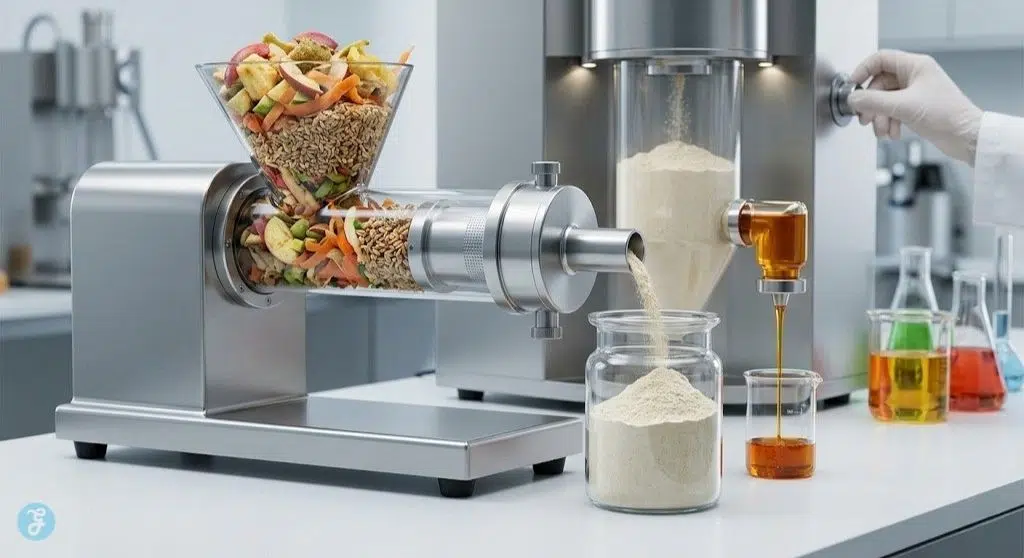
Through advanced thermodynamic processing, rapid dehydration, or proprietary enzymatic extraction, they upgrade these liabilities into premium flours, functional binders, and soluble proteins that command top-tier pricing in the B2B marketplace. This allows major food brands to offer unique, compelling marketing claims to eco-conscious consumers without sacrificing product texture, shelf stability, or flavor.
10 US Startups Engineering Upcycled Food Ingredients
Navigating this rapidly expanding landscape requires identifying the specific companies that have successfully moved beyond pilot facilities and into true commercial-scale production. The following ten innovators represent the vanguard of the circular food movement, offering highly functional, drop-in solutions that are currently transforming commercial kitchens and manufacturing lines across the United States.
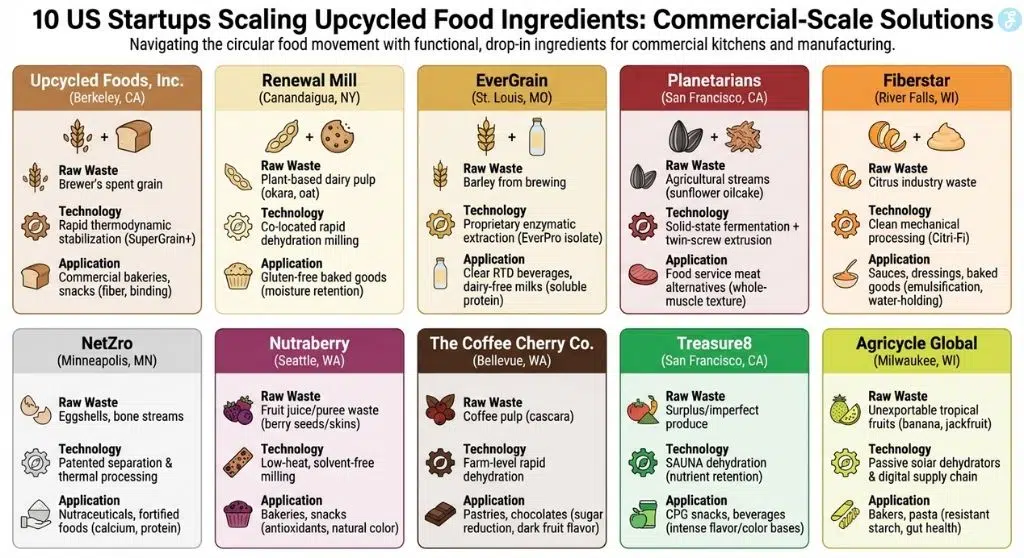
1. Upcycled Foods, Inc.
Operating out of Berkeley, California, this pioneering firm (formerly known as ReGrained) essentially wrote the blueprint for scaling reclaimed brewery waste. They have expanded beyond simple ingredient supply by launching a dedicated Upcycled Food Lab, which provides crucial co-manufacturing and recipe formulation support for large brands looking to seamlessly integrate novel flours into their existing, high-speed production lines.
Primary Commercial Application: Commercial bakeries, artisanal bread manufacturers, and extruded snack producers seeking high-fiber, clean-label binding agents.
Core Technological Edge: The company holds foundational global patents for the rapid thermodynamic stabilization of wet, highly volatile brewer’s grain, rendering it entirely safe for long-term shelf storage without any degradation of its core nutritional matrix.
Formulation Dynamics: The resulting SuperGrain+ flour carries a distinctively toasted, malty flavor profile that natively enhances dark breads, chocolate applications, and savory snacks, though it may require specific recipe masking when utilized in completely flavor-neutral applications.
2. Renewal Mill
Headquartered in Canandaigua, New York, Renewal Mill directly targets the massive, high-moisture waste streams generated by the booming plant-based dairy alternative sector. They utilize a highly efficient operational model, intercepting wet pulp immediately before oxidation occurs to capture the absolute maximum nutritional value of the raw material.
Primary Commercial Application: Formulators and industrial bakers developing premium, moisture-rich gluten-free baked goods, cookies, and specialty pastries.
Core Technological Edge: They design and co-locate their custom, rapid-dehydration milling equipment directly alongside the extraction lines inside major dairy-alternative facilities, ensuring zero transit degradation of the fragile by-product.
Formulation Dynamics: Their proprietary okara (soy pulp) and oat milk flours act as exceptional, natural gluten-free binders that actively prevent the dry, crumbly texture typically associated with alternative baking, while vastly improving crumb moisture retention.
3. EverGrain
Based in St. Louis, Missouri, EverGrain is backed by the immense infrastructure and capital of AB InBev. Despite this corporate backing, they operate as a highly agile startup, successfully utilizing the world’s largest brewing supply chain to extract vital, highly functional plant proteins at an unprecedented global scale.
Primary Commercial Application: Beverage manufacturers developing clear, ready-to-drink (RTD) sports recovery drinks, premium dairy-free milks, and liquid nutritional supplements.
Core Technological Edge: They utilize a highly guarded, proprietary enzymatic extraction process that gently separates the barley protein from the insoluble fiber without the use of harsh, denaturing chemicals.
Formulation Dynamics: The resulting isolate, EverPro, is almost completely soluble in liquid, entirely eliminating the gritty texture and astringent “beany” off-notes that typically plague formulations relying on traditional pea or soy protein isolates.
4. Planetarians
Operating from San Francisco, California, Planetarians focuses exclusively on upcycling agricultural streams into high-fidelity, whole-muscle meat alternatives. They are explicitly targeting the demanding food service, hospitality, and institutional catering sectors, moving away from heavily processed, synthetic-tasting vegan burgers.
Primary Commercial Application: Commercial chefs, restaurants, and catering services requiring clean-label, highly marinateable bases for vegan ribs, pulled meats, stews, or kebabs.
Core Technological Edge: By successfully combining solid-state fermentation with highly advanced twin-screw extrusion technology, they alter the molecular structure of plant waste to mimic animal tissue.
Formulation Dynamics: This process achieves the fibrous, tearable chew and deep umami profile of real meat without utilizing heavily processed synthetic binders, though procurement teams must carefully manage allergen labeling due to the primary use of sunflower seed oilcake.
5. Fiberstar
Located in River Falls, Wisconsin, Fiberstar intercepts and upcycles massive amounts of citrus industry waste into a highly functional culinary tool. Their flagship product has become a direct, label-friendly challenger to the market dominance of heavily synthesized hydrocolloids and artificial thickeners.
Primary Commercial Application: Sauce, dressing, and baked goods manufacturers looking to completely replace synthetic gums, modified starches, and chemical emulsifiers in their recipes.
Core Technological Edge: They utilize a completely clean, mechanical processing method that physically opens up citrus fiber cells to exponentially expand their surface area, creating a highly functional native ingredient called Citri-Fi.
Formulation Dynamics: Boasting exceptional water-holding and natural emulsification properties, recipes incorporating Citri-Fi require exact hydration recalibrations during the R&D phase to ensure the final product does not become overly dense over its commercial shelf life.
6. NetZro
NetZro, based in Minneapolis, Minnesota, tackles the absolute most difficult-to-process animal and agricultural by-products. They are actively building a true circular economy for calcium and protein waste streams, such as eggshells and bone, that historically ended up in massive industrial landfills.
Primary Commercial Application: Nutraceutical brands and commercial food manufacturers requiring highly bioavailable, upcycled calcium fortification in baked goods and functional beverages.
Core Technological Edge: They operate patented, specialized equipment that safely and cleanly separates eggshells from their inner membrane, neutralizes all pathogens through targeted thermal processing, and recovers volatile nutrients without destroying the native collagen.
Formulation Dynamics: While highly functional and nutritionally dense, utilizing upcycled animal by-products prevents the final ingredient from qualifying for strict vegan certifications, requiring careful deployment within specific plant-based or flexitarian product lines.
7. Nutraberry
Situated in Seattle, Washington, Nutraberry capitalizes on the massive antioxidant waste generated by the Pacific Northwest’s robust fruit juice and puree industries. They focus exclusively on the highly potent, frequently discarded seeds and skins of local raspberries, blackberries, and blueberries.
Primary Commercial Application: Artisanal bakeries, commercial granola manufacturers, and functional snack bar producers wanting vibrant natural color and highly concentrated antioxidant density.
Core Technological Edge: They have engineered a low-heat, completely solvent-free milling process explicitly designed to preserve volatile antioxidants and delicate seed oils without triggering rancidity.
Formulation Dynamics: The resulting defatted berry seed flours impart a native, subtle tartness that pairs exceptionally well with sweet applications, while delivering intense nutritional value without adding the problematic moisture load associated with incorporating fresh or frozen fruit.
8. The Coffee Cherry Co.
Based in Bellevue, Washington, this innovative startup intercepts agricultural waste directly at the farm level across the global coffee belt. They create a brand new, highly lucrative agricultural revenue stream for farmers while simultaneously preventing immense methane emissions generated by rotting coffee pulp.
Primary Commercial Application: Pastry chefs, commercial chocolatiers, and dessert manufacturers looking to substantially reduce refined sugar in dark chocolate formulations and high-end baked goods.
Core Technological Edge: By deploying rapid dehydration technology at the farm level before natural, uncontrolled fermentation occurs, they safely capture a massive amount of dietary fiber and a unique flavor profile.
Formulation Dynamics: Despite the origin, the resulting cascara powder does not taste like coffee; it imparts a complex, dark roasted fruit flavor similar to dried cherry, molasses, or raisin, requiring specific education for R&D teams expecting a traditional espresso profile.
9. Treasure8
Operating out of San Francisco, California, Treasure8 is a deep-tech food innovation firm utilizing military-grade drying techniques to capture the intense nutrition of surplus, cosmetically imperfect produce that fails to meet strict grocery store aesthetic standards.
Primary Commercial Application: CPG snack brands, beverage formulators, and culinary teams requiring incredibly vibrant, functional vegetable colorants and intense flavor bases for dry mixes and extruded snacks.
Core Technological Edge: Their proprietary SAUNA (Systemic, Advanced, Ultra-Nutrient Accumulation) dehydration technology preserves over 90% of the original enzymes, vitamins, and cellular colors compared to traditional, highly energy-intensive freeze-drying methods.
Formulation Dynamics: Because the resulting vegetable and fruit powders are hyper-concentrated in both flavor and pigment, they must be used in highly controlled, micro-dosed quantities during formulation to prevent completely overpowering the base recipe.
10. Agricycle Global
Headquartered in Milwaukee, Wisconsin, Agricycle Global manages a highly complex, decentralized international supply network. They successfully turn wasted, unexportable tropical fruits from remote smallholder farmers into premium, highly functional ingredients tailored strictly for the US market.
Primary Commercial Application: Commercial bakers, pasta manufacturers, and health-food brands looking for clean-label, functional thickeners that natively boost clinical gut-health claims.
Core Technological Edge: They distribute proprietary, passive solar dehydrators to remote farming cooperatives, supported by a rigorous, US-based digital supply chain and intensive quality assurance testing network.
Formulation Dynamics: Their upcycled green banana and jackfruit flours act as incredibly powerful resistant starches; they seamlessly stabilize culinary emulsions and improve dough elasticity while simultaneously providing massive prebiotic benefits to the end consumer.
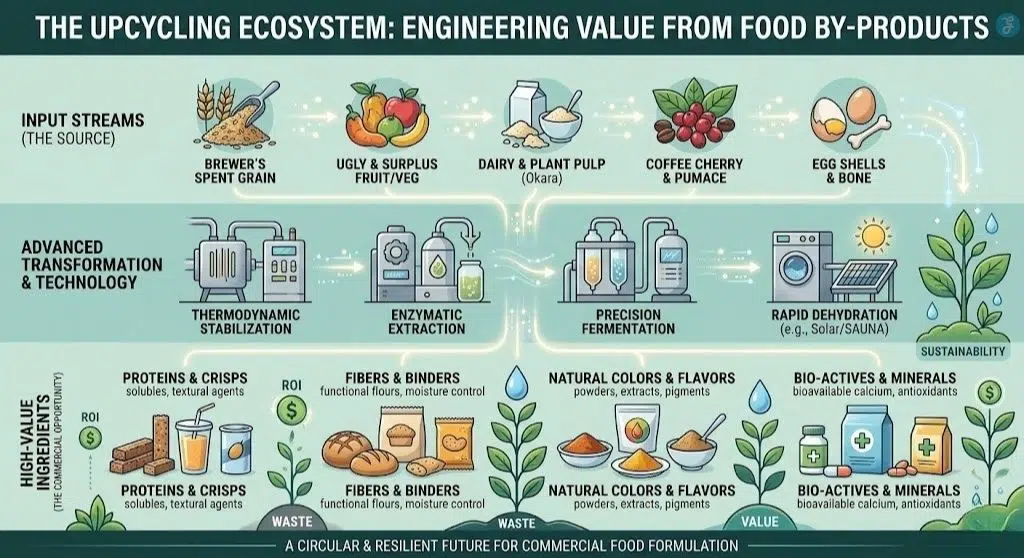
To further clarify the distinct processing methods utilized by these industry leaders, the following table details the specific technological mechanisms used to stabilize raw waste.
Comparing Core Extraction Technologies
Understanding exactly how these companies capture, stabilize, and process highly volatile waste streams is absolutely essential for procurement teams evaluating long-term ingredient viability. This comparative breakdown highlights the core technologies utilized across the sector to transform raw, rotting waste into safe, shelf-stable commercial assets.
| Startup Innovator | Primary Origin Material | Core Processing Technology | Primary Commercial Output |
| Upcycled Foods, Inc. | Brewer’s Spent Grain | Thermodynamic Stabilization | High-fiber binding flour |
| Renewal Mill | Oat & Soy Pulp | Co-located Rapid Dehydration | Gluten-free okara/oat flour |
| EverGrain | Brewer’s Barley | Proprietary Enzymatic Extraction | Soluble barley protein isolate |
| Planetarians | Sunflower Oilcake | Solid-State Fermentation | Whole-muscle meat blocks |
| Fiberstar | Citrus Peels & Pulp | Clean Mechanical Expansion | Natural hydrocolloid (Citri-Fi) |
| NetZro | Eggshells & Bone | Pathogen-Neutralizing Separation | Bioavailable calcium/collagen |
| Nutraberry | Berry Pomace | Low-Heat Solvent-Free Milling | Defatted antioxidant flour |
| Coffee Cherry Co. | Coffee Fruit Pulp | Rapid Farm-Level Dehydration | High-fiber cascara powder |
| Treasure8 | Surplus Produce | SAUNA Dehydration Tech | High-enzyme colorant powders |
| Agricycle Global | Tropical Fruit | Decentralized Solar Dehydration | Resistant starch banana flour |
While the environmental and financial benefits of utilizing reclaimed materials are undeniable, integrating these novel components into legacy commercial recipes requires significant strategic planning.
Research and Development teams must account for stark variations in dough hydration, oven browning rates, and native flavor profiles that differ dramatically from the heavily refined, highly predictable commodity flours they are accustomed to using. A direct, one-to-one volume swap is rarely successful without a period of scientific recipe recalibration.
Simultaneously, marketing and compliance teams face the challenge of consumer education. The terminology surrounding these ingredients has evolved rapidly; terms like “waste” or “scraps” are strictly avoided in consumer-facing copy. Instead, the focus is placed entirely on “upcycled,” “rescued,” and “climate-positive” messaging.
Furthermore, obtaining official certification from organizations like the Upcycled Food Association is becoming a critical requirement for CPG brands looking to validate their sustainability claims and avoid accusations of corporate greenwashing on the grocery store shelf.
Finally: Securing the Next Generation of Supply Chain Resiliency
The maturation of the upcycled ingredient sector proves that massive environmental and logistical challenges can be successfully solved through aggressive, technologically driven innovation. By systematically transforming agricultural liabilities into premium, high-margin functional assets, these ten startups are completely rewriting the rules of food procurement.
They are ensuring that the future of commercial food formulation is not only highly profitable and nutritionally dense, but fundamentally circular, protecting both the corporate bottom line and the global ecosystem from the severe volatilities of the modern agricultural landscape.
Frequently Asked Questions (FAQs) About Upcycled Food Ingredients
To provide deeper insight into the technical aspects of this industry, here are the answers to the most common questions regarding upcycled food ingredients.
1. What is the legal definition of an upcycled food ingredient?
According to the Upcycled Food Association, upcycled ingredients are officially defined as materials that otherwise would not have gone to human consumption, are procured and produced using verifiable supply chains, and have a positive impact on the environment. They must be safe, highly regulated, and structurally upgraded into a higher-value product.
2. Do upcycled flours behave the same as traditional wheat flour in commercial baking?
No. Because upcycled flours (like spent brewer’s grain or defatted berry seeds) lack gluten and often contain exponentially higher levels of dietary fiber, they absorb significantly more water than standard wheat flour. Commercial bakers must usually blend them with standard flours (typically at a 10% to 25% inclusion rate) and heavily adjust their hydration ratios to prevent the dough from becoming too dense.
3. How do upcycled ingredient companies ensure food safety when dealing with “waste”?
These startups utilize highly advanced, food-grade technologies to guarantee safety. Whether it is rapid thermodynamic processing that eliminates moisture before bacteria can form, or pathogen-neutralizing thermal separation used on eggshells, the raw materials are stabilized immediately. The resulting ingredients are subject to the exact same FDA commercial food safety and microbial testing standards as virgin agricultural products.
4. Why is rapid dehydration so critical in the upcycled food supply chain?
Agricultural by-products, especially items like oat milk pulp, coffee cherries, or brewer’s grain, have massive moisture contents. If left at room temperature, they will begin to naturally ferment, oxidize, or spoil within hours. Rapid dehydration halts enzymatic activity immediately, locking in the nutritional profile and transforming a highly volatile, rotting liability into a stable, dry powder with a multi-year shelf life.
5. Are upcycled ingredients cheaper for commercial food brands to purchase?
Not necessarily. While the raw feedstock (the waste) is acquired very cheaply, the advanced technology required to rapidly stabilize, extract, and mill that waste into a safe, functional, clean-label ingredient is highly capital-intensive. Consequently, these ingredients are priced as premium, highly functional specialty components rather than cheap commodity fillers, offering brands value through functional performance and ESG marketing claims rather than raw cost-cutting.