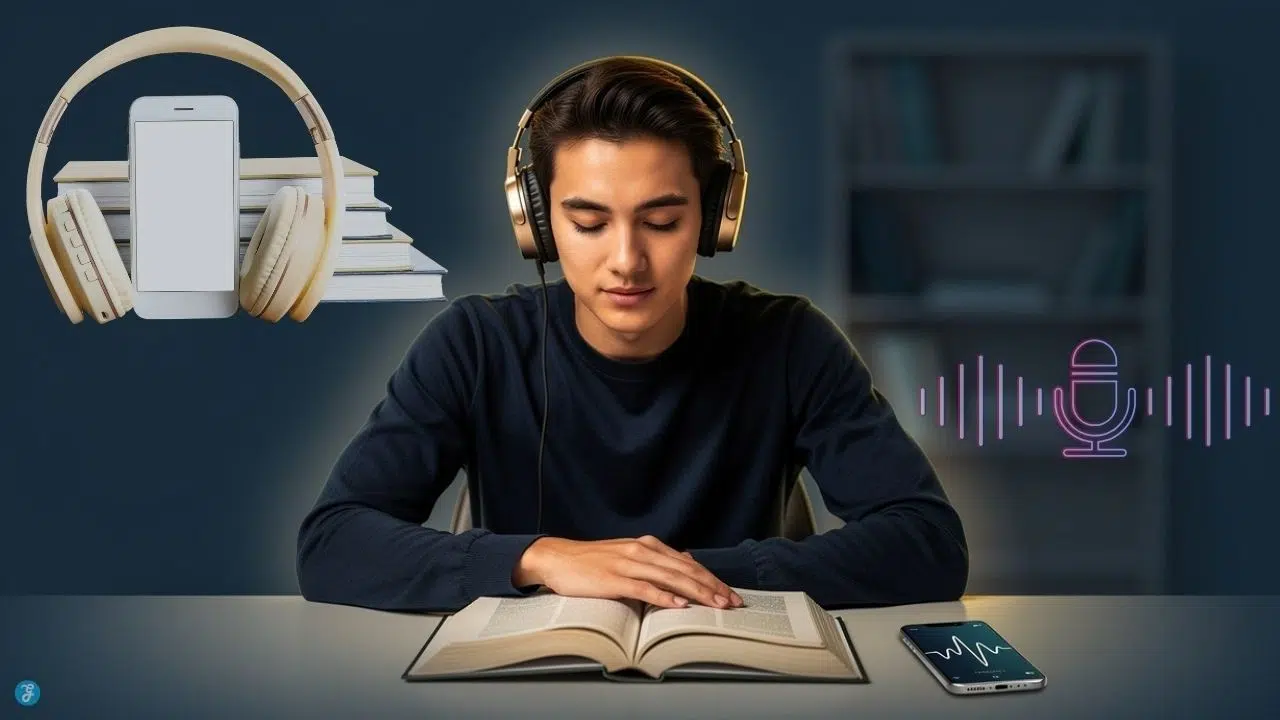
Have you ever started your morning fully intending to finish that new episode, only to realize an hour later that your mind was completely somewhere else? At some point, we all have been there. We all download these amazing shows with the best intentions. Life simply gets busy, distractions pop up, and we end up retaining almost nothing. The issue is not the material you choose.
I recently found out that people retain 65 percent more information when they switch from passive hearing to active listening. Your ears do the work, but your brain needs a little help to lock those brilliant ideas in place.
Grab a cup of coffee, and let’s go through it together. We’ll discuss the active listening strategies and how to get the most from Audio Books and Podcasts.
Exploring the Benefits of Audiobooks and Podcasts
Audiobooks and podcasts change how you learn and grow. They fit perfectly into your busy schedule without demanding extra hours. You can absorb fresh ideas while you work out, drive, or clean the kitchen.
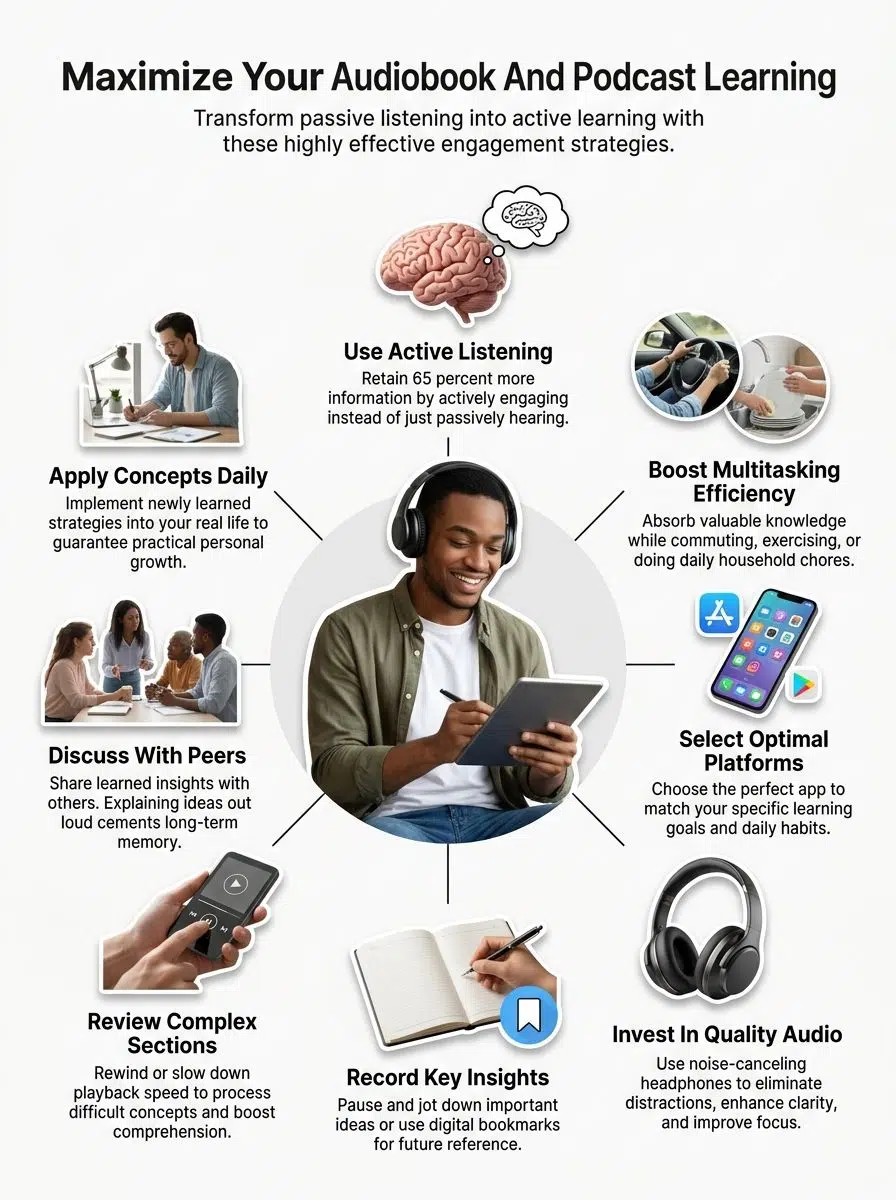
Expand Knowledge and Enhance Learning
Listening to audio content completely transforms how you absorb new information. Your brain soaks up facts and skills while you go about your day. You can pick up complex business strategies or personal development tips at your own pace. Comprehension feels easier because great narrators use their tone to highlight the most important points.
A 2025 study from the University of California, Berkeley, found that auditory information often creates stronger memory traces than reading plain text. The natural intonation and pacing of a human voice help your brain identify key concepts automatically.
“Hearing a voice emphasizes important details naturally. This makes the learning process feel effortless.”
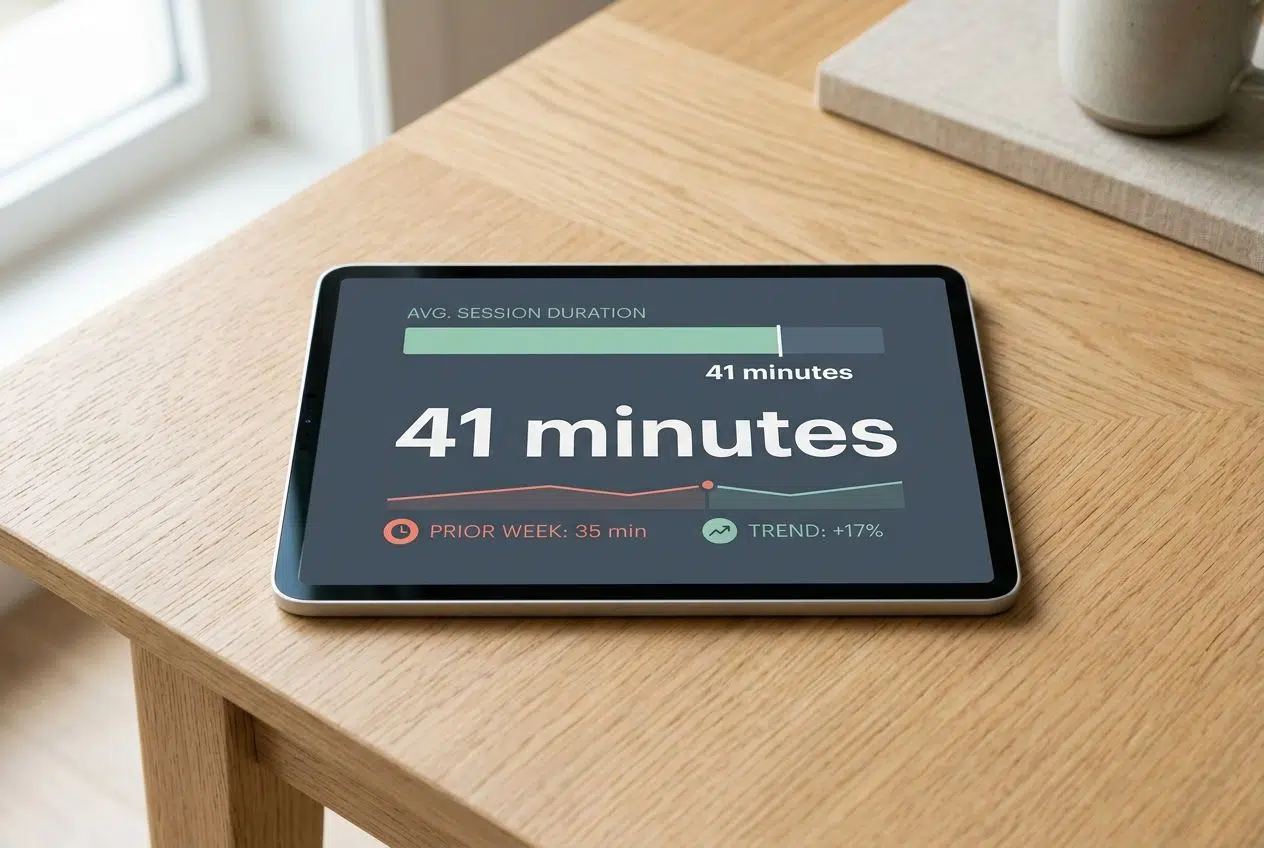
According to recent industry data, the average American listens to audiobooks for about 41 minutes a day. You can easily finish two full books a month just by using this time wisely. Speed controls let you adjust the playback. You can slow down for a dense science topic or speed up for a familiar history lesson.
Boost Multitasking Efficiency
Audio content turns dead time into a productive learning session. Recent 2026 data shows the average US commute is about 27.6 minutes each way. That is nearly an hour of driving every single day. Your car can easily become a personal classroom. This approach maximizes your productivity because you squeeze learning into gaps that already exist. Your brain processes the audio while your body handles routine physical tasks.
Here are my favorite ways to combine tasks for the best results:
- Commuting: Listen to daily news or business strategy shows to prepare for the workday.
- Household Chores: Play an engaging true crime or comedy show to make cleaning fun.
- Gym Sessions: Choose high-energy health and wellness podcasts to keep your momentum up.
- Meal Prep: Listen to a dense nonfiction audiobook since your hands are busy but your mind is free.
Speed controls help you customize this experience. You can increase playback speed to 1.25x for familiar topics to save even more time.
Enjoy Content Anywhere, Anytime
You gain incredible freedom in where and when you consume your favorite content. Digital media travels with you everywhere you go. You can listen during your morning jog and pick up exactly where you left off on your evening walk. As of 2026, 73 percent of Americans have listened to a podcast. This huge popularity means you can find a show for any highly specific interest.
You never have to waste a single moment. Your personal development strategy fits smoothly around your life. You capture time that would otherwise just slip away.
Setting Up for Optimal Listening
Getting your setup right makes a massive difference in how much you actually absorb. If you are wondering How To Get The Most From Audio Books And Podcasts, your choices about apps and equipment are the best place to start.
Select the Ideal Platform or App
Picking the right platform shapes your entire daily audio experience. Your subscription choice determines your access to content and your ability to take helpful notes. In the US, Apple Podcasts and Spotify currently lead the market for podcast fans, but newer AI tools offer incredible features for serious learners.
Here is a quick look at the three top platforms in 2026 to help you choose:
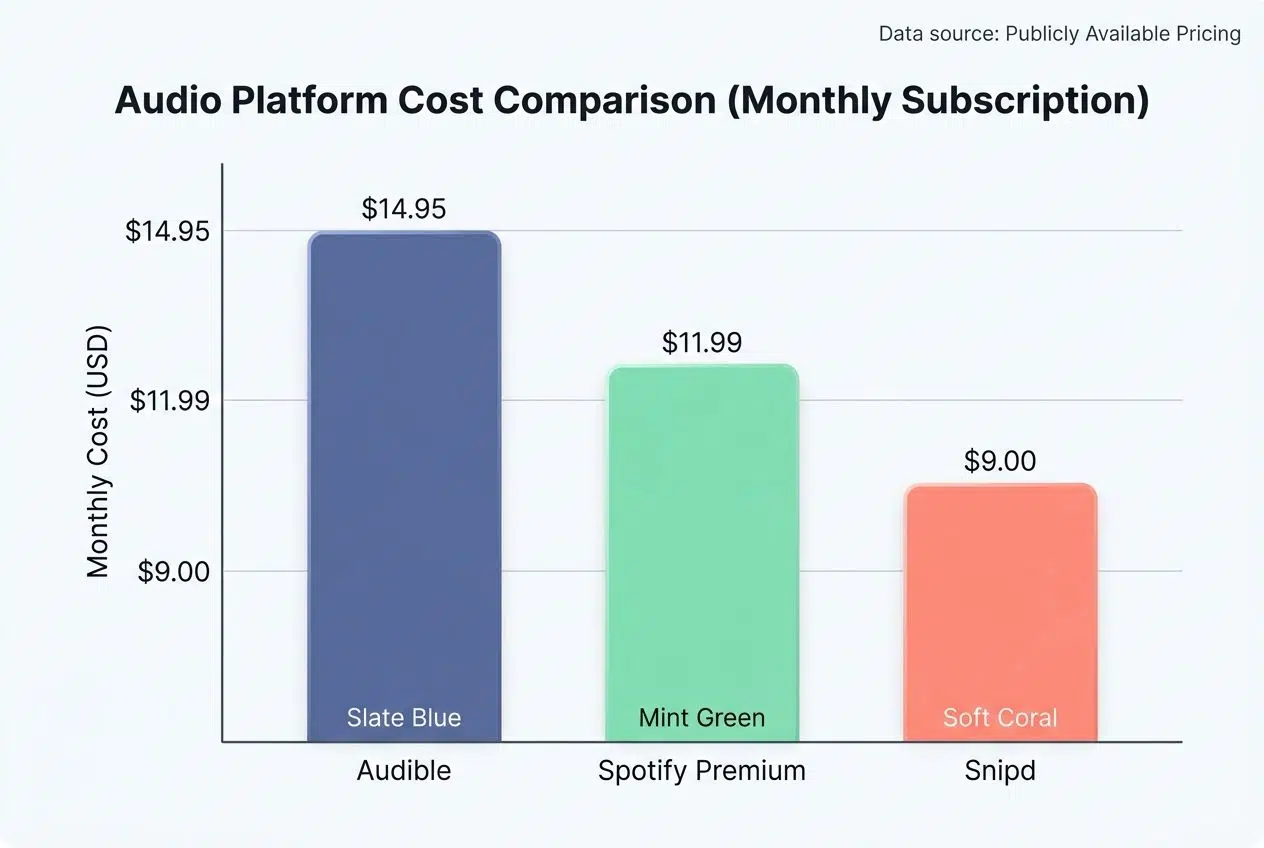
| Platform | Best For | Key Feature | Approximate Monthly Cost (US) |
|---|---|---|---|
| Audible | Serious audiobook listeners | Over one million titles and professional narration | $14.95 |
| Spotify Premium | All-in-one audio fans | Personalized AI DJ and massive podcast library | $11.99 |
| Snipd | Active learners and note-takers | AI transcripts and instant highlighting | Free to $9.00 |
Libby is another fantastic option because it connects directly to your local library. You can borrow audiobooks for free just by entering your library card number.
Choose Content That Aligns With Your Interests
Your interests act as a compass for your listening journey. Pick topics that excite you to keep your brain engaged. Engagement directly drives your ability to retain facts. You will absorb information so much faster when you actually care about what you hear.
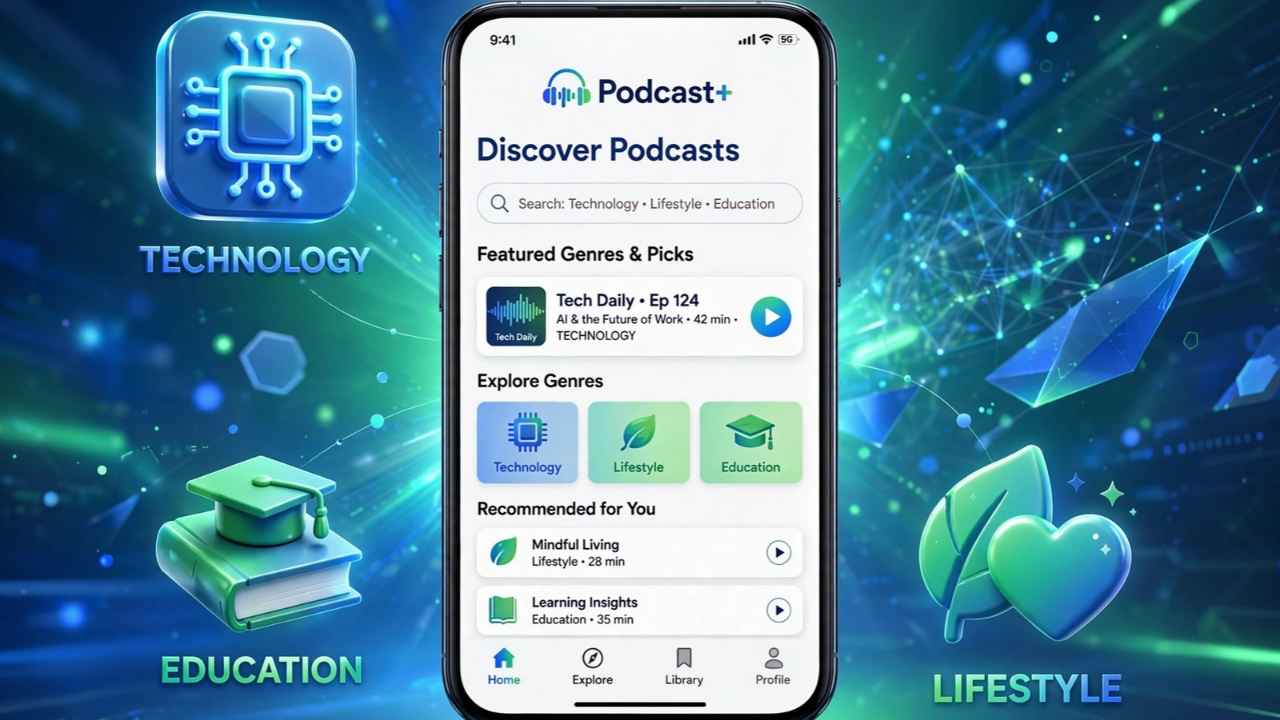
If you need a place to start, comedy, true crime, news, and society are the most popular podcast genres in the US right now. Explore different categories on your chosen platform to see what grabs your attention. Most apps let you browse by trending shows or listener ratings.
Your tastes might shift over time, so stay flexible. Mixing educational material with pure entertainment prevents burnout and keeps things fun.
Invest in High-Quality Audio Equipment
Once you pick content that speaks to you, the quality of your equipment matters immensely. Cheap earbuds can turn a great show into a frustrating, muddy mess. You need headphones that deliver clear sound so you catch every single word. Sound clarity directly impacts your comprehension. A quality pair of noise-canceling headphones is the best investment you can make. They block out background traffic or gym noise, allowing you to focus completely on the message.
Here are two fantastic 2026 options depending on your budget:
| Headphone Model | Best Use Case | Standout Feature | Price Range (US) |
|---|---|---|---|
| Sony WH-1000XM6 | Premium daily listening | Top-tier active noise cancellation for loud spaces | Around $400 |
| Soundcore Space One | Budget-friendly focus | Incredible battery life and great sound clarity | Under $100 |
Investing in decent audio gear pays off every single day. You stay engaged, pick up subtle details, and actually recall what you learned.
Techniques for Effective Listening
Master the art of smart listening to transform how much you absorb from every chapter.
Concentrate on the Speaker’s Core Message
Focusing on the core message turns background noise into active learning. Your brain works best when you filter out distractions and zero in on the main ideas. Try to identify the central theme within the first five minutes. You can use that theme as your anchor point throughout the episode.
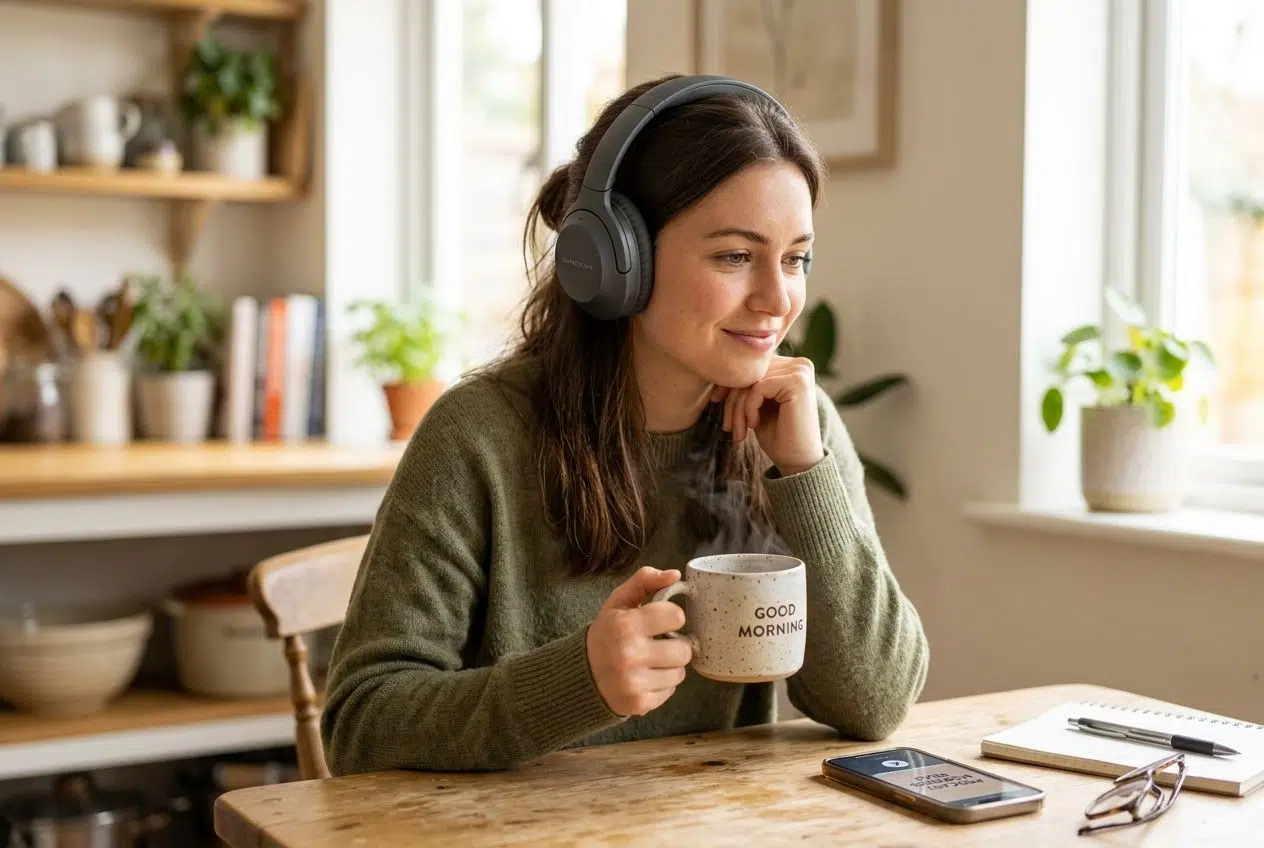
Many active learners on forums like Hacker News emphasize that passive listening is the enemy of retention. They suggest asking yourself simple questions while you listen. What problem does the speaker solve? How does this insight change my thinking?
“Active learning improves your retention by up to 100 percent compared to passive listening. Questioning the material keeps your brain sharp.”
You catch the real value when you stop trying to memorize every word. Track the big picture instead.
Record Key Points for Future Reference
Taking notes transforms a casual session into a permanent resource. Your brain retains facts much better when you actively capture them. Writing things down signals to your memory that this information is important.
Here are the most effective ways to record insights today:
- Use an AI tool: Apps like Snipd allow you to tap your headphones to save an audio clip. The app automatically creates a transcript and summary for you.
- Sync to a database: Connect your podcast app to a knowledge base like Notion or Readwise so your notes stay organized in one place.
- Create a simple shorthand: If you use a physical notebook, develop quick symbols for key ideas to save time.
- Summarize out loud: Pause the audio and briefly explain the main point to yourself. Speaking out loud anchors the idea in your memory.
Review these notes within a day of your session. This short delay strengthens your memory pathways and locks the information in.
Review Sections for Clearer Comprehension
Replaying sections of your audio content helps you lock in the information that matters most. Pause the playback whenever you encounter a complex idea that feels fuzzy. Your comprehension improves dramatically when you give your mind a few seconds to process difficult material.
Spaced repetition is a proven learning strategy. Try listening to a dense passage twice in one sitting, and then review it once more the next day. This timing activates your long-term memory perfectly. If a speaker talks too fast, do not hesitate to slow the speed down to 0.8x. You control the pace of your own learning.
Enhancing Retention and Interaction
You lock in what you hear when you create space for reflection and conversation. Putting ideas into action makes the knowledge stick.
Establish a Quiet Listening Space
A quiet environment helps your brain focus entirely on the speaker’s message. You want to block out traffic noise, sirens, and household activity that pulls your attention away. Turn off your phone notifications so random buzzes do not break your concentration.
Many people use a dedicated white noise machine to mask unpredictable background sounds. The Hatch Restore 3 is a highly rated 2026 model that offers custom sleep and focus sounds for around $170. If you want a more affordable option, the LectroFan EVO provides excellent fan and pink noise sounds for about $60. Dim the lights slightly to signal to your brain that it is time to focus. Practice this routine regularly so your mind learns to enter a focused state quickly.
Talking about what you learn with friends or coworkers is a massive retention booster. You gain fresh perspectives when other people share their takes on the same episode. These conversations stick with you far better than solo listening ever could. If you need a community, try joining a Goodreads audio group or Reddit’s r/podcasts forum to find like-minded fans.
Your peers challenge your thinking and help you see angles you might have missed completely. You move from simply hearing words to actually explaining ideas out loud. When you teach a concept to someone else, your own understanding deepens instantly. The discussion itself becomes a powerful memory tool, cementing concepts much faster than replaying a track.
Implement Concepts in Practical Scenarios
Real growth happens when you put those fresh ideas to work in your daily life. Practical application is the ultimate test of your comprehension. It proves whether you truly grasped the material.
Try these strategies to apply what you hear:
- The 24-Hour Rule: Apply a new productivity tip or communication strategy within one day of hearing it.
- Track your results: Start a small project based on a podcast insight and measure how it changes your daily output.
- Test a new routine: Follow a fitness or cooking method step-by-step to see if it works for your specific lifestyle.
- Share a strategy: Teach a business concept to a colleague and observe the real-world outcomes together.
Testing concepts in the real world provides you with concrete feedback.
Incorporating Audiobooks and Podcasts into Daily Life
You can easily weave audio content into your everyday routine without blocking out extra hours.
Listen During Commutes or Physical Activities
Your commute transforms into a valuable learning opportunity the moment you press play. Driving to work or riding the bus gives you prime time to absorb content. Jogging or hitting the gym becomes far more engaging when a great host fills your ears.
Physical activities pair beautifully with audio because your hands are busy, but your mind is free. Doing household chores or mowing the lawn no longer feels like a waste of your afternoon. Listening during these ordinary moments builds your comprehension while you accomplish your daily goals.
Dedicate Time for Regular Listening Sessions
Carving out dedicated time for listening transforms your experience from casual entertainment into intentional learning.
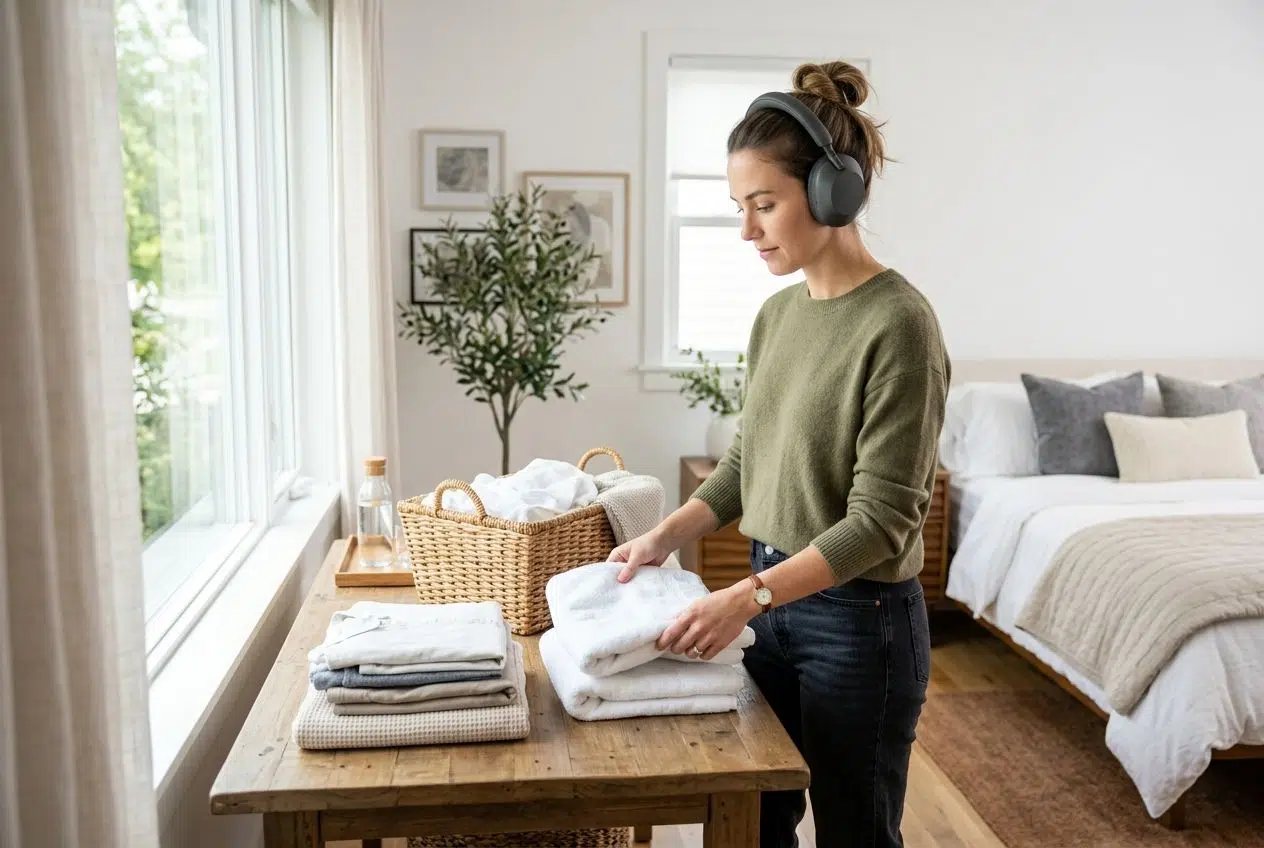
Set a specific schedule for yourself. You might prefer thirty minutes each morning or a full hour during an evening walk. Consistency builds strong habits that stick with you. Habit stacking is a brilliant way to build this routine. You simply pair your listening time with a habit you already do every day, like brewing your morning coffee or folding the laundry.
“Treat your listening sessions as non-negotiable appointments with yourself. Consistency is the secret to real personal growth.”
Track your progress by noting which topics you grasp quickly. This simple review helps you refine your strategy over time.
Tools and Apps for a Better Experience
Modern technology makes your audio experience incredibly smooth and rewarding.
Use bookmarking features to save key moments
Bookmarking features act exactly like digital sticky notes for your brain. When you hear something valuable, you just tap a button to save that exact moment. You can easily return to important ideas without endlessly rewinding through a long chapter.
Most modern tools make this process completely frictionless:
- Audible Clips: Use the clip button to save thirty-second snippets of any audiobook directly to your library.
- Snipd Summaries: Tap your screen to capture a moment, and let the AI generate a text summary of the conversation.
- Apple Podcasts Transcripts: Search the automatically generated text transcript to find the exact quote you need to reference.
These bookmarks become your personal library of actionable wisdom.
Explore apps for personalized recommendations
Smart apps serve up personalized suggestions based entirely on your unique listening history. Platforms like Spotify and Apple Podcasts track what you play, pause, and finish. They use this data to suggest similar shows that match your specific interests. Spotify’s AI DJ and algorithm get smarter the more you listen, which saves you hours of frustrating scrolling. You can easily explore curated playlists made by industry experts in business, science, or self-help.
Following your favorite creators ensures you get an alert the second a new episode drops. This keeps your feed fresh and prevents you from getting stuck in a content rut.
Your journey with audio content does not end when you finish an episode or a book. The real magic happens when you take what you have learned and put it into action.
Start small today. You might apply one quick insight to your work tomorrow, or discuss a key point with a friend over coffee. These simple steps turn your listening time into a powerful tool for growth.
Learning How To Get The Most From Audio Books And Podcasts requires a bit of daily practice. Track which content types work best for your lifestyle and adjust your speed settings when necessary. The tools you choose should always serve your goals, making your life easier and your mind sharper.
Frequently Asked Questions (FAQs) on Active Listening Strategies
1. How can I remember more from audiobooks and podcasts?
Listen when you’re not distracted, like during a walk or while folding laundry. Pause every 10 to 15 minutes to think about what you heard. Jotting down quick notes on your phone helps too, even if it’s just a word or two.
2. What is the best way to pick audio books or podcasts that fit my interests?
Start by thinking about what excites you, like stories or how-to tips, then explore those topics using apps like Spotify. Reviews and friend suggestions help too, since word of mouth often leads to great finds.
3. Can I multitask while listening without missing important details?
You sure can, but stick to simple tasks like sweeping the floor instead of complex work. If you catch yourself zoning out, just rewind 30 seconds so nothing slips through.
4. Are there tricks for making learning from audio more fun and useful?
Mix up genres to keep things fresh, discuss episodes with someone to help ideas stick, and slow down playback to 0.85x speed if speakers talk too fast.