Many traditional businesses struggle to keep pace in today’s fast-moving market. Outdated systems slow operations, frustrate customers, and erode competitive advantage. Consider a family-owned store in Springfield, United States, losing sales because it cannot compete with online-first competitors.
Digital Transformation for Traditional Businesses focuses on integrating modern digital technologies across all areas of an organization. This approach streamlines operations, enhances customer experiences, and drives sustainable growth through smarter technology adoption.
A clear roadmap includes key pillars such as process automation, data-driven decision-making, and seamless system integration. It also addresses common challenges like legacy infrastructure and stakeholder alignment.
With the rise of AI/ML integration and cloud migration, businesses that act now can stay competitive and future-ready.
What is Digital Transformation?

Digital transformation integrates digital technology into every part of a business organization. Companies adopt this approach to rewire their operations and create value through constant tech deployment at scale.
Think of it like upgrading an old car engine to a high-tech model; suddenly, everything runs smoother and faster. Successful efforts demand changes in technology, operations, and strategy that all connect and support each other.
Leaders focus on people first, because digital transformation stresses the human side of organizational change more than the tools themselves. Ethics, governance, and compliance need active plans from the start to guide these shifts.
A strong digital strategy bridges business goals with new digital technologies, helping firms optimize operations and boost customer experiences.
Digital transformation is fundamentally more about people than technology, says Prosci, highlighting the need for change management in every step.
Firms tackle legacy software systems by embracing data analytics and tools like ERP systems or CRM systems. They build a solid data foundation to drive decisions and improve operational efficiency.
Picture a traditional shop owner switching to SaaS for inventory; it cuts hassle and sparks growth. Technology adoption often involves models like the ADKAR model for smooth transitions.
Experts from Deloitte and IDC stress risk management to avoid pitfalls. Sapphire Technologies Pvt Ltd offers executive briefings on these topics, drawing from real business outcomes.
Teams use frameworks like the AWS Well-Architected Framework or NIST AI Risk Management Framework to modernize safely. This path fosters an agile operating model, ready for future trends.
Why Digital Transformation Matters for Traditional Businesses
Traditional businesses face tough choices in today’s fast-paced world. They cling to old ways, like a ship captain ignoring a storm on the horizon. Digital transformation integrates digital technology into all aspects of a business organization, as experts like Leonard Rosenblatt from Rosenblatt Consulting point out.
This change creates value through continuous deployment of technology at scale. It rewires the entire setup, linking digital tools to business goals. Executives and businessmen see this as vital for survival.
Imagine a mom-and-pop store using legacy modernization to update their systems; they suddenly compete with giants. A well-designed digital roadmap bridges the gap between business goals and technological advancements.
Companies optimize operations and elevate customer experiences through strategic technology deployment. Successful shifts require technological, operational, and strategic changes that work together.
People drive this process, more than gadgets do. Ethics, governance, and compliance demand proactive steps during these initiatives. Winning strategies involve tools like SSO/MFA for security and observability to track progress.
Team topologies help organize groups effectively, while the strangler pattern eases system integration. DORA research shows how high performers use these to boost business operations.
Businesses gain an edge with a digital transformation roadmap, a strategic visual plan that ties technology initiatives to business goals. This plan shows how digital investments fuel organizational success and value creation.
Firms leverage opportunities and roll out new systems and processes fast and seamlessly. Picture executives on LinkedIn sharing stories of transformation maturity models guiding their paths.
They modernize customer experience and automate processes, drawing from real insights. Data-driven decision making becomes the norm, replacing gut feelings. Traditional setups evolve, much like shedding an old skin for a fresh one.
This shift emphasizes the human element of organizational change, putting people at the center. Leaders adopt these methods to stay ahead, using pdf resources for quick learning.
Key Pillars of Digital Transformation
4. Key Pillars of Digital Transformation: Imagine your old-school business as a rusty engine that needs a tune-up, so we focus on core supports like automating workflows with AI bots, pulling insights from big data tools such as analytics dashboards, revamping customer chats through apps like mobile interfaces, and linking everything with cloud platforms for smooth rides—keep going to see how these power your shift!
Process Automation
Process automation streamlines repetitive tasks, freeing up your team for creative work. Imagine software bots handling invoices, like robots in a factory line. This integration of digital technology boosts efficiency across your business.
It links directly to goals, creating value through quick system deployments. Companies leverage these opportunities, implementing processes seamlessly. Think of it as rewiring operations with tech at scale.
Ethics guide these changes, keeping governance in check.
Your staff adapts to this shift, since digital transformation focuses on people over gadgets. Operational tweaks work hand in hand with strategic moves. Data flows better, aiding decisions.
Customer experiences improve too, thanks to optimized setups. Robotic process automation tools, such as UiPath bots, handle mundane jobs. Machine learning algorithms predict needs, scaling capabilities fast.
This bridges business aims with tech advances, driving success.
Data-Driven Decision Making
Data-driven decision making turns raw numbers into smart choices for your business. Consider this, you collect info from sales, customer habits, and market trends, then use tools like AI algorithms and business intelligence software to spot patterns.
This approach rewires your organization, creating value through tech at scale, just as digital transformation demands. It links technology initiatives straight to business goals, much like a roadmap that guides you home without detours.
Folks often overlook the human side here, but digital transformation thrives on people more than gadgets. You build teams that analyze data for better calls, optimizing operations and boosting customer experiences.
Ethical steps, like strong governance, keep things on track. Imagine a bakery using sales data to predict hot items; that’s real value creation in action, helping traditional spots compete in a fast world.
Customer Experience Modernization
Businesses today update customer interactions with fresh tech tools. They use CRM software to track needs and respond fast. Chatbots handle questions around the clock, like a helpful friend who never sleeps.
This shift elevates experiences, as digital transformation deploys tech to create value at scale. People drive this change, not just gadgets, so teams adapt with training and empathy.
Leaders bridge goals and tech by integrating systems for seamless service. Apps let customers shop online or in-store without hassle. Data insights reveal what buyers want, sparking quick fixes.
Ethics guide these moves, keeping trust high. Roadmaps link initiatives to success, turning old ways into modern wins.
System Integration
System integration ties all your business tools together, like puzzle pieces fitting into one big picture. Companies use APIs and middleware to connect old software with new apps, creating smooth data flow across departments.
This setup lets teams share information in real time, cutting down on errors from manual work. Picture a retail store where inventory systems talk directly to sales platforms; stock levels update instantly, and customers get accurate info.
Digital transformation demands this kind of link-up, as it rewires organizations for value through tech at scale. Ethics play a big role here too, so teams build in strong governance to keep data safe and compliant.
Firms often start with cloud services like AWS or Azure to blend systems without big overhauls. This approach bridges business goals and tech advances, optimizing operations for better customer experiences.
Take a manufacturing company that integrates ERP with IoT sensors; machines predict failures before they happen, saving time and money. People drive this change, so train your staff on these tools to make the shift stick.
A solid roadmap shows how these integrations create real value, helping traditional businesses adapt fast.
A Step-by-Step Digital Transformation Roadmap
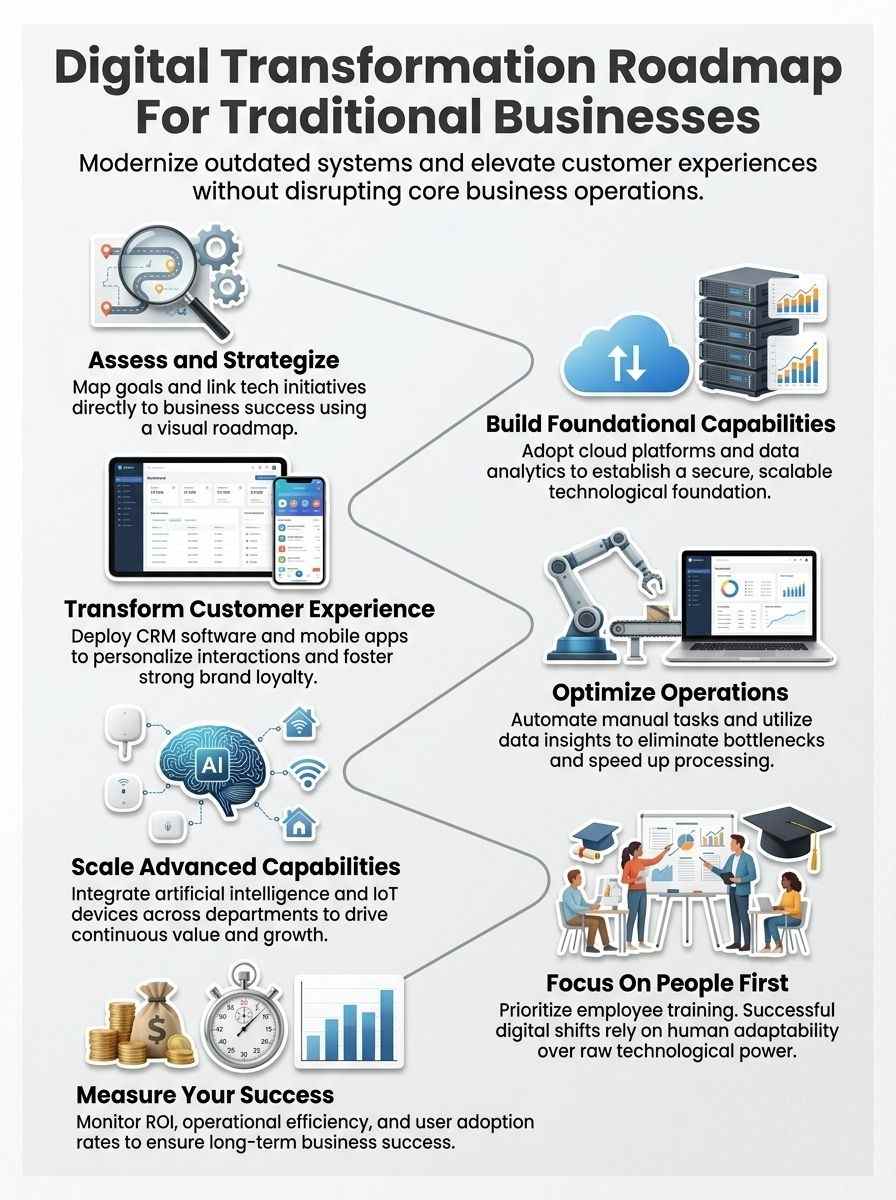
Imagine your business as a rusty old car, and this roadmap as the mechanic’s guide to rev it up with fresh tech like AI tools and cloud platforms. Jump in, assess your starting point with data analytics, integrate systems such as ERP software, and watch your operations zoom ahead—keep reading for the full drive.
Phase 1: Assess and Strategize
Digital transformation starts with a clear look at your business. You assess where you stand and plan how to move forward.
- Kick off by defining what digital transformation means for your company, as it involves the integration of digital technology into all aspects of a business organization, much like rewiring a house to handle modern appliances without flicking a switch blindly.
- Create a digital transformation roadmap, a strategic visual plan that links technology initiatives directly to business goals, helping you see the big picture like a treasure map leading to gold.
- Evaluate how this roadmap demonstrates the way digital investments contribute to organizational success and value creation, so you spot the wins early, avoiding that sinking feeling of throwing money into a black hole.
- Focus on leveraging opportunities to implement new systems and processes quickly and seamlessly, think of it as oiling the gears so everything runs smooth as butter.
- Recognize that successful digital transformation requires technological, operational, and strategic changes working in an interdependent manner, like a team where everyone pulls their weight or the whole boat tips.
- Digital transformation is fundamentally more about people than technology, emphasizing the human element of organizational change, so chat with your team, hear their stories, and make sure no one feels left in the dust.
- Address ethics, governance, and compliance with proactive approaches during digital transformation initiatives, think of it as building guardrails on a highway to keep everyone safe while speeding ahead.
- Define digital transformation as the rewiring of an organization with the goal of creating value through continuous deployment of technology at scale, so you set the stage for ongoing growth, rather than a one-time fix.
- Design a well-crafted digital roadmap that bridges the gap between business goals and technological advancements, acting as that sturdy bridge over a rushing river, connecting where you are to where you want to go.
- Plan how digital transformation helps companies optimize operations and elevate customer experiences through strategic technology deployment, like upgrading from a clunky old bike to a sleek electric scooter for smoother rides.
Phase 2: Build Foundational Capabilities
Building foundational capabilities forms the bedrock of your digital transformation. You lay down the essential tech and skills that support everything else.
- Start by integrating digital technology into every part of your business organization, much like weaving a strong net to catch new opportunities; this means rolling out cloud computing and basic data analytics tools to create a solid base, and successful digital transformation requires technological, operational, and strategic changes that work together hand in hand.
- Create a strategic visual plan, your digital transformation roadmap, that directly links technology initiatives to business goals; imagine it as a treasure map guiding you to value creation, where you deploy tools like enterprise resource planning systems to optimize operations and elevate customer experiences through smart tech choices.
- Focus on how digital investments contribute to organizational success and value creation, hey, it’s like planting seeds that grow into a thriving garden; integrate cybersecurity measures and integration platforms to help your company leverage opportunities and roll out new systems and processes quickly and seamlessly.
- Emphasize that digital transformation is fundamentally more about people than technology, so train your team on these new tools, perhaps sharing a quick anecdote about a buddy who turned tech fear into excitement by starting small; this human element drives organizational change, making sure everyone buys in for real progress.
- Adopt proactive approaches to ethics, governance, and compliance right from this phase, imagine it as building guardrails on a winding road; use compliance software and set clear policies to rewire your organization, aiming to create value through continuous deployment of technology at scale.
- Bridge the gap between business goals and technological advancements with a well-designed digital roadmap, like connecting two shores with a sturdy bridge; implement data management systems to ensure your foundational capabilities support data-driven decisions and system integration down the line.
Phase 3: Transform Customer Experience
Digital transformation reshapes how businesses connect with customers. This phase focuses on elevating those interactions through smart tech and human touch.
- Companies integrate digital technology into all business areas to revamp customer experiences, like using AI chatbots for quick support or apps for seamless shopping, which creates value by deploying tech at scale and makes folks feel valued, not just like another number in the system.
- Successful shifts demand tech, operations, and strategy changes that work together, so imagine your team training on new CRM tools while tweaking workflows to personalize offers, turning a simple purchase into a delightful chat with a friend who knows your tastes.
- This rewiring of the organization aims at ongoing tech rollout to boost satisfaction, for example, by adding data analytics for customized recommendations that surprise customers with just what they need, emphasizing that it’s people, not gadgets, driving the real magic.
- Firms optimize operations and lift customer moments via strategic tech use, such as blending online portals with in-store perks, which fosters loyalty and turns one-time buyers into raving fans, all while keeping ethics in check to build trust.
- The human side shines here more than the tech itself, imagine employees empowered by mobile apps to solve issues on the spot, blending strategy with empathy to make every touchpoint feel personal and warm, like a cozy neighborhood store gone digital.
Phase 4: Optimize Operations
You’ve reached the stage where efficiency becomes your best friend. Optimization turns everyday tasks into smooth, powerful engines that drive your business forward.
- Start by focusing on process automation to cut down manual work and boost speed, as digital transformation integrates technology into all business aspects, helping you leverage opportunities and roll out new systems seamlessly.
- Use data-driven insights to spot bottlenecks, since successful changes demand interdependent technological, operational, and strategic shifts that optimize operations through smart tech use.
- Modernize your systems with tools like ERP software and cloud platforms, which bridge business goals and tech advances, creating value via continuous tech deployment at scale.
- Train your team on these tools—this shift is more about people than gadgets, emphasizing the human side of change to elevate experiences and efficiency.
- Tackle ethics and compliance early, with proactive steps that keep your roadmap on track, linking tech initiatives straight to your goals for real success.
- Integrate IoT devices for real-time monitoring, as a strong digital plan shows how investments spark organizational wins and quick process upgrades.
- Streamline supply chains with AI algorithms, turning data into decisions that rewire your setup for ongoing value and smoother daily runs.
- Test changes in small batches first, like a chef tasting soup before serving, to ensure interdependent elements work together without hiccups.
- Monitor progress with key metrics, because optimizing operations elevates customer experiences too, through strategic tech that feels like a well-oiled machine.
- Adapt to feedback loops, hey, even the best plans need tweaks, as this phase builds on foundations to scale capabilities and drive lasting growth.
Phase 5: Scale Advanced Capabilities
You’ve made it to the pinnacle of your digital journey. This phase focuses on expanding advanced tech to drive ongoing value.
- Digital transformation defines itself as rewiring your organization to create value via continuous tech deployment at scale, so start by rolling out tools like artificial intelligence and Internet of Things across all departments, making sure they mesh with your business goals for seamless growth.
- A well-designed digital roadmap bridges the gap between business goals and technological advancements, which means you integrate cloud computing and big data analytics to handle larger operations, always checking that these tools support ethics, governance, and compliance in proactive ways.
- Successful digital transformation requires technological, operational, and strategic changes working in an interdependent manner, like a team of rowers syncing their strokes, so train your people on machine learning platforms while emphasizing the human element to foster real organizational change.
- Digital transformation helps companies optimize operations and elevate customer experiences through strategic technology deployment, picture it as upgrading from a bicycle to a high-speed train, so deploy blockchain for secure scaling and monitor how it boosts efficiency without overwhelming your team.
- Ethics, governance, and compliance require proactive approaches during digital transformation initiatives, hey, it’s like building a sturdy fence before the storm hits, so audit your advanced systems regularly to ensure they align with laws and create lasting value for everyone involved.
- Digital transformation is fundamentally more about people than technology, emphasizing the human element of organizational change, so involve employees in piloting augmented reality tools, gathering their feedback to refine deployments and keep the momentum going strong.
Common Challenges and How to Overcome Them
Digital transformation throws curveballs at traditional businesses, but you can dodge them with smart moves.
| Challenge | How to Overcome It |
|---|---|
| People resist change, since digital shifts hit the human side hard. | Focus on the human element first. Train your team, share success stories like a coffee shop that boosted sales with app orders. Make it feel like a team adventure, not a forced march. |
| Ethics, governance, and compliance issues pop up without warning. | Take proactive steps early. Build rules into your plan, use tools like compliance software to track data privacy. Think of it as installing guardrails on a winding road. |
| Technology integration feels like herding cats, with old systems clashing against new ones. | Link tech initiatives to business goals right away. Deploy cloud platforms for seamless system integration, just as a bakery swapped manual logs for ERP software to cut errors. |
| Data-driven decisions stall without clear insights. | Leverage analytics tools like business intelligence dashboards. Turn raw numbers into quick wins, optimizing operations as if flipping a switch to light up hidden opportunities. |
| Customer experience modernization lags, leaving folks frustrated. | Elevate interactions with CRM systems. Deploy chatbots and apps to create value, much like a retail store that used mobile payments to speed up lines and delight shoppers. |
| Scaling advanced capabilities drags on, due to poor planning. | Create a strategic visual plan that shows how investments drive success. Roll out process automation software step by step, rewiring your organization for continuous tech deployment at scale. |
| Operational changes clash with strategic goals, causing confusion. | Ensure technological, operational, and strategic changes work together. Use a roadmap to bridge gaps, helping your business seize chances fast, like a factory that automated lines to slash downtime. |
Measuring the Success of Digital Transformation
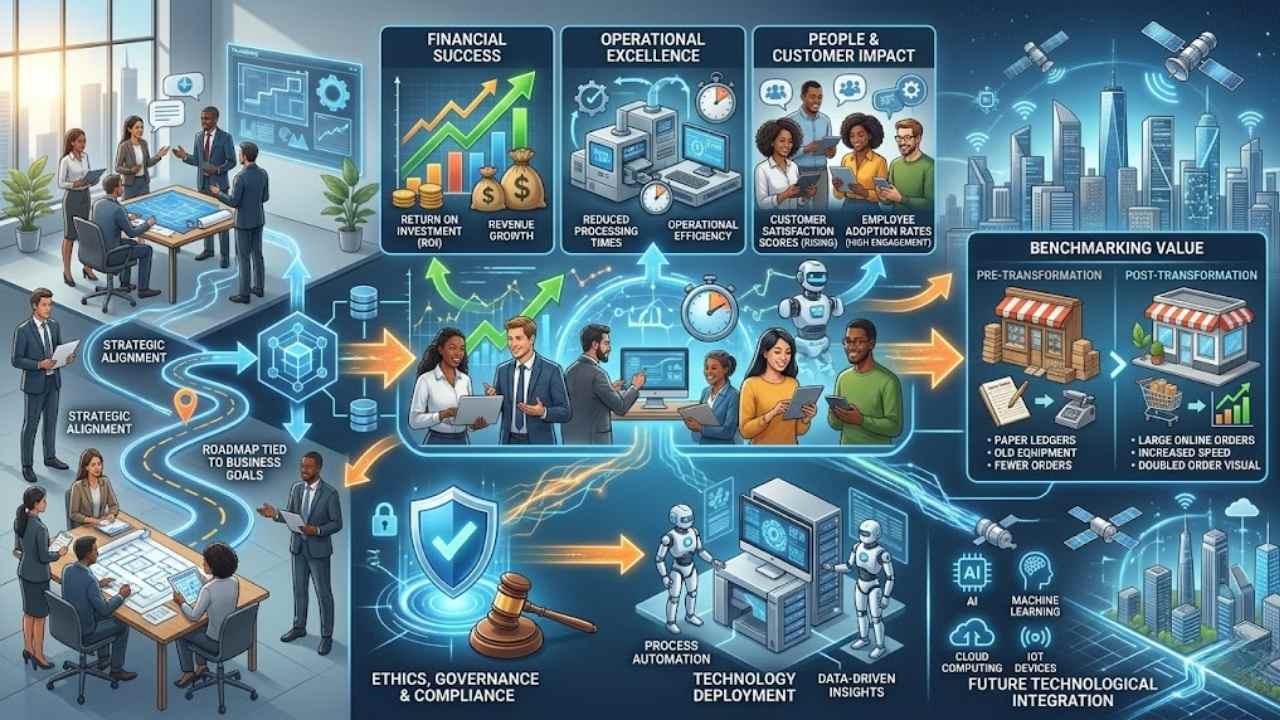
You put in the effort to rewire your organization, deploying technology at scale to create real value. Track that progress with clear metrics tied to your business goals. Start by looking at return on investment, or ROI, which shows how digital investments boost profits and cut costs.
Customer satisfaction scores rise as you modernize experiences, proving the human side of change pays off. Operational efficiency metrics, like reduced processing times, highlight seamless system integration.
Think of it like checking a map on a road trip; you spot landmarks that confirm you’re heading right. Ethics and governance checks ensure compliance stays strong amid these shifts.
Data-driven insights reveal if strategic changes truly elevate operations and spark innovation.
Leaders often overlook the people factor, yet employee adoption rates tell a big story in success tales. High engagement means your team embraces new processes without a hitch. Revenue growth from advanced capabilities, such as AI tools or cloud platforms, measures long-term wins.
Compare pre- and post-transformation benchmarks to see value creation in action. Picture a traditional retailer flipping to online sales; their roadmap links tech upgrades to doubled orders.
Proactive approaches to challenges keep the journey smooth, turning potential pitfalls into stepping stones. Scale those capabilities, and watch organizational success unfold through continuous tech deployment.
Real-World Example: A Traditional Business Transformed
Take a family-owned hardware store in a small town, folks. They sold tools and supplies the old-fashioned way for decades, with paper ledgers and face-to-face chats. Then, digital transformation hit them like a bolt from the blue.
Owners integrated digital tech into every corner of their business, rewiring the whole operation to create value through constant tech rollout at scale. They built a strategic roadmap that tied tech moves straight to business aims, showing how investments sparked success and fresh value.
Tech, operations, and strategy all worked together, hand in glove, to make it happen. People stood at the heart of it all, not just gadgets, as staff learned new skills and adapted to change.
Ethics, governance, and compliance got top billing from the start, keeping things on the straight and narrow.
This roadmap let them grab opportunities fast, rolling out new systems without a hitch. They automated processes, like inventory tracking with cloud software, and used data for smart choices that boosted sales.
Customers got a modern experience through an online shop and app, elevating interactions sky-high. Operations hummed smoother, optimized by strategic tech use. A well-crafted digital plan bridged their goals to tech advances, proving digital shifts focus more on folks than on machines.
Picture the owners, grinning ear to ear, as their store thrived in a digital world, leveraging every chance for growth.
Future Trends in Digital Transformation
Digital transformation keeps evolving, and it ties right into rewiring your organization for value through continuous tech deployment at scale. Think about artificial intelligence leading the charge; it helps companies optimize operations and elevate customer experiences with smart, strategic moves.
Ethics, governance, and compliance demand proactive steps as you integrate tools like machine learning and blockchain. These changes blend technological, operational, and strategic shifts that work together, always putting people first in this human-centered journey.
Picture a world where cloud computing and Internet of Things devices bridge business goals with cutting-edge advancements, much like a well-oiled machine humming along. You see, successful shifts emphasize the human element of organizational change, turning data into gold for better decisions.
A solid roadmap links these tech initiatives to your goals, letting firms seize opportunities fast. Hey, it’s like upgrading from a bicycle to a rocket ship, but with everyone on board and ethics steering the way.
Final Thoughts
You’ve journeyed through the basics of digital transformation, from its core pillars like process automation and data-driven choices to a clear roadmap with phases that build strong foundations and scale up smart tech.
These steps make the shift practical, you can start small with quick assessments and see real gains without massive overhauls. What if you applied just one phase to your business this week? Embracing this change boosts efficiency, sparks innovation, and helps traditional firms thrive in a fast-paced market.
Check out resources like free online courses on cloud computing or case studies from companies like IBM for more guidance. Go ahead, take that first step, your business future looks brighter already.
FAQs
1. What does digital transformation mean for traditional businesses?
Hey, picture your old-school shop like a rusty bike, and digital transformation is the tune-up that makes it zoom. It means using tech tools, like cloud computing and data analytics, to update operations and boost customer experience. Don’t worry, it’s not as scary as it sounds; start small and watch your business pedal ahead.
2. Why should my brick-and-mortar store bother with a digital roadmap?
Traditional businesses often feel stuck in the mud, but a digital roadmap pulls you out by improving efficiency and reaching more folks online. Think of it as trading your horse and buggy for a speedy car; you’ll predict trends better and keep up with savvy competitors.
3. How do I kick off digital transformation without messing up?
First, assess your current setup, like checking the foundation before building a house. Then, pick simple tools for tasks such as automating inventory or personalizing ads. Involve your team early to avoid bumps, and remember, it’s okay to stumble a bit, just like learning to ride a bike.
4. What pitfalls lurk in digital shifts for legacy companies?
Watch out for resistance from staff who fear change, or skimping on cybersecurity that leaves you open like an unlocked door. Budget wisely to dodge money drains, and always tie tech to real goals for smooth sailing. Yeah, it’s a journey, but the view at the end is worth it.