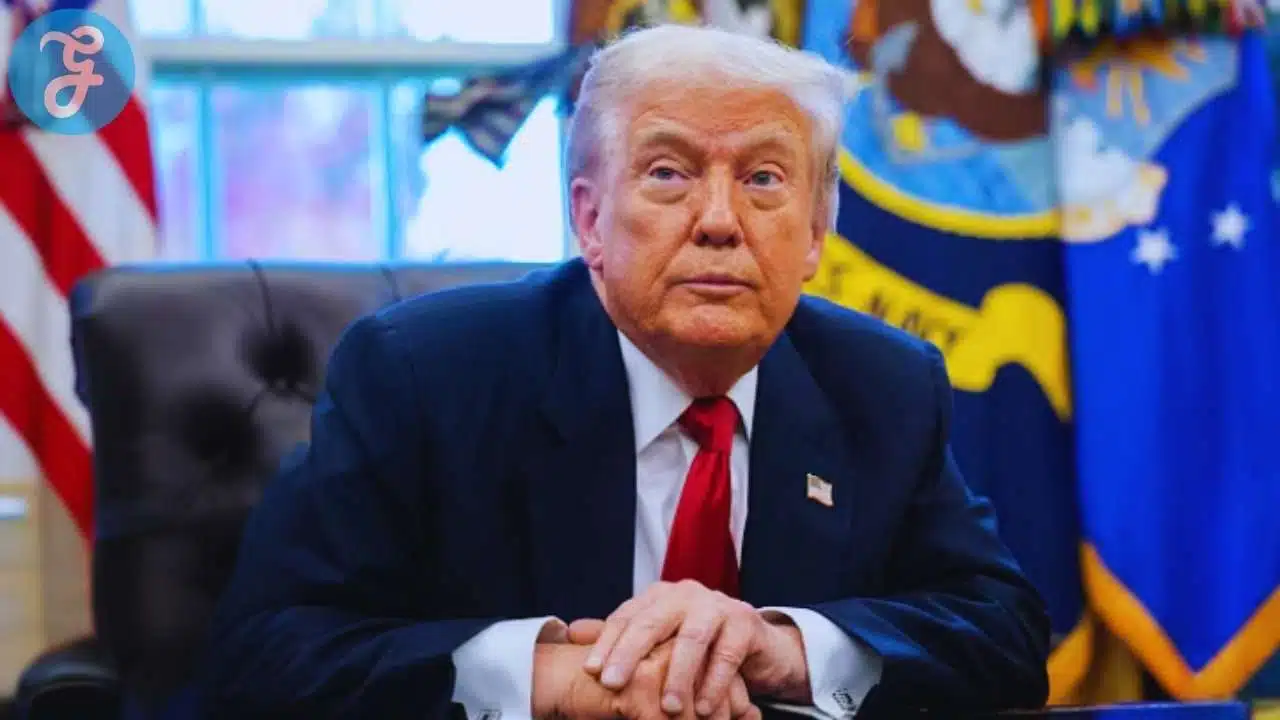
US President Donald Trump delivered a sobering warning on Thursday about the Russia-Ukraine war, cautioning that its continuation could ignite World War III and drag the world into unprecedented global conflict. Speaking directly to reporters at the White House right after signing a major executive order aimed at regulating artificial intelligence across federal agencies, Trump highlighted the staggering human cost, revealing that approximately 25,000 people—predominantly soldiers on both sides—lost their lives in the conflict just last month alone.
His comments underscore a growing sense of urgency from the administration, as the war enters its fourth grueling year, with frontline battles showing no signs of letting up and both Moscow and Kyiv digging in on their positions amid mounting international pressure for a breakthrough. Trump’s frustration was palpable as he described how endless posturing and “games” by the involved parties risk pulling in major powers like the United States, NATO allies, and others into a broader catastrophe that no one wants.
The executive order he signed focuses on streamlining AI development while curbing what the administration sees as overly restrictive state-level rules, but the president’s mind was clearly on the escalating violence overseas, where daily artillery barrages, drone strikes, and infantry clashes continue to claim lives and devastate infrastructure. This comes at a time when Trump has positioned himself as a decisive leader on foreign policy, promising swift resolutions to long-standing conflicts inherited from previous administrations, and his stark rhetoric serves as both a wake-up call and a signal of his impatience with diplomatic foot-dragging.
Frustration Builds Over Stalled Peace Talks
White House Press Secretary Karoline Leavitt echoed Trump’s sentiments during a Thursday briefing, confirming that the president is “extremely frustrated” with both Russia and Ukraine for the painfully slow progress in winding down the war that has ravaged Europe since early 2022. She detailed how the Trump administration has invested more than 30 hours in the past few weeks alone on high-level discussions involving Russian, Ukrainian, and European officials, yet these sessions have yielded little beyond preliminary understandings and repeated stalemates. Leavitt emphasized that Trump is “sick of meetings just for the sake of meeting,” making it clear he craves concrete action—such as ceasefire agreements, troop withdrawals, and binding peace terms—rather than more rhetoric or photo opportunities that fail to stop the killing.
Key figures in these efforts include Special Envoy Steve Witkoff, a seasoned negotiator with deep ties to international business circles, and Jared Kushner, Trump’s son-in-law who played a pivotal role in Middle East peace deals during the first Trump term. Earlier this month, they spent over four hours in Moscow engaging directly with Russian President Vladimir Putin, in what US officials described as “very productive” and “detailed” exchanges covering potential de-escalation steps, security guarantees, and economic incentives for both sides.
Despite these marathon sessions, challenges persist, including Russia’s insistence on formal recognition of annexed territories and Ukraine’s demands for robust NATO-like protections against future aggression. The administration’s all-hands approach also involves coordination with European partners, who are wary of any deal that might embolden Putin further, while domestic pressures in the US mount for reducing overseas aid commitments that have already topped tens of billions since the invasion began.
Key Territorial Disputes Hold Up Progress
At the heart of the negotiations lie thorny territorial disputes, particularly around the Donetsk region in eastern Ukraine and the strategically vital Zaporizhzhia nuclear power plant, which has been under Russian control since the early days of the full-scale invasion and remains a flashpoint for sabotage fears and energy blackmail. Ukrainian President Volodymyr Zelenskyy announced on Thursday that Kyiv has formally submitted a comprehensive 20-point counterproposal to the United States, refining an original 28-point American blueprint that drew sharp criticism from Ukraine and its European backers for appearing overly accommodating to Russian demands.
Zelenskyy specified that the US plan pushes for Ukraine to withdraw forces from significant portions of Donetsk to establish a “free economic zone” open to international investment, potentially fostering reconstruction and trade, but he firmly stated that any territorial concessions would only proceed after a nationwide referendum to ensure democratic legitimacy and public buy-in. These sticking points reflect deeper strategic calculations: Russia views Donetsk and surrounding areas as historically and culturally integral, bolstered by referendums it conducted under occupation, while Ukraine sees yielding ground as a betrayal of its sovereignty and a green light for further encroachments. The Zaporizhzhia facility adds nuclear risks, with ongoing concerns over safety amid shelling and power outages that could trigger meltdowns reminiscent of Chernobyl.
Reports from diplomatic channels suggest Trump is aiming for a comprehensive agreement by Christmas, leveraging holiday goodwill and his personal rapport with world leaders to force compromises, though the White House has stopped short of an official deadline to avoid self-imposed pressure. Zelenskyy’s team has coupled its proposals with calls for accelerated Western arms deliveries, arguing that bolstering Ukraine’s defenses on the ground will strengthen its hand at the table, while Putin has signaled openness to talks only if they align with Russia’s “red lines” on neutrality and demilitarization.
NATO Sounds Alarm on Broader Threats
Heightening the stakes, NATO Secretary General Mark Rutte issued his own dire warning from Berlin on Thursday, alerting that Russia could launch attacks on alliance member states within the next five years if NATO fails to dramatically boost defense spending and modernize its forces. Rutte painted a vivid picture of preparation needs, likening the potential scale to the total wars of the 20th century and urging allies to confront the reality of a revanchist Moscow flush with resources from energy exports and wartime production.
This assessment aligns with intelligence reports of Russia ramping up military exercises near NATO’s eastern flank, stockpiling munitions, and forging ties with adversarial powers, all while the Ukraine conflict serves as a testing ground for hybrid tactics like cyberattacks and disinformation. Rutte’s remarks come amid internal NATO debates over burden-sharing, with Trump himself having long criticized European allies for underfunding defenses and relying excessively on US support. The timing amplifies Trump’s WWIII caution, as stalled Ukraine talks risk emboldening Putin to probe NATO borders, from the Baltics to the Black Sea.
European leaders, including those from Poland and the UK, have rallied behind Rutte’s call, pledging procurement surges in drones, air defenses, and long-range strikes, while pressing for a Ukraine deal that includes ironclad security pacts. Overall, these converging warnings paint a precarious moment where diplomatic breakthroughs could avert catastrophe, but prolonged deadlock threatens to widen the war’s destructive footprint across the continent and beyond.