Uttarakhand once again faced nature’s fury as a massive cloudburst struck the outskirts of Dehradun on Tuesday (September 16, 2025), bringing with it torrential rains, flash floods, and landslides. The downpour, which began late Monday night, severely affected Sahastradhara, Tapkeshwar, Maldevta, and parts of Rishikesh, leading to widespread damage to houses, roads, shops, and religious sites. Authorities confirmed that at least two people are missing, while rescue operations are underway in multiple locations.
This disaster comes just weeks after a devastating cloudburst in Uttarkashi’s Dharali area (August 5, 2025), which destroyed homes, hotels, and homestays, killing several people and leaving many missing. Together, these events highlight how vulnerable Uttarakhand remains to extreme weather linked to climate change.
Sahastradhara Area Bears the Brunt
The Sahastradhara valley, a popular tourist destination in Dehradun known for its springs, caves, and resorts, witnessed unprecedented flooding.
- Shops, hotels, and local markets in the area were submerged under muddy waters and debris.
- Several roads caved in or washed away, cutting off access to interior villages.
- Authorities reported that dozens of vehicles were swept away by the strong currents.
Local eyewitnesses described the scene as terrifying, with gushing water carrying away stones, wood, and even parts of small structures. The floods have left many residents stranded in upper floors and nearby hillsides until rescue teams could reach them.
Tapkeshwar Mahadev Temple Flooded by the Tamsa River
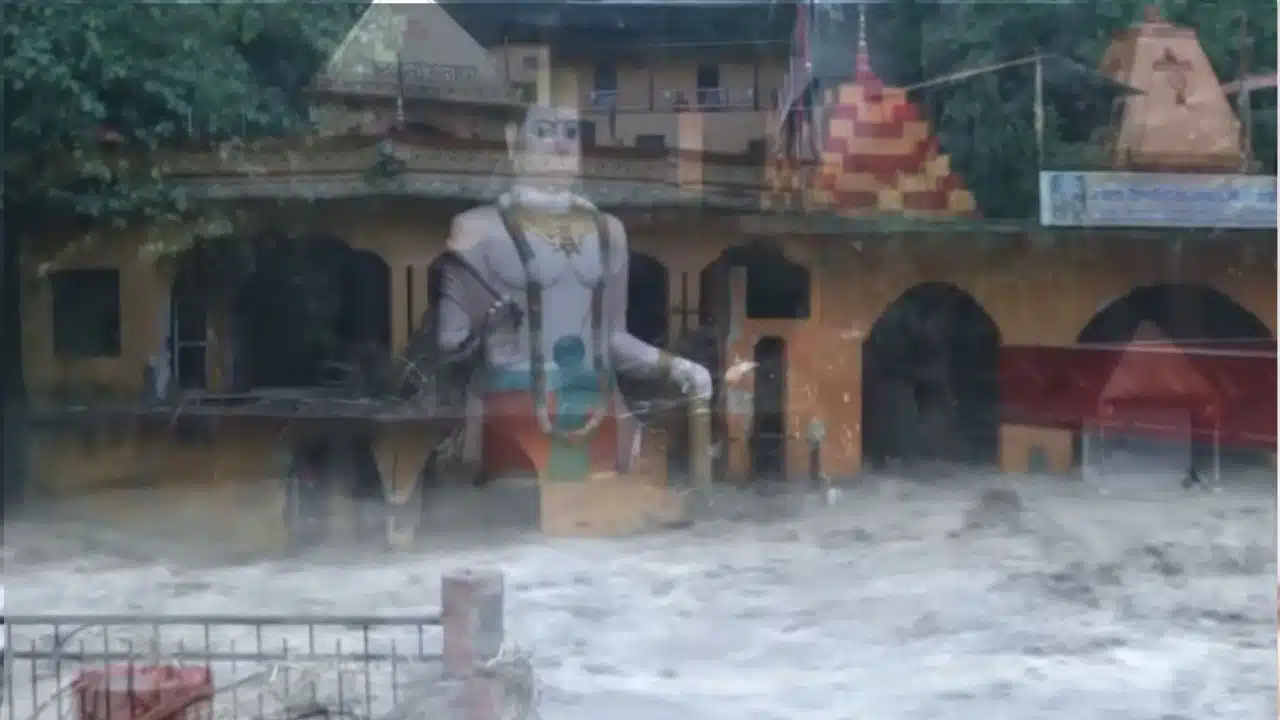
One of the most striking visuals came from the Tapkeshwar Mahadev Temple, one of Dehradun’s oldest and most revered shrines. Dedicated to Lord Shiva, the temple is located on the banks of the Tamsa River, which swelled overnight due to the heavy downpour.
- Water entered the temple complex, flooding its courtyard.
- The rising waters reached the statue of Lord Hanuman, though the sanctum sanctorum (inner shrine) miraculously remained untouched.
- Devotees and priests were evacuated quickly to prevent any casualties.
This temple, which attracts thousands of pilgrims annually, has faced flooding threats in past monsoons, but Tuesday’s event was among the most severe in recent memory.
#WATCH | Uttarakhand | Tamsa river in spate and Tapkeshwar Mahadev temple inundated as heavy rainfall lashes Dehradun.
Temple priest Acharya Bipin Joshi says, “The river started flowing heavily since 5 AM, the entire temple premises were submerged… This kind of situation had… pic.twitter.com/4E6PhKBM6K
— ANI (@ANI) September 16, 2025
Infrastructure Damage: Roads and Bridges Washed Away
The heavy rains and floods have caused severe infrastructure damage across Dehradun district:
- A bridge near Fun Valley and Uttarakhand Dental College on the Dehradun–Haridwar National Highway was badly damaged, disrupting traffic movement.
- Several link roads in Maldevta, Mussoorie, and adjoining hilly areas collapsed or became unsafe for vehicles.
- Local authorities confirmed that many residential colonies experienced power outages and waterlogging, further complicating relief efforts.
Given that Dehradun serves as a major gateway to Uttarakhand’s hill stations, the damage to road connectivity is likely to impact both rescue work and tourism.
Chandrabhaga River Floods in Rishikesh
The impact of the cloudburst was not limited to Dehradun alone. In Rishikesh, the Chandrabhaga River overflowed dangerously, flooding the highway and trapping multiple vehicles.
- SDRF teams rescued at least three people stranded in the river.
- Several vehicles remain stuck, and heavy machinery is being used to clear debris.
- Authorities warned that the swelling river posed risks to adjacent residential and commercial areas.
Rishikesh, being a hub for both pilgrims and tourists, has raised additional concerns for safety and traffic management.
Casualties, Missing Persons, and Rescue Operations
As of Tuesday morning:
- At least two people have been reported missing in Sahastradhara.
- Over 300–400 people have been shifted to safer shelters from vulnerable locations across Dehradun.
- SDRF and NDRF teams are conducting search and rescue missions along with local police, fire services, and the Public Works Department.
- Temporary shelters have been set up with arrangements for food, drinking water, and medical aid.
Authorities also warned that the number of missing people could rise as more reports from remote areas come in.
Government and Official Response
Chief Minister’s On-Ground Supervision
Uttarakhand Chief Minister Pushkar Singh Dhami rushed to the affected zones to oversee relief work. He:
- Conducted an on-site inspection in Dehradun district.
- Directed officials to provide immediate relief materials, including safe shelter, dry rations, clean water, and health facilities.
- Assured that no affected family would be left unattended.
Centre’s Response
- Prime Minister Narendra Modi and Union Home Minister Amit Shah spoke directly with CM Dhami to get updates.
- The Centre has assured all necessary support, including funds and additional rescue teams if required.
Weather Warnings by IMD
The India Meteorological Department (IMD) issued a red alert for Dehradun, Haridwar, and Tehri districts, predicting continued heavy to very heavy rainfall in the coming days.
- Locals have been strictly advised to avoid riversides, landslide-prone areas, and unnecessary travel.
- Schools (Classes 1–12) and Anganwadi centres in Dehradun were ordered shut for the day.
Experts warn that Uttarakhand’s fragile geography makes it extremely vulnerable to such incidents, which are becoming more frequent due to climate change and rapid urbanisation in hilly regions.
Recent History of Cloudbursts in Uttarakhand
This is not an isolated incident. Uttarakhand has witnessed multiple cloudbursts in 2025 alone:
- Dharali, Uttarkashi (August 5, 2025): Flash floods destroyed homes, hotels, and homestays, killing and injuring many.
- Chamoli & Rudraprayag (July 2025): Heavy rains caused landslides, road blockages, and property losses.
- Kedarnath Valley (June 2025): Early monsoon rains caused fear of a repeat of the 2013 disaster, though large-scale damage was avoided.
These recurring disasters underscore the urgent need for better disaster-management planning, stricter construction norms, and early-warning systems.
The cloudburst in Dehradun is yet another reminder of the fragile Himalayan ecosystem. While immediate relief efforts are ongoing, experts believe that long-term strategies—including sustainable development, climate-resilient infrastructure, and disaster preparedness—are essential to protect lives and livelihoods in Uttarakhand.
For now, the focus remains on rescuing the stranded, rehabilitating the displaced, and repairing the damaged infrastructure. With the IMD warning of more rain ahead, Uttarakhand continues to remain on high alert.