Disease outbreaks keep scientists awake at night. New viruses emerge faster than we can develop treatments. The covid-19 pandemic showed us how unprepared the world was for a global health crisis.
Traditional drug discovery takes years, sometimes decades. Meanwhile, people suffer and die waiting for cures.
Ukraine’s biotech startups work on breakthrough medical solutions despite facing the russian invasion. These companies develop artificial intelligence tools for faster diagnosis. They create personalized treatments based on your DNA.
Some build 3D printed organs that could replace damaged hearts. Their work on monoclonal antibodies might stop the next pandemic before it starts.
This article reveals seven Ukrainian biotech companies that could change medicine forever. You’ll discover how these start-up companies use cutting-edge technology to fight cancer, autoimmune diseases, and deadly viruses.
Each company tackles different medical challenges with fresh approaches.
The future of healthcare might come from an unexpected place.
Key Challenges in Global Disease Treatment
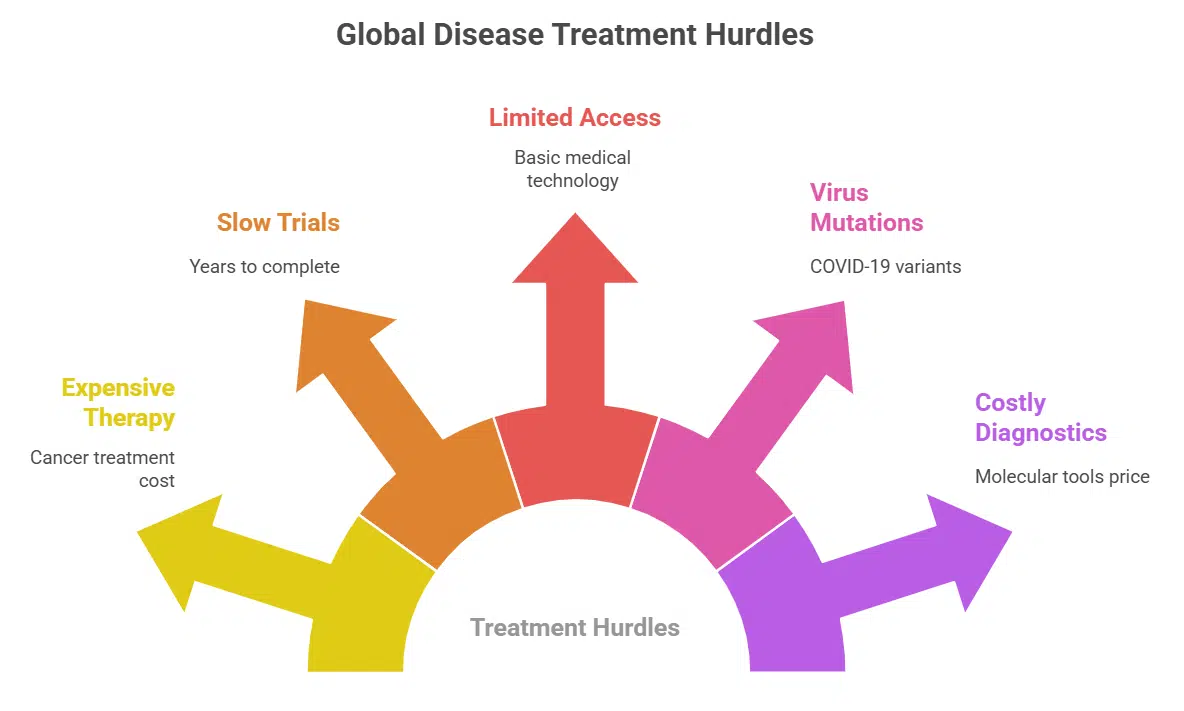
Global disease treatment faces massive hurdles that slow down progress. Cancer therapy remains expensive and often fails patients who need it most. Clinical trials take years to complete, while people suffer from autoimmune diseases without effective treatments.
The World Health Organization reports that many countries lack basic medical technology and proper drug delivery systems. Developing nations struggle with limited access to FDA-approved medications and modern diagnostic tools.
New virus mutations like COVID-19 variants create fresh problems for scientists. The SARS-CoV-2 virus keeps changing its spike protein, making vaccines less effective over time. Researchers work hard to develop polyclonal antibodies that can fight multiple strains.
Molecular diagnostics help doctors identify diseases faster, but these tools cost too much for many hospitals. Venture capital funds invest billions in biotech companies, yet breakthrough treatments still take decades to reach patients who desperately need them.
7 Promising Biotech Startups in Ukraine
Ukraine’s biotech scene buzzes with innovation, despite facing challenges from the Russian invasion of Ukraine. These seven companies push boundaries in cancer treatment, genomics, and AI-driven healthcare solutions that could change medicine forever.
MyHelix: Personalized DNA Testing and Nutrition
MyHelix stands at the forefront of personalized medicine in Ukraine. This biotech startup combines DNA testing with custom nutrition plans. Their approach helps people understand their genetic makeup better.
The company analyzes specific genes that affect how bodies process different nutrients. MyHelix creates detailed reports about food sensitivities, vitamin needs, and metabolism patterns.
Their testing covers areas like lactose tolerance, gluten sensitivity, and caffeine processing. The startup uses advanced sequencing technology to read genetic codes. Doctors and nutritionists can use these results to design better meal plans for patients.
The company’s DNA tests reveal important health information that standard blood work might miss. MyHelix focuses on preventing diseases before they start. Their genetic analysis can spot early signs of autoimmune diseases and other health problems.
The startup partners with medical professionals across Ukraine to expand their reach. Their work could help millions of people avoid serious health issues through better nutrition.
MyHelix proves that Ukrainian entrepreneurs are building solutions for global health challenges. The company’s research contributes to cancer treatment understanding and other medical breakthroughs.
Biopharma: Blood Plasma-Based Therapies
Biopharma makes medicine from blood plasma. This Ukrainian company turns donated blood into life-saving treatments. Blood plasma contains special proteins that fight diseases. The company extracts these proteins and creates therapies for people with autoimmune diseases.
Plasma-based treatments help patients who cannot make their own antibodies. Biopharma’s polyclonal antibody products work against many different threats at once. Clinical trials show these treatments can stop serious infections.
The virus that causes septic shock becomes less dangerous with plasma therapy. This approach gives doctors powerful tools to save lives during pandemics.
Enamine: Drug Discovery and Chemical Libraries
Enamine stands as Ukraine’s powerhouse in drug discovery, building massive chemical libraries that help scientists worldwide find new medicines. This biotech company creates millions of different chemical compounds, giving researchers the building blocks they need to develop treatments for diseases like cancer and autoimmune diseases.
Their work speeds up the testing of drugs by providing ready-made molecules that scientists can study in clinical trials.
The company’s chemical libraries contain over 3 million compounds, making them one of the largest collections in the world. Pharmaceutical giants like Google’s parent company and other major players rely on Enamine’s vast database to discover new treatments.
Their scientists work around the clock, creating new molecules that could become the next breakthrough medicine, helping fight everything from avian flu to complex genetic disorders.
Pharmbills: AI-Driven Healthcare Solutions
Pharmbills brings artificial intelligence to healthcare in a big way. This Ukrainian startup uses data analytics to spot patterns doctors might miss. Their AI systems scan medical records faster than any human could.
The company focuses on catching diseases early, when treatment works best. Pharmbills helps doctors make better choices for their patients. Their technology can predict which treatments will work for specific people.
Medical device companies partner with Pharmbills to improve patient care. The startup’s cloud computing platform processes huge amounts of health data. Doctors get alerts when patients need urgent attention.
Pharmbills also helps hospitals run more smoothly by predicting busy periods. Their AI spots fertility issues and autoimmune diseases before symptoms appear. This early warning system saves lives and cuts healthcare costs across Ukraine and beyond.
A.D.A.M.: 3D Bioprinting for Medical Applications
A.D.A.M. creates artificial hearts and prosthetic devices using 3D bioprinting technology. This Ukrainian startup prints living tissues that could replace damaged organs in patients.
The company’s bioprinters work like regular printers, but they use living cells instead of ink. Scientists load the machine with special bio-ink made from human cells. The printer then builds organs layer by layer, creating complex structures that match human anatomy.
A.D.A.M.’s technology shows promise for treating autoimmune diseases and other serious conditions. Their printed tissues could help millions of people who need organ transplants. The World Health Organization reports that organ shortages affect patients worldwide.
A.D.A.M.’s bioprinting could solve this problem by creating organs on demand. The startup has caught attention from venture fund investors who see the potential. Clinical trials for their printed tissues may start soon, bringing hope to patients with failing organs.
Borsch Ventures: Biotech Investment and Innovation
Borsch Ventures stands as a key player in Ukraine’s biotech investment scene. This venture capital firm focuses on funding early-stage biotechnology companies across the region. Their portfolio includes startups working on drug discovery, medical devices, and digital health solutions.
The company actively seeks projects that could address global health challenges. Many of their investments target autoimmune diseases and infectious disease research.
Investment strategies at Borsch Ventures emphasize companies with strong clinical trials data. They look for startups that can compete with established firms like Insilico Medicine.
The firm provides more than just funding, they offer mentorship and industry connections. Their approach helps Ukrainian biotech companies reach international markets. Recent investments include companies developing covid-19 vaccines and diagnostic tools for various plagues.
Smarta: AI for Advanced Disease Diagnosis
Smarta changes how doctors find diseases early. This Ukrainian startup uses artificial intelligence to spot health problems before they get worse. The company’s smart technology looks at medical images and patient data.
It finds patterns that human doctors might miss. Smarta’s AI can detect cancer, heart problems, and autoimmune diseases faster than old methods. The system works like having a super-smart assistant that never gets tired or makes mistakes from being overworked.
The startup’s facial recognition technology helps identify genetic disorders by looking at a person’s face. This sounds like science fiction, but it works. Smarta’s tools help doctors in places where specialist doctors are hard to find.
The company plans to run clinical trials soon to prove their AI works as well as they claim. Their technology could save millions of lives by catching deadly diseases early, when treatment works best.
The Role of Ukrainian Biotech Startups in Fighting Global Diseases
Ukrainian biotech startups are becoming major players in the global fight against diseases. These companies work on solutions that could help millions of people worldwide. MyHelix creates personalized medicine based on DNA testing, which helps doctors treat patients better.
Enamine builds huge libraries of chemicals for drug discovery, speeding up the process of finding new treatments. Their work supports clinical trials around the world. Biopharma develops blood plasma therapies that could treat autoimmune diseases.
These startups don’t just serve Ukraine, they serve the entire planet.
War hasn’t stopped these companies from pushing forward with their research. The russian invasion of ukraine created new challenges, but it also sparked innovation. Companies like A.D.A.M.
use 3D bioprinting to create medical devices that could replace damaged organs. Smarta uses AI to spot diseases early, which saves lives and reduces treatment costs. Pharmbills combines AI with healthcare to make medical care more efficient.
These startups prove that breakthrough medical discoveries can come from anywhere, even during tough times.
Takeaways
Ukraine’s biotech scene shows real promise for fighting tomorrow’s diseases. These seven startups work on everything from DNA testing to AI diagnosis, proving that innovation doesn’t stop during tough times.
Companies like Enamine and Smarta push boundaries while the world watches. Their work could help millions of people worldwide get better treatments and faster cures.
FAQs on Biotech Startups In Ukraine
1. What makes Ukrainian biotech startups special during wartime?
Ukrainian biotech companies like Kvertus keep working even during the Russian invasion of Ukraine. They focus on clinical trials and research while their country fights electronic warfare and drone warfare.
2. Which diseases are these startups trying to cure?
These companies target autoimmune diseases, UTIs, and viral threats like avian influenza and Nipah virus. Some work on COVID-19 coronavirus treatments too.
3. How do Ukrainian startups get funding during war?
The European Investment Bank helps fund these companies. Social media platforms like Twitter, Telegram, and Facebook also help them connect with investors worldwide.
4. What role does genomics play in Ukrainian biotech?
Genomics helps these startups understand diseases better. Companies use proteomic chemistry and advanced lab tools like pipettes to study how antigens work in the body.
5. Are any Ukrainian biotech companies becoming unicorns?
Some startups show promise of reaching unicorn status. The World Health Organization watches their progress closely, especially for neutralizing dangerous viruses.
6. How does the war affect biotech research in Ukraine?
Ukrainian servicemen and the Armed Forces of Ukraine protect research labs from military drones and unmanned aerial vehicles. Scientists in cities like Derhachi keep working despite electronic warfare systems and anti-aircraft systems nearby.