
You want to earn crypto without spending money, yet you feel stuck. In fact, you can earn passive income through staking, yield farming on decentralized exchanges, and providing liquidity in pools.
This guide shows you ten simple ways to grow your crypto wallet with airdrops, play-to-earn games, crypto lending and more. Ready to start?
Key Takeaways
- Stake or farm crypto to earn 3%–12% APY
– Lock tokens on chains like Ethereum 2.0, Cardano, or Polkadot
– Use DeFi platforms such as Uniswap, Aave, or Compound
– Watch for price swings, impermanent loss, and pool fees - Lend coins on platforms like BlockFi, Celsius, or Nexo
– Deposit Bitcoin, Ether, or stablecoins to earn interest
– Set your own rates, terms, and collateral rules
– Note: savings accounts lack FDIC insurance and carry hack risk - Join liquidity pools or run masternodes for block rewards
– Supply equal-value token pairs on AMMs (e.g., Uniswap) to earn trading fees
– Run a DASH or PIVX masternode by staking tens of thousands of tokens
– Track uptime, server costs, and network size for real returns - Claim free tokens via airdrops, bounties, or microtasks
– Complete tasks (Twitter, Discord, code audits) to meet drop criteria
– Early Uniswap users earned up to $1,200 (later worth $12,000)
– Bug bounties can pay up to $250,000 for critical smart contract flaws - Use rewards programs and crypto cards for passive gains
– Brave browser pays BAT tokens for viewing privacy-respecting ads
– Gemini Card gives 4% back on gas, 3% on dining, 2% on groceries
– Lolli browser plugin offers up to 30% crypto cashback at Nike, eBay, and more
How can I earn crypto through staking?
Staking locks crypto to help run blockchain networks with security. It pays regular rewards, but it ties up funds and faces price swings.
- Choose a chain like Ethereum 2.0, Cardano, or Polkadot, as these options offer moderate to high staking efficiency and strong network security.
- Acquire the minimum tokens, which may demand a significant initial investment, and store them in a wallet such as MetaMask, Ledger, or Trezor to secure your crypto assets.
- Delegate your tokens to a reputable validator or node, supporting decentralized finance operations and strengthening consensus.
- Lock your assets for the required term; a longer lock often yields higher staking rewards but blocks access to funds until it ends.
- Watch market volatility and track token price changes since swings can impact total returns alongside staking rewards.
- Factor in pool fees charged on defi platforms because these costs can reduce your net gains.
- Claim your staking rewards at regular intervals to reinvest and boost passive income.
- Track participant numbers; more stakers dilute your share of rewards in popular pools.
What is yield farming and how do I participate?

Yield farming locks crypto in DeFi pools. It earns passive income through liquidity pools.
- Pick a DeFi platform such as Uniswap, Aave or Compound. These services host liquidity pools for yield farming.
- Use a secure digital wallet like MetaMask or Trust Wallet. Transfer tokens safely, guard your seed phrase.
- Buy stablecoins or ETH to supply to a liquidity pool. USDT often runs low fees on some platforms.
- Deposit assets into a pool to stake or lend crypto. That action starts your liquidity mining.
- Watch smart contract vulnerabilities and market volatility. A hack or price crash can wipe out gains.
- Track impermanent loss by checking pool ratios. Price shifts can cut your token value.
- Claim staking rewards on a regular basis. You can reinvest them to build compound returns.
- Review tax implications before you pull funds. Each withdrawal may trigger a taxable event.
How do I lend crypto on lending platforms?
You can earn passive income by letting others borrow your crypto. Many platforms let you lend coins like Bitcoin or Ether on your terms.
- Pick a reputable platform like BlockFi, Celsius, or Nexo to lend crypto. Check rates, fees, and reputation to assess platform risk.
- Deposit your coins into the platform wallet. Use a secure address and confirm the transfer on a blockchain explorer.
- Lock in loan details by setting your interest rate, term length, and collateral rules. Factor in borrower risk, demand, and fees to gauge your yield.
- Open the loan and let the platform match you with approved borrowers. You keep ownership of assets while they pay interest.
- Track your loans and reinvest interest to boost passive income. Adjust terms or move funds if platform rates or market value shift.
What are liquidity pools and how can I join them?
Liquidity pools let you earn fees in DeFi. You lock fungible tokens on an automated market maker to share in trading volume.
- Choose a decentralized exchange such as Uniswap or another AMM. Link your browser wallet and fund it with a pair of tokens.
- Pick an asset pair that matches your risk tolerance. Focus on pools with high trading volume to boost passive income.
- Approve the pool’s smart contract to hold your assets. Watch for potential vulnerabilities in the code.
- Deposit equal values of both tokens into the liquidity pool. Your share mirrors the asset ratio you add.
- Track your position using a block explorer or a DeFi dashboard. Keep an eye on impermanent loss and platform fees.
- Claim earned trading fees and staking rewards at regular intervals. Reinvest or withdraw based on your passive income goals.
How do I run a masternode to earn crypto?
Masternodes pay a share of each block reward for running a full node. You earn passive income while you secure the network.
- Pick a coin like DASH, PIVX or Zcoin, weighing governance power, initial investment, and privacy perks.
- Host a reliable Linux VPS or home server, since crypto mining rigs draw more power and spike electricity costs.
- Install the latest node software, reading docs on blockchain technology to dodge smart contract vulnerabilities.
- Lock the required collateral, often tens of thousands of tokens, in an always-on wallet to earn staking rewards.
- Connect your node to peers and monitor network health, meeting uptime targets to stay in the active node count.
- Manage ongoing maintenance costs, running updates, backups, and security tools to fend off phishing sites or malware.
- Track rewards per block and factor in server expenses, network size, and capital gains tax to see real returns.
- Withdraw or reinvest your passive income, diversifying in decentralized finance yield farming or staking pools for better rates.
How can I collect dividends from crypto tokens?
Dividend-paying tokens work like stocks. You select a token like KuCoin Shares, NEO or VeChain. Purchase on an exchange, then send it to a digital wallet in decentralized finance (defi).
Hold the token long enough to meet distribution rules. A basic wallet such as MetaMask or a hardware device handles this with little tech know-how.
Payouts reflect project profits, distribution policy, demand and token price. Teams announce pay dates on websites or social media. Claim funds via a smart contract call or wait for automatic transfers.
You face risk from a project failing or token devaluation, so track your tax receipts as some agencies treat these gains like interest income.
What are crypto savings accounts and how do they work?
You can open a crypto savings account on BlockFi, Celsius, Nexo or Binance. Registration involves verifying your ID then picking a flexible or fixed term to earn passive income. The platform holds your coins in a cryptocurrency wallet and pays interest rates from 3% to 12% APY.
You deposit Bitcoin, Ether or stablecoins and watch your balance grow each month. Blockchain technology tracks each deposit and interest credit on a public ledger.
Returns depend on rates, fees, deposit size, lock-up period, demand and promotional rates. Platform insolvency or hacking can wipe out your funds since accounts lack FDIC insurance.
Taxable events occur when interest credits hit your wallet, so track earnings for capital gains taxes. Diversification helps spread risk across crypto lending, staking rewards or liquidity pools.
How do play-to-earn games reward me with crypto?
Games like Axie Infinity and Gods Unchained reward players with crypto tokens or NFTs for in-game wins. They send those assets to a crypto wallet when you claim rewards.
DeFi Kingdoms uses decentralized finance (defi) features on blockchain technology to pay JEWEL tokens for hero upgrades. Players must spend hours farming digital assets in liquidity pools or by staking NFTs in a marketplace.
Earnings face market volatility and depend on tokenomics and demand.
How can I participate in crypto airdrops?
Crypto airdrops give free tokens to early users or people who meet specific criteria. These drops use smart contracts on blockchain and can boost your passive income.
- Research project announcements on crypto news sites and official social media to spot airdrops.
- Set up a secure crypto wallet, like a hardware device or trusted software app, and store your seed phrases offline.
- Guard your data against phishing scams, fake websites, and phishing emails to keep your private keys safe.
- Connect your wallet to decentralized applications on blockchain and read smart contract details before you approve any action.
- Complete tasks like Twitter follows, Discord chats, or crypto faucet steps to meet drop criteria.
- Hold or stake tokens in liquidity pools or defi platforms, as many drops reward token holders.
- Join platforms like The Sandbox or Uniswap to claim free tokens, since Uniswap gave early users up to $1,200, later worth $12,000.
- Track deadlines and block heights, as most airdrops run for a set time and have specific eligibility rules.
- Report tokens as income at receipt time and check tax laws, because airdrops can trigger tax implications.
- Diversify across chains and projects so you can earn from multiple drops and spread risk.
What microtasks can I complete to earn crypto?
Small gigs pay you crypto. You do not need to trade or invest.
- Complete data labeling tasks on CryptoTask. Over 20,000 freelancers tag images, sort text, and train AI. Payments land in BTC, Tezos, or Ethereum stablecoins. Difficulty is medium, and time per task varies.
- Fill surveys on Braintrust. Each survey pays in USD, and you earn BTRST tokens for referrals. You can cash out to a cryptocurrency wallet that supports stablecoins.
- Solve captchas for small fees. Sites route micro work to you, and deposit crypto straight into your cryptocurrency wallet. Demand for captcha solvers stays steady, so you tap a steady stream.
- Test blockchain apps and decentralized apps. Give feedback on user flows, bugs, or design. Platforms crowdsource tests, and pay directly to your crypto address.
- Moderate content for blockchain communities. Flag spam, review posts, and guard against phishing scams. This keeps networks safe, and pays out in digital assets.
- Watch ads or videos on crypto faucet sites. Earn tiny sums of crypto per view. You stack small amounts over time, which builds into real value.
- Translate or transcribe short clips and docs. Platforms post tasks in various languages. You work from home and collect crypto through your wallet.
- Report smart contract vulnerabilities on bug bounty programs. Find flaws, submit reports on GitHub or bounty portals. Payouts reward DeFi experts, and can run to hundreds of dollars.
- Refer friends via microtask platforms. Use your link on CryptoTask or Braintrust, and earn BTRST or a cut of their task fees. This builds passive income in digital assets.
How does using Brave browser earn me crypto rewards?
The privacy-focused browser pays users in Basic Attention Token, or BAT, for viewing ads. Users choose to see short, privacy-respecting ads. Each click moves tokens to their wallet immediately.
It feels like pocket change for a couple of clicks. This method adds passive income without any trading windows.
Store BAT in a cryptocurrency wallet or tip your favorite creator right away. Over 70 million monthly users earn tokens this way. Withdrawals happen fast once your BAT is ready. Rates shift based on ad supply and your region.
No heavy lifting; just surf and earn. This approach makes collecting digital assets a breeze.
How do I claim referral bonuses for crypto?
Claiming referral bonuses can boost your passive income. You need a crypto account and a friend link.
- Sign up on Coinbase or Gemini with a friend link. These sites will credit you and your friend with $10 each after you finish a qualifying deposit or trade.
- Register on KuCoin using an invite code. You can earn a mystery box prize worth up to $500 in digital assets. Difficulty is very easy, time required is minimal.
- Link a cryptocurrency wallet to your new account. This step activates the bonus through blockchain technology transfers.
- Complete any qualifying transfer or deposit. The site credits your referral reward once you finish a valid move, thanks to secure smart contracts.
- Track pending bonuses in your account dashboard. You will see timers and alerts for any holding or withdrawal restrictions on your bonus funds.
- Invite more friends and grow passive income. Each successful referral adds a small boost to your ongoing crypto rewards.
What are learn-and-earn programs in crypto?
Crypto sites turn lessons into passive income. Coinbase offers $3 to $6 per completed module. The Binance platform and Phemex also reward students. Lessons take minutes and end with a short quiz.
Platforms send tokens into your cryptocurrency wallet once you pass.
New and existing users qualify after meeting simple eligibility rules. Programs cover blockchain technology, decentralized finance or smart contract vulnerabilities. They pack study and crypto airdrops into one task.
This approach boosts digital assets and builds real skills. It feeds both your knowledge and your crypto bank.
How do crypto rewards credit cards work?
Applying takes minutes. Your card lands in 10 to 14 days. Gemini Card gives 4% back on gas and EV charging. It pays 3% on dining, 2% on groceries and 1% for all else. You pick rewards in over 50 cryptocurrencies.
Crypto.com Visa Card tops out at 5% back when you stake CRO tokens.
Transactions post instantly to your digital wallet. It shows rewards in real time. Different issuers use varied tiers. Personal spending sets the cashback rate. Cards work like normal plastic, but pay out in digital assets.
Holders link them to a cryptocurrency wallet like any other card. Blockchain technology tracks each purchase.
How can I earn royalties from NFTs?
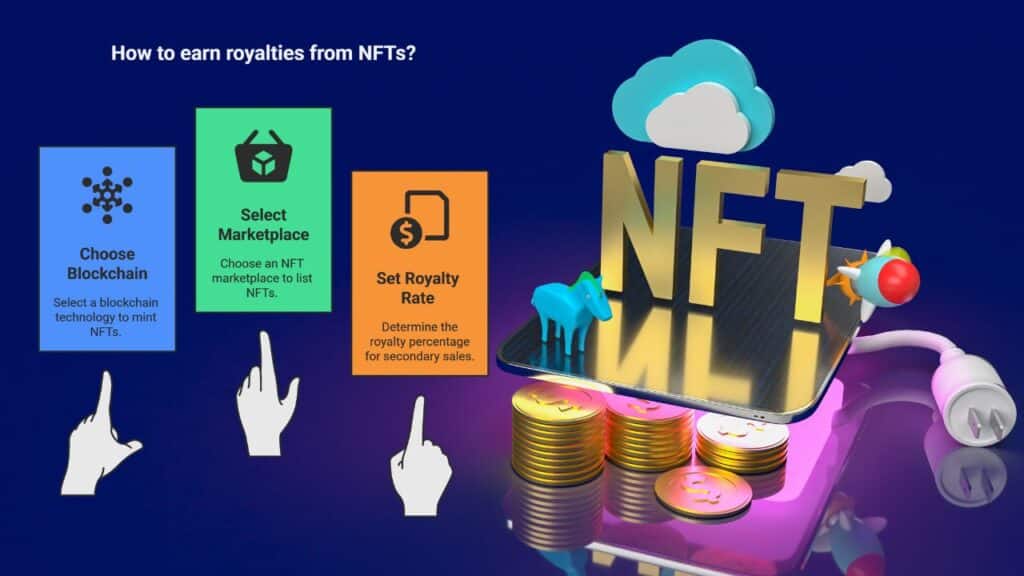
Artists earn passive income on digital assets. They add royalty code into a smart contract. Each resale triggers a payout. NFT marketplaces pay automatically at sale. That tweak keeps cash flowing after the first deal.
The market has slipped since the 2021 boom, so expect thinner checks. Returns hinge on creator reputation, market trends, royalty percentage, and marketplace policy.
Creators choose blockchain technology like Ethereum or a programmable ledger, or pick Binance Smart Chain or Flow. They head to an NFT marketplace such as OpenSea or another hub. Then they mint art, set their royalty rate, and list the item.
Sales on the secondary market then feed that income stream. Good work can spark repeat trades, each one adding to your crypto stash.
What are crypto bounty programs and how do I join?
Crypto bounty programs pay rewards for tasks like code audits, security scans, and marketing. Rewards range from small tokens to up to $250,000 for critical issues on Ethereum.
- Set up a crypto wallet. It holds digital assets and opens doors to passive income.
- Browse bounty boards. Look on code hosting platforms that list tasks in blockchain technology.
- Pick a task. Decide if you want to audit code, scan smart contract vulnerabilities, or run marketing tests. Hard tasks on Ethereum can pay up to $250,000.
- Complete the work. Audit code or run security testing, or craft social media posts for projects.
- Submit proof. Send your patch or report via email or the board, and include logs and screenshots.
- Await review. Approval can take days or weeks based on task complexity and project schedule.
- Receive payment. Projects pay in crypto tokens or stablecoins, values can shift with market volatility.
- Track tax. Record each reward as income to handle tax implications for digital assets.
What are cloud mining opportunities and are they worth it?
Cloud mining rents hash power so you can earn crypto, without buying hardware. It feels like renting a car instead of buying one. Genesis Mining, BrightHash, and EasyHash let you buy a hash rate to mine Bitcoin, Ethereum, or other coins.
Fees and contract terms eat into your passive income. You often see low to moderate returns each month.
Scams and bad actors lurk on shady sites; they claim big profits then vanish. You must check a provider’s reputation, fees, and contract length. Mining difficulty, coin value, and hash rate shape your returns.
Honest platforms like Genesis Mining post clear terms and stats. Compare fees, read user reviews, and go slow.
How can I shop and earn cashback in crypto?
Lolli plugin links to your cryptocurrency wallet. It runs on Chrome and Firefox. Setup is easy and needs just a few clicks. Shop at Nike, eBay and Groupon. Get up to 30% crypto cashback.
This trick grows digital assets and boosts passive income.
Cashback lands in your wallet after each purchase. Stores set different rates and update them often. You must meet a minimum before you can withdraw. The site relies on blockchain technology and taps into decentralized finance.
Takeaways
These ten crypto hacks can fund your digital wallet, from staking rewards on DeFi platforms, lending via BlockFi or Nexo, to remote mining. You can earn token giveaways or vault fees in liquidity vaults, run a node operator, or grab NFT cuts.
Many methods use DeFi apps, smart contract projects, remote mining services, or digital wallets like MetaMask. Pick a tool that fits your time, risk, and tax rules, then jump in. Watch your passive income grow, while you sip coffee and check your digital wallet.
FAQs
1. What are Bitcoin faucets and can they grow my digital piggy bank?
Bitcoin faucets give tiny drops of digital assets to your cryptocurrency wallet. You click a button or solve a captcha, then watch small amounts trickle in. It feels like earning passive income by tapping a tap, but it adds up slowly.
2. How does yield farming in decentralized finance work and what is impermanent loss?
Yield farming locks your coins in a liquidity pool so you earn extra tokens. It lives in defi apps, where you act as a liquidity provider. Watch out for impermanent loss when prices swing hard, a real headache in market volatility.
3. Is staking the same as cryptocurrency mining or cloud mining?
Staking rewards lock your tokens on a proof-of-stake network, like Cardano staking rewards. Cryptocurrency mining needs rigs, heavy power, and cost of electricity. Bitcoin cloud mining rents that work to you, but profits can vanish if prices drop.
4. What are crypto airdrops and bug bounties on blockchain technology?
Crypto airdrops hand out free tokens to holders or early users after an initial coin offering. Bug bounties pay you for finding smart contract vulnerabilities. Both tap your love of digital assets and test your detective instincts.
5. How do Visa crypto debit cards and crypto lending apps earn me interest?
Visa crypto debit cards let you spend coins, earn cashback in crypto, then load funds from your wallet. Crypto lending apps loan out your digital currencies to others at set rates, so you get interest. Always check tax implications before you cash out.
6. Can I earn crypto by play to earn games like The Sandbox?
Play to earn games hand you tokens as you level up or trade virtual land in The Sandbox. You join a decentralized autonomous organization or a guild, then get rewards for wins or rare items. It’s a fun ride, but shop around before you dive in.