

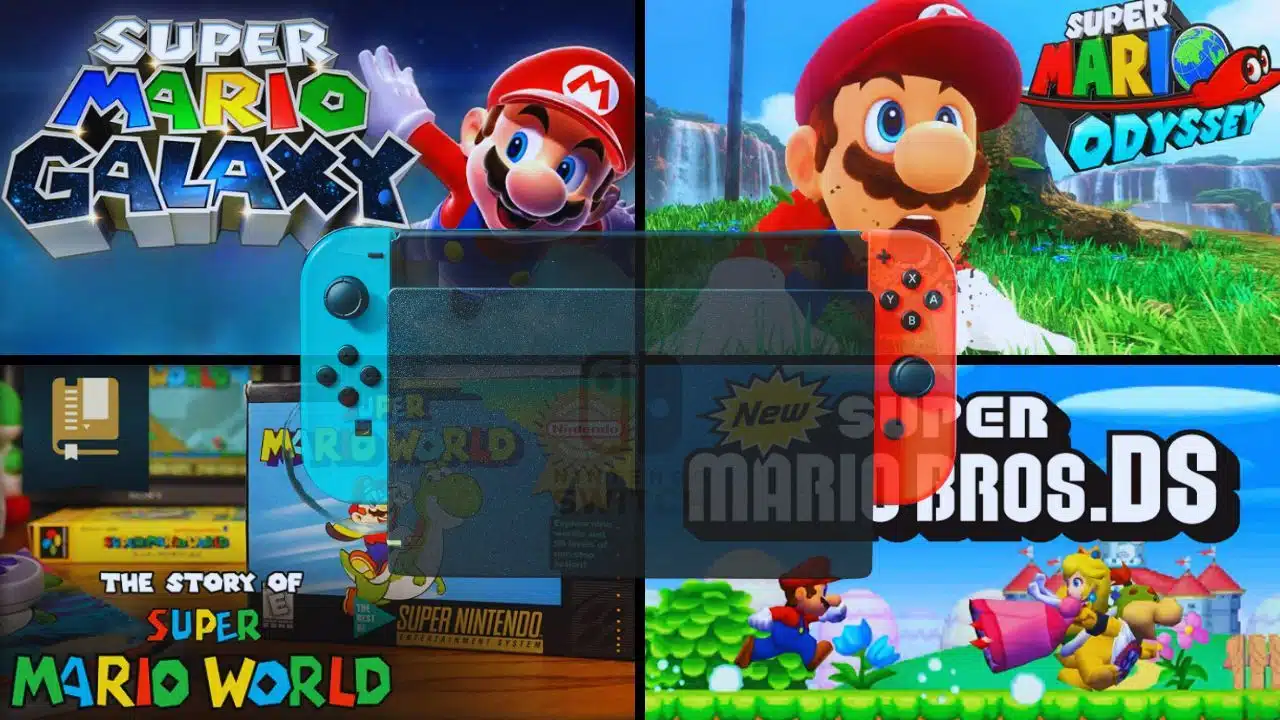
Super Mario is more than just a video game character—he’s a pop culture icon whose influence spans generations. Since debuting in arcades with Donkey Kong in 1981, Mario has shaped the platforming genre and played a pivotal role in Nintendo’s success. Across handheld and home consoles, from 8-bit to open world, Mario has reinvented himself again and again—delighting players of all ages.
So, what are the most iconic Mario games to grace each Nintendo console? We’ve curated a detailed ranking of the best Mario experiences that defined their platforms—and in many ways, defined gaming itself.
1. Super Mario Galaxy (Nintendo Wii)
Release Date: November 1, 2007
Platform: Nintendo Wii
Genre: 3D Platformer
Average Playtime: 15 hours
Topping the list is the cosmic masterpiece Super Mario Galaxy. It took platforming to the stars, using spherical gravity, breathtaking environments, and a full orchestral score to create a magical, immersive experience.
The gameplay is polished to perfection, offering both challenge and joy. Many fans consider this the most artistically complete Mario game to date. It’s an unforgettable journey from start to finish—and even spawned a brilliant sequel.
Stellar Achievements:
- Revolutionary gravity mechanics
- Award-winning musical score
- Critical darling and fan favorite
2. Super Mario Odyssey (Nintendo Switch)
Release Date: October 27, 2017
Platform: Nintendo Switch
Genre: 3D Platformer
Average Playtime: 13 hours
In Odyssey, Mario isn’t limited to power-ups—he becomes the power-up. With Cappy, his sentient hat, Mario can control enemies and objects in a richly detailed, globe-spanning adventure.
Whether dancing in New Donk City or diving into the Seaside Kingdom, Odyssey combines open-world exploration with unmatched creativity and movement precision.
What Sets It Apart:
- Unique transformation system via Cappy
- Dozens of creative kingdoms to explore
- One of the highest-rated games of all time (Metascore: 97)
3. Super Mario 64 (Nintendo 64)
Release Date: September 26, 1996
Platform: Nintendo 64
Genre: 3D Platformer
Average Playtime: 12 hours
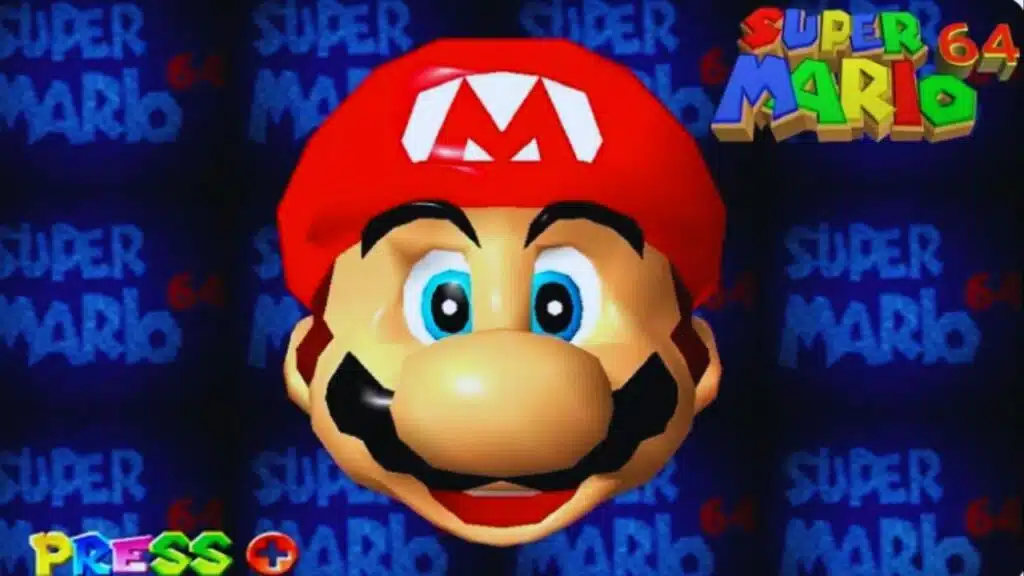
The leap to 3D gaming started here. Super Mario 64 gave players a full camera-controlled 3D world to explore, complete with platforming challenges, puzzles, and hidden stars.
The game not only introduced 3D analog controls but redefined how movement and exploration could work in a virtual space. It set the benchmark for every 3D game that followed.
Industry Impact:
- First 3D platformer of its kind
- Dynamic hub world (Peach’s Castle)
- Still widely played and speedrun
4. Super Mario World (SNES)
Release Date: August 23, 1991
Platform: SNES / GBA
Genre: Platformer
Average Playtime: 5 hours
Super Mario World refined everything from previous Mario titles and introduced Yoshi. The world map was vast and filled with branching paths, hidden exits, and secret worlds. Every inch of this game radiated personality and precision.
From the Star Road to the special levels, this game is still a speedrunning favorite and a prime example of perfect 2D design.
Timeless Elements:
- Debut of Yoshi
- Secret paths and unlockables
- Rich level design with excellent pacing
5. Mario Kart 8 (Wii U/Switch)
Release Date: May 30, 2014
Platform: Wii U, Nintendo Switch
Genre: Kart Racing
Average Playtime: 10+ hours
Widely considered the best kart racing game of all time, Mario Kart 8 mastered the formula. With its anti-gravity tracks, deep customization, and stunning visuals, it became a console-seller for both the Wii U and Switch.
Frequent updates, booster packs, and online races kept the game alive for nearly a decade. It’s fast, fun, and endlessly competitive.
Game-Changing Features:
- Anti-gravity racing
- Massive character roster
- Ongoing DLC and online tournaments
6. Super Mario Bros. 3 (NES/GBA)
Release Date: October 23, 1988
Platform: NES / GBA
Genre: Platformer
Average Playtime: 5 hours
This was the Mario game that expanded everything—new suits, overworld maps, and layered stage mechanics. It added the iconic Super Leaf, which let Mario fly, and introduced the Koopalings.
The GBA remake included graphic upgrades and minor tweaks, ensuring newer generations could enjoy the masterpiece. The sheer volume of creativity packed into Super Mario Bros. 3 changed game design forever.
Key Additions:
- Introduced world maps and item inventory
- Raccoon Mario became iconic
- Multiple routes and hidden levels
7. New Super Mario Bros. (Nintendo DS)
Release Date: May 15, 2006
Platform: Nintendo DS
Genre: 2D Platformer
Average Playtime: 7 hours
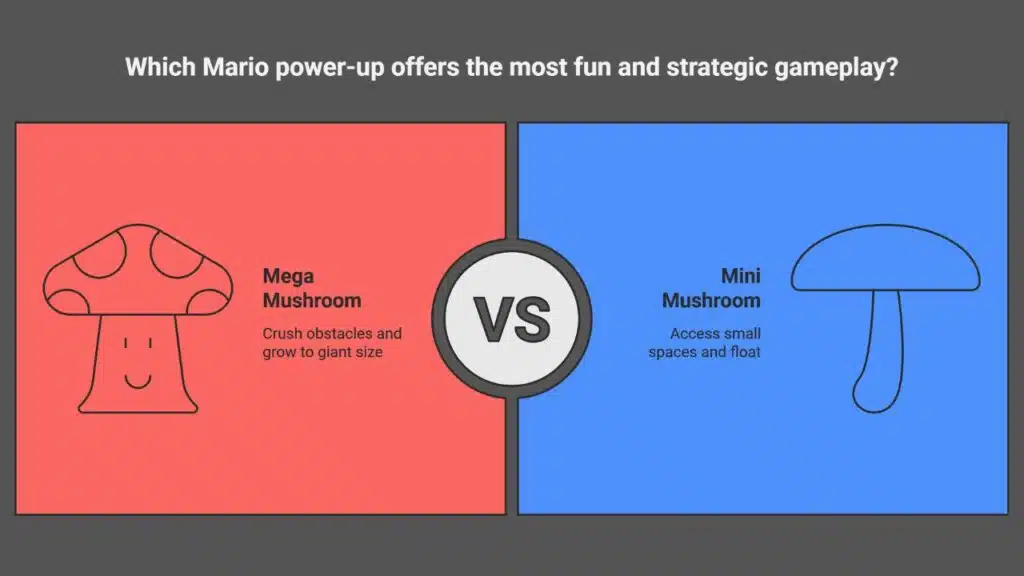
This game revived the classic Mario format for a new audience. New Super Mario Bros. introduced modern 2.5D visuals and added power-ups like the Mega Mushroom, letting Mario grow to screen-filling size and crush everything in his path.
With sharp visuals, creative level gimmicks, and multiplayer support, it gave handheld gamers a polished, nostalgic adventure that still holds up today.
What Made It Special:
- Giant and Mini Mario power-ups
- Fresh level designs and secret exits
- Revived interest in 2D Mario titles
8. Super Mario Bros. (NES)
Release Date: November 17, 1985
Platform: NES
Genre: Platformer
Average Playtime: 2 hours
This is where it all began—Mario’s solo breakthrough. Super Mario Bros. not only saved the video game industry post-crash but also set the gold standard for side-scrolling platformers. Its pixel-perfect jumping, hidden warp zones, and catchy soundtrack helped define an entire genre.
Despite its simplicity, the game is still playable and enjoyable today, with a thriving speedrunning community and generations of fans who remember each level’s secrets by heart.
Cultural Impact:
- One of the best-selling video games of all time
- Spawned a billion-dollar franchise
- Designed by industry legends Shigeru Miyamoto and Takashi Tezuka
9. Super Mario Sunshine (Nintendo GameCube)
Release Date: August 26, 2002
Platform: Nintendo GameCube
Genre: 3D Platformer
Average Playtime: 15 hours
The sequel to Super Mario 64, Sunshine delivered a tropical twist to Mario’s 3D adventures. Players visited the beautiful Isle Delfino and wielded the FLUDD, a jetpack-like water cannon that introduced new traversal and combat mechanics.
This game dared to be different, adding cinematic cutscenes, voiced characters, and an ongoing storyline about pollution and identity. While some players found its physics and difficulty challenging, others celebrated its ambition, vibrant design, and the introduction of Bowser Jr.
Innovations:
- FLUDD gameplay added puzzle mechanics
- Fully voice-acted cutscenes
- Colorful, open environments with secret challenges
10. Super Mario 3D Land (Nintendo 3DS)
Release Date: November 13, 2011
Platform: Nintendo 3DS
Genre: 3D Platformer
Average Playtime: 7 hours
A creative blend of classic 2D gameplay and 3D environments, Super Mario 3D Land was tailor-made to show off the Nintendo 3DS’s stereoscopic 3D capabilities. Players could experience depth-based platforming and precision jumps that simply weren’t possible before.
The game cleverly brought elements from both Super Mario Bros. and Super Mario 64 together, combining them with crisp visuals, catchy music, and excellent level design. With dozens of bonus stages and tough post-game content, it became a go-to for completionists.
Key Features:
- Introduced Tanooki Suit revival
- Used 3D mechanics to create visual puzzles
- Massive post-game challenge levels
11. Mario Kart World (Nintendo Switch 2)
Release Date: June 5, 2025
Platform: Nintendo Switch 2
Genre: Open-World Racing
Players: 1–24
Mario Kart World took the beloved racing series into uncharted territory—literally—with an open-world concept. This 2025 title introduced vast, interconnected race zones, mini-games, and expansive environments to explore. While the concept was exciting and visually striking, the game didn’t quite reach the creative heights of its predecessor, Mario Kart 8 Deluxe.
That said, Mario Kart World remains a solid, fun racing experience. It delivered fresh mechanics, character customization, and new vehicles, all while pushing the boundaries of what a kart racer can be on a next-gen console.
What Stood Out:
- First open-world Mario Kart game
- Support for 24-player races
- Online exploration hubs and new customization system
12. Super Mario Land (Game Boy)
Release Date: April 21, 1989
Platform: Game Boy
Genre: Side-scrolling Platformer
Average Playtime: 1.5–2 hours
Super Mario Land might seem humble by today’s standards, but in 1989, it was a trailblazer. As a Game Boy launch title, it allowed players to experience Mario on the go for the very first time. No longer tied to the living room TV, kids could now hop across platforms and save princesses from the back seat of the car or under their bed covers.
Set in the distant land of Sarasaland (a departure from the Mushroom Kingdom), this title introduced Princess Daisy, who would later become a beloved recurring character. While the graphics were simpler and the game was shorter than its NES counterpart, the innovative gameplay for a handheld platform was revolutionary.
Why It Still Matters:
- First Mario game on a portable console
- Debut of Princess Daisy
- Showcased early Game Boy hardware capabilities
Final Thoughts: Mario’s Multiverse of Greatness
From Super Mario Bros. to Odyssey and Galaxy, the Mario franchise continues to evolve—never straying too far from its roots while boldly innovating with every generation. These 12 games show just how versatile and enduring Nintendo’s flagship character truly is.
No matter your age or gaming background, there’s a Mario game that likely defined a moment in your life—and that’s why he’ll always wear the crown.






















