Many homeowners fret when bathroom floors warp or crack under heavy use. Porcelain tile and ceramic tiles resist water and hold up to heavy foot traffic. This guide lists seven durable flooring picks, from porcelain tile and laminate flooring to luxury vinyl plank, and gives tips on scratch resistance, flooring maintenance, and professional installation.
Read on.
Key Takeaways
- Porcelain and ceramic tile fire at 2500°F and 2000°F, creating dense, waterproof floors with tough glazes that resist scratches per Mohs hardness tests.
- Vinyl flooring (WPC and SPC) locks out moisture, delivers a fully waterproof core, uses click-lock install in hours, offers a slip-resistant finish, and boasts a 0.7 mm wear layer for high traffic.
- Luxury Vinyl Plank (LVP) sports a thick wear layer, a waterproof core, grout-free DIY fit, and wins top scratch and stain ratings from Consumer Reports and the Red Wine Challenge.
- Laminate flooring uses an MDF core with water-resistant tops, installs DIY with underlayment, stays budget-friendly, but needs fast spill cleanup and sealed gaps to prevent core swelling.
- Natural stone and concrete floors need wet saws, sealants, and strong subfloors; concrete reaches 4000 psi compressive strength and holds epoxy dyes, while stone demands regular sealing to maintain slip resistance.
Why Choose Porcelain or Ceramic Tile for Bathrooms?
Porcelain and ceramic tile suit bathrooms. Porcelain tile fires at 2500°F, ceramic at 2000°F. Porcelain has a denser core. Planks and thin gauged panels match many styles. A moisture meter helps test the subfloor before thinset mortar sets tile.
Glued porcelain tile planks stand up to heavy foot traffic. Tough glaze resists scratches and stains. Scratch resistance keeps floors looking fresh. This durable flooring demands strong subfloor and professional installation.
DIY installation calls for a tile cutter and grout float. These tiles give waterproof flooring that holds up well.
What Makes Vinyl Flooring a Good Bathroom Choice?
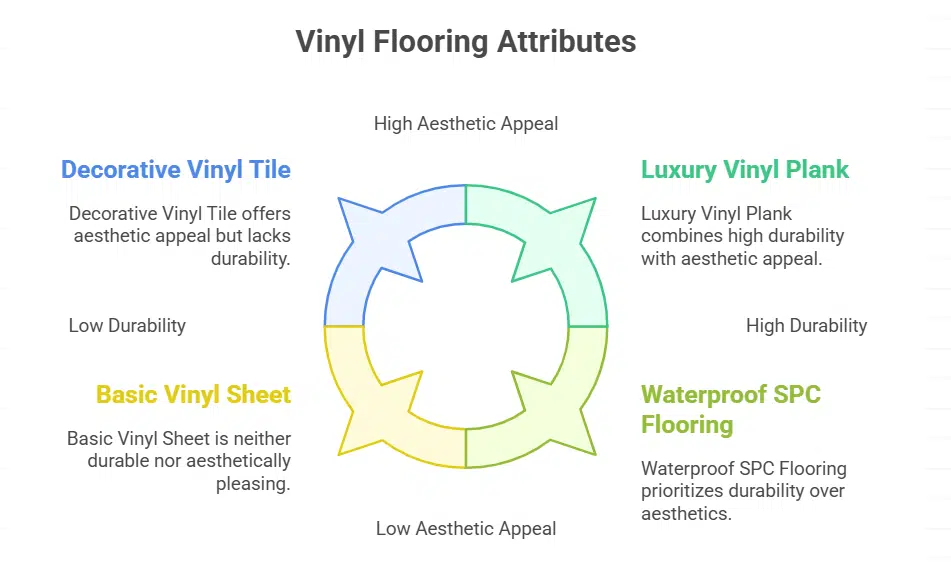
Vinyl flooring stands tough under spills, splashes, and constant foot traffic. WPC and SPC floors lock out moisture and stay fully waterproof. Plank styles mimic wood grain, while tile options mirror natural stone.
People praise them for strong scratch resistance and stain resistance. This budget friendly flooring moved upmarket, with luxury vinyl plank earning top marks in Consumer Reports.
Homeowners install many vinyl floors with a simple click lock tool. They can finish work in hours instead of days. The surface feels soft underfoot and hides scuffs. You can pick slip resistant finishes for safer bath areas.
Pro installers can add underfloor heating for extra warmth.
What Are the Benefits of Luxury Vinyl Plank (LVP) Flooring?
LVP flooring offers a thick wear layer. A waterproof core stands up to bath splashes and kids’ messes. The wear layer blocks scratches and boosts scratch resistance. Manufacturers even toss red wine at planks in the Red Wine Challenge to test stain fighting power.
DIY fans praise quick grout-free installation and easy cleanup. SPC models cost about the same as porcelain tile yet skip pro fees, so you keep more cash in your wallet. A damp mop restores shine without harsh cleaners.
Is Laminate Flooring Suitable for High-Traffic Bathrooms?
Laminate flooring uses an MDF core, topped with water-resistant material and a wax seal. It mimics stone or tile and stays budget friendly. Homeowners grab an underlayment, tapping block, pull bar and fit planks in high-traffic areas.
This DIY-style install cuts labor fees and speeds up a project.
Moisture can sneak under boards and make the core swell. You must wipe spills fast and seal gaps near the shower. Scratch resistance rates well for daily foot traffic, yet damp spots still pose a risk.
Good care and quick cleanup keep this option working in busy bathrooms.
What Should You Know About Natural Stone Flooring?
Natural stone flooring adds a luxury aesthetic to a bathroom. Marble, granite, and travertine deliver stunning visuals and spa vibes. These materials cost more than tile or vinyl. Rock grinder tools include a wet saw, a masonry trowel, and a polishing pad.
Sealant and grout help create waterproof flooring that stays slip-resistant. Strong adhesive and clear subfloor prep promote lasting stone fit.
Stone tile shows porosity and demands regular sealing or resurfacing. A sealant remover and buffer tools renew the shine. Many homeowners opt for professional installation to avoid chips.
Hiring a pro adds cost but stops cracks and boosts flooring durability. You can plan long life with solid flooring maintenance and guard against water damage.
How Durable Is Concrete Flooring in Bathrooms?
Concrete flooring holds up under heavy use. It resists heat and flames. It delivers a compressive strength over 4000 psi. A floor grinder will smooth rough spots. Epoxy coats or dyes add color choices.
Sealers lock out moisture for a water-resistant floor. It shows top flooring durability in wet spots. Many people pick it for cost-effective flooring with lasting shine. It works in spa showers and steam rooms.
Can Bamboo Flooring Withstand Bathroom Conditions?
Strand-woven bamboo flooring boards handle heavy wear. They block moisture with tight fibers. A factory-applied urethane finish seals the planks. Several products boast water-resistant cores that suit damp rooms.
Some brands add a vapor-barrier underlayment.
Clean spills with a dry mop within minutes. Place non-skid bath mats at tub edges. Use a dehumidifier when steam runs high. Such steps help maintain flooring durability. You can enjoy the look of bamboo flooring without fuss.
Key Factors for Selecting Bathroom Flooring

Think of a moisture meter and a grout float as your leak-fighting sidekicks, squashing mold fast. Compare wear-resistance ratings, then slide sample tiles underfoot to test slip resistance and long-term durability.
How Important Is Moisture and Water Resistance?
Waterproof flooring stands firm in wet rooms. Porcelain tile endures moisture after a 2500°F firing. Liquid stays out of vinyl tile, so it stops mildew, warping, and swelling. Flooring durability rises with a sturdy protection layer under the finish.
Test instruments spot leaks early, so you can add sealant fast. Water-resistant laminate boards use an MDF core with water-repelling materials. Carpet with RX2 technology repels spills like a champ.
A strong moisture barrier preserves the subfloor in high-traffic bathrooms.
What About Scratch and Stain Resistance?
Porcelain tile stands up to scratches and blocks stains. It scores high on the Mohs hardness scale. Vinyl plank also resists scuffs and stains. Laminate flooring fights scratches with a tough wear layer.
Engineered hardwood uses a hardened top coat to fight dings.
Manufacturers use abrasion testers to grade wear resistance. Glazed finishes on ceramic tiles stop spills from soaking in. Luxury vinyl plank seals edges to block stains. You spot clean most marks with a mild cleaner.
How to Assess Foot Traffic Durability?
Floors in busy baths face tough wear. You need clear checks for long life.
- Check wear layer thickness. Use a digital caliper on luxury vinyl plank or water-resistant laminate flooring. SPC vinyl planks often have a robust 0.7 mm wear layer built for commercial use.
- Review scratch resistance. Look for AC4 or AC5 ratings on laminate flooring or wood-look tiles. Porcelain tiles score 6 on a scratch scale and handle heavy foot traffic.
- Measure moisture hold. Use a moisture meter on concrete slabs and engineered wood floorboards. Natural stone tile needs a seal coat and professional installation to fight mold growth.
- Scan stain resistance. Drop a bit of coffee or inkjet ink on tile flooring and wipe it clean. Durable flooring should let you clear stains fast.
- Seek slip rating. Aim for R11 or higher on polished concrete and rubber flooring to cut slip risk. Ceramic tile often meets this mark in bathrooms.
- Note warranty terms. A 20-year commercial warranty on luxury vinyl tiles or SPC vinyl shows proven flooring durability. Budget-friendly flooring may offer only 10 years.
- Assess installation quality. DIY installation can leave gaps that let water seep in and raise maintenance requirements. Professional installation will align floorboards and slow wear.
- Test load pressure. Drop a small weight on a sample of concrete flooring or epoxy flooring. A hard floor will show no dents or cracks.
Takeaways
Your bathroom deserves champion flooring that stands guard. Stoneware slabs lock out moisture like a tough shield. Composite strips and cement sheets show top scratch resistance. Bamboo boards stand up to heavy foot traffic with style.
Water-resistant laminates fight spills on your team. Mix in professional installation or DIY installation to suit your mood. Now you can pick a flooring hero and declare victory over wear and tear.
FAQs on Best Flooring for High-Traffic Bathrooms
1. What are the top 7 durable flooring options for high-traffic bathrooms?
Porcelain tile and ceramic tile lead the pack with high wear resistance and stain resistance. Luxury vinyl plank and water-resistant laminate give a wood-look flooring vibe on a budget-friendly flooring plan. Wood-look tiles add style with waterproof flooring strength. Epoxy flooring and polished concrete bring a rock-solid feel and slip-resistant flooring.
2. Which flooring handles heavy foot traffic best?
Porcelain tile tops the chart with top scratch resistance. Concrete flooring also shines under constant foot traffic. Rubber flooring adds comfort and slip-resistant safety when the floor gets wet.
3. Can I use laminate flooring in a busy bathroom?
Yes, water-resistant laminate works well in wet spots. It mimics hardwood flooring and stays cost-effective and affordable. You can try a DIY installation, but mind the maintenance requirements to avoid warping.
4. Are wood-look flooring options good around water?
You bet. Wood-look tiles and luxury vinyl plank mimic hardwood flooring but resist water. These waterproof flooring options stay strong under heavy foot traffic.
5. Should I call a pro or try DIY installation?
DIY installation works for planks like water-resistant laminate and many tile flooring styles. Epoxy flooring or polished concrete often need professional installation to mix and smooth just right. A pro helps your floors last, no ifs or buts.
6. How do I care for these flooring materials?
Most floors need a quick wipe and mild cleaner, no harsh scrubs. Porcelain tile and wood-look tiles take little effort. Rubber flooring wants a soft mop to keep its slip-resistant surface. Good care boosts your flooring durability.