As World Day Against Child Labor is held today on June 12, 2025, you may feel small when you see a child laborer in a photo. You may want to help but feel unsure what to do.
The International Labour Organization and UNICEF report that 160 million children still do child labor around the world. In this post, you will find simple steps to fight the worst forms of child labor.
We share tips from global partnerships, civil society groups, and the SCREAM Program. You will see how to join awareness campaigns, sign up for a mailing list, and push for policy change.
Keep reading.
Key Takeaways
- The ILO and UNICEF report shows 160 million children worked in labor in 2025, with 72 million in Africa (1 in 5 kids).
- Governments must ratify ILO Conventions No. 138 and No. 182 and meet SDG 8.7 goals by 2025 to ban the worst forms of child labor.
- Alliances like Alliance 8.7 (ILO, UNODC, governments, unions), the Latin America & Caribbean Initiative (33 nations, ILO, IOM, UNICEF), and the Child Labor Platform (brands, suppliers, NGOs) unite to end forced child labor.
- The ILO’s SCREAM Program taught over 5 million students in Asia and Africa about child protection, and campaigns like Music Against Child Labor and Red Card to Child Labor spark global action.
- You can share campaign posts, host Red Card screenings, use the ILO’s toolkit in schools, and write local leaders to back child‐welfare funding and strong labor policies.
The 2025 Focus: Progress and Remaining Challenges

The International Labour Organization shows a drop in child labor since 2016, but risky work still shadows many kids. New global estimates on sustainable development goals expose fresh gaps under the ILO Convention, and experts call for action.
Release of the 2025 global estimates and trends
Here are the top figures from the 2025 estimates and their trends.
| Data Point | Value | Notes |
|---|---|---|
| Total child labor | 160 million | Almost 1 in 10 children |
| Africa prevalence | 72 million | 1 in 5 children |
| Progress audit | Global trends 2025 | Supports SDG 8.7 goals |
| Lead bodies | ILO, UNICEF | Push for policy change |
| Funding boost | New investments | Policy influence tool |
| Tracking methods | Data modeling, maps | Pinpoints hotspots |
Next, we move to the key areas needing faster action.
Key areas requiring accelerated efforts
Governments in Africa, Asia, and the Pacific must speed up policy action to block child labor. These regions hold 90 percent of global cases, and 84 million children toil in middle-income countries.
Lawmakers can ratify ILO Convention No. 138 and Convention No. 182 to ban the worst forms of child labor fast. Civil society groups can fuel this move by pushing for strict labor standards and wider social safety nets.
Armed conflict and the COVID-19 crisis push more kids into harmful work. Schools need major investments to heal the wounds of education deprivation. Cash transfers can break the cycle of poverty that drags kids into forced labor or trafficking.
Data dashboards and child labor monitoring systems can track illegal work in hazardous environments. Civil society, donors, and the ILO can join the global movement against child labor to hit key targets in the Sustainable Development Goals ahead of World Day Against Child Labor.
Actions to Take Against Child Labor
Activists grab policy toolkits, form civil society networks, and push leaders to ban forced labor and boost decent work. Discover how these coalitions link schools, fair jobs, and safe homes for young laborers.
Global partnerships and collaboration
Partnerships drive progress on World Day Against Child Labor. Groups link forces to stamp out child labor.
- Alliance 8.7 brings ILO, UNODC, governments, employers, trade unions, and civil society together. It works to meet SDG Target 8.7 by 2025, ending forced labor, the worst forms of child labor, and child trafficking.
- The Latin America and Caribbean Initiative links 33 nations with ILO, IOM, and UNICEF. The group fights hazardous work, debt bondage, recruitment of child soldiers, and education deprivation.
- The Child Labor Platform connects brands, suppliers, and NGOs in a network. It scans supply chains, boosts decent work, and defends vulnerable children in low-income and lower-middle-income countries.
- The Music Against Child Labor initiative uses songs, concerts, and social media. It sparks a global movement against child exploitation, forced labor, and human trafficking.
- The Red Card to Child Labor campaign aligns with soccer stars, schools, and civil society. It shows a red card to modern slavery, forced prostitution, and armed conflict involving children.
Effective teamwork across NGOs and the ILO laid the groundwork for teaching and fairness. Education frees children from forced labor. Social justice defends the rights of vulnerable children.
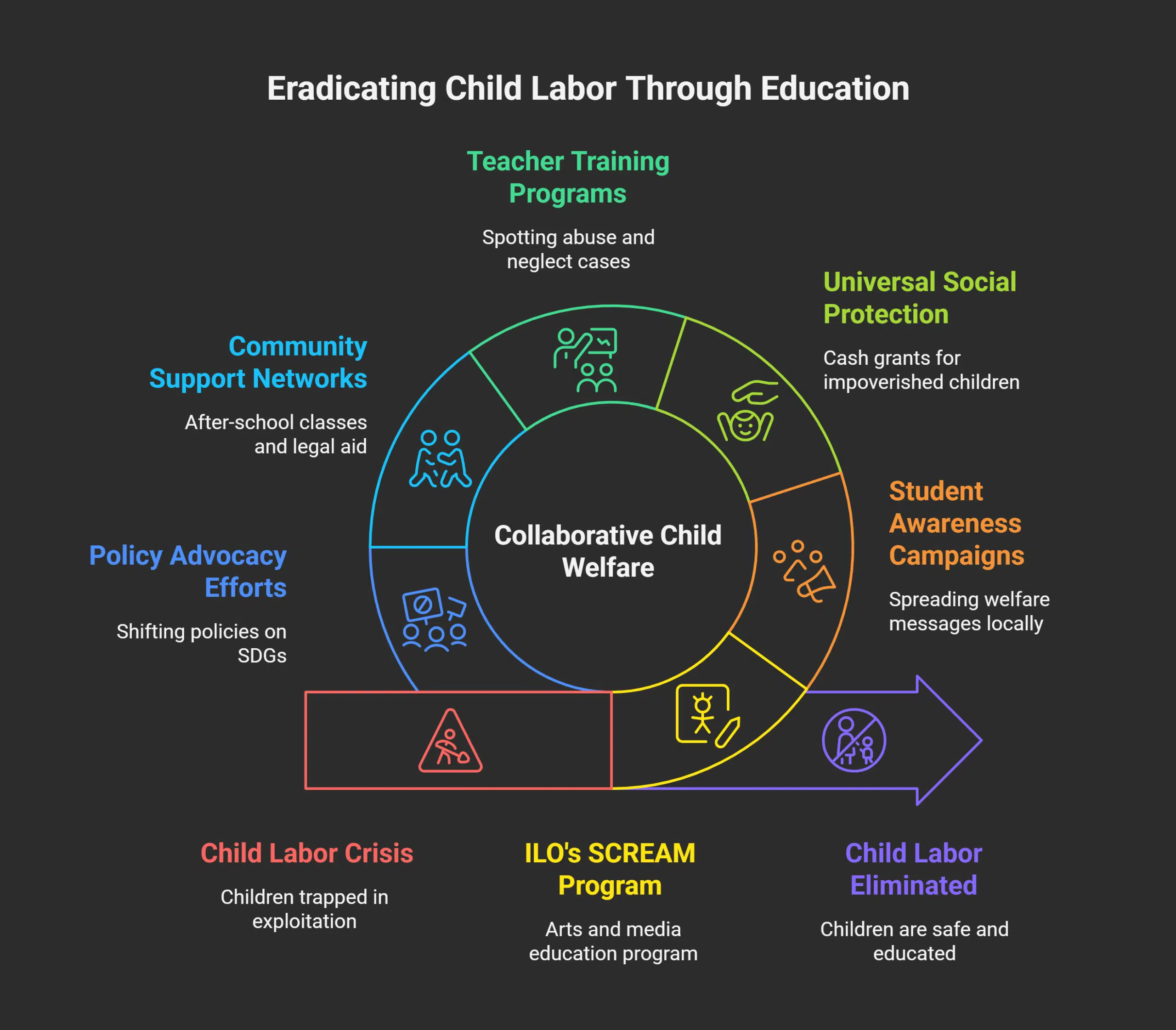
- The ILO’s SCREAM Program uses arts and media to teach over five million students in Asia and Africa, lifting them from hazardous environments.
- British Culture College students wrote and recorded a song that spread child welfare messages on local radio, cutting stigma for trafficked youths.
- Many communities embrace universal social protection, the 2022 theme, offering cash grants to impoverished children to halt exploitative work and cover school fees.
- Governments can train teachers in fifty low-income countries to spot abuse and neglect, boosting child protection after the COVID-19 pandemic.
- Local schools team up with civil society to run after-school classes and legal aid clinics, rescuing kids from drug trafficking and the worst forms of child labor.
- Civil society and UN agencies urge policy shifts on SDG4 and SDG8, aiming to end child trafficking and exploitation by 2030.
How Individuals Can Contribute
Ask your coffee buddy to share a story on forced labor and spark a ripple that turns into a tide. Flip through the International Labor Organization’s child protection guide, join a neighborhood task force, and light a path out of the poverty cycle.
Supporting awareness campaigns
People can back big campaigns on World Day Against Child Labor. Active support boosts the elimination of child labor.
- Share posts from Music Against Child Labor on Instagram, Twitter, or Facebook. It spreads news of the worst forms of child labor, forced labor, and child trafficking.
- Host a screening of the Red Card to Child Labor video, invite neighbors, and spark a chat on child exploitation, illicit activities, and armed conflict.
- Contact schools to present the ILO’s SCREAM Program toolkit and help children learn about hazardous environments, drug trafficking, and education deprivation.
- Print posters from the International Labour Organization (ILO) site, and pin them in community centers, cafes, or shops to spark a fire in your neighborhood for child welfare.
- Write emails to local leaders, ask civil society groups and the United Nations to back sustainable development goals, child protection, and economic growth programs that break the cycle of poverty.
Advocating for policy changes
Policy change needs steady pressure. Active campaigns drive real reform.
- Lobby lawmakers to ratify ILO Convention 138 and ILO Convention 182 to raise the legal work age and ban the worst forms of child labor.
- Partner with civil society networks and the Alliance 8.7 campaign to push for SDG Target 8.7 on the elimination of child labor by 2025.
- Amplify the Durban Call to Action, demanding prevention of forced labor, protection against child trafficking, and stronger cross-sector partnerships.
- Support bills that strengthen social protection systems and improve education systems for vulnerable children, cutting the cycle of poverty.
- Promote tougher rules on hazardous environments, illicit activities like drug trafficking and armed conflict, and wider child exploitation.
- Urge local reps to fund child welfare programs and use the 2025 ILO global estimates and trends to guide policy choices.
Takeaways
Brave voices shape real change. Every new partnership pushes the worldwide drive ahead. Civil society teams lift their banners high. Governments and local heroes must boost child protection now.
Information kits and arts programs share urgent facts. You can add your voice and spark hope.
FAQs on World Day Against Child Labor
1. What is World Day Against Child Labor 2025?
It is a global call to end child labor. It asks us to protect young dreams. It unites civil society, communities, and policymakers.
2. Why do we need a global movement against child labor?
A child in a factory faces education deprivation, and that hurts the future. Forced labor, child trafficking, and armed conflict trap many kids. Who wants a child to juggle school and labor, right? We must break this cycle of poverty.
3. How can civil society take action on this day?
Groups can host talks, share stories, and fund safe spaces. It takes a village, as they say. They can push for laws to ban the worst forms of child labor. They can train local heroes to spot harm.
4. What are the worst forms of child labor we target?
It includes forced labor, hazardous environments, and child trafficking. It covers drug trafficking and work in armed conflict zones. These jobs steal childhood and wreck health.
5. How does the International Labour Organization help eliminate child labor?
The International Labour Organization sets rules that all nations must follow. It collects data on forced labor, child trafficking, and child exploitation. Then, it guides policy for child welfare and economic growth.
6. How does this day link to the sustainable development goals?
It drives progress on quality education, decent work, and poverty reduction. It is the glue that ties many goals together. It boosts child welfare and fights child exploitation. It feeds a global push for sustainable development goals.