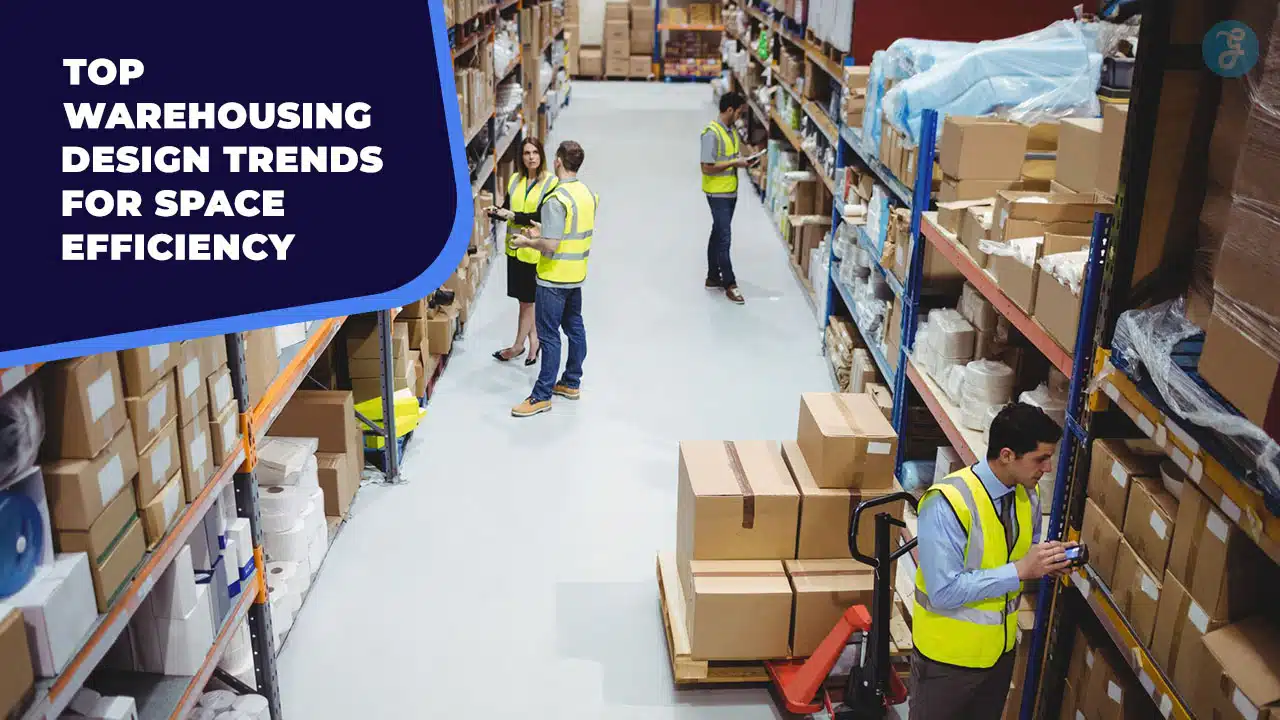
Many warehouses feel squeezed by the supply chain race. Teams pack aisles but still hit a wall. Automated storage and retrieval systems like AutoStore can double, even quadruple storage by stacking high.
This fact points to a smarter fix for cluttered centers.
This post lists 10 design trends that free up room. We will talk about vertical racks, micro-fulfillment centers, warehouse management systems, IoT sensors, and AMRs. You will get clear tips to cut walking, speed up order picks, and save on rent.
Keep reading.
Key Takeaways
- AutoStore ASRS uses cube grids and robots. It stacks bins to the ceiling. It doubles or quadruples storage in any hub.
- Bergfreunde cut CO2 per package by 30% after adding ASRS and solar panels. A 2022 Gartner report shows retailers cut stockouts by 30% with predictive WMS.
- A Texas gigafactory used AI and predictive maintenance in 2023. It cut equipment downtime by 40% and sped up orders.
- Urban micro-fulfillment hubs use AMRs, AR headsets, and IoT sensors. They cut travel miles. They deliver same-day groceries and goods.
- High racks, AMRs, and solar roofs stack pallets up to 30 feet. They shrink footprints and lower energy use.
Automated Storage and Retrieval Systems (ASRS)
AutoStore ASRS uses a cube-based design on an aluminum grid. Intelligent robots ride on top and fetch bins without human help. It packs shelves up to the ceiling. This layout can double or quadruple storage capacity over traditional racks.
Modular cells fit small centers and large hubs. Integrators link these cells to a warehouse management system (WMS) for real-time visibility and control.
Integration with internet of things (IoT) sensors and machine learning algorithms cuts maintenance delays with predictive maintenance alerts. Live dashboards let staff watch stock movements without delay.
Bergfreunde cut CO2 per package by 30 percent after installing ASRS. Smart automation lowers labor needs, trims energy use, and boosts throughput. Warehouse staff tie the system to autonomous mobile robots (AMRs) and artificial intelligence (AI) software for better operational efficiency.
Robotic Piece-Picking Technology
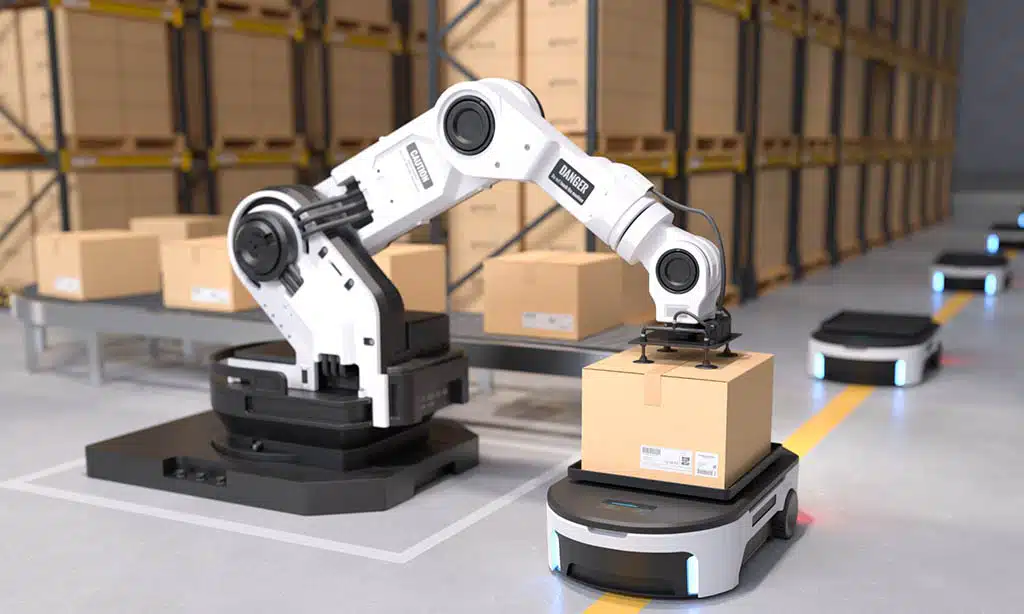
Small robots use cameras and neural nets to grab boxes and labels. The system taps artificial intelligence (ai) and advanced vision to pick items with pinpoint accuracy. It links to warehouse management systems (wms) and IoT sensors for real-time tracking.
Machine learning algorithms cut labor errors and speed up pick and place tasks. A tangle of metal and wires moves faster than a human on a busy day.
Subscription plans let firms tap robotic manipulators without huge capital. Automation-as-a-Service brings a flexible model that fits tight budgets and scales on demand. Workers feel less fatigue and focus on cognitive tasks like data analytics and inventory management.
This shift boosts productivity, trims strain, and supports same-day delivery in tight supply chains. Robotic helpers pair with autonomous mobile robots (amrs) for smooth warehouse flow, and they link to predictive analytics to improve order processing.
Data-Driven Warehouse Management Software
Modern warehouse management systems tap real-time visibility to trim waste and boost operational efficiency. Sensors, linked to internet of things devices, feed big data lakes that power machine learning algorithms for demand forecasting.
A 2022 Gartner report shows retailers cut stockouts by 30 percent after adding predictive analytics to their wms. Leaders use predictive maintenance to spot failing conveyors before they break and trigger unexpected downtime.
Digital twins let teams test new pallet racking layouts without halting order processing.
Artificial intelligence drives adaptive pick paths in smart warehouses outfitted with autonomous mobile robots guiding pallets across aisles. Blockchain technology locks in traceability on every shipment, creating a tamper-proof supply-chain ledger.
In 2023, a Texas gigafactory used AI and predictive maintenance to slash equipment downtime by 40 percent. Real-time tracking with RFID tags ensures each pallet stays in view, which helps retailers hit same-day delivery goals.
Energy-efficient lighting and robust analytics keep energy consumption in check while pushing toward operational excellence.
Micro-Fulfillment Centers for Urban Areas
Cities host micro-fulfillment hubs just blocks from homes. Each hub uses automated storage and retrieval systems and autonomous mobile robots. Warehouse management systems tie into machine learning algorithms for real-time visibility.
IoT sensors track stock levels and predict demand. Teams run predictive maintenance on conveyor belts and robotic arms. AI steers dark warehouse operations and limits human steps. Energy-efficient lighting and solar panels curb carbon output and lower power bills.
Hyperlocal warehousing fuels same-day delivery for groceries and online shopping orders. Urban warehouses cut travel miles and shipping costs.
Teams tap IoT data to cut downtime. Predictive maintenance alerts pop up before a belt or motor fails. AR headsets guide pickers through tight aisles. RFID tags and sensors feed real-time tracking data to AI engines.
Autonomous mobile robots roll shelves to human stations for fast sorting. This workflow slashes order-processing time and boosts operational efficiency. Micro-hubs link to 3PL networks to handle surges during holiday sales.
Sustainable and Eco-Friendly Warehouse Designs
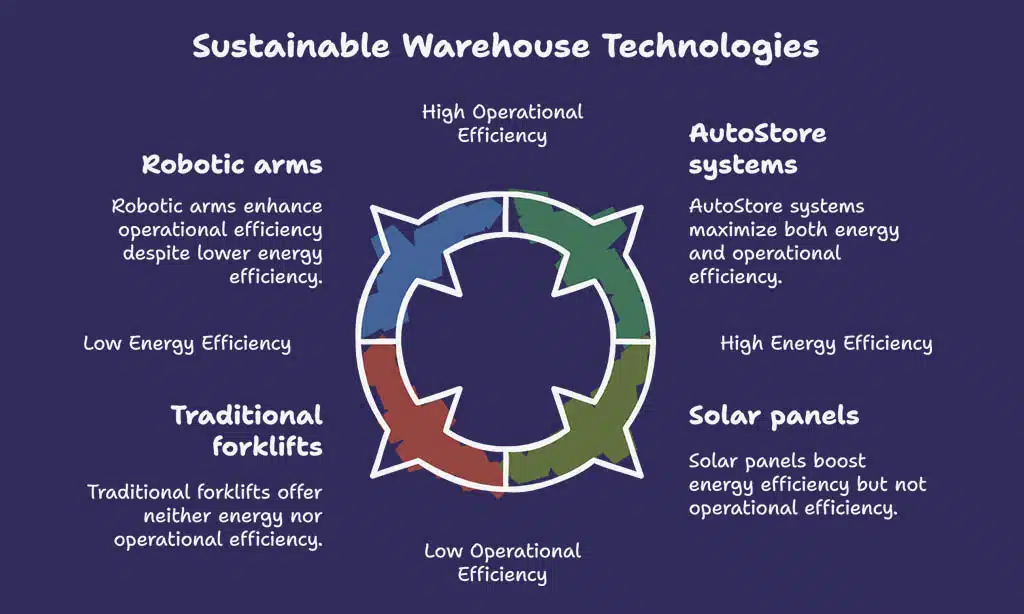
Companies install solar panels atop warehouse roofs. Workers watch energy flow on smart Internet of Things, or IoT, dashboards. Motion sensors switch off rows of LED fixtures when aisles sit empty.
Warehouse management systems, or WMS, link to smart meters and adjust power draw. Recycling bins sit near packing stations. Staff sort cardboard and plastic for reuse. AutoStore systems pack goods into dense cubes, so racks need fewer lamps.
Bergfreunde cut CO2 emissions per package by 30 percent after installing AutoStore. Firms see lower utility bills almost at once.
Robotic arms and autonomous mobile robots shorten travel time. They sync with AI powered WMS and machine learning algorithms. Sensors feed real-time visibility to control centers. Predictive maintenance cuts downtime and trims wasted energy.
Rainwater harvesting systems collect roof runoff for cleaning floors. Workers move pallets with electric forklifts linked to charging stations powered by wind or sun. Firms report big cost savings from these smart designs.
Tools like IoT platforms track each kilowatt.
Space Optimization Through Vertical Storage Solutions
Space runs out fast in city hubs as rents climb. Vertical expansion lifts racks high, stacking bins and pallets tight. A grid-storage solution packs four times more stock in the same footprint.
That approach blends stacked bins and automated storage and retrieval systems (AS/RS), and it cuts carbon footprints with energy-efficient lighting and minimal aisle lights. Warehouse management systems (WMS) deliver real-time visibility, guiding machine learning algorithms to pick the right bin at the right time.
Storage lifts and autonomous mobile robots (AMRs) haul goods up to 30 feet, boosting order processing speed for same-day delivery. That ceiling looks bare, so engineers stack racks toward the sky.
Predictive maintenance schedules keep lift motors humming and avoid downtime. That mix of smart warehouse tech saves energy, trims waste, and future-proofs your layout. Distribution centers can tap solar panels on the roof to run the system on renewable energy sources and add more green warehouse design points.
Integration of Autonomous Vehicles for Material Handling
Autonomous mobile robots (AMRs) roam aisles, lift pallets, and carry boxes to packing stations. These self-driving units adapt to new layouts, cutting travel time and boosting productivity.
Automated guided vehicles (AGVs) join AMRs to shuttle heavy loads across yards, keeping workers safe and freeing them for skilled tasks. Subscription-based Automation as a Service plans let small firms test robotic arms and ASRS without big upfront fees.
IoT sensors feed data to warehouse management systems (WMS), giving managers real-time visibility and predictive maintenance alerts.
Machine learning algorithms plan routes, avoid obstacles, and learn high-demand spots for faster order processing. That cuts same-day delivery times and shrinks carbon footprints in urban warehouses.
This mix of robots and smart software turns space into a lean layout, raising operational efficiency and trimming energy use.
Takeaways
These trends pack goods into tight spots. Crane-driven systems lift bins on tall racks. Robotic arms speed up each grab. Warehouse software shows live stock and closes gaps. City hubs shrink last-mile runs.
Solar panels soak up sun and slash bills. Augmented reality gear guides steps, mobile robots roam with carts. This mix cuts waste, sparks smiles, boosts green cred.
FAQs
1. What design trend adds more storage without eating floor space?
Vertical expansion stacks racks high, like building a Lego tower skyward. It teams with green warehouse design to cut your carbon footprint and boost space efficiency.
2. How do warehouse management systems and real-time visibility speed things up?
A WMS gives you real-time tracking of each pallet, like GPS for your boxes. This cuts order processing errors, drives same-day delivery, and lifts operational efficiency.
3. How do robots and automated systems change the game?
Robots roam aisles like busy bees, grabbing goods for last-mile delivery. They talk to AI and machine learning algorithms, plan the best routes, cut waste, and back operational excellence.
4. Can IoT and predictive maintenance keep downtime low?
IoT sensors spot gear faults early, triggering predictive maintenance before breakdowns happen. This trims waste, cuts equipment maintenance costs, and keeps uptime high.
5. Why does energy-efficient lighting and solar power matter?
LED lights save energy like a night owl in daylight. Solar power and other renewable energy sources shrink energy consumption and drive carbon footprint reduction.
6. How do AR and intelligent systems help pick and pack faster?
Augmented reality gear shows pick paths in a worker’s view, like a digital map on their visor. Intelligent systems with real-time tracking and predictive analytics speed online shopping fulfillment and smooth third-party logistics.