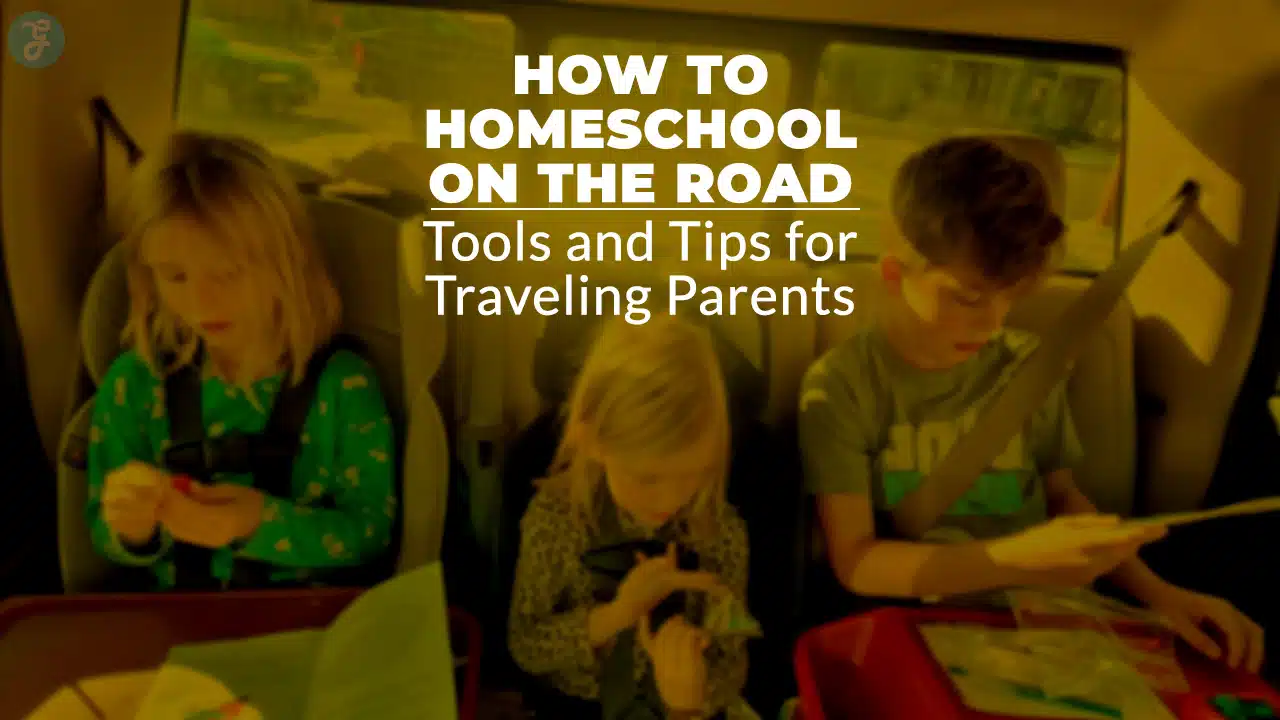
Hitting the road with your kids can sound scary, especially if you want to keep up with their education. You might worry about homeschool laws, finding a simple homeschool curriculum, or making sure your children still learn on long travel days in your RV.
Many parents new to rv homeschooling feel lost and unsure where to start.
In the past year and a half, more families have started home schooling while traveling full-time. It can be hard at first, but many tools like online learning apps, digital resources such as Khan Academy or Time4Learning, and offline activities help make things easier.
This blog will show you how to follow educational rules for each state, pick a good flexible curriculum that moves with you from national parks to historic sites, use helpful planners and mobile hotspots for distance learning—even when camping deep in nature—and turn every stop into an educational field trip.
Get ready—your stress is about to hit the highway!
Key Takeaways
- Homeschool laws change from state to state. Check the Home School Legal Defense Association (HSLDA) for up-to-date rules. Some states like Texas are relaxed, but others want reports and records.
- Use portable tools like tablets, laptops, Kindles, and mobile hotspots for lessons anywhere. Apps such as Khan Academy, Time4Learning, Lingopie, and Duolingo keep learning fun on the go.
- Build your child’s studies around places you visit—like national parks or historic sites—to make every stop into an educational field trip. Collect Junior Ranger badges or use brochures for learning activities.
- Join support groups such as Full-time Families or Xscapers to connect with other traveling homeschoolers. Facebook groups give tips about planning lessons and handling internet problems while traveling.
- Stay flexible! Have backup work for when Wi-Fi is weak. Mix online classes with hands-on life skills like cooking at campsites or budgeting money at gas stations to teach real-world lessons daily.
Preparing for Homeschooling on the Road
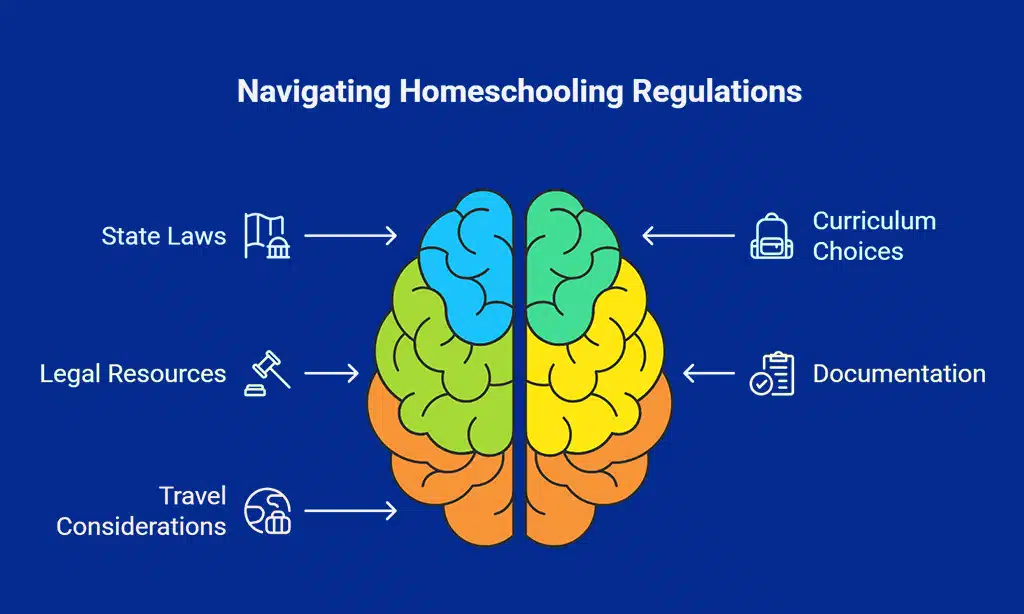
Rules change from state to state, so it pays to check local homeschool laws before you pack up the car. Pick study plans like Time4Learning or portable lesson books that work with busy travel days and unscheduled stops.
Check state regulations and legal requirements
Each state has its own homeschool laws and hoops to jump through. To stay legal while homeschooling on the road, you need a good plan and some know-how.
- Check the home school legal defense association (HSLDA) website for facts about all 50 states’ homeschool requirements.
- Find out if your state makes you take attendance, teach certain subjects, or keep test records.
- Some states want you to file paperwork each year before starting your homeschool routine.
- Texas is known for being relaxed with homeschool laws—no tests or teacher reports needed—so many families choose it as their “home base.”
- You must have a registered address, even if traveling in RVs; a P.O. Box or family member’s address works for most states.
- States like New York or Pennsylvania are strict—they want detailed reports and sometimes ask for portfolios.
- Laws may cover subjects like reading, history, science, and math; check what your chosen flexible curriculum covers.
- While roadschooling around the U.S., always update yourself on the rules of any state where you might park for long periods.
- Legal help is available from organizations like HSLDA if questions or issues pop up during travel-based education.
- If visiting national parks or historic sites, gather proof of time spent learning there—it counts as educational field trips in many places.
Keep these points handy before packing up your books and digital resources for rv homeschooling adventures!
Choose a flexible and adaptable curriculum
Lots of homeschool curriculums can work for roadschooling. Some, like Abeka Homeschool Curriculum, offer structured outlines and sample calendars. Others—Time4Learning or online learning programs—let you log in from almost anywhere with internet access.
Unschooling is less strict and allows children to follow their own interests, even while visiting national parks or historic sites.
A flexible curriculum means you can change topics on the fly. Literature-based lessons let you read ebooks or audiobooks as you drive between stops. Unit-based studies pull together math, science, and reading around a travel theme or field trip location.
Many families add digital resources and apps to keep things light but effective on the road by February 2, 2025—or any date really! Mix different types until your homeschool routine fits your travels just right.
Essential Tools for Roadschooling
Smartphones and tablets open up a whole new world for roadschooling families, making long car rides less of a drag. With homeschool planners, mobile hotspots, and sturdy backpacks tossed in the mix, you’ll keep lessons on track—even if Tuesday’s classroom is a picnic table by Yellowstone.
Portable learning devices and apps
Portable learning gadgets and education apps are like a magic toolbox for homeschooled kids on the move. These tools can make learning possible in an RV, at a picnic table, or in line at a national park.
- Tablets let students use math apps like Khan Academy. Kids can watch math lessons or practice equations anywhere with Wi-Fi.
- Cell phones open up audio books for reading time. A story can turn long drives into quiet study sessions or spark big talks about famous heroes.
- Laptops help with online classes and research. Learners log into Time4Learning to do language arts or science work from campgrounds or hotels.
- A Kindle holds lots of books without taking up much space. Homeschooled kids keep reading favorite stories no matter where they travel.
- Google Sheets is handy as a homeschool tracker. Parents log every lesson or field trip here to meet homeschool laws across states.
- Mobile hotspots give internet access even off the beaten path, so students join lessons, email teachers, and finish homework while roadschooling.
- Lingopie teaches languages through shows and videos—kids love picking up Spanish during lunch breaks using this app on their device.
- Duolingo turns daily language drills into fun games. Learners grow vocab words while waiting for food or resting at historic sites.
Each device and app keeps rv homeschooling simple, flexible, and ready for adventures at every stop.
Offline and online educational resources
Many families doing homeschooling on the road need strong resources. Both offline and online tools help kids learn anywhere, from the woods to a city park.
- Khan Academy offers math lessons online for free, with videos and practice quizzes. Kids can use it anytime, as long as there is internet access.
- Lingopie or Duolingo lets kids learn new languages. Even a ten-minute lesson on the phone can boost vocabulary before visiting a new country.
- Education.com gives worksheets you can print before hitting the road. These cover reading, writing, science, and even history topics.
- Trailblazing Families has a 12-week course that teaches children to be global thinkers. The program mixes hands-on projects with cultural learning, perfect for travel-based education.
- Outschool provides live classes over video chat in many subjects like art, science experiments or world geography. This way, your child joins a class with other homeschoolers without being tied down to one spot.
- Library books offer offline help during long drives or quiet nights in your RV. Many local libraries let travelers borrow books through national programs—ask the librarian about their policy.
- National parks hand out Junior Ranger activity booklets full of puzzles and facts about nature and history. Kids earn badges by completing fun tasks at each park visited — turning every stop into an educational field trip.
- Educational podcasts turn car rides into learning time. Science shows or storytelling series entertain children while sneaking in lessons about animals, planets or historic sites.
- Mobile hotspots keep everyone connected during stops in remote areas where Wi-Fi signals may fade but online learning still needs to happen.
Everything listed above fits well into flexible curriculum plans for rv homeschooling or families focused on experiential learning while traveling full-time.
Homeschool planners and trackers
Good planners and trackers make homeschooling on the road smoother. You need tools that fit your life, not the other way around.
- Use a homeschool tracker with Google Sheets to keep daily lessons organized. This simple digital log helps you follow homeschool laws in each state.
- Choose a planner with space for notes on national parks or historic sites. A flexible curriculum works best for travel-based education, so jot down where and what you learn.
- Abeka Homeschool Curriculum offers sample year calendars and structured outlines. These can help RV homeschooling families keep on track while moving from place to place.
- Print out checklists for each week’s goals or use apps like Time4Learning to track online learning progress. Both make it easy to spot gaps or celebrate wins.
- Stickers and color-coding turn boring logs into fun trackers for kids. Seeing progress keeps everyone motivated, especially during long travel days.
- Make sure paper planners are small enough for backpacks but big enough to write in clearly. Digital resources shine when internet is good, but pen-and-paper can save the day offline.
- Snap photos of completed lessons at museums or field trips and store them right with your tracker. Your records will be ready if someone asks about your homeschool routine during a state check.
- Set aside time weekly to update all trackers—no one likes backtracking through piles of receipts or scribbled notes after a busy roadschooling week.
Tips for Effective Homeschooling While Traveling
Learning on the go can be both fun and hard, with study tools like Time4Learning or a mobile hotspot helping to keep lessons rolling. Kids pick up new skills fast when they can ask questions at an old fort or count change at a busy gas station—school doesn’t always fit inside four walls!
Build lessons around travel destinations
Travel can spark a child’s interest in learning. Use each place you visit as a jumping-off point for your homeschool curriculum.
- Visit national parks, and teach about ecosystems, geology, or American history. A walk through Yellowstone might inspire a science lesson on geysers.
- Plan lessons at museums or zoos. After seeing rare animals at the zoo, talk about habitats and conservation.
- Tour historic sites to give context to social studies. Walking through Independence Hall brings revolutionary history alive.
- Try zip-lining in Costa Rica, then study rainforests, local wildlife, and global climates.
- Assign reading or research tasks before sightseeing trips. Kids can read about Abraham Lincoln before the family visits his memorial in Washington D.C.
- Collect brochures and maps. Use them to practice reading skills or create travel journals.
- Take part in ranger-led talks at state parks for free interactive classes—these often cover topics like geology and native plants.
- Download digital resources from websites like Time4Learning before you travel somewhere new with spotty Wi-Fi.
- Turn downtime between destinations into focused study sessions using portable devices, apps—or even just a notebook and pencil.
- Connect big sights with math lessons: calculate distances traveled each day or budget expenses for meals on the road.
Each adventure offers material for hands-on experiential learning that sticks far longer than worksheets alone.
Turn sightseeing into educational field trips
Seeing new places turns any trip into pure gold for learning. Kids love stories, and every stop gives a new one.
- Explore national parks like Yellowstone or Grand Canyon. Teach about geology, wildlife, and conservation with your own eyes instead of only from books.
- Visit historic sites such as Gettysburg or Independence Hall. Children can walk on the same ground as famous leaders and soldiers, making American history real and unforgettable.
- Spend an afternoon at local museums or zoos. Science comes alive seeing animals up close or touching fossils from millions of years ago.
- Use sightseeing tours to study rainforests after zip-lining or learn about cave systems in Mammoth Cave National Park. Connect adventure with facts.
- Turn visits to art galleries or local markets into creative assignments. Let kids draw what they see or write stories about street artists they meet.
- Download digital resources before trips to areas with weak signals using a mobile hotspot. Apps like Time4Learning help fill in topics missed during busy travel days.
- Track each field trip in a homeschool planner to connect them back to the flexible curriculum and homeschool laws for your state.
- Ask park rangers questions during guided walks. They know odd facts that make science fun, plus it teaches children how real scientists gather information over time.
- Combine sightseeing with educational workbooks or online learning programs so downtime becomes productive without feeling forced.
- Let kids interview locals at each stop, picking up folk tales and traditions to turn into mini writing projects later on the road.
Use downtime for focused study sessions
Downtime is your secret weapon for rv homeschooling. Short breaks can lead to big learning wins, especially on the road.
- Long car rides are perfect for workbook-based homeschool curriculum. Kids can finish math pages or spelling sheets before the next gas stop.
- Lap desks help older children keep things organized and comfy while writing in the vehicle.
- Save tricky, writing-heavy lessons for days parked at a campsite, since bumpy roads make neat handwriting tough.
- Offline digital resources like Khan Academy or Time4Learning work well if internet drops out. Download lessons ahead of time to avoid trouble.
- Pull out reading books, flashcards, or educational apps while waiting at laundromats or during routine checks.
- Some families use mobile hotspots but always have backup work that doesn’t need WiFi, so kids don’t skip study sessions.
- Watch for car sickness with schoolwork in motion. Reading may not mix well with winding mountain roads—audio books from Audible or Libby offer a smart swap.
- National park visits offer downtime between hikes. Pull out a U.S. map and quiz states or capitals right at the picnic table.
- Historic sites often mean waiting around. Turn these minutes into quick discussions about what happened there, sneaking history into snack breaks.
- Stick small study sessions into odd places: airport gates, rest stops, diner booths, shady spots under a giant tree—roadschooling means any spot can become your classroom.
Incorporate life skills and independence into learning
Pack the homeschool routine with real skills. Kids help plan meals, do laundry in RV parks, count change at gas stations, and sweep out the camper. Tasks like making grocery lists or fixing a flat tire teach math and problem-solving on the go.
Cooking over a camp stove or washing dishes at a campsite gives hands-on lessons that stick better than worksheets.
Travel brings surprises—rainy days, road repairs, empty propane tanks—and children learn to adjust their schedules fast. Let them choose what history site to visit next or track miles traveled using maps and apps.
Time4Learning works for online lessons when weather keeps you indoors. Each day builds school know-how and strong independence—even if shoes end up on the wrong feet!
Managing Challenges of Roadschooling
Sometimes your Internet drops out, or the day runs off track—welcome to road life with kids. A mobile hotspot saves the day for online learning, while a simple homeschool routine helps keep things moving forward.
Staying consistent with a flexible schedule
Set a loose daily plan, so learning stays on track. Use homeschool planners or simple checklists to keep your homeschool routine clear. Storage bins help organize books and tablets, making it easy to switch from lessons to field trips at national parks or historic sites.
Some families like Time4Learning for easy online lessons during travel.
Patience takes you far on the road. Life skills come as kids help pack up the RV or set up camp. Flexibility matters more than perfection, whether school happens in a library parking lot with a mobile hotspot, or while waiting out rain inside your campervan.
Stick with what works and adjust as needed; that’s how roadschooling keeps rolling smoothly.
Maintaining internet access for online learning
Good internet keeps homeschoolers learning on the road. Many parents use a mobile hotspot for steady online access. A backup plan often helps, like buying local SIM cards or stopping at coffee shops with Wi-Fi.
Digital resources and live classes from platforms such as Outschool need strong and stable connections. Some families try two networks, like one phone service plus a mobile hotspot, to avoid slow speeds in parks or remote campgrounds.
Roadschooling near national parks sometimes means weak signals, so download lessons ahead of time if possible. Apps that work offline can save the day during long drives or blackout zones.
Stay flexible—one rainy day at an RV park can turn into extra study time thanks to working Wi-Fi. With quick thinking and smart tools, families keep their homeschool curriculum running anywhere they wander.
Balancing travel activities with schoolwork
Long car rides can be perfect for workbook-based homeschool curriculum. Kids can use a lap desk to do math or grammar as the miles roll by. National parks and historic sites turn sightseeing into educational field trips, mixing fun with roadschooling lessons.
On days packed with hiking or tours, save writing-intensive subjects like essays for quiet RV stops. Use downtime, like rain in Yellowstone or repairs at a service shop, for focused study sessions.
Embrace travel disruptions as chances to teach flexibility—sometimes learning goes off script, but every day offers something new on the road.
Finding Support and Community
No one should feel isolated rolling down the highway with kids and lesson plans. Plug into groups like Fulltime Families or use Facebook to swap tips, share laughs, and maybe even meet fellow roadschoolers at a national park picnic.
Join roadschooling and homeschooling communities
Finding your people on the road helps a lot. Support from others makes rv homeschooling much easier.
- Full-time Families offers meetups, tours, and rallies across the country. You can find their events in national parks, historic sites, or even at big campgrounds. Kids make friends, parents swap tips about homeschool curriculum, and everyone shares laughs around the picnic table.
- Xscapers is popular for families who want community while traveling. Their group has special events made for working parents balancing online learning with travel-based education.
- Facebook groups brim with advice and real stories about daily life while homeschooling on the road. These groups have answers to questions about homeschool laws in each state or how to handle internet hiccups with a mobile hotspot.
- Online forums like Roadschool Moms give tips about educational field trips and ways to fold experiences into your homeschool routine. Parents post things like worksheets, favorite apps such as Time4Learning, and reviews of digital resources.
- Local meetups happen everywhere— libraries, playgrounds, science centers. You get ideas for lessons based on actual places you visit and swap funny travel stories with new friends.
Joining these groups gives you fresh activities without fuss or stress. The chance to share good times and help each other grows your family’s confidence wherever your wheels take you.
Participate in local events and meetups
Families hit the road and often meet new friends fast. Local events and meetups help your kids build friendships and learn about communities.
- Go to community fairs or holiday parades in each town. Your children will spot local customs, taste new foods, and make memories that stick longer than any textbook reading.
- Visit national parks for Junior Ranger programs. Park rangers share facts about wildlife, plants, and history. Kids join activities right on location—great for travel-based education.
- Attend library story hours or science workshops. Many libraries welcome visiting homeschoolers with open arms. It is a resource you can use without internet access.
- Join groups like Full-time Families or Xscapers for fun events at RV parks or recreation centers. These groups hold rallies, crafts sessions, and game nights—your young learners make friends of all ages.
- Sign up for local team sports such as Little League baseball if you stay somewhere for a season. Even while roadschooling, children play ball, practice teamwork, and build confidence through steady routines.
- Search social media groups for meetup announcements near your current stop. Facebook pages or apps like Meetup connect traveling parents with other homeschooling families close by.
- Check museum calendars for family days or hands-on exhibits at art centers and historic sites. Activities here turn field trips into real adventures in learning.
- Take part in farmers’ markets, festivals, or volunteer projects to support community life while teaching civic skills outside digital resources.
- Find school co-op classes held in churches, rec halls, or even outdoors. Parents pitch in together—sharing lessons on science experiments, languages, music, and more.
These options keep your homeschool routine lively while making the road feel like home—no matter where you park next!
Takeaways
Homeschooling on the road can feel scary at first, but it gets easier day by day. You do not need fancy tools—just a good plan, strong internet (hello, mobile hotspot), and patience with your crew.
Use places like national parks or museums for hands-on lessons and let adventure be your classroom. Every mile gives you new ways to learn together. Try things out, stay flexible, and watch your kids bloom in this wild journey called life!
FAQs on Tools and Tips for Traveling Parents
1. What tools help with homeschooling on the road?
You’ll want a mobile hotspot, digital resources like Time4Learning, and a flexible homeschool curriculum. These keep lessons going strong whether you’re parked near national parks or rolling past historic sites.
2. How do I handle homeschool laws while traveling?
Homeschool laws change from state to state. Before you hit the road, double-check each place’s rules so your travel-based education stays smooth as butter.
3. Can RV homeschooling include field trips?
Absolutely! Educational field trips are everywhere—think about exploring national parks or stopping at local museums and old battlefields for hands-on learning that sticks better than peanut butter in shag carpet.
4. How do we set up a daily homeschool routine on the move?
Keep it simple: pick times for lessons, mix in breaks, and use online learning tools when Wi-Fi is friendly. A routine helps kids know what to expect—even if today’s classroom is next to a canyon.
5. Is experiential learning possible while traveling full-time?
Yes! Experiential learning shines when you visit new places often. Kids can read about geysers one day and see them blast off the next—talk about making science real without ever opening another dusty workbook!