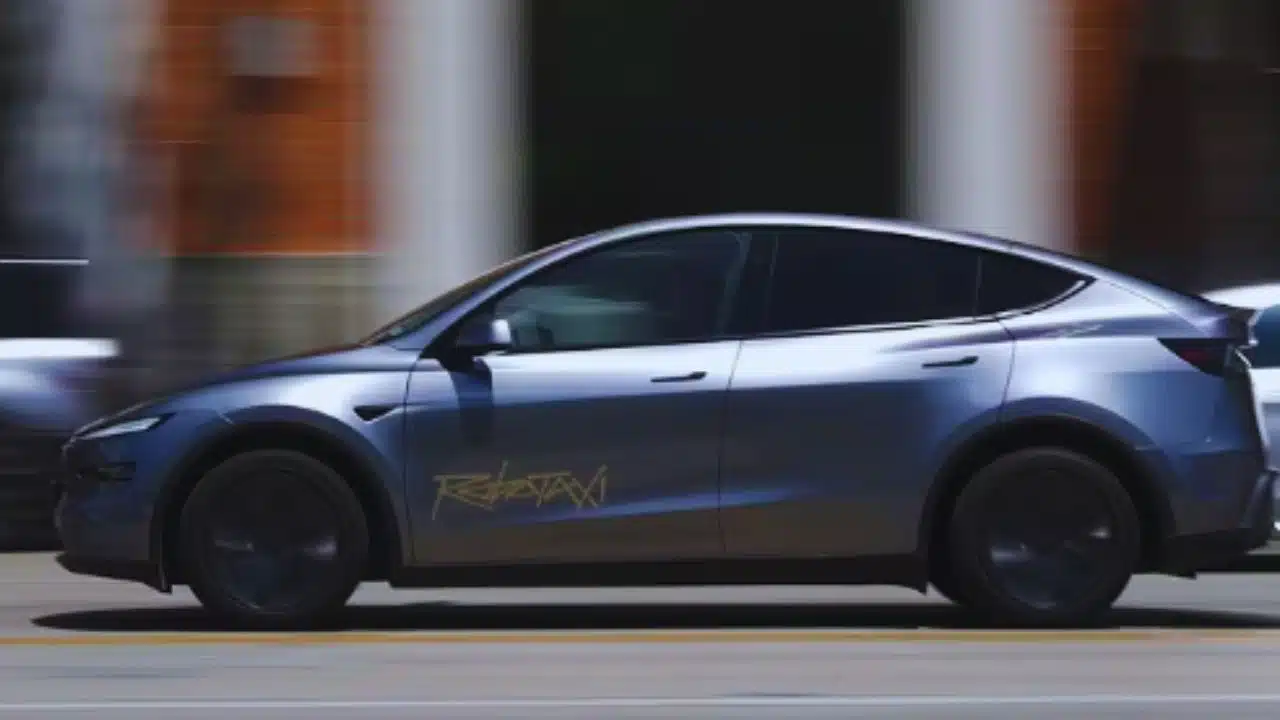
Elon Musk has long promised a future where Tesla’s self-driving cars would transform into a global fleet of robotaxis, capable of ferrying passengers without human drivers. That vision took a bold step forward this summer when Tesla quietly rolled out a ride-hailing service in the San Francisco Bay Area.
But documents and email exchanges reviewed by Reuters show that Tesla’s rollout has raised serious red flags with both California and national regulators. Far from being a fully autonomous “robotaxi” launch, the service is currently operating with human safety monitors, and Tesla lacks the permits required to legally operate driverless cars for commercial use in California.
This gap between Tesla’s marketing and regulatory compliance has triggered confusion, frustration, and growing scrutiny.
The Regulatory Emails: What Officials Said
In late July 2025, Kareem Habib, an investigator at the U.S. National Highway Traffic Safety Administration (NHTSA), emailed officials at the California State Transportation Agency. His question was simple:
Had California regulators met with Tesla to discuss the “weekend rollout” of its robotaxi program in the Bay Area?
The answer, according to California authorities, was no. Tesla had not secured the necessary permits to operate an autonomous ride-hailing service in the state.
This revelation raised alarms because Tesla had launched an invitation-only service in Austin, Texas a month earlier. In Austin, Tesla’s rides typically had a safety operator in the passenger seat — but in California, the company shifted the setup: the monitor now sits behind the steering wheel, creating an impression similar to a standard Uber or Lyft ride where the driver simply happens to own a Tesla equipped with Full Self-Driving (FSD) software.
Officials Push Back on Public Confusion
Emily Warren, California’s Deputy Transportation Secretary, sent a pointed email to Tesla’s public-policy staffer Noelani Derrickson.
She expressed concern that Tesla’s branding and public statements were blurring the lines between supervised driving and true driverless autonomy.
- Tesla had previously told the California Public Utilities Commission (CPUC) that its Bay Area program would be limited to friends and family of Tesla employees using non-autonomous vehicles.
- Yet recent Tesla statements — including a post on X advertising “$99/mo to have your own supervised Robotaxi” — gave the impression that full self-driving, driverless rides were available.
Warren asked directly whether Tesla planned to clarify its messaging to avoid misleading the public.
Tesla’s response was vague. The company’s policy team said Tesla “does not respond to press inquiries” and that customers would learn about ride-hailing operations only “when they become available.”
California’s Position: Tesla Must Be Honest
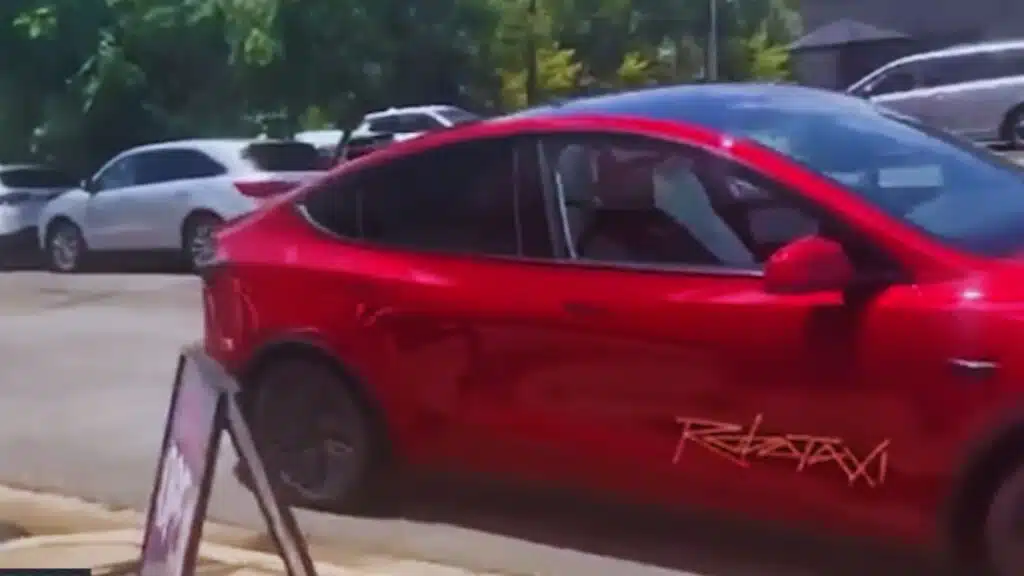
California’s Public Utilities Commission, which regulates ride-hailing and autonomous vehicle deployment, has warned Tesla that it must:
- “Properly and accurately” describe its service.
- Clearly distinguish between human-driven services and autonomous robotaxi programs.
This demand reflects growing unease that Tesla’s marketing hype may be outpacing both technology readiness and regulatory compliance.
Tesla Expands Elsewhere: Nevada, Arizona, Florida
While California regulators hesitate, Tesla has made more progress in other states:
- Nevada: Tesla received approval from the state’s DMV to begin testing robotaxis with safety operators. The Office of Business Licensing added Tesla to its Testing Registry in mid-September 2025.
- Arizona: The Arizona Department of Transportation (ADOT) acknowledged Tesla’s self-certification to test vehicles with safety operators.
- Florida: Tesla has been spotted testing fully driverless vehicles — with no one inside — in Miami.
During Tesla’s July 2025 earnings call, Musk confirmed that the company had applied for operating permissions in multiple states, including California, Arizona, Nevada, and Florida.
Musk’s Promise: Safety Drivers Gone by Year-End
Elon Musk has remained defiant. On X, he recently insisted that safety drivers are “only needed for the first few months to be extra safe.” He predicted that by the end of 2025, Tesla robotaxis would operate without human safety monitors at all.
But California’s strict framework makes that timeline doubtful. Unlike Texas, Nevada, or Arizona — states generally friendlier to AV testing — California requires multiple overlapping approvals before autonomous vehicles can carry paying customers without a human onboard.
The Airport Push
According to Politico, Tesla has also been seeking permission from several California airports to allow its robotaxi service to pick up and drop off passengers. This suggests Tesla is preparing for a broader commercial launch in the Bay Area — even before it has obtained the necessary state permits.
The Tesla Robotaxi app has already appeared on the Apple App Store. Musk has publicly set a goal for half of the U.S. population to have access to Tesla’s robotaxi service by the end of 2025.
Why the Confusion Matters
This disconnect has three major consequences:
- Public trust at risk: If customers believe Tesla is offering full robotaxis when the service still relies on human monitors, disappointment and backlash could follow.
- Legal and financial risk: Operating without the right permits could expose Tesla to fines, lawsuits, or a regulatory freeze in California.
- Competitive landscape: Rivals like Waymo and Cruise have spent years securing permits and operating limited driverless services in San Francisco. Tesla, by contrast, risks being seen as cutting corners.
Tesla’s robotaxi dream is colliding with regulatory reality. In California, the company cannot yet legally offer fully driverless rides to the public. Instead, Tesla’s Bay Area ride-hailing service is essentially a supervised pilot: safety drivers remain in control, and regulators are demanding clearer communication to avoid misleading the public.
Musk’s promise of a driverless, nationwide robotaxi fleet remains one of Tesla’s boldest bets — but the path to approval is uncertain, and California’s regulators are watching closely. For now, Tesla’s robotaxi is still a human-supervised dream, not a driver-free reality.
The Information is Collected from The Independent and USA Today.