

In a move that could transform digital access across India, Elon Musk’s Starlink has received the final green light from Indian regulators to begin commercial operations, according to a detailed report from Reuters. The approval was granted by the Indian National Space Promotion and Authorization Centre (IN-SPACe), the central authority overseeing private sector participation in India’s rapidly growing space sector.
This regulatory nod marks a pivotal step in India’s digital journey and allows Starlink, a division of SpaceX, to officially enter the Indian broadband market. With this, Starlink becomes the third satellite internet provider approved to operate in India, following in the footsteps of Eutelsat’s OneWeb and Reliance Jio’s satellite initiatives.
Hardware and Pricing: What Indian Customers Can Expect
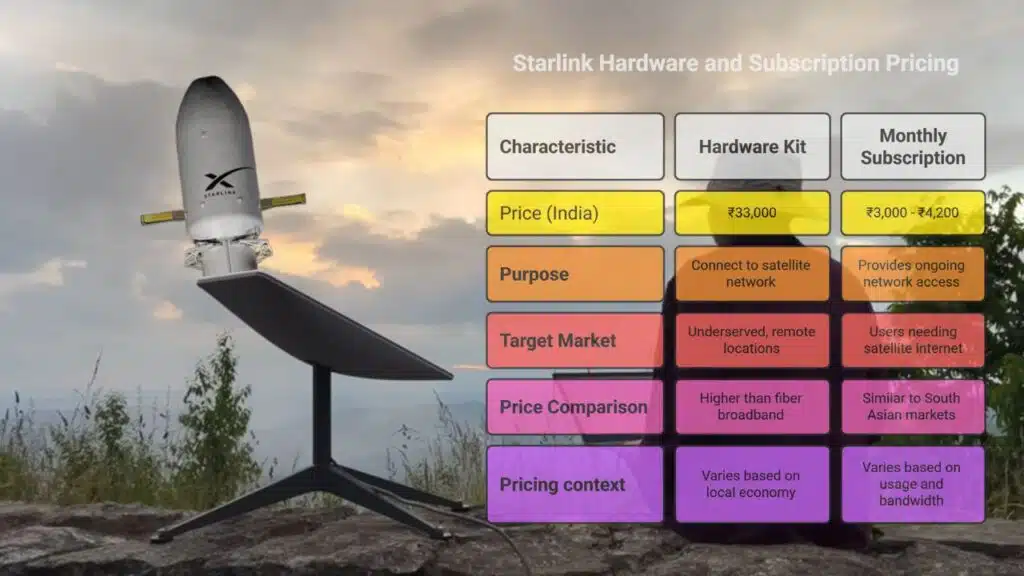
According to sources familiar with the company’s rollout plans, Starlink’s hardware kits—which include a satellite dish (Dishy), mounting tripod, and WiFi router—will be priced at approximately ₹33,000 per unit for Indian consumers. These kits are essential to connect users to Starlink’s global satellite network.
In terms of subscription charges, monthly plans are expected to fall between ₹3,000 and ₹4,200, depending on usage levels and bandwidth options. These prices are comparable to Starlink’s offerings in neighboring South Asian markets, such as Bangladesh and Bhutan, where service levels and market demands are similar.
While these prices may seem high compared to traditional fiber broadband plans, it’s important to note that Starlink targets underserved and hard-to-reach locations, where traditional ISPs either do not operate or provide poor service quality. By comparison, markets like Zimbabwe and Madagascar enjoy slightly lower pricing, tailored to local economic conditions.
What’s Still Pending Before Starlink Goes Live
Despite receiving full operational clearance from IN-SPACe, Starlink must clear several more critical steps before it can start accepting customers:
- Spectrum Allocation: Starlink will need to acquire satellite communication spectrum from the Indian government. This is a major step and involves policy coordination with the Department of Telecommunications (DoT) and Telecom Regulatory Authority of India (TRAI).
- Ground Infrastructure: The company must establish gateway earth stations, data centers, and local processing hubs to manage data traffic in compliance with India’s data localization laws.
- Security Trials and Compliance: Starlink will also need to undergo security screening and technical evaluations to meet India’s cyber, national, and operational security regulations. This is particularly important in sectors involving space-based and cross-border communication systems.
Only after these steps are completed will Starlink be able to initiate full-fledged commercial operations across Indian regions.
Strategic Alliances with Airtel and Jio for Faster Rollout
Starlink is not entering India alone. The company is forming strategic partnerships with two of India’s largest telecom providers—Bharti Airtel and Reliance Jio—to streamline its launch and expand its market reach.
- Bharti Airtel Collaboration
In March 2025, Bharti Airtel signed a conditional agreement with SpaceX, aiming to act as a distribution partner and retail facilitator for Starlink’s services across India. Airtel’s vast physical retail footprint, combined with its existing broadband subscriber base, positions it as a strong distribution arm for satellite internet kits.
Additionally, Airtel plans to help Starlink reach rural institutions—including schools, healthcare centers, and local government offices—that have struggled to access stable internet. This aligns with India’s Digital India initiative and targets deep digital inclusion.
- Reliance Jio Partnership
Meanwhile, Reliance Jio Platforms, led by billionaire Mukesh Ambani, is also teaming up with Starlink to explore technology integration and co-branded offerings. Jio is India’s largest telecom operator by subscriber base and data consumption, and its digital retail ecosystem offers a robust pipeline for Starlink kit sales and technical support.
Jio is also planning to use Starlink’s satellite network to strengthen broadband coverage in geographically difficult or economically nonviable regions—such as the North-East, tribal belts, and desert areas.
Roadblocks Along the Way: Why the Launch Was Delayed
Starlink’s entry into India has been far from smooth. The company has faced multiple policy hurdles, bureaucratic delays, and opposition from local telecom players, particularly on the issue of spectrum allocation methodology.
- Security and Policy Delays
In November 2024, Telecom Minister Jyotiraditya Scindia stated that Starlink had not met India’s full spectrum of security requirements, including local data routing and encryption standards. These concerns delayed the issuance of operating licenses and raised flags within India’s defense and cybersecurity agencies.
- The Spectrum Auction Dispute
Another major bottleneck was a policy dispute over how satellite spectrum should be distributed. Starlink and SpaceX strongly advocated for administrative allocation, arguing that auctions were unsuitable for satellite-based networks and would drive up costs for consumers.
However, Reliance Jio and other Indian operators opposed this stance, claiming administrative allocation would give international players like Starlink an unfair edge. Jio instead pushed for auction-based allocation, similar to traditional telecom spectrum.
This disagreement led to a broader policy debate within India’s telecom and space ministries, eventually resulting in a partial shift in favor of administrative licensing for satellite services, especially those with a rural focus.
What Starlink’s Launch Means for India’s Digital Future
India has the second-largest internet user base in the world, but connectivity gaps remain glaring, particularly in remote, tribal, border, and forested regions. According to the Internet and Mobile Association of India (IAMAI), over 400 million Indians still lack access to stable high-speed internet.
Starlink’s technology, which leverages low-Earth orbit (LEO) satellites, offers low-latency, high-speed broadband anywhere under the sky—making it a game-changer for:
- Rural education
- E-health and telemedicine
- Remote government service delivery
- Agricultural technology solutions
- Disaster response communication systems
- Military border operations
Moreover, the entry of satellite broadband aligns with India’s National Digital Communications Policy (NDCP) 2025, which aims to achieve broadband access for all and improve rural internet penetration to over 70% by 2026.
Looking Ahead: When Will Services Begin?
While a firm launch date has not yet been announced, industry insiders believe that Starlink could begin beta testing in late 2025, followed by full-scale commercial rollout in early 2026.
Much will depend on how quickly the company secures:
- Spectrum clearance
- Import permissions for equipment
- Deployment of local infrastructure
Once live, Starlink will offer a reliable alternative to fiber broadband in areas where laying cables is impractical, too costly, or geopolitically sensitive.
A New Era for India’s Digital Connectivity
Starlink’s regulatory clearance marks a watershed moment in India’s digital transformation. With its powerful constellation of LEO satellites, strategic backing from telecom giants, and a policy landscape now more conducive to satellite services, Starlink is poised to reshape the internet landscape across the subcontinent.
If implemented efficiently, this could dramatically improve connectivity for millions of underserved Indians, bringing education, healthcare, commerce, and governance within digital reach like never before.
The Information is collected from NDTV and MSN.




























