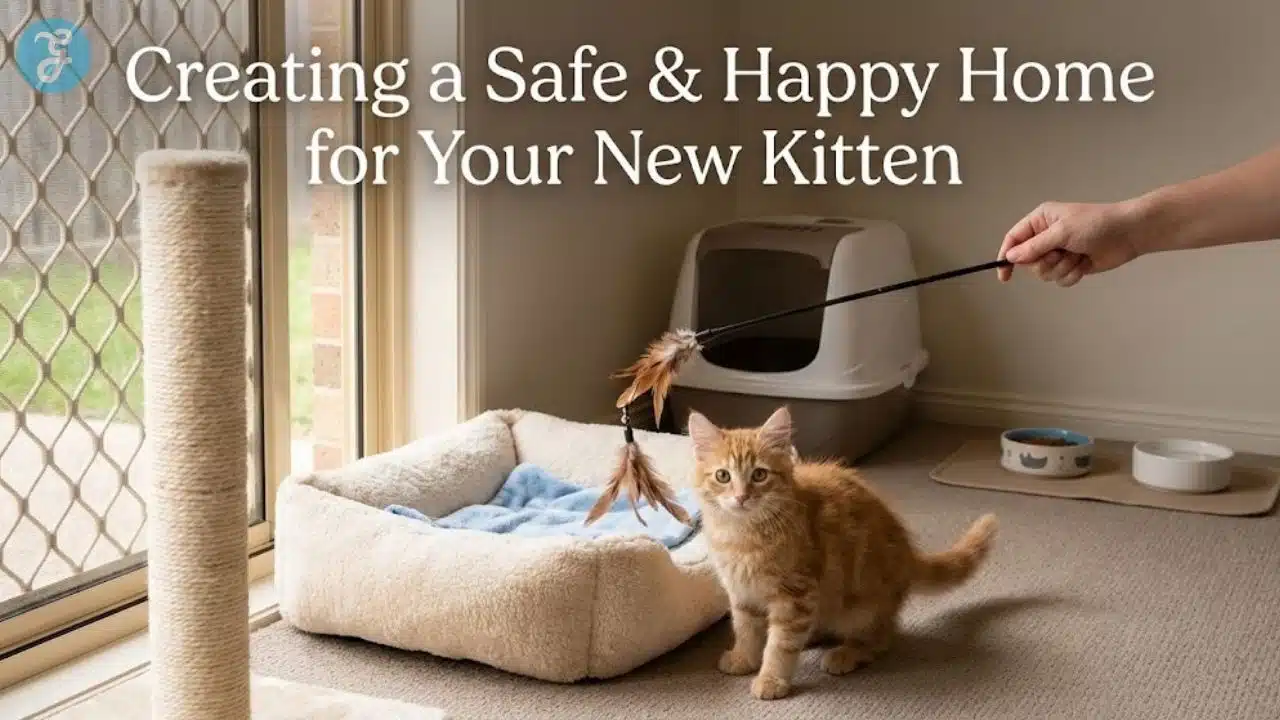
Bringing a new kitten home is exciting for sure. They bring along playful antics and comforting purrs. However, what most of us fail to realize is that it’s also a significant transition for a tiny feline kitty as well. It requires careful preparation to ensure their safety, comfort, and healthy development.
So, creating a secure and stimulating environment from day one is a must. It lays the foundation for a well-adjusted and happy cat. This comprehensive guide outlines the essential steps on how to create a safe and happy home for a new kitten, set up vital supplies, establish routines, and introduce your new companion to their forever family.
5 Things to Consider Before Bringing Home a New Kitten
Here’s how you can bring your new kitten home in 5 easy steps:
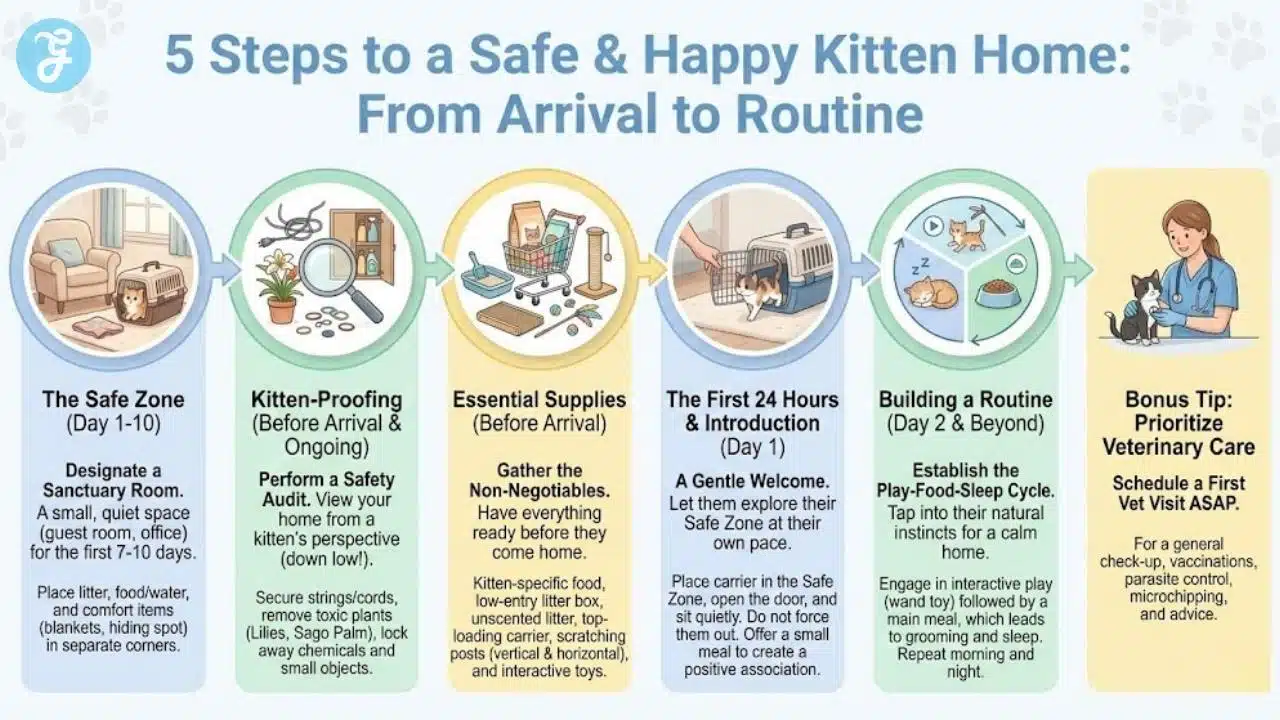
1. Create a “Safe Zone.”
The biggest mistake most new owners make is giving a kitten the run of the entire house immediately. Imagine being a toddler dropped into a giant shopping mall alone—that is what a 2,000-square-foot house feels like to a 2-pound kitten. It is overwhelming, scary, and frankly, dangerous.
The solution is the “Safe Zone” method.
What is a Safe Zone?
A Safe Zone is a designated sanctuary room—like a guest bedroom, a quiet home office, or a large bathroom—where your kitten will live exclusively for the first 7 to 10 days. This isn’t a punishment; it is a security blanket. It allows the kitten to map out their territory, find the litter box easily, and decompress from the stress of moving.
Setting Up the Sanctuary
Before bringing home a kitten, you need to stage this room. Here is the strategic layout:
-
The Litter Station: Place the litter box in a corner that offers a clear view of the room. Cats feel vulnerable when doing their business, so don’t hide it behind a noisy door.
-
The Dining Area: Cats are fastidious. They instinctively refuse to eat near where they eliminate. Place food and water bowls as far away from the litter box as possible—ideally on the opposite side of the room.
-
Scent Soakers: This is a pro tip. Before the kitten arrives, fill the room with soft items like blankets, plush beds, or a cardboard scratcher. These items absorb the kitten’s scent quickly. As they rub against them, they mark the territory as “theirs,” which boosts their confidence and lowers anxiety.
-
The Fortress of Solitude: Provide a hiding spot. A cardboard box turned on its side with a towel inside is often preferred over expensive beds because it feels like a protected cave.
2. Kitten Proofing Your Home (The Safety Audit)
Kittens explore the world through their mouths. To them, your home is not a living space; it is a giant puzzle made of potential chew toys. You must perform a safety audit.
The Golden Rule: If it can fit in their mouth, it will end up in their stomach.
To do this effectively, you cannot stand up. You must get down on your hands and knees to see the room from their eye level (about 8 inches off the ground).
The “String” Hazard (Linear Foreign Bodies)
This is the most critical safety warning in this guide. Veterinarians frequently perform emergency surgeries to remove “linear foreign bodies.” If a kitten swallows one end of a string, it can bunch up the intestines like an accordion.
-
The Culprits: Window blind cords, dental floss, sewing thread, hair ties, rubber bands, and yarn.
-
The Fix: Tie up all blind cords high out of reach. Use covered trash cans in the bathroom (dental floss is irresistible to cats). Keep sewing kits in locked drawers.
The Toxic Flora Hit-List
Many common houseplants are lethal to cats.
-
Lilies (True Lilies & Daylilies): These are Public Enemy #1. Even getting a smudge of pollen on their fur and grooming it off can cause fatal kidney failure in less than 72 hours.
-
Sago Palm: Highly toxic to the liver.
-
Tulips & Hyacinths: The bulbs are concentrated with toxins.
-
Safe Alternatives: If you want greenery, opt for Spider Plants, Boston Ferns, or Calatheas.
The Warmth Trap
Kittens have a poor ability to regulate body temperature, so they seek heat sources.
-
Appliances: Always check the washer, dryer, and dishwasher before closing the door and hitting start. This sounds paranoid until you hear the horror stories.
-
Recliners: Be careful with electric reclining chairs; kittens often crawl into the mechanism underneath.
3. The New Kitten Essentials Checklist
You don’t need to buy the entire pet store, but you do need specific tools to make the transition successful. Here is a breakdown of the non-negotiables.
| Category | Item | Why It Matters |
| Nutrition | Kitten-Specific Food | Kittens need massive amounts of energy for growth. Look for labels saying “For Growth” or “Kitten.” Avoid adult food, which lacks necessary calories and calcium. |
| Hygiene | Low-Entry Litter Box | A kitten’s legs are tiny. High-sided boxes are hard to enter, leading to accidents. Start with a shallow pan or a specialized kitten box. |
| Litter | Unscented, Non-Clumping | For the first few weeks, use non-clumping (pellet or clay) litter. Kittens sometimes eat litter; clumping clay can cause blockages if ingested. |
| Travel | Top-Loading Carrier | Trying to shove a scared kitten through a front door is a battle. A top-loading carrier allows you to gently lower them in. |
| Scratching | Vertical & Horizontal | Cats have preferences. Provide a vertical sisal post and a horizontal cardboard scratcher to save your sofa. |
| Grooming | Nail Trimmers | Start touching their paws and trimming tips early (week 1) to desensitize them. |
4. The First 24 Hours
The big day is here. You are officially bringing home a kitten. How you handle these first few hours sets the tone for your relationship.
The Arrival
When you walk through the door, go straight to the Safe Zone. Place the carrier on the floor, open the door, and then… do nothing.
Do not reach in and pull them out. Do not surround them with five loud family members. Sit quietly on the floor and read a book or look at your phone. Let the kitten decide when they are brave enough to step out. This builds trust because it gives them agency.
The First Meal
Once they venture out, offer a small amount of wet food immediately. You want them to associate your presence—and the new room—with the best thing in the world: food.
The First Night
This is the hardest part. It is completely normal for a kitten to cry or meow on the first night. They are away from their mother and littermates for the first time.
-
Do not: Bring them into your bed yet (they can fall off or get crushed).
-
Do not: Rush in every time they squeak (this teaches them that crying = attention).
-
Do: Provide a warm bed (maybe with a heartbeat toy or a warm water bottle wrapped in a blanket) and ensure they are safe in their zone.
5. Building a Routine (Socialization)
Cats are creatures of habit. To keep a kitten happy (and to stop them from attacking your ankles at 3 AM), you need to tap into their primal cycle: Hunt, Catch, Kill, Eat, Sleep.
The Play-Food Cycle
Many owners make the mistake of leaving a bowl of dry food out all day (free-feeding) and then wondering why their cat is hyperactive at night. Instead, create a rhythm:
-
The Hunt (Play): Use a wand toy (feather or mouse on a string) to simulate prey. Make the toy move like a mouse—hiding behind corners, freezing, and darting away. Do this for 10–15 minutes until the kitten is panting or lying down.
-
The Catch/Kill: Let them “catch” the toy at the end of the session.
-
The Eat (Feast): Immediately feed them their main meal (wet food is best here).
-
The Sleep: After eating a big meal, a kitten’s biology tells them to groom and sleep.
Do this cycle once in the morning and once right before you go to bed. This is the secret to a cat that sleeps through the night.
The “No Hands” Rule
Never use your hands or feet as toys. It looks cute when a 2-pound kitten wrestles your hand, but it will be painful and aggressive when it is a 10-pound cat. Always put a toy between you and the kitten. If they bite you, go limp (don’t pull away fast, which triggers a chase instinct) and make a high-pitched “Ow!” noise, then ignore them for a minute.
5 Tips on How to Create a Safe and Happy Home for New Kittens
Here are 5 tips + a bonus tip to help you create the perfect environment for your furry buddies:
1. Kitten-Proof Your Home for Safety
Kittens are naturally curious explorers, and their small size allows them to squeeze into surprisingly tight spaces. Before your new arrival steps paw indoors, a thorough kitten-proofing of your home is paramount to prevent accidents and hazards.
This process involves identifying and securing potential dangers that could harm your inquisitive furball. Here are some common household hazards and how you can solve them:
| Hazard Category | Specific Examples | Solution |
| Electrical Wires | Loose cables, charging cords | Secure with cord covers, hide behind furniture, use cable ties |
| Toxic Plants | Lilies, Sago Palms, Tulips, Oleander, Poinsettias | Remove from home, place in inaccessible areas, use pet-safe alternatives |
| Small Objects | Rubber bands, hair ties, string, buttons, jewelry | Store securely in drawers/cabinets, keep off counters |
| Chemicals | Cleaning supplies, medications, automotive fluids | Lock in cabinets, use child-proof latches |
| Openings/Gaps | Gaps behind appliances, open windows, and toilet lids | Block access with barriers, install window screens, and keep toilet lids down |
| Human Food | Chocolate, onions, garlic, grapes, avocados, alcohol | Store securely, never leave unattended, and educate family members |
| Fragile Items | Glass decor, easily breakable objects | Move to higher shelves, secure with museum putty, and store away. |
For additional safety:
- Secure Cabinets: Use child-proof latches on cabinets containing cleaning products, medications, or human food.
- Check Appliances: Ensure your washing machine, dryer, and dishwasher are closed. Kittens can easily crawl inside for a nap.
- Window and Balcony Safety: Install sturdy screens on all windows and keep balcony doors closed or screened. Kittens can fall or jump.
- Litter Box Placement: Position the litter box in a quiet, easily accessible area away from food and water bowls. For larger homes, consider two litter boxes initially.

2. Gather Essential Kitten Supplies
Having the right equipment ready before your kitten arrives will ease their transition and your responsibilities. These items are crucial for their health, comfort, and entertainment.
| Item Category | Specifics | Notes |
| Food & Water | High-quality kitten kibble/wet food, ceramic/stainless steel bowls | Consult vet for best food choice; avoid plastic bowls |
| Litter Box | Appropriately sized litter box, clumping/non-clumping litter, scoop | Place in a quiet, accessible location; avoid scented litter |
| Bedding | Soft bed or blanket, carrier with soft lining | Place the bed in a quiet, draft-free spot; carrier for transport |
| Toys | Interactive toys (wand, laser pointer), small balls, crinkle toys, puzzle feeders | Encourage play and mental stimulation; rotate toys to prevent boredom |
| Grooming | Soft brush, nail clippers, kitten-safe shampoo (if needed) | Start grooming early for positive association; consult a vet for bathing frequency |
| Scratching | Scratching post (vertical), scratching pad (horizontal) | Essential for claw health and redirecting destructive scratching |
| Carrier | Secure, comfortable carrier | For vet visits and safe transport, keep open at home to encourage familiarity |
| Health | First-aid kit (gauze, antiseptic, pet thermometer), vet contact info | Consult vet for specific kit contents; keep emergency numbers handy |
Pro tip: Opt for kitten-specific formulas, as they contain higher protein and fat content essential for growth.
3. Set Up Your Kitten’s Safe Space
Upon arrival, your kitten will likely feel overwhelmed. Designating a small, quiet “safe room” or area provides a secure base from which they can gradually explore their new home. This space should contain all their essentials.
Setting up a Safe Space:
Location: A spare bedroom, bathroom, or a quiet corner of a living area.
Things you’ll need:
- Litter box (in one corner)
- Food and water bowls (opposite corner from litter)
- Soft bed or cozy blanket
- A few toys
- Scratching post
- A hiding spot (e.g., a cardboard box on its side, a pet tunnel)
Allow your kitten to spend their first few hours, or even a day or two, in this space. This allows them to acclimate to new smells and sounds without feeling exposed or threatened.
4. Introduce Your Kitten to Family and Other Pets Gently
A gentle and controlled introduction process is crucial for a harmonious household, especially if you have children or other pets.
- Children: Supervise all interactions. Teach children to handle the kitten gently, supporting its body, and to recognize signs of stress (flattened ears, hissing).
- Other Cats: Introduce gradually through scent first (e.g., swapping blankets), then supervised visual contact through a gate. Keep initial meetings short and positive, rewarding calm behavior.
- Dogs: Ensure your dog is calm and well-trained. Keep the dog on a leash during initial supervised meetings. Provide the kitten with escape routes and high perches. Never leave them unattended until you are certain they are comfortable and safe together.
5. Establish Routines and Begin Training
Kittens thrive on routine. Consistent feeding times, play sessions, and litter box maintenance build security and help them learn household rules.
- Feeding Schedule: Feed small, frequent meals throughout the day, as recommended by your vet.
- Litter Box Training: Most kittens instinctively use a litter box. If accidents occur, gently place the kitten in the litter box and praise them when they use it. Never punish for accidents.
- Playtime: Engage in interactive play daily (15-20 minutes, several times a day) to burn energy, satisfy hunting instincts, and bond. Use wand toys, not hands, to avoid encouraging biting.
- Scratching Training: Encourage use of scratching posts by placing them in prominent areas and gently guiding your kitten’s paws to them. Reward with praise or treats.
Bonus Tip: Prioritize Veterinary Care
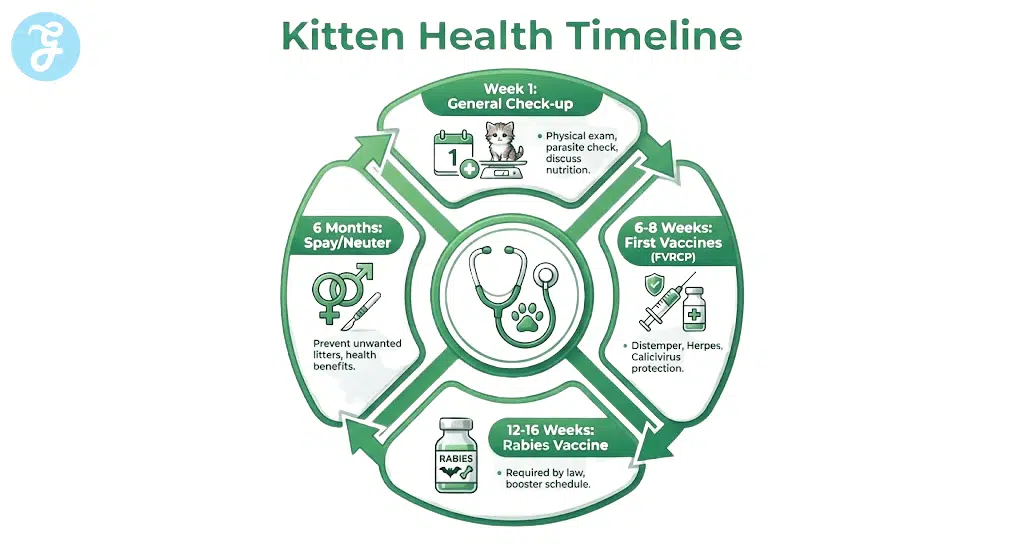
A vet visit should be one of your first priorities after bringing your kitten home. Regular veterinary care is essential for your kitten’s long-term health and well-being.
| Vet Care Aspect | Details | Importance |
| General Check-up | Physical examination, weight, vital signs | Ensures overall health and identifies any immediate concerns |
| Vaccinations | Core kitten vaccines (FVRCP, Rabies) | Protects against common, serious feline diseases |
| Parasite Control | Deworming, flea/tick prevention | Prevents infestations and associated health issues |
| Microchipping Pets | Implanting a small identification chip | Crucial for reuniting if your kitten gets lost |
| Spaying/Neutering | Discuss timing and benefits | Prevents unwanted litters, reduces behavioral issues, and improves health |
| Diet Advice | Recommendations for appropriate kitten food | Supports healthy growth and development |
Final Thoughts
Now that you know how to create a safe and happy home for a new kitten, we hope you are able to apply our tips and guidance when welcoming your own fur baby. Creating a safe and happy home for your new kitten involves thoughtful preparation, patience, and consistency. By kitten-proofing your house, providing essential supplies, establishing a secure safe space, managing introductions carefully, implementing routines, and prioritizing veterinary care, you set the stage for a wonderful companionship.
Witnessing your tiny explorer grow into a confident, loving member of your family is one of the most rewarding experiences a pet parent can have. Embrace the journey, cherish the purrs, and enjoy every moment with your new feline friend.
Frequently Asked Questions (FAQs)
Here are the most frequently asked questions people have about How to Create a Safe & Happy Home for Your New Kitten Guide.
What is the first step I should take when bringing a new kitten home?
The first step you should take is to kitten-proof your home. Kittens are very curious and can get into dangerous situations, so securing electrical wires, removing toxic plants, putting away small objects, and locking up chemicals are crucial to ensure their safety from the moment they arrive.
What essential supplies do I need before my kitten comes home?
You will need a variety of essential supplies. These include high-quality kitten food and water bowls, an appropriately sized litter box with suitable litter, soft bedding, a secure carrier for transport, various interactive toys, a soft brush and nail clippers for grooming, and both vertical and horizontal scratching posts to promote healthy scratching habits.
Should my new kitten have a designated safe space when they first arrive?
Yes, your new kitten should absolutely have a designated safe space. This small, quiet room or area provides them with a secure base to acclimate to new smells and sounds without feeling overwhelmed. This space should contain all their essentials like a litter box, food, water, a bed, and toys.
How should I introduce my new kitten to children or other pets?
You should introduce your new kitten gradually and with supervision. For children, teach them gentle handling and to recognize signs of kitten stress. For other cats, introduce them through scent first, then supervised visual contact.
Is veterinary care important immediately after getting a new kitten?
Yes, prioritizing veterinary care is extremely important and should be one of your first actions. A vet visit ensures a general check-up, initiates core vaccinations, addresses parasite control (deworming, flea/tick prevention), allows for microchipping, and provides an opportunity to discuss spaying/neutering and appropriate diet advice for healthy growth.