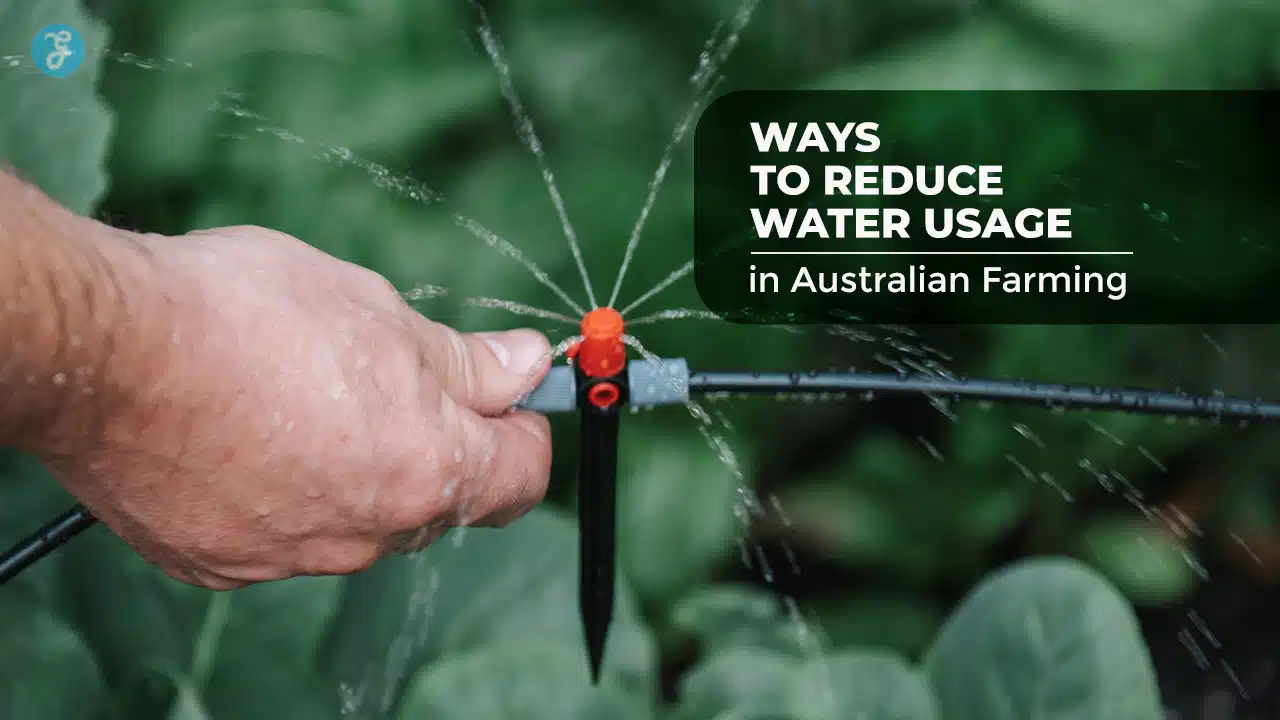
Water is one of the most critical resources for Australian farmers, especially in a country where droughts and dry climates are common challenges.
The agricultural sector in Australia consumes a significant portion of the nation’s water, making efficient water management crucial for the sustainability of farming practices. As climate change exacerbates water scarcity, adopting water-saving strategies has become a necessity for farmers aiming to maintain productivity while protecting the environment.
This guide explores 10 practical and innovative ways to reduce water usage in Australian farming.
From advanced irrigation techniques to soil improvement strategies, these methods can help farmers conserve water, reduce costs, and ensure sustainable agricultural practices for future generations.
1. Implement Drip Irrigation Systems
Drip irrigation systems are revolutionizing water management in agriculture, offering one of the most efficient ways to deliver water directly to plants. Unlike traditional irrigation methods, which can waste significant amounts of water through evaporation and runoff, drip irrigation targets the root zone with precision.
This system uses a network of pipes, tubing, and emitters to release small amounts of water steadily, ensuring that every drop counts. For Australian farmers, especially in arid regions, drip irrigation is a game-changer, reducing water consumption by up to 50%.
In addition to conserving water, it enhances crop yields by maintaining consistent soil moisture and reducing stress on plants. Drip irrigation also minimizes weed growth, as water is applied only to targeted areas.
With its potential for automation, farmers can save time and labor while achieving sustainable water usage. It’s a practical investment that ensures long-term productivity and environmental stewardship.
Advantages
- Reduces water wastage by up to 50%.
- Promotes healthier crop growth by preventing overwatering.
- Minimizes weed growth by limiting water to non-essential areas.
| Feature | Benefit |
| Targeted Water Delivery | Reduces water loss and evaporation |
| Customizable Systems | Suitable for various crop types |
| Energy Efficient | Lower energy consumption than sprinklers |
Drip irrigation is a smart investment for farmers seeking to optimize water usage and enhance crop yield.
2. Use Mulching to Retain Soil Moisture
Mulching is a simple yet highly effective water-saving technique that every farmer should consider. By covering the soil with organic or synthetic materials, mulching significantly reduces water evaporation, keeping the soil moist for longer periods.
This method also prevents soil erosion, improves fertility, and regulates soil temperature, creating an ideal environment for plant growth. For Australian farmers facing dry and hot climates, mulching is a cost-effective way to conserve water and enhance crop yields.
Organic mulches like straw or wood chips decompose over time, enriching the soil with nutrients, while synthetic mulches provide durable, long-term protection.
Additionally, mulching suppresses weed growth, ensuring that crops do not compete for water and nutrients. By incorporating mulching into their farming practices, Australian farmers can boost water efficiency and support sustainable agriculture without a significant financial outlay.
Advantages
- Reduces evaporation by up to 70%.
- Improves soil fertility and structure over time.
- Lowers the frequency of irrigation required.
| Mulch Type | Benefit |
| Organic (straw, wood chips) | Enhances soil health |
| Synthetic (plastic mulch) | Provides long-lasting moisture retention |
Mulching is an affordable and eco-friendly solution for Australian farmers aiming to maximize water efficiency.
3. Collect and Store Rainwater
Rainwater harvesting is an essential water conservation strategy for Australian farmers, given the country’s unpredictable rainfall patterns. By collecting and storing rainwater, farmers can create a reliable water supply for irrigation, livestock, and other needs, even during dry spells.
This method typically involves the use of rainwater tanks, gutters, and filtration systems to capture and store runoff from rooftops and other surfaces. Stored rainwater not only reduces dependence on external water sources but also helps cut water bills.
Additionally, rainwater harvesting is an environmentally friendly practice, minimizing the strain on local water systems. For farmers in drought-prone regions, this strategy ensures resilience against water shortages while promoting sustainable water use.
With advancements in rainwater storage technologies, farmers can now install scalable systems to meet their specific needs, making rainwater harvesting a valuable long-term investment.
Advantages
- Cost-effective water supply during droughts.
- Reduces strain on local water systems.
- Promotes sustainable water management.
| Feature | Benefit |
| Rainwater Tanks | Provides a reliable water source |
| Filtration Systems | Ensures water quality for crops |
| Scalability | Suitable for small and large farms |
Rainwater harvesting is a proactive approach to water conservation, ensuring long-term sustainability for Australian farms.
4. Improve Soil Health for Better Water Retention
Healthy soil is the foundation of water-efficient farming. When soil is rich in organic matter and has good structure, it retains water more effectively, reducing the need for frequent irrigation.
Practices such as adding compost, using cover crops, and minimizing soil compaction can drastically improve soil health and water retention. For Australian farmers, who often contend with sandy or degraded soils, investing in soil improvement can lead to significant water savings.
Healthy soil not only holds more water but also allows better absorption during rainfall or irrigation, preventing runoff and wastage. Additionally, well-maintained soil supports robust plant growth, improving crop yields and overall farm productivity. By prioritizing soil health, farmers can achieve a sustainable balance between water conservation and agricultural success.
Advantages
- Reduces water runoff and evaporation.
- Enhances nutrient availability for plants.
- Supports long-term soil fertility.
| Soil Improvement Practice | Impact on Water Usage |
| Adding Compost | Increases water-holding capacity |
| Using Cover Crops | Reduces water evaporation |
| Minimizing Tillage | Prevents soil compaction |
Investing in soil health is a long-term strategy that benefits both water conservation and overall farm productivity.
5. Opt for Drought-Resistant Crops

Drought-resistant crops are specifically bred to thrive in low-water conditions, making them an invaluable asset for Australian farmers. These crops, such as sorghum, millet, and certain varieties of wheat and barley, require less water to grow and can withstand extended dry spells.
By incorporating drought-resistant crops into their farming practices, farmers can maintain productivity while reducing irrigation demands. These crops are not only water-efficient but also highly resilient, providing stable yields even in challenging climates.
For farmers looking to adapt to water scarcity, switching to drought-resistant varieties is a practical and cost-effective solution. Additionally, these crops often require less maintenance, reducing labor and input costs. Adopting drought-resistant crops is a forward-thinking approach that ensures sustainable farming in Australia’s often harsh and unpredictable climate.
Advantages
- Requires less irrigation.
- Provides stable yields during dry seasons.
- Reduces farming costs over time.
| Crop Type | Water Efficiency |
| Sorghum | Thrives with minimal water |
| Millet | Highly drought-tolerant |
| Drought-Tolerant Wheat | Provides consistent yields |
Drought-resistant crops are a practical solution for farmers looking to adapt to water scarcity challenges.
6. Install Smart Irrigation Technologies
Smart irrigation technologies are transforming water management in agriculture by leveraging real-time data to optimize water use.
These systems use advanced tools like soil moisture sensors, weather integration, and automated scheduling to ensure that crops receive the exact amount of water they need, when they need it. For Australian farmers, who face unique water challenges, smart irrigation offers a highly efficient way to conserve resources while maximizing productivity.
By reducing water wastage and improving irrigation precision, these systems can cut water usage by up to 30%. Additionally, smart irrigation reduces labor requirements, as farmers can monitor and control water delivery remotely.
With the added benefit of integrating with other farm management tools, smart irrigation is a modern solution for sustainable farming in Australia.
Advantages
- Improves water efficiency by up to 30%.
- Reduces labor and monitoring efforts.
- Enhances crop health through precise watering.
| Feature | Benefit |
| Soil Moisture Sensors | Tracks water needs accurately |
| Automated Scheduling | Ensures efficient water delivery |
| Weather Integration | Adjusts irrigation based on rainfall |
Smart irrigation technologies are a game-changer for modern farming, combining efficiency with innovation.
7. Use Rotational Grazing for Livestock
Rotational grazing is a sustainable farming practice that involves moving livestock between different pastures to prevent overgrazing and allow soil recovery. This method not only promotes healthier pastures but also improves water retention in the soil.
By preventing soil compaction and encouraging natural water infiltration, rotational grazing reduces the need for supplemental irrigation. For Australian farmers, rotational grazing is a practical way to conserve water while maintaining productive livestock operations.
This practice also supports biodiversity, as it allows native vegetation to regenerate. Additionally, healthier pastures mean better nutrition for livestock, leading to improved yields and profits. Rotational grazing is an eco-friendly approach that benefits both the environment and the farmer.
Advantages
- Improves soil water retention.
- Reduces water needed for supplemental irrigation.
- Promotes healthier pastures and livestock.
| Feature | Benefit |
| Pasture Rotation | Prevents overgrazing |
| Water Management | Enhances natural water absorption |
| Soil Recovery | Improves long-term productivity |
Rotational grazing is an eco-friendly practice that benefits both livestock and the environment.
8. Invest in Efficient Water Pumps
Efficient water pumps are a vital component of water management on Australian farms. Traditional pumps can be wasteful, leading to significant water loss over time. Modern water pumps, particularly solar-powered options, are designed to deliver water with greater precision and minimal wastage.
These pumps are not only energy-efficient but also environmentally friendly, reducing both operational costs and carbon footprints. For farmers looking to optimize their irrigation systems, upgrading to efficient water pumps is a smart investment.
These pumps often come with features like automatic shutoff and variable speed controls, ensuring that water is used effectively. By incorporating efficient water pumps, Australian farmers can achieve significant water savings while improving the sustainability of their operations.
Advantages
- Saves water by reducing leaks and overflows.
- Lowers energy costs.
- Reduces environmental impact.
| Feature |
Benefit |
| Solar-Powered Pumps | Cost-effective and eco-friendly |
| High-Efficiency Motors | Delivers water with minimal wastage |
| Automatic Shutoff | Prevents water overflow |
Efficient water pumps are a simple yet impactful way to conserve water and reduce operational costs.
9. Monitor and Fix Leaks Regularly
Undetected leaks in irrigation systems, pipelines, or water tanks can lead to significant water loss, often going unnoticed until it’s too late. Regular monitoring and maintenance are essential to ensure that water resources are used efficiently.
Farmers can use tools like water flow meters and pressure gauges to identify leaks early and address them promptly. Fixing leaks not only conserves water but also reduces operational costs by preventing unnecessary wastage.
For Australian farmers, where every drop of water counts, regular inspections are a crucial aspect of sustainable water management. Implementing a routine maintenance schedule can extend the lifespan of irrigation systems and ensure consistent performance, ultimately contributing to long-term productivity.
Advantages
- Prevents water wastage.
- Lowers water bills.
- Extends the lifespan of irrigation systems.
| Feature | Benefit |
| Leak Detection Tools | Identifies water loss early |
| Regular Maintenance | Ensures efficient water usage |
| Cost Savings | Reduces overall water expenditure |
Regular monitoring ensures that water resources are used efficiently and sustainably.
10. Educate and Train Farm Staff
Water conservation is a collective effort that requires the active participation of everyone involved in farming operations. Educating and training farm staff on water-saving techniques is essential for achieving sustainable practices.
Training programs can cover topics such as efficient irrigation methods, soil improvement, and equipment maintenance, ensuring that staff have the knowledge and skills to implement conservation strategies effectively. For Australian farms, where water resources are often limited, staff training is a critical investment.
By fostering a culture of sustainability, farmers can ensure that water-saving practices are consistently followed, leading to improved efficiency and reduced costs. Collaboration and shared responsibility among farm staff are key to successful water management.
Advantages
- Increases awareness about water conservation.
- Ensures consistent implementation of strategies.
- Improves farm productivity and sustainability.
| Feature | Benefit |
| Staff Training Sessions | Promotes awareness and skills |
| Best Practice Guidelines | Standardizes water-saving techniques |
| Collaboration | Encourages teamwork in conservation |
Educating farm staff creates a culture of sustainability, ensuring that water-saving practices are consistently followed.
Takeaway
Water conservation is not just a necessity for Australian farmers—it’s a responsibility. By implementing these 10 strategies, farmers can significantly reduce water usage, improve efficiency, and contribute to sustainable agricultural practices.
From modern irrigation technologies to improving soil health, every small step adds up to create a big impact.
Let me know if you’d like to further expand any of the sections or add more details!