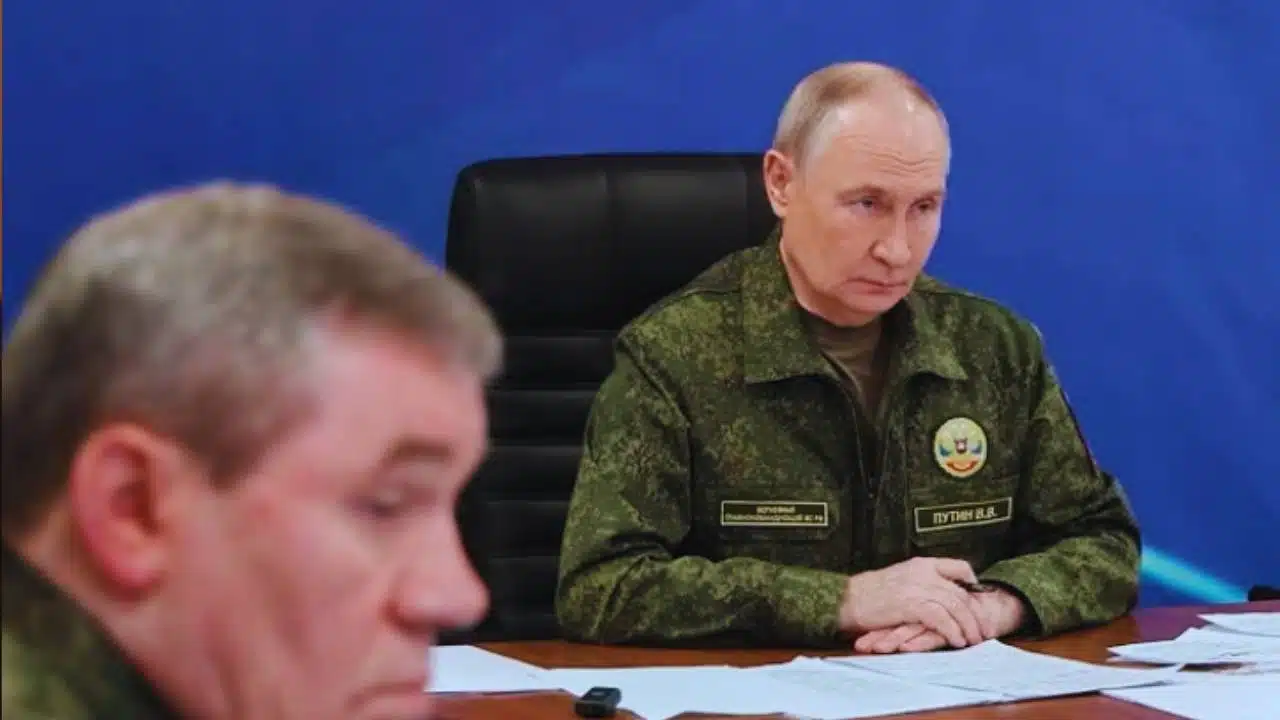
Russia says it has provided the U.S. with drone components it claims prove Ukraine targeted President Vladimir Putin’s residence in the Novgorod region on Dec. 29, but U.S. intelligence and Ukraine deny the accusation, raising fresh tension around peace talks.
What Russia Handed Over and What It Claims It Proves
Russian officials say they delivered “physical evidence” to the United States on Thursday, including a navigation controller recovered from a downed drone.
According to Russia’s account, Admiral Igor Kostyukov, head of Russia’s military intelligence agency, handed the component to a U.S. military attaché. Russian authorities argue that data decoded from the device shows the drone’s intended destination was a presidential residence near Lake Valdai in the Novgorod region.
Moscow has tied the handover to a broader claim: that Ukraine launched an attack involving 91 drones on the night of December 29, and that Russian air defenses stopped the strike before it reached the residence.
Russia has not released independent verification that the controller came from a drone launched in that incident, nor publicly provided full technical logs that outside experts could authenticate.
CIA Assessment: Target Was Military, Not a Residence
U.S. intelligence has delivered a sharply different conclusion.
U.S. officials briefed President Donald Trump that Ukraine did not target Putin or any presidential residence in the alleged Dec. 29 incident. The assessment said Ukrainian drones were aimed at a military facility elsewhere in the Novgorod region, not the residence near Lake Valdai.
CIA Director John Ratcliffe reportedly provided the findings in a briefing dated December 31. The U.S. view, as described by officials, is that Russia’s narrative does not match available intelligence on the drones’ likely flight paths and intended targets.
Ukraine’s Response: “Fabrication” and a Disinformation Play
Ukraine has flatly denied Moscow’s allegations.
President Volodymyr Zelenskyy has called the claim false and framed it as an attempt to:
- justify intensified Russian strikes,
- weaken international support for Ukraine,
- and complicate diplomatic momentum toward negotiations.
Ukraine’s government-linked disinformation monitoring bodies have also pointed to what they describe as missing or inconsistent supporting details, including:
- a lack of publicly shown evidence of air-defense activity near the residence,
- unclear documentation of drone impact sites tied to the specific claim,
- and shifting accounts about casualties and debris locations.
Why This Matters Now: Peace Talks and Political Stakes
The dispute lands at a politically sensitive moment.
It emerged shortly after Trump hosted Zelenskyy at Mar-a-Lago, where both sides signaled they were nearing agreement on parts of a potential peace framework. The accusation also introduced a new talking point Moscow could use to argue that Kyiv is escalating or acting unpredictably—an argument Ukraine says is designed to reduce Western pressure on Russia.
Trump’s public posture appeared to shift over the week. After initially reacting angrily when Putin raised the allegation, Trump later expressed skepticism and circulated commentary suggesting Russia may be obstructing progress.
Meanwhile, the European Union’s top diplomat, Kaja Kallas, publicly dismissed Russia’s narrative as a deliberate distraction intended to derail diplomacy.
Russia’s Diplomatic Signal: “Reassess” the Negotiating Line
Russian Foreign Minister Sergey Lavrov has suggested the alleged incident could affect Moscow’s approach in negotiations, implying Russia may harden its position or revisit its demands.
That warning matters because it connects the drone allegation to concrete diplomatic leverage: if Moscow can persuade audiences that an attempted strike on a presidential residence occurred, it may argue that compromises are politically impossible—or that retaliation is justified.
Ukraine and several Western officials counter that this dynamic is precisely the point of the claim: to reshape the diplomatic environment in Russia’s favor.
Key Timeline of Events
| Date (2025–2026) | Event | Who Said What |
| Dec. 29, 2025 | Alleged drone incident in Novgorod region | Russia says 91 drones targeted a presidential residence |
| Dec. 31, 2025 | Intelligence briefing delivered | U.S. assessment says the target was a military site, not Putin |
| Jan. 1, 2026 | Russia hands over drone component | Russia says device data supports its claim |
| Early Jan. 2026 | Diplomatic reactions intensify | Ukraine rejects claim; EU warns of distraction strategy |
Claim vs Counterclaim
| Issue | Russia’s Claim | U.S./Ukraine Position |
| Intended target | Putin’s residence near Lake Valdai | A military facility elsewhere in Novgorod region |
| Evidence presented | Navigation controller allegedly from a downed drone | Intelligence assessment disputes Russia’s targeting claim |
| Purpose of narrative | Security incident requiring accountability | Disinformation meant to justify strikes and disrupt talks |
| Diplomatic impact | Grounds to reassess negotiating stance | Attempt to derail peace progress and fracture alliances |
Russia’s decision to hand over alleged drone evidence adds a high-profile escalation to the information war around the conflict—especially because it touches the symbolic red line of targeting a head-of-state residence. But the U.S. intelligence assessment rejecting the claim, combined with Ukraine’s categorical denial, leaves the core allegation unproven publicly.
In the near term, the dispute is likely to be less about technical proof and more about diplomatic positioning: whether the narrative shifts pressure, fractures alignment between Kyiv and Washington, or creates new justification for military and political hardening on the Russian side.