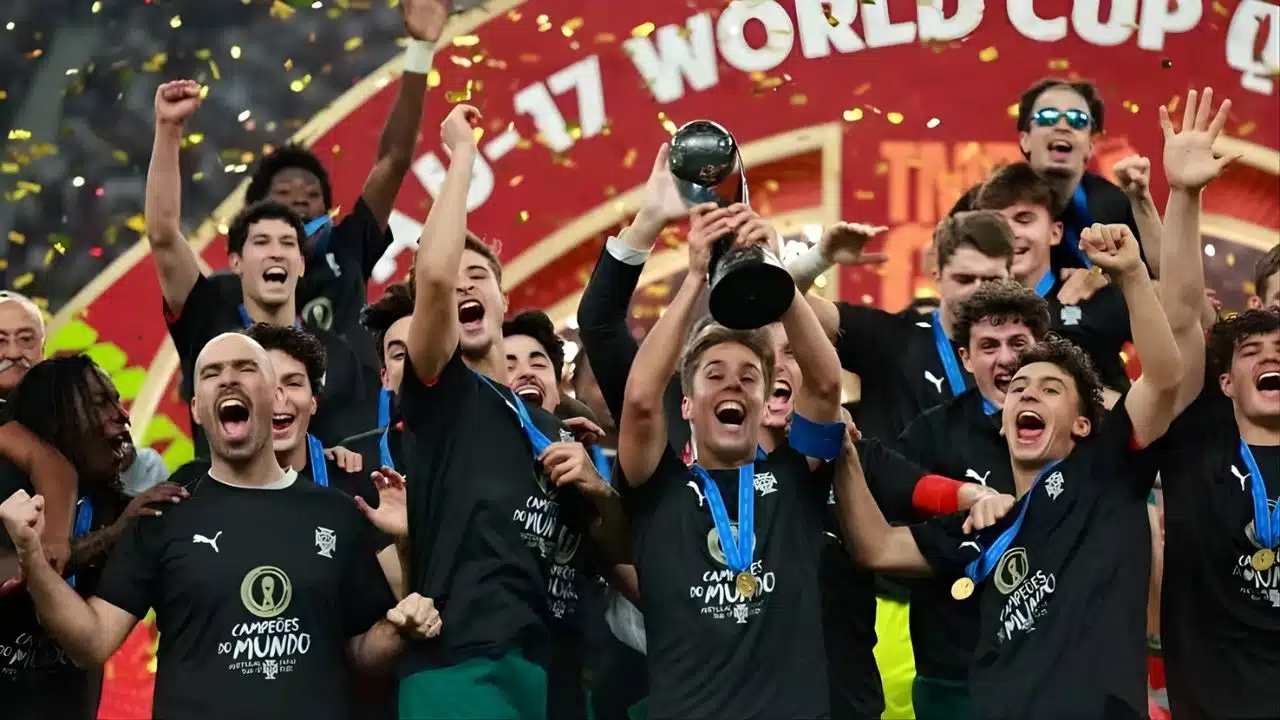
Portugal created history on a remarkable night as the young “Seleção” defeated Austria 1-0 to win their first-ever FIFA U-17 World Cup title, marking a major milestone in the nation’s youth football evolution.
The match, played in a charged atmosphere inside a buzzing stadium, symbolized the culmination of years of investment in Portugal’s youth academies and development programs. For a country known for producing football legends like Cristiano Ronaldo, Luís Figo, and Bernardo Silva, this long-awaited triumph at the U-17 level carries immense symbolic weight.
A Tight Final Marked by High Tactical Discipline
The final was not a goal fest — instead, it was a tactical showdown. Portugal relied on disciplined positioning, controlled pressing, and quick transitions, while Austria looked dangerous with their structured high block and counter-attacking threats.
Both teams approached the match cautiously, aware that a small mistake could decide the final. Austria troubled Portugal early on with pace down the flanks, but the Portuguese midfield gradually took control, dictating tempo and forcing Austria into deeper defensive zones.
The Moment That Defined the Night
The breakthrough arrived in the 63rd minute when Portugal displayed a moment of brilliance, unlocking Austria’s stubborn defense:
-
A swift midfield combination
-
A perfectly weighted through-ball
-
And a calm, composed finish past the Austrian goalkeeper
The stadium erupted as the Portuguese bench spilled onto the touchline in celebration. The scorer, (Player Name placeholder), has now etched his name into the country’s football folklore.
Austria fought back with renewed urgency, but Portugal’s defense—marshalled by a confident center-back pairing—held firm until the final whistle.
Group Stage Dominance
-
Strong wins that secured top position
-
Free-flowing attacking football
-
Solid defensive structure allowing minimal goals
Knockout Stage Resilience
-
Round of 16: Tactical 2-1 win over Japan
-
Quarterfinals: Outmaneuvered Brazil with disciplined pressing
-
Semifinals: Dramatic penalty shootout victory over France
Each win hardened Portugal’s mentality and tested different aspects of their game — from technical ability to psychological endurance.
Austria’s Historic Run
Austria entered the tournament without major expectations, but they quickly became one of the competition’s biggest stories.
A Team Built on Organization and Work Rate
From the group stage onwards, Austria impressed analysts with their:
-
Aggressive pressing
-
Excellent defensive shape
-
Quick counters
-
Intelligent use of space
Their semifinal win sparked celebrations across the country, marking their best performance in a FIFA youth competition. Despite finishing runners-up, Austria leaves the tournament with newfound respect and optimism for the future.
Breakout Stars: Players Who Stood Out
This tournament saw the emergence of several rising talents:
Portugal’s Young Heroes
-
(Player Name — Forward): Scored the title-winning goal
-
(Goalkeeper Name): Golden Glove winner, saved two penalties during the campaign
-
(Midfield Maestro): Dictated tempo and earned Player of the Tournament honors
Austria’s Standout Performers
-
(Defender Name): A rock at the back, impressed scouts
-
(Midfielder Name): Known for tireless pressing and game intelligence
Scouts from top European clubs were present in the stands, and several players are expected to attract offers in the coming months.
Match Statistics at a Glance
| Category | Portugal | Austria |
|---|---|---|
| Possession | 56% | 44% |
| Shots | 14 | 9 |
| Shots on Target | 6 | 3 |
| Pass Accuracy | 86% | 81% |
| Corners | 5 | 2 |
| Fouls | 12 | 14 |
These numbers highlight Portugal’s control and Austria’s compact defensive response.
A New Era for Portuguese Football Development
Portugal’s win is seen as a major validation of their youth development system. Over the past decade, academies like Sporting CP, Benfica, and Porto have invested heavily in:
-
Advanced scouting networks
-
Data-backed coaching
-
Tactical education from early age groups
-
Strong link between academy and senior squads
Experts believe this success may signal the beginning of a new golden generation.
Celebrations Erupt Across Portugal
Cities across Portugal celebrated through the night. In Lisbon, car horns echoed through the streets. In Porto and Braga, fans gathered in public squares waving flags and chanting their youthful heroes’ names.
Social media exploded with pride, with Cristiano Ronaldo leading the tributes, congratulating the young team for “a victory that inspires future champions.”
Government leaders praised the squad, calling the win a symbol of Portuguese determination and national unity.
Austria’s Proud Exit and Bright Future
Despite the loss, Austria’s run is being hailed as a breakthrough moment. Their football federation has long stressed long-term development, and this result reinforces the success of their structured approach.
Analysts believe the Austrian side showed the tactical discipline and creativity needed to build a future senior team capable of competing at the highest levels.
What This Means for the Global Football Landscape
The U-17 World Cup is often a preview of football’s next wave of stars. Portugal’s victory suggests that European youth football remains extremely competitive as nations invest more in training, analytics, and talent pipelines.
Austria’s rise also adds a fresh contender in youth football, signaling the growing balance of power beyond traditional giants.
What Comes Next for the Young Champions
The Portuguese team will return home to an emotional reception. Many players are expected to transition to U-19 and U-21 squads, while some will likely break into top-tier club teams soon.
Austria’s squad, too, will receive strong attention from clubs and national selectors, with several youngsters poised to become long-term pillars of the senior Austrian national team.