Anime is huge now. It’s not a niche corner of the internet anymore. Netflix says more than half of its global members watch anime, dentsu’s 2025 global study says 31% of consumers worldwide watch anime weekly, and the Association of Japanese Animations says the industry hit a record 3.8 trillion yen in 2024. That’s a big reason new viewers keep asking the same question: where do I even start?
That’s where a guide like this helps. The most popular anime genres aren’t just labels for superfans. They’re shortcuts. They tell you whether a show is likely to be high-energy, emotional, weird, cozy, dark, or all five at once. Current beginner guides and genre explainers keep circling the same lanes: shonen, isekai, romance, slice of life, seinen, sports, mecha, and psychological stories.
The tricky part is that anime uses two systems at once. One is genre: action, romance, horror, comedy. The other is demographic: shonen, shojo, seinen, josei, and kodomomuke. Genre tells you what the story feels like. Demographic tells you who the original manga or magazine was aimed at. Once you separate those two, anime gets a lot easier to browse.
Why the labels matter before you hit play
Genre vs. demographic, in plain English
A lot of new fans think shonen is a genre in the same way romance or horror is a genre. It isn’t. Shonen is a demographic label, usually tied to manga aimed at younger male readers. A shonen series can still be action, comedy, fantasy, sports, sci-fi, or some mash-up of all of them. That’s why a show like One Piece feels completely different from a show like Haikyu!! even though both are often filed under shonen.
Why beginners get confused so fast
Anime also loves overlap. A single show can be action, fantasy, comedy, and romance at the same time. That sounds messy, but it’s actually useful. It means you don’t have to pick one flavor forever. You can watch a fantasy show with slow, emotional scenes, or a sports anime that feels more like a character drama than a sports documentary. That overlap is one of anime’s best hooks.
| Term | What it tells you | Example of how it works |
| Genre | The story style or mood | Action, romance, horror, slice of life |
| Demographic | The original target readership | Shonen, shojo, seinen, josei |
| Theme/Subgenre | A recurring setup or device | Isekai, mecha, sports, psychological |
| Best beginner move | Start by mood, not jargon | “I want action” is easier than “I want shonen” |
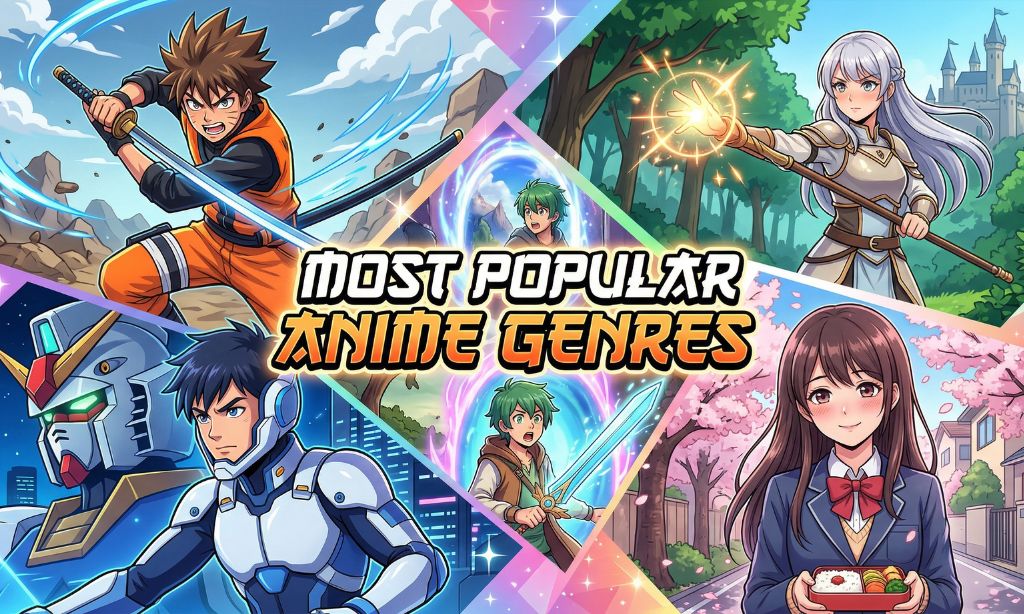
Most Popular Anime Genres: shonen action and adventure
What this lane feels like
If someone says anime is fun, fast, emotional, and packed with big swings, they’re usually talking about shonen-flavored action and adventure. This is the lane of rivalries, training arcs, found family, big goals, and fights that feel like they matter. It’s also still one of the easiest ways into anime because the stakes are clear and the pacing usually wants to keep you moving.
Why new fans usually start here
This genre works because the rules are easy to learn. Somebody wants to become stronger, protect people, win something, or reach an impossible dream. You don’t need a glossary to enjoy that. Beginner lists still lean hard on this kind of gateway anime, with titles like Fullmetal Alchemist: Brotherhood, One Piece, and SAKAMOTO DAYS often recommended first.
What to watch for
The only catch is length. Some action-adventure anime are short and clean. Others are lifestyle commitments. If you’re brand-new, it’s smart to start with a tighter series before jumping into something with hundreds of episodes. This genre is still the safest first stop if you want momentum, spectacle, and clear emotional payoffs.
| What you’ll get | Common traits | Good starter examples |
| High energy | Fights, quests, rivalries, growth arcs | Fullmetal Alchemist: Brotherhood |
| Big emotions | Friendship, loyalty, loss, comeback moments | Demon Slayer |
| Easy momentum | Clear stakes and fast plot movement | Jujutsu Kaisen |
| Long-form adventure | World-building and huge casts | One Piece |
Fantasy and isekai are everywhere for a reason
Why this genre clicks so fast
Among the most popular anime genres, fantasy is one of the broadest and easiest to love. Add isekai to the mix and you get one of anime’s most recognizable modern formulas: a character lands in another world and has to survive, adapt, or reinvent themself. It remains one of the most visible parts of anime for a reason.
What makes it work for beginners
The appeal is simple. Another world means fresh rules, magic systems, monsters, guilds, kingdoms, and clean wish-fulfillment. Even when the writing gets silly, the setup is easy to grasp. That’s why so many new fans click with it fast. You don’t need deep anime knowledge to understand “normal person gets dropped into a wild world and has to figure it out.”
What to be careful about
Still, not every fantasy anime is the same. Some are warm and reflective, like Frieren: Beyond Journey’s End. Others are power fantasies. Others are dark. And yes, isekai can get repetitive if you binge too much of it back-to-back. It’s better to treat fantasy and isekai as a buffet, not your whole diet.
| Subtype | Core hook | Beginner appeal | Starter examples |
| Fantasy adventure | New worlds, magic, quests | Easy immersion | Frieren |
| Isekai | Transported or reborn elsewhere | Instantly readable premise | Re:Zero, Konosuba |
| Dark fantasy | Monsters, danger, moral pressure | Higher stakes | Attack on Titan |
| Cozy fantasy | Slower, more emotional journey | Great for viewers who hate nonstop fights | Delicious in Dungeon |
Romance, shojo, and josei give anime its heart
Romance is bigger than people think
A lot of new viewers come in expecting action and stay because of romance. That happens all the time. Romance anime can be funny, dramatic, awkward, bittersweet, or quietly devastating. It doesn’t always mean glitter and love triangles. Sometimes it means a very ordinary conversation that hits harder than any boss fight.
Shojo and josei are worth learning early
This is also the best spot to learn the difference between shojo and josei. Shojo is a demographic traditionally aimed at younger girls, while josei is aimed at older women. That doesn’t mean men can’t enjoy them or that all stories follow the same template. It just means the tone, emotional focus, and relationship dynamics may land differently.
Who should start here
If you like chemistry, character tension, emotional growth, or slow-burn storytelling, start here. Romance is also a smart counterweight to heavy action anime. It reminds new fans that anime isn’t one thing. It can be tender, funny, and intimate without losing momentum.
| Label | What it usually means | Tone you’ll often get | Starter examples |
| Romance | Relationship-driven storytelling | Sweet, funny, dramatic, or bittersweet | Toradora! |
| Shojo | Demographic aimed at younger girls | Emotional, stylish, character-centered | Fruits Basket |
| Josei | Demographic aimed at adult women | More grounded relationships and adult concerns | Nana |
| Romance-comedy | Love plus timing and chaos | Very beginner-friendly | Kaguya-sama |
Slice of life and comedy are the comfort food picks
Low stakes doesn’t mean low quality
Slice of life gets underestimated by people who think anime has to be loud to be good. It doesn’t. These stories are built around daily routines, relationships, and ordinary moments. That can sound small on paper, but in practice it’s often where anime becomes the most human.
Why these shows hook people anyway
The trick is detail. A good slice-of-life anime notices little things: awkward pauses, after-school habits, shared meals, quiet grief, goofy jokes that come back three episodes later. Comedy works the same way. Anime comedy can be absurd, deadpan, chaotic, or deeply character-based.
Best use for beginners
It helps to keep one comfort show in rotation. Watch your action series, sure, but also keep a calmer title nearby. It helps you see how wide anime really is. It also stops burnout. Not every night needs to end with a cliffhanger and a screaming villain.
| Genre | What it focuses on | Best for | Starter examples |
| Slice of life | Everyday moments and relationships | Viewers who like cozy, relatable stories | Yuru Camp |
| Comedy | Timing, exaggeration, personality clashes | Quick, easy watching | Nichijou |
| Slice-of-life comedy | Small stakes, big charm | Stress-free bingeing | Spy x Family |
| Iyashikei-style calm | Soothing mood and atmosphere | Viewers who want a breather | Mushishi |
Seinen, psychological thrillers, and horror are for darker moods
This is where anime stops playing nice
If shonen action is the front door, seinen and psychological anime are the rooms deeper inside the house. Seinen is a demographic label usually aimed at adult men, but the practical takeaway for beginners is tone: heavier themes, morally messy characters, and stories that don’t rush to reassure you.
Why this genre has such loyal fans
These series stick because they trust the audience. They let scenes breathe. They leave questions open. They lean harder into fear, obsession, guilt, systems of power, or plain old dread. For the right viewer, this is the point where anime stops feeling like “cartoons with fights” and starts feeling like prestige TV with sharper visual language.
The beginner warning here is real
Darker anime can be brilliant but rough as first entries because they ask for more patience or carry heavier subject matter. Still, if you already like thrillers, crime stories, or morally gray drama, this may actually be your best entry point. Start with one smart, clean recommendation rather than the bleakest thing on the shelf.
| Type | What to expect | Best for | Starter examples |
| Seinen drama | Adult themes, layered characters | Viewers who want mature storytelling | Monster |
| Psychological thriller | Mind games, tension, unstable truths | Fans of suspense | Death Note |
| Horror | Fear, dread, unsettling imagery | Viewers who like darker material | Another |
| Dark fantasy/seinen blend | Violence plus moral ambiguity | Fans of prestige-style drama | Vinland Saga |
Sports and mecha are better starter genres than people expect
Sports anime works even if you do not care about sports
This is one of the easiest surprises in anime. You do not need to care about volleyball, basketball, or skating to enjoy sports anime. The real engine is usually growth, teamwork, rivalry, and pressure. Sports stories are built to make progress visible, which is great for new fans.
Mecha is more than giant robots punching things
Mecha has the opposite problem. People assume it’s all hardware and noise. But strong mecha anime is usually about war, politics, identity, trauma, or the relationship between humans and the machines they build. Some of the best-known mecha series blend spectacle with character drama in a way that feels much richer than the stereotype suggests.
Why both genres deserve a shot
Sports anime gives you clean emotion. Mecha gives you big ideas with visual punch. Both are easy to skip if you’re browsing by stereotype. Don’t. Some of anime’s most satisfying first watches live right here.
| Genre | Core appeal | Common mistake new fans make | Starter examples |
| Sports | Teamwork, momentum, growth | “I need to like the sport first” | Haikyu!! |
| Mecha | Robots plus war, politics, identity | “It’s only about machines” | Neon Genesis Evangelion |
| Competitive ensemble stories | Rivalry and payoff | Assuming they’re repetitive | Blue Lock |
| Character-first mecha | Big ideas with strong emotion | Expecting only action | Gundam entries |
How to choose among the most popular anime genres
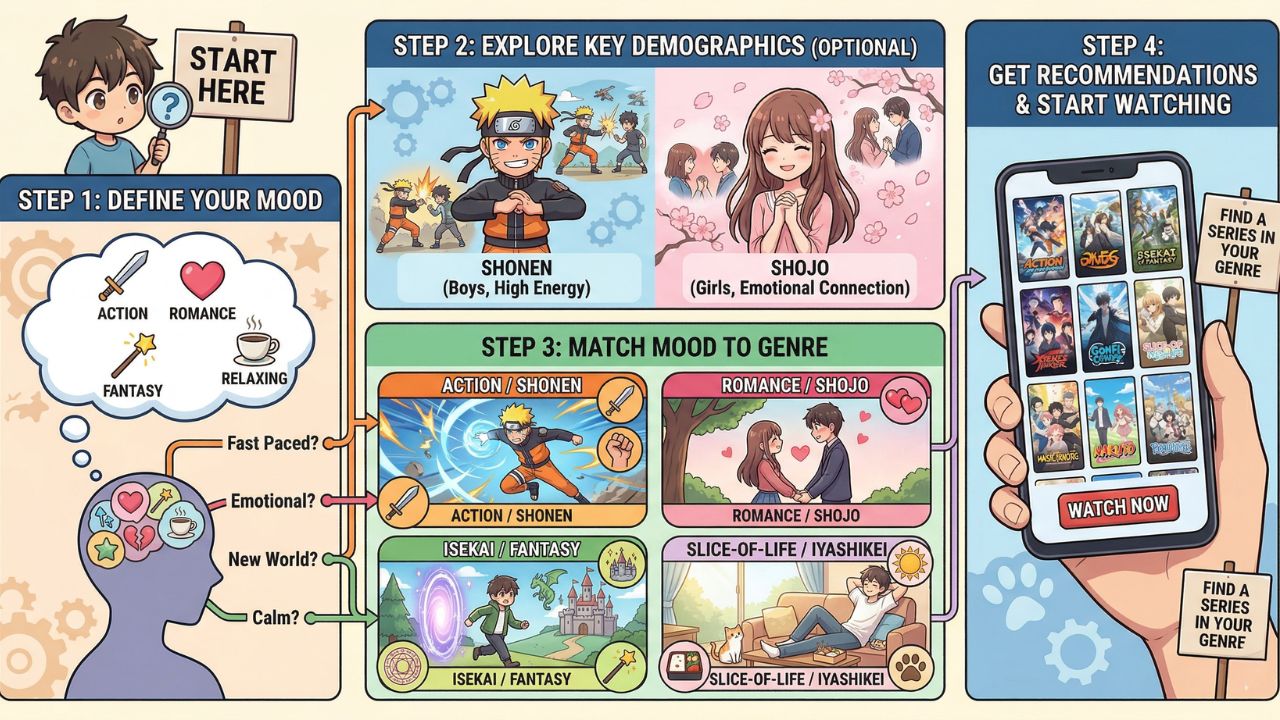
Start with mood, not with prestige
If you’re new, don’t begin by asking what anime is “the best.” Ask what you’re in the mood for. Want fast and hype? Pick shonen action. Want wonder? Pick fantasy or isekai. Want feelings? Romance. Want calm? Slice of life. Want your brain twisted into a knot? Psychological thriller. This is the easiest way to make the most popular anime genres feel useful instead of overwhelming.
A quick beginner cheat sheet
- Action and adventure: Start here if you want the classic anime rush.
- Fantasy or isekai: Start here if you love world-building.
- Romance: Start here if you care most about character chemistry.
- Slice of life/comedy: Start here if you want a lighter watch.
- Seinen/psychological: Start here if you already like darker prestige drama.
- Sports/mecha: Start here if you want something more specific but surprisingly rewarding.
| Mood | Best genre match | What it usually delivers |
| “I want excitement” | Shonen action/adventure | Big fights, goals, rivalries |
| “I want escape” | Fantasy / isekai | New worlds, lore, magic |
| “I want feelings” | Romance / shojo / josei | Chemistry, longing, growth |
| “I want something cozy” | Slice of life / comedy | Comfort, humor, low-stakes charm |
| “I want something intense” | Seinen / psychological / horror | Tension, darker themes |
| “I want something different” | Sports / mecha | Fresh framing, strong payoffs |
Final Thoughts on the most popular anime genres
The easiest way to enjoy anime is to stop treating it like one giant monolith. It isn’t. The most popular anime genres exist because different viewers want different things: some want hype, some want heartbreak, some want comfort, and some want stories strange enough to feel brand-new. Once you know the basic lanes, picking your first series gets much easier.
So if you’re a new fan, don’t stress about watching the “right” title first. Pick the mood that suits you, choose a starter show in that lane, and let the genre do the heavy lifting. That’s the real value of understanding the most popular anime genres: they help you find your taste, your people, and your next obsession much faster.
Frequently Asked Questions (FAQs)
Is shonen a genre or a demographic?
Shonen is a demographic, not a pure genre. It usually refers to works originally aimed at younger male readers, but those works can still be action, sports, comedy, fantasy, or romance.
Why do anime have so many labels at once?
Because anime often mixes genre, demographic, and theme. A single series can be shonen, action, fantasy, and comedy at the same time. That overlap is normal, and it’s one reason anime feels so flexible.
Is isekai always fantasy?
Usually, but not always in the exact same way. Isekai is built around crossing into another world, and that often brings fantasy elements with it. But the tone can swing from comedy to horror to character drama.
Should beginners watch sub or dub first?
Go with whatever gets you watching. Dubs are often a smoother entry for new fans. Subs keep the original performances. Neither choice makes you more “real” as a fan. It’s more about comfort than correctness.
Do I need to start with old classics before newer anime?
No. Start with the show that sounds fun right now. A modern hit can be a better entry point than a classic you admire from a distance. Once you know your taste, circling back to older titles feels much easier.
Why do sports anime work for people who do not even watch sports?
Because they’re rarely just about the sport. They’re about pressure, teamwork, improvement, rivalry, and emotional payoff. The sport is the frame. The characters do the heavy lifting.