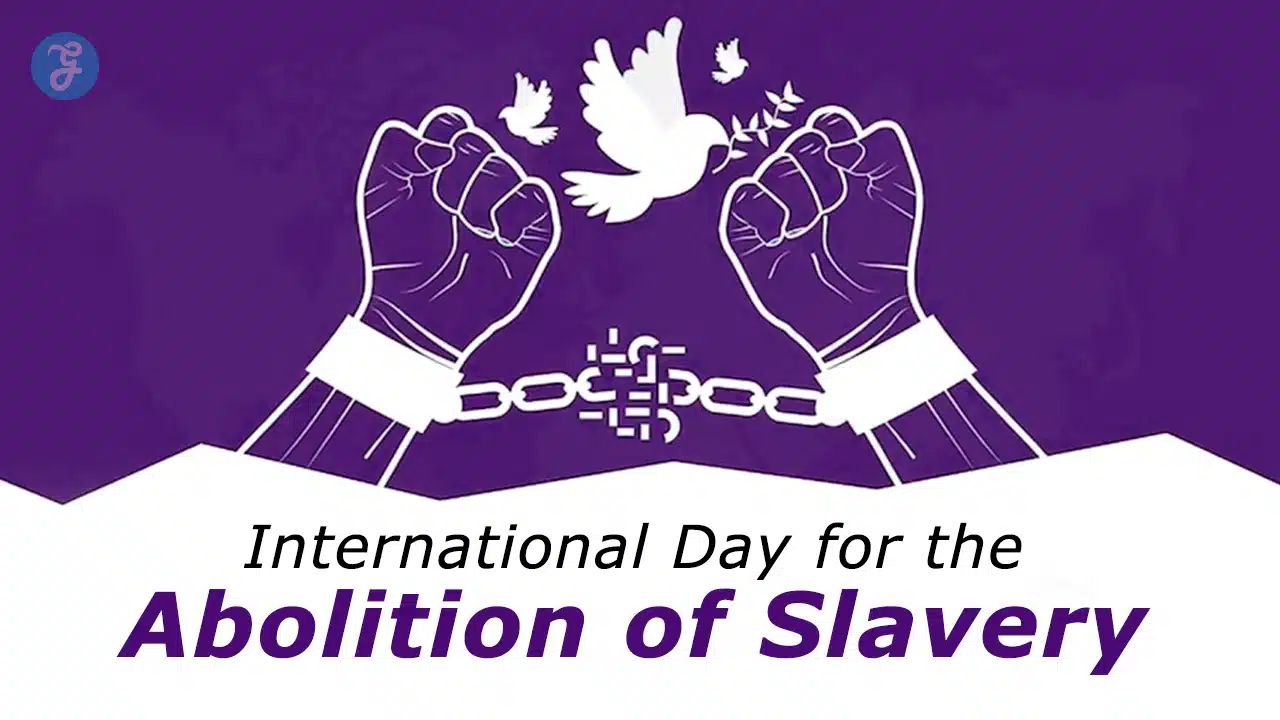
The International Day for the Abolition of Slavery, observed on December 2 each year, continues to shine a spotlight on a brutal global reality: slavery has not disappeared. It has changed forms, moved underground, expanded across borders, and embedded itself in modern economies. The day serves as both a commemoration of historic abolition efforts and a call to action to eliminate the contemporary systems that still hold millions of people in conditions of exploitation.
While formal chattel slavery ended in many countries during the 19th century—such as the abolition of U.S. slavery in 1865—the United Nations, International Labour Organization (ILO), and countless human rights groups warn that forced labor, human trafficking, and the worst forms of child labor now trap more people than ever in modern history. The persistence of these abuses shows that legal abolition alone is not enough; societies must continuously recognize and confront the evolving mechanisms of exploitation.
Modern slavery today is driven by global inequality, conflict, corruption, discrimination, climate displacement, and lucrative black-market supply chains. These factors create ideal conditions for traffickers, exploitative employers, and criminal networks to prey on vulnerable individuals—often without facing meaningful accountability. The International Day for the Abolition of Slavery aims to deepen global awareness of these realities and reinforce the world’s commitment to human dignity and freedom.
Understanding Modern Slavery in 2025
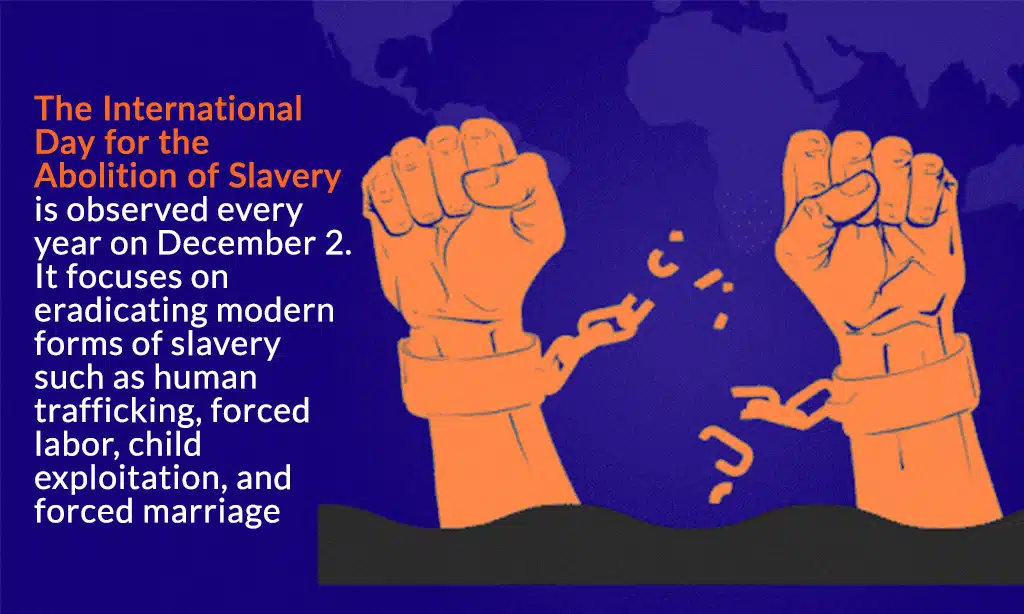
Modern slavery in 2025 reflects a global system of exploitation that adapts rapidly to economic and social pressures. Criminal networks now use sophisticated digital tools, encrypted communication, and social media recruitment strategies to identify and control victims. Many cases remain invisible because victims often operate in private settings—such as homes, small workshops, or remote agricultural fields—where oversight is minimal.
Modern slavery also intersects with global economic demands. The rise of fast production cycles, cheap goods, and labor outsourcing has intensified pressure on vulnerable workers. This environment allows unscrupulous employers to exploit people through wage theft, unsafe working conditions, and debt bondage, often under the guise of legitimate employment. For millions, these conditions leave no realistic choice but to submit to exploitation.
How Slavery Has Evolved Beyond Physical Chains
Modern slavery is not defined in a single legal statute. Instead, it is understood as an umbrella term encompassing multiple forms of exploitation that restrict freedom through coercion, threat, deception, violence, or abuse of power. In many cases, victims appear to be working voluntarily, but unseen pressure, manipulation, or debt bondage prevents them from leaving.
Forced Labor: The Engine of Illicit Global Profit
Forced labor remains one of the most common and profitable forms of modern slavery. As of 2021, more than 27.6 million people were trapped in forced labor worldwide. Victims work across diverse sectors, including:
- Agriculture and fishing, where exploitative seasonal work, debt bondage, and passport confiscation are common
- Construction and mining, involving dangerous conditions and withholding of wages
- Garment and textile factories, often outsourcing labor to clandestine workshops
- Domestic work, where migrant workers face isolation, abuse, and restrictions on movement
- Hospitality, food processing, and cleaning services, where invisible labor fuels everyday conveniences
- Forced prostitution and sexual exploitation, particularly targeting women and girls
Many forced labor victims are migrants who pay large recruitment fees, only to be trapped by debt when employers seize their identification documents or manipulate work contracts. Threats of deportation or harm against family members are commonly used to maintain control.
Child Labor: A Violation of Rights and Childhood
Child labor continues to undermine the lives of millions. Globally, one in ten children is involved in work that is dangerous, exploitative, or interferes with education. The worst forms of child labor include:
- Hazardous agricultural work
- Brick kilns and mining
- Domestic servitude
- Trafficking for begging or illegal activities
- Commercial sexual exploitation
These practices violate the fundamental principle recognized by the UN Convention on the Rights of the Child: that children must be protected from economic exploitation and conditions harmful to their development.
Human Trafficking: A Transnational Crime Fueled by Demand
Human trafficking involves recruitment, transportation, harboring, or receipt of people for exploitation, using force, coercion, or deception. Traffickers often use false job offers, manipulation, or emotional abuse to lure victims into exploitative circumstances.
Trafficking includes:
- Sexual exploitation
- Forced labor
- Forced marriage
- Slavery-like practices
- Organ removal
- Exploitation of children without any need for proven coercion
Trafficking networks operate internationally, but domestic trafficking—where victims are exploited within their own country—remains prevalent and often overlooked.
Global Trends and Alarming Growth
The rise of modern slavery is not only a humanitarian crisis—it is a reflection of major shifts in global systems. Increased migration flows, economic downturns, and inflation have pushed more people into risky labor markets. Criminal groups capitalize on instability by expanding trafficking routes and building coordinated networks that cross continents.
Meanwhile, international enforcement remains inconsistent. In many regions, anti-trafficking laws exist but are poorly implemented due to corruption, lack of training, or limited resources. Even when victims are rescued, few perpetrators face long-term consequences, creating a cycle of exploitation that repeats generation after generation. As global supply chains grow more complex, tracing the origin of goods becomes increasingly difficult, allowing forced labor to infiltrate mainstream marketplaces.
Why Modern Slavery Is Increasing Instead of Declining
Despite decades of international commitments, modern slavery has increased significantly in the past five years. ILO estimates released in 2022 show:
- 50 million people were living in modern slavery in 2021
- 10 million more people were enslaved compared to 2016
- 27.6 million were in forced labor
- 22 million were in forced marriage
This growth reflects structural global issues, including:
Economic Inequality and Global Supply Chains
Rapid globalization has created vast supply chains that rely on cheap, flexible labor. In many cases, subcontracting and informal labor markets hide exploitation from regulatory oversight.
Conflict, Climate Change, and Displacement
Armed conflict and natural disasters force millions into migration, where traffickers exploit their instability. Climate-induced displacement particularly increases risks for indigenous communities, rural populations, and low-income families.
Gender Discrimination and Social Vulnerability
Women and girls continue to face higher risks, especially in domestic work and sexual exploitation. Marginalized social groups—such as low-caste communities, ethnic minorities, and undocumented migrants—face systemic discrimination that traffickers exploit.
Digital Platforms and Criminal Adaptation
Traffickers increasingly use social media and online recruiting platforms to identify, groom, and control victims. Cryptocurrency and online marketplaces also make illicit profits harder to trace.
Who Is Most Vulnerable to Modern Slavery?
Vulnerable populations face heightened risks because they lack access to legal protection, financial stability, or social support. Women fleeing domestic violence, for example, are frequently targeted by traffickers who offer fraudulent job opportunities. People with limited education or literacy face exploitation simply because they cannot read contracts, understand labor laws, or recognize deceptive employment offers.
Additionally, rapid urbanization in developing regions has created vast informal economies where regulation is weak. Day laborers, undocumented migrants, and displaced families often depend on employers who take advantage of their desperation. Without proper identification, social standing, or community networks, these individuals become easy targets for traffickers and exploiters.
How Exploitation Targets Those with the Least Protection
Modern slavery does not impact all groups equally. Vulnerability is shaped by social, economic, and cultural conditions.
Groups at Highest Risk
- Indigenous peoples and tribal minorities facing discrimination and limited legal protections
- Low-caste groups subject to traditional forms of bonded labor
- Women and girls, who make up the majority of sexual exploitation victims
- Children, especially those in impoverished or unstable environments
- Migrants and refugees, often lacking legal status or labor protections
- People with disabilities or mental illness, who are easily manipulated or isolated
In many cases, victims do not self-identify because coercion is psychological as much as physical. Shame, fear, and distrust of authorities further isolate them.
Historical Background of the Observance
The observance of December 2 has deep historical roots in the global fight for human freedom. While the 1949 UN Convention focused on eradicating prostitution-related exploitation, the broader movement against slavery dates back centuries and was shaped by abolitionist struggles, resistance movements, and landmark human rights declarations.
Over time, the meaning of abolition has expanded to include not just legal freedom but freedom from exploitation, coercion, and systemic inequality. The UN’s ongoing recognition of this day reinforces the idea that slavery is not confined to any one era. It highlights the need to continuously evolve solutions as new forms of exploitation emerge.
Tracing the Global Commitment to Ending Slavery
The International Day for the Abolition of Slavery originates from early UN efforts to address human exploitation after World War II.
Key Milestones
- 1949 – Adoption of the UN Convention for the Suppression of the Traffic in Persons and the Exploitation of the Prostitution of Others
- 1985 – A UN Working Group recommended that December 2 be recognized globally as World Day for the Abolition of Slavery
- 1995 – The observance became widely known as the International Day for the Abolition of Slavery
- 2004 – International Year to Commemorate the Struggle Against Slavery and Its Abolition
- 2007 – Marking 200 years since the abolition of the transatlantic slave trade
- Annual August 23 observance – Remembering the history and legacy of the global slave trade
UN Symbolism
The UN emblem—featuring a world map surrounded by olive branches—often appears in educational and awareness materials marking December 2. It symbolizes peace, global unity, and collective responsibility.
How the World Observes the Day
Many communities use this day to amplify marginalized voices and give survivors a platform to share their experiences. Their testimonies provide powerful insight into the psychological manipulation, violence, and deprivation that define modern slavery. Public institutions also use the day to release new research, policy proposals, and statistics that help shape national and international responses.
Beyond awareness, the day encourages practical engagement. Some cities host art installations or public vigils honoring victims who lost their lives to trafficking. Universities often collaborate with NGOs to train students on human rights monitoring, while workplaces hold sessions to educate employees about ethical sourcing and exploitation within global industries.
Public Awareness, Education, and Advocacy
The International Day for the Abolition of Slavery is not a public holiday, but it generates widespread activity across media, educational institutions, governments, and civil society.
Educational and Public Engagement
- Schools review the history of the slave trade and its modern evolution
- Universities host lectures, panel discussions, and awareness campaigns
- Community groups distribute flyers, fact sheets, and posters
- Survivors share their experiences to empower advocacy and healing
Media Coverage
Newspapers, broadcasters, and online platforms highlight stories on:
- Human trafficking investigations
- Labor exploitation in supply chains
- Survivor testimonies
- Policy failures and reforms
- Global trends in forced labor
Documentaries commonly recommended for awareness include:
- Born into Brothels
- The Storm Makers
- Slavery: A 21st Century Evil
Political Engagement
Government officials, ministers, senators, and human rights agencies use the day to reaffirm commitments and urge the public to help eradicate modern slavery.
What Individuals Can Do to Help
Individual action plays a crucial role in confronting modern slavery. People can begin by examining the supply chains behind the products they buy—whether clothing, electronics, chocolate, or seafood—to ensure their choices do not support exploitative labor systems. Becoming aware of common trafficking tactics also empowers individuals to recognize warning signs in everyday situations, from suspicious recruitment ads to signs of coercion in local businesses.
Communities can strengthen prevention efforts by supporting programs that offer safe housing, legal aid, education, and job training for at-risk populations. Providing opportunities to vulnerable individuals reduces the likelihood that they will fall into exploitative situations. Speaking openly about the issue also helps reduce stigma, encouraging more victims to come forward.
Taking Personal Action to End Exploitation
Everyone has a role in combating modern slavery.
Learn to Recognize the Signs
Common indicators include:
- Restricted movement
- Withheld wages
- Confiscated passports
- Fearful behavior
- Signs of physical abuse
- Long work hours with no breaks
Be a Responsible Consumer
Avoid companies known for forced or child labor in:
- Clothing
- Electronics
- Agriculture
- Seafood
Support Community Efforts
Join or donate to local anti-trafficking groups. Support shelters, legal assistance programs, and organizations working to protect vulnerable communities.
Engage with Leaders
Ask representatives what policies they support to:
- Strengthen labor inspections
- Protect migrant workers
- Enhance survivor services
- Punish traffickers more effectively
Listen to Survivors
Survivor-led organizations provide crucial insights into the systems that allow exploitation to flourish.
Why the Day Remains Essential in 2025
In 2025, the importance of the International Day for the Abolition of Slavery lies in its ability to connect the past with the urgent challenges of the present. As global crises—from pandemics to climate change—reshape labor markets and deepen inequality, more people are pushed into exploitable conditions. The day underscores the need for stronger international cooperation at a time when traffickers operate with unprecedented sophistication.
It also reminds societies that freedom is not guaranteed by law alone. True abolition requires education, enforcement, economic reform, and cultural change. By keeping this observance active, the world acknowledges that every generation bears responsibility for safeguarding human dignity and ensuring that no form of exploitation is tolerated.
A Renewed Global Call for Freedom and Justice
The International Day for the Abolition of Slavery remains essential because modern slavery is increasing—not declining. Despite global awareness, economic pressure, political instability, and expanding illicit markets have heightened the risks for millions.
Forced labor profits now reach record levels, creating powerful financial incentives for criminal networks. Meanwhile, many victims remain hidden in private homes, informal work sites, and digital spaces.
December 2 serves as a global reminder of the ongoing struggle and reinforces the principle that freedom is a fundamental human right. Ending modern slavery requires continual vigilance, stronger laws, international cooperation, corporate responsibility, and public education.
Above all, it demands recognition that exploitation is not a relic of the past—it is a present-day crisis requiring urgent action.
Final Thoughts
The International Day for the Abolition of Slavery is more than an annual observance—it is a global reminder that freedom is still out of reach for millions. Modern slavery has evolved in its methods but not in its cruelty. Whether through forced labor, human trafficking, child exploitation, or coercion in the workplace, exploitation thrives wherever inequality, conflict, and indifference persist.
As the world becomes more interconnected, the responsibility to protect vulnerable populations grows stronger. Governments must strengthen laws and enforce them, companies must ensure ethical supply chains, and communities must stay informed and vigilant. Most importantly, individuals must recognize that their actions—whether through advocacy, conscious purchasing, or awareness—carry real power.
The fight against modern slavery demands persistence, empathy, and global cooperation. On this day and every day, the call to action remains clear: freedom, dignity, and justice must be upheld for all people, everywhere.