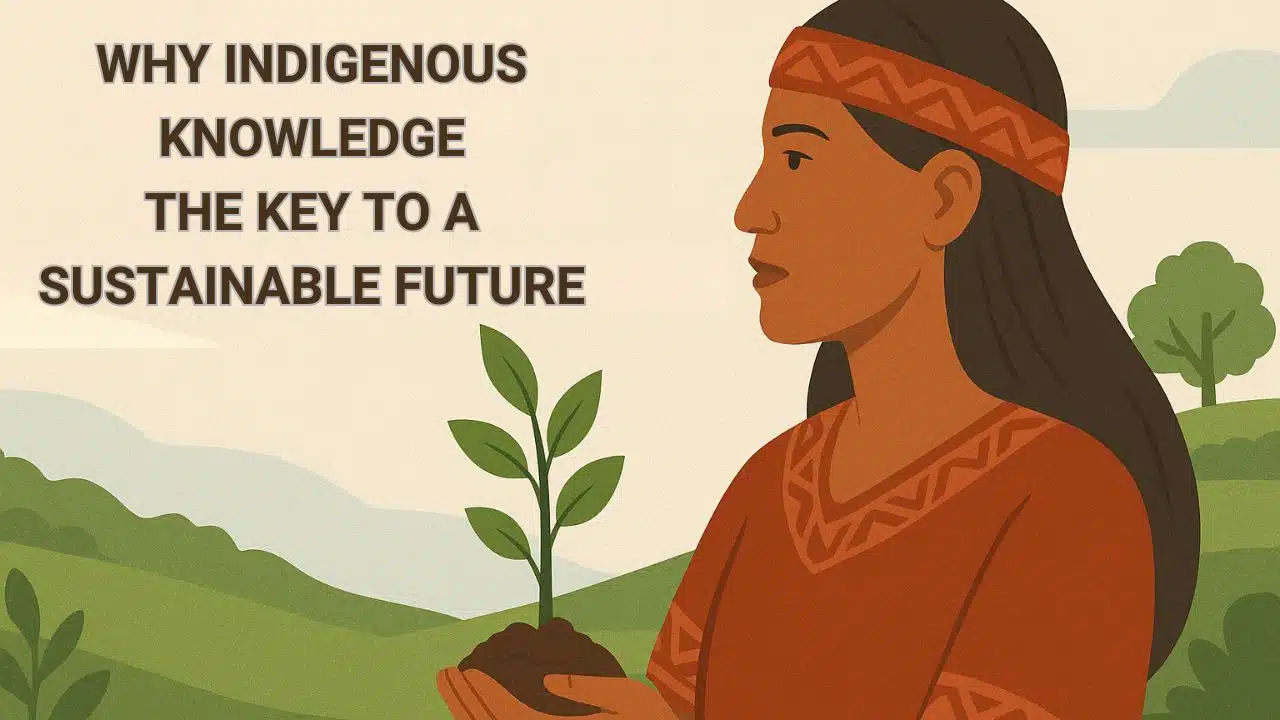
Today, August 9, is International Day of the World’s Indigenous People—a global observance that honors the rights, cultures, and contributions of Indigenous communities. This year’s celebration reminds us that Indigenous peoples are not just keepers of tradition; they are guardians of the Earth’s future.
Around 476 million Indigenous people live across more than 90 countries, representing over 5,000 cultures and speaking 7,000 languages. They manage or influence 80% of the world’s biodiversity-rich lands, offering time-tested solutions to modern environmental problems.
As the world faces climate change, biodiversity loss, and resource scarcity, Indigenous knowledge—passed down through generations—is proving to be a key ingredient in building a sustainable future. Their deep connection with nature, holistic worldviews, and sustainable living practices can inspire and guide us toward environmental balance.
What Is Indigenous Knowledge?
Indigenous knowledge, sometimes called traditional ecological knowledge (TEK), is the wisdom, skills, and practices developed by Indigenous peoples over thousands of years. It is not stored in textbooks alone but is woven into oral traditions, cultural rituals, seasonal calendars, and hands-on experience.
While Western science often focuses on analyzing parts of a system, Indigenous knowledge sees the whole ecosystem—connecting plants, animals, people, and the climate as one interdependent network. It is adaptable, community-driven, and rooted in respect for natural resources.
| Feature | Indigenous Knowledge | Western Science |
|---|---|---|
| Approach | Holistic, interconnected | Specialized, segmented |
| Transmission | Oral traditions, lived experience | Written records, formal education |
| Goal | Harmony with nature | Understanding, control, innovation |
Living in Harmony with Nature
For Indigenous peoples, nature is not just a resource—it is a living partner. This belief shapes their hunting, fishing, farming, and housing methods to work with the environment, not against it.
-
Amazonian Agroforestry: Indigenous farmers in the Amazon create “forest gardens” that mix crops with wild plants, attracting pollinators and preventing soil depletion.
-
Maasai Livestock Management: The Maasai in East Africa rotate grazing lands to avoid overuse, giving pastures time to recover.
-
Inuit Navigation: Inuit hunters use generations-old knowledge of sea ice patterns to travel safely and sustainably in the Arctic.
Such practices help maintain biodiversity, ensure food security, and preserve ecological balance—all without the heavy footprint of industrial methods.
Indigenous Strategies for Climate Resilience

Many Indigenous practices are natural climate change solutions that modern science is now recognizing.
-
Fire Management in Australia: Aboriginal “fire-stick farming” uses controlled, low-intensity burns to reduce wildfire risks, promote regrowth, and protect wildlife.
-
Water Conservation in the Andes: The Inca and modern Quechua communities use stone terrace farming to conserve water, prevent erosion, and grow crops in high altitudes.
-
Seed Preservation in India: Tribal farmers store seeds of drought-resistant crops, ensuring future harvests despite changing rainfall patterns.
By integrating such traditional methods into national climate policies, governments could improve disaster preparedness, reduce carbon emissions, and support sustainable agriculture.
Guardians of the World’s Biodiversity
Indigenous territories often overlap with the planet’s richest ecosystems, making Indigenous peoples frontline defenders of biodiversity.
-
Amazon Rainforest Tribes: Protect millions of acres of forest from illegal logging and mining.
-
Pacific Islander Coral Reef Care: Use traditional fishing limits and seasonal bans to keep reef ecosystems healthy.
-
Canadian First Nations Forest Stewardship: Manage forests using selective logging and species diversity planting to prevent disease spread.
| Ecosystem | Region | Indigenous Practice | Impact |
|---|---|---|---|
| Rainforest | Amazon | Mixed-species planting | Boosts biodiversity, soil health |
| Coral Reef | Pacific Islands | Seasonal fishing bans | Protects fish populations |
| Boreal Forest | Canada | Selective harvesting | Maintains ecosystem balance |
Threats to Indigenous Knowledge

Despite its value, Indigenous knowledge faces serious threats:
-
Land Dispossession: Mining, deforestation, and infrastructure projects displace Indigenous communities from their ancestral lands.
-
Language Loss: With each language that disappears, unique environmental knowledge is lost forever.
-
Marginalization in Decision-Making: Policies often ignore Indigenous voices, leading to unsustainable development.
-
Climate Impacts: Rising sea levels, deforestation, and extreme weather hit Indigenous lands hardest.
Protecting Indigenous rights is not just a moral duty—it’s a climate and sustainability necessity.
Bridging Indigenous Knowledge and Modern Science
Collaboration between Indigenous knowledge holders and scientists can lead to powerful environmental solutions:
-
Canada’s Co-Managed National Parks: Indigenous communities share decision-making with government agencies.
-
New Zealand Māori Resource Management: Māori principles guide forest, river, and fishery policies.
-
UN’s Sustainable Development Goals: Increasing inclusion of Indigenous perspectives in climate action planning.
For these partnerships to work, ethical safeguards like Free, Prior, and Informed Consent (FPIC) must ensure Indigenous communities benefit fairly.
How to Support Indigenous-Led Sustainability
Individuals, organizations, and governments can:
-
Promote Land Rights—Recognize Indigenous territories in national law.
-
Support Indigenous Conservation Projects—Fund grassroots programs.
-
Learn and Share Indigenous Stories—Use education to preserve languages and knowledge.
-
Amplify Indigenous Voices—Include representatives in climate conferences.
-
Blend Science and Tradition—Encourage research that values cultural context.
Takeaways
On this International Day of the World’s Indigenous People, we are reminded that sustainability is not a new concept—it is a way of life that Indigenous peoples have practiced for thousands of years.
Their deep respect for the Earth, their skill in living within natural limits, and their ability to adapt to changing conditions offer valuable lessons for all of humanity.
If we truly want a sustainable future, we must learn from, partner with, and protect the communities that have been sustaining our planet long before modern environmentalism was born.