Ever had a cough that just wouldn’t quit, making you wonder if it’s something more serious? You’re not the only one. Pneumonia, a serious respiratory infection, is a major cause of sickness and death, especially in young children and older adults across the globe.
This is why we mark World Pneumonia Day every year on November 12th.
I’m here to walk you through some of the most important facts about this day and the illness it highlights. Together, we’ll explore why it’s so critical to pay attention, what the numbers really mean, and the simple steps that can keep you and your loved ones safe.
Key Takeaways
- According to the Global Burden of Disease study, pneumonia claimed 2.5 million lives in 2023, including 610,000 children under five.
- World Pneumonia Day, held on November 12th, is a global event to raise awareness and advocate for better prevention and treatment.
- The vast majority of childhood pneumonia deaths occur in low- and middle-income countries, with South Asia and West and Central Africa having the highest rates.
- Vaccines, like the pneumococcal conjugate vaccine (PCV), are highly effective at preventing bacterial pneumonia, but access remains a challenge in many areas.
- Simple prevention methods like handwashing, good nutrition, clean air, and breastfeeding are powerful tools in the fight against this respiratory infection.
Why is World Pneumonia Day Important?
Pneumonia is the single largest infectious killer of children worldwide. In 2023 alone, this respiratory infection was responsible for the deaths of 610,000 children under the age of five. While it can affect anyone, babies and the elderly are at the highest risk.
Despite these staggering numbers, many people don’t realize how common and deadly pneumonia can be. That’s where World Pneumonia Day comes in.
Every November 12th, organizations like the Every Breath Counts Coalition work to shine a light on this silent killer. They use this day to educate families and communities about prevention, recognizing symptoms like a cough or fast breathing, and the importance of quick treatment with antibiotics or oxygen therapy.
The theme for World Pneumonia Day 2025 is “Child Survival,” recognizing that pneumonia remains the leading infectious cause of death in children.
Health groups and families worldwide unite to demand better access to care for every child, no matter where they live. This day serves as a powerful call to action, driving awareness so that fewer lives are lost to an illness that is both preventable and treatable.
What Are the Key Statistics About Pneumonia Worldwide?
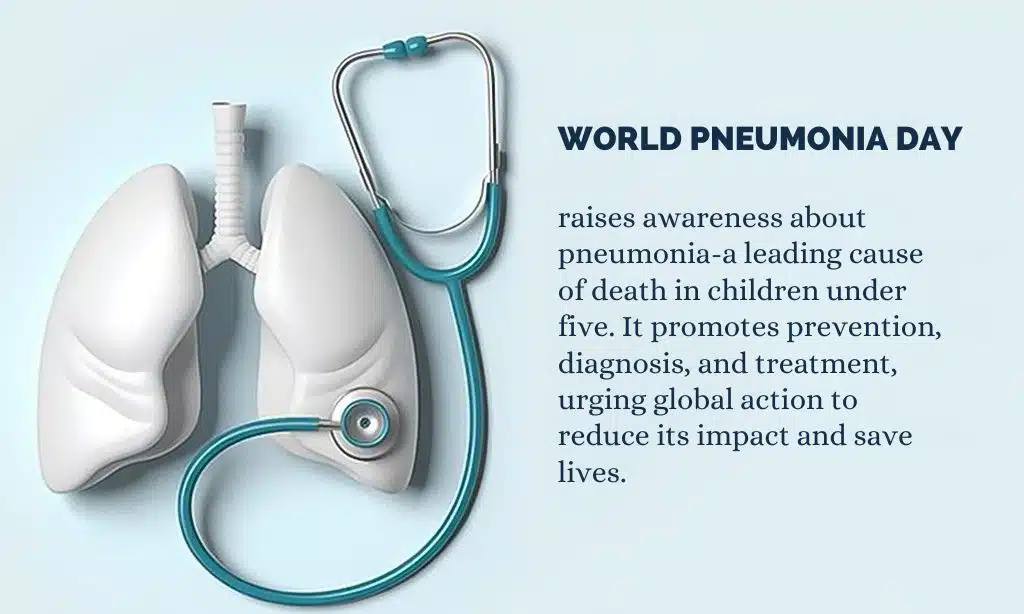
The numbers behind pneumonia are truly eye-opening. These facts paint a clear picture of how this respiratory infection impacts people of all ages across the globe.
| Fact | Details |
|---|---|
| Total deaths yearly | According to the Global Burden of Disease study, pneumonia was responsible for 2.5 million deaths in 2023. This includes adults and children. |
| Children under five | It is the top infectious cause of death for children under five, claiming 610,000 lives in 2023. That’s about one child every 51 seconds. |
| High-burden regions | The highest rates of childhood pneumonia are found in South Asia and West and Central Africa. Countries like India and Nigeria face a particularly heavy burden. |
| Elderly risk | Adults over the age of 70 are also at very high risk, and more than a quarter of pneumonia deaths in this age group are linked to air pollution and smoking. |
| Common causes | The bacteria Streptococcus pneumoniae is the most frequent cause of bacterial pneumonia in kids, while respiratory syncytial virus (RSV) is the most common viral cause. |
| Hospital admission | In the U.S., there were 1.4 million emergency room visits related to pneumonia in 2021. Severe cases often require hospitalization and sometimes intensive care. |
| Costs | The total cost for pneumonia care in the United States reached $18.9 billion in 2021. For a single patient with major complications, the average hospital bill can exceed $20,000. |
| Preventable cases | Experts at UNICEF and the World Health Organization (WHO) stress that most of these deaths are preventable through vaccination, adequate nutrition, and access to antibiotics and clean water. |
| Vaccines | The pneumococcal conjugate vaccine (PCV) is highly effective. Studies have shown PCV13 can reduce vaccine-type invasive disease by up to 96% in children and 75% in adults over 65. |
How Can Pneumonia Be Prevented and Vaccinated Against?
Stopping this respiratory infection before it starts is key. A combination of powerful vaccines and healthy habits can save lives, especially for the most vulnerable among us.
- Get vaccinated. Immunizations against bacteria like Streptococcus pneumoniae and Haemophilus influenzae type b (Hib) are the most effective way to prevent pneumonia. The WHO recommends these shots for all infants.
- Wash your hands. It’s a simple but powerful habit. Washing hands with soap and water for at least 20 seconds can significantly reduce the spread of germs that cause respiratory illnesses.
- Watch for key symptoms in children. A tell-tale sign of pneumonia in children under five is fast breathing or “lower chest wall indrawing,” where the chest retracts during inhalation. If you see this, seek medical help right away.
- Avoid cigarette smoke. Smoke damages the lungs’ natural defenses, making it easier to get sick. Keeping children away from secondhand smoke is crucial for their respiratory health.
- Promote breastfeeding. The WHO reports that exclusively breastfeeding babies for their first six months provides essential antibodies that boost their immune systems and help protect them from infections.
- Improve indoor air quality. The WHO has found that household air pollution from cooking with fuels like wood or charcoal is responsible for almost half of all pneumonia deaths in young children. Using cleaner cookstoves and ensuring good ventilation makes a huge difference.
- Use antibiotics wisely. Antibiotics are life-savers for bacterial pneumonia, but they don’t work on viruses. Only take them when prescribed by a doctor to help fight antibiotic resistance.
- Eat a healthy diet. Good nutrition is fundamental to a strong immune system. A balanced diet helps your body defend itself against all kinds of illnesses, including this one.
- Spread awareness. Health education campaigns that teach parents and caregivers to spot early warning signs, like fast breathing or chest pain, ensure that people seek help quickly when symptoms appear.
Takeaways
World Pneumonia Day is more than just a date on the calendar; it’s a crucial reminder about a respiratory infection that impacts millions. By understanding these nine facts, we can all see the incredible value of prevention, vaccination, and timely treatment.
Every action, whether it’s washing your hands, getting a flu shot, or simply sharing this information, contributes to a healthier community. What you do today can truly help protect someone tomorrow.
FAQs on World Pneumonia Day
1. What is World Pneumonia Day, and why does it matter?
World Pneumonia Day is observed every year on November 12 to bring attention to the world’s leading infectious killer of children and adults. It matters because pneumonia is a preventable and treatable disease that still claims millions of lives, and this day encourages global action to fight it.
2. How does World Pneumonia Day help save lives?
This day helps save lives by promoting proven prevention strategies, like the pneumococcal conjugate vaccine (PCV), and by educating communities on early warning signs like rapid breathing. Greater awareness leads to better access to treatments, including essential antibiotics that can cure bacterial pneumonia.
3. Who started World Pneumonia Day, and when did it begin?
World Pneumonia Day was established in 2009 by the Global Coalition Against Child Pneumonia to raise awareness and unite efforts in combating the disease.
4. What are some key facts I should remember about pneumonia from this special day?
A critical fact is that pneumonia accounts for 14% of all deaths in children under five, making it the single largest infectious cause of death in this age group worldwide. Despite this, it can often be treated with low-cost antibiotics and prevented through vaccines, good nutrition, and by reducing air pollution.