
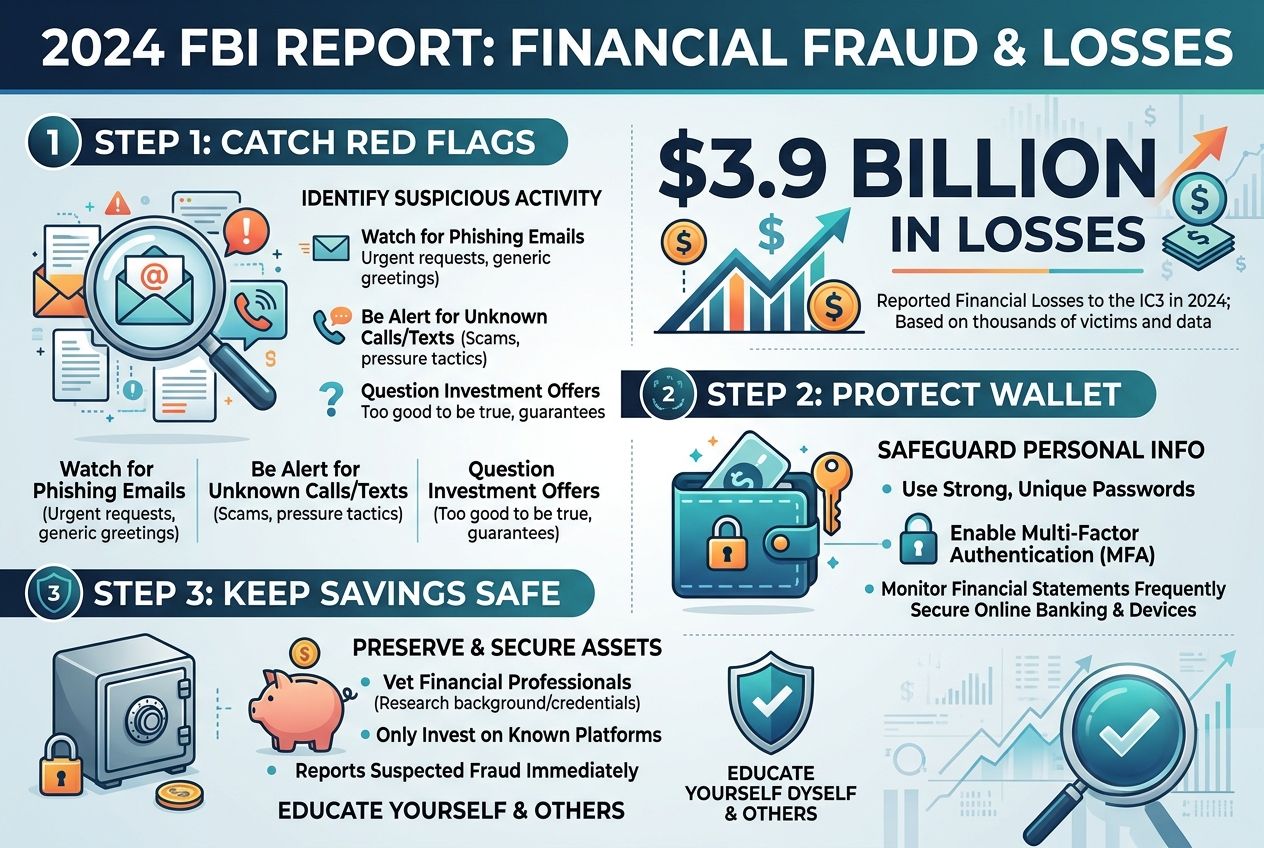
Have you ever felt a pit in your stomach about a shiny new digital investment? You see a tempting offer online, flashing massive numbers and the promise of quick profits. Maybe a friend is bragging about earning thousands in just a few days. But deep down, something feels off. You are completely right to trust your gut. Scammers are experts at hiding the truth, and they cost Americans billions of dollars every single year. A recent 2024 FBI report revealed that investment fraud involving digital assets caused over $3.9 billion in losses in the US alone.
I am going to walk you through exactly how to spot a crypto scam before it’s too late. We will cover how to catch the red flags early, protect your wallet, and keep your hard-earned savings safe. Grab a cup of coffee, and let’s go through it together.
Understanding Cryptocurrency Scams
Crypto fraud is growing incredibly fast. Scammers develop smarter tricks every single day to separate you from your money. Spotting red flags early can save your digital assets from vanishing into thin air.
What is a cryptocurrency scam?
A cryptocurrency scam tricks you into sending money or digital assets with fake promises. Criminals might ask for your Bitcoin or Ethereum by guaranteeing high returns that never actually arrive. They build fake websites and use stolen photos on social media to earn your trust fast.
Here are the most common things they want from you:
- Your wallet seed phrase, which acts as the master key to your funds.
- Direct transfers of cryptocurrency to their personal blockchain addresses.
- Access to your computer through remote desktop software like AnyDesk.
- Your personal identity documents for fake verification processes.
If an offer sounds too good to be true, it almost certainly is. Their main goal is to drain your account before you realize what happened.
Why are cryptocurrencies targeted by scammers?
Digital assets move incredibly fast across borders. Scammers love this speed because they can disappear before local authorities can intervene. Transactions stay permanently on the blockchain, but users do not have to reveal their legal names.
This anonymity gives criminals a perfect place to hide in plain sight. Local police often hit dead ends when tracing these crimes, and many cases are dropped due to a lack of physical clues. Law enforcement faces tough hurdles trying to track funds moving through international digital wallets.
A 2024 FBI warning highlighted that unregulated markets act like magnets for thieves. They offer a quick way to steal millions without much risk of getting caught.
Why Cryptocurrency Attracts Scammers
Scammers flock to cryptocurrency because they know the system is incredibly difficult to police. The technology masks their tracks and gives them plenty of room to operate.
Lack of regulation
Many digital assets lack strong consumer protections in the US. The Securities and Exchange Commission (SEC) frequently warns that many crypto projects operate without proper legal registration. This means no official watchdog is checking if a platform is honest before you invest your savings.
“Without clear consumer protections, scammers operate freely. If a platform vanishes tomorrow, investors have no government safety net to recover their funds.”
Some fake sites pop up for a single month, steal millions of dollars, and vanish completely. Investors face extreme risks because there is rarely a customer service hotline to call when a transaction goes wrong.
Anonymity of transactions
Digital assets rely on blockchain technology to process every transfer. While the blockchain is a public ledger, it only displays a random string of numbers and letters instead of a real person’s name. Bad actors take full advantage of this privacy layer.
They use special software called “mixers,” like Tornado Cash, to scramble the path of stolen funds. This makes it extremely tough for law enforcement to trace the money back to a physical person. Blockchains like Bitcoin and Ethereum do not link home addresses or phone numbers to wallets.
Spotting red flags early is your absolute best defense. Once your money moves down these digital rabbit holes, recovering it is incredibly rare.
Common Types of Crypto Scams
Some scams look totally professional on the surface but hide dirty tricks underneath. These traps fool both new and highly experienced investors every day.
Fake investment platforms
Fake investment platforms look just like real trading sites, complete with slick price charts and fake customer reviews. They make big promises of high returns to get you to deposit your money quickly. A common tactic right now is “liquidity mining” fraud.
Scammers guarantee a steady passive income if you link your wallet to their fake platform. Once you connect and deposit your funds, they instantly drain your account and shut down the website. Scam trackers show billions are lost to these fake domains every single year.
Always verify a company’s executive team and official contact information. Real companies operate with total transparency, while fakes hide behind walls of secrecy.
Phishing scams
Phishing scams use fake emails and websites to steal your confidential login details. Scammers send urgent messages pretending to be trusted companies like Coinbase or MetaMask. They ask you to click a link to verify your account or stop a fake unauthorized withdrawal.
They usually use these sneaky methods:
- Sending fake emails that look exactly like official security alerts.
- Running malicious ads at the very top of search engine results.
- Tricking you into signing malicious smart contracts to drain your wallet.
If you click and enter your password, they instantly steal your digital assets. A massive threat right now is “approval phishing.” A 2024 Crypto Crime Report from Chainalysis showed that approval phishing drained $374 million from victims in just one year.
Fraudsters use dating apps and social media to build fake relationships over several weeks or months. This tactic is widely known as “pig butchering” because the scammer fattens up the victim with affection before stealing their money. They share a sad personal story or brag about their luxurious lifestyle.
Watch out for these specific behaviors:
- Moving the conversation quickly from a dating app to encrypted texting.
- Constantly talking about their wealthy and successful crypto mentor.
- Refusing to meet in person or join a live video call.
Once you trust them, they push you to invest your cash on a fake crypto platform. A 2024 study from the University of Texas estimated these specific scams have stolen over $75 billion globally since 2020.
Ponzi and pyramid schemes
Ponzi schemes pay older investors using the fresh cash collected from new recruits. They promise high returns with zero risk, which is a massive red flag in any financial market. You will often see wild claims that you can double your cryptocurrency fast.
Pyramid schemes force you to recruit your friends and family to earn a payout. The entire system crashes the moment new people stop joining, leaving everyone at the bottom with empty pockets. Recent high-profile busts resulted in massive losses for everyday people.
Be extremely careful if an investment requires you to bring in new members to see a profit. Scammers love using those lines as bait for fraud.
Impersonation of legitimate businesses
Criminals create fake social media accounts that look exactly like the official support pages for major financial brands. They set up phishing websites to trick you into giving away your digital assets.
You will typically spot them on these platforms:
- Twitter or X, replying directly to your technical support questions in seconds.
- Fake Facebook groups pretending to be official company communities.
- Discord servers offering exclusive, VIP investment tips.
They will offer to help you by asking for your private seed phrase. Real customer support will never ask for your passwords or wallet recovery words.
How To Spot A Crypto Scam Before It’s Too Late: Warning Signs
Keep your eyes peeled for anything that seems a little too perfect. If alarm bells start ringing in your head, pause and double-check the facts before you send any digital assets.
Unrealistic promises of high returns
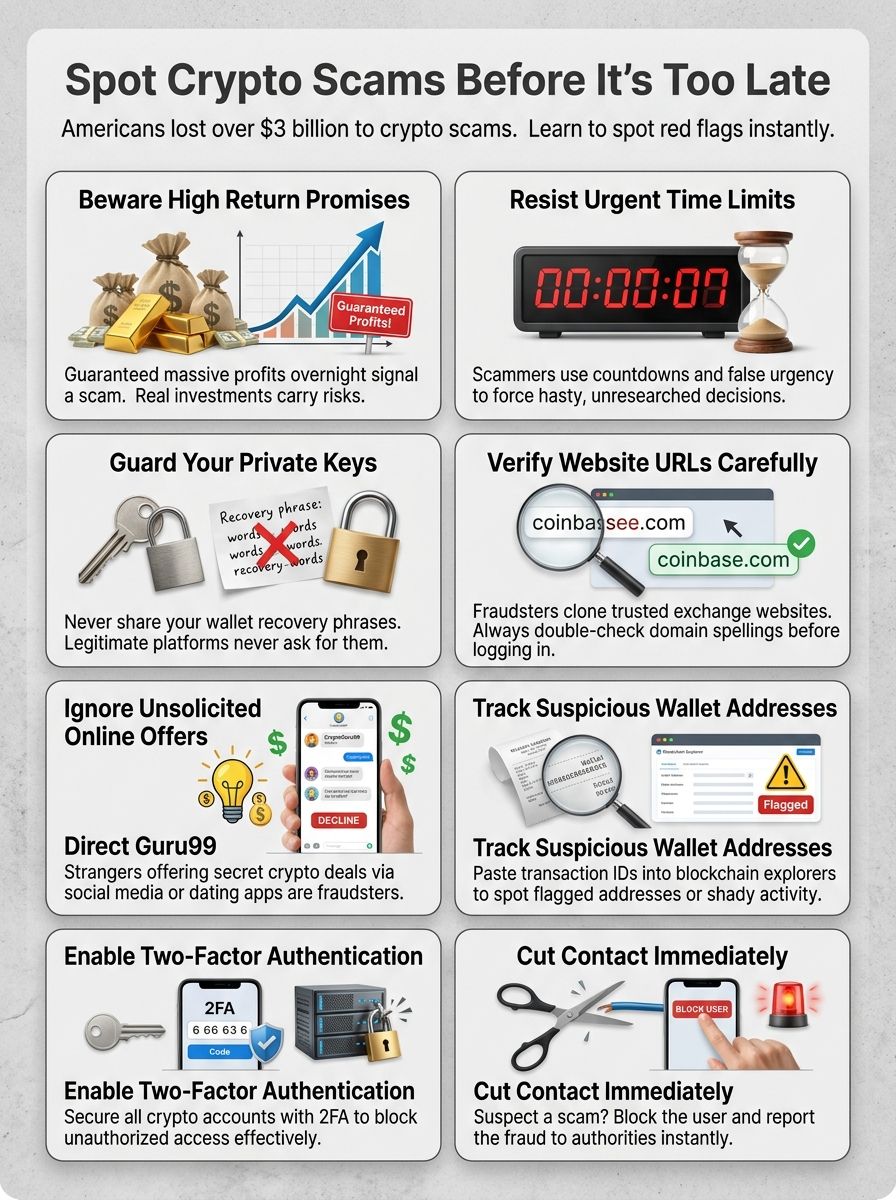
Promises of huge, guaranteed returns are the loudest warning signs of a scam. If a stranger claims you can earn 1% daily with absolutely no risk, you should walk away immediately. Real investments go up and down daily.
Even major assets like Bitcoin experience sudden, serious price drops. Scammers use flashy numbers to trigger your greed and blind you to the very real risks. They often share fake testimonials from people claiming to have made millions from tiny deposits.
Always question any offer that sounds too good to be true. It is almost always a trap designed to steal your money.
Pressure to act quickly
Scammers want you to panic and make a fast choice without thinking clearly. They use countdown timers or claim a special investment deal will expire in just one hour. This tactic creates a severe fear of missing out.
They hope you will rush your decision instead of researching the platform. A legitimate digital assets company will never force you to decide on the spot. If someone pressures you to send funds right now, close the webpage. Safe investments give you plenty of time to read the fine print and understand the risks.
Requests for confidential information
Asking for your private keys is a major red flag. No honest team will ever need those specific details to assist you with an account issue.
They usually ask for things you should never share:
- Your 12-word or 24-word wallet seed phrase.
- Your two-factor authentication backup codes.
- Direct remote access to your laptop or mobile phone.
Some fraudsters also ask for your Social Security number during a fake identity verification process. Real platforms use secure, encrypted methods to verify your identity.
Lack of transparency about the platform or team
Scammers hide their real identities from the public. They use fake names, stolen stock photos, and made-up biographies for their executive team. If you cannot find clear information about the people running a project, you should avoid it.
Search for the founders on LinkedIn to see if they have real, verifiable work histories. Legitimate companies proudly display their team members and physical office locations. You deserve to know exactly who is handling your money before you invest.
Tools and Resources to Identify Scams
There are simple tricks and handy online tools that can help you sniff out fraud before it empties your wallet. Knowing how to use them keeps you a step ahead.
Crypto scam trackers
Crypto scam trackers are powerful tools that help you spot fraud early. These websites collect reports from victims and flag suspicious platforms in real-time. Checking a tracker takes just a few seconds and can save your entire savings account.

| Tool Name | Best Used For |
|---|---|
| Scam Sniffer | Identifying fake websites and blocking malicious smart contracts. |
| Revoke.cash | Checking which apps have hidden permissions to spend your crypto. |
| Better Business Bureau | Reading verified reviews and scam alerts for US-based companies. |
Using these resources gives you a huge advantage against modern fraudsters in the forex and digital asset markets.
Researching wallet addresses and transaction IDs
Scammers leave digital footprints on the public blockchain. You can copy a suspicious wallet address and paste it into a blockchain explorer like Etherscan or Solscan. This tool lets you see every single transaction connected to that specific wallet.
If you see thousands of tiny deposits from random people, that is a huge red flag. It often means the wallet belongs to a scammer collecting funds from multiple victims. Huge sums moving instantly to unknown offshore accounts is another major warning sign. Digging into these details takes a little practice. It is a fantastic way to protect your investments.
Verifying legitimacy through official channels
Always go straight to the source to verify a company. Visit official websites using links from trusted search engines instead of clicking random social media ads. You should also check government databases to see if the company is legally registered to operate.
You should check these official databases:
- The CFTC RED List for unregistered foreign financial entities.
- The SEC EDGAR database for legal US company filings.
- The Better Business Bureau for recent consumer complaints.
If a crypto platform is missing proper licenses, close the tab immediately. Go directly to official newsrooms and look for recent updates about fraud warnings.
Steps to Avoid Falling Victim
You can steer clear of trouble if you pay close attention and take simple safety steps. A little caution goes a very long way in the digital money space.
Educate yourself about cryptocurrency
Scammers prey on people who do not fully understand how digital assets work. You can easily protect yourself by learning the basics of blockchain technology and wallet security. Many trusted platforms offer completely free courses for beginners.
Sites like Binance Academy and Coinbase Learn teach you how to securely manage a crypto wallet. They also explain common fraud tactics like Ponzi schemes and phishing traps in simple terms. The more you understand the technology, the harder it is for a criminal to trick you.
Always verify domain registration dates. If a company claims ten years of experience but registered its website last month, it is a scam.
Only use reputable exchanges and wallets
Choosing a safe platform is the most important decision you will make. Stick to well-known exchanges that have strong security records and millions of active users. Platforms like Coinbase and Kraken must follow strict financial regulations in the US.
For storing your digital assets, hardware wallets offer the best possible protection. Devices like the Ledger Flex or Trezor Safe 5 store your private keys completely offline. This makes it nearly impossible for an online hacker to steal your funds.
Always double-check website addresses before logging in. Small spelling mistakes often mean you are on a phishing site.
Avoid unsolicited investment offers
Ignore random messages about secret crypto investments. Scammers blast out thousands of fake offers every day on platforms like Telegram, Discord, and WhatsApp.
“If a stranger on the internet promises to make you rich, they are actually trying to make themselves rich with your money.”
Most real financial opportunities do not just fall into your lap. Turn off direct messages from strangers on your social media accounts to instantly block these attempts. Keeping your inbox clean is an effective way to avoid temptation and fraud.
Enable two-factor authentication (2FA)
Two-factor authentication adds a vital layer of security to your online accounts. When you log in, the app requires your normal password plus a temporary numerical code. Even if a hacker steals your password, they cannot access your money without that second code.
You should use a dedicated authenticator app like Google Authenticator, Authy, or a physical YubiKey. Avoid using standard SMS text messages for 2FA. Scammers can hijack your phone number through a common “SIM swap” attack. Taking five minutes to set up an authenticator app provides massive peace of mind.
What to Do if You Suspect a Scam
If you spot something fishy, cut ties fast and get professional help. Knowing the right emergency steps can save your remaining funds.
Stop communication immediately
If you feel something is wrong, cut off all contact with the person right away. Block their phone number and report their social media profiles to the platform. Do not try to argue with them or beg for your money back.
Scammers are skilled manipulators who will use extreme guilt or legal threats to keep you talking. They might even demand a fake withdrawal tax to release your frozen funds. Ending the conversation immediately stops them from stealing any more of your personal information. The faster you stop talking to scammers, the safer your funds remain.
Reporting the crime helps law enforcement track down the criminal networks behind these massive operations. In the US, your first step should be filing a detailed report online.
Make sure you contact these agencies immediately:
- The FBI Internet Crime Complaint Center (IC3.gov).
- The Federal Trade Commission (FTC) fraud division.
- Your local state attorney general’s consumer protection office.
The information you provide helps them issue public Scam Alerts to protect other people. Move quickly to notify your bank if you transferred any money directly from a traditional checking account.
Secure your accounts and assets
Change your passwords for all your crypto and banking accounts immediately. Use a reliable password manager to create long, complex passwords that are impossible to guess.
Take these immediate steps to lock down your funds:
- Use a tool like Revoke.cash to remove dangerous smart contract permissions.
- Transfer any remaining digital assets to a brand-new, offline hardware wallet.
- Contact your bank to freeze any connected checking or savings accounts.
Acting fast limits the damage. It is the best way to regain complete control of your finances.
Real-World Case Studies of Crypto Scams
Stories of real scams can open your eyes faster than any generic warning. These examples show that even very smart, experienced adults sometimes fall for sophisticated crypto tricks.
Pig butchering scams
Pig butchering scams are devastating because they steal both your money and your emotional trust. A recent case highlighted by the US Justice Department involved a criminal ring that stole over $73 million from American victims. The scammers spent months texting victims daily, pretending to be wealthy, successful friends.
They convinced people to invest life savings into a trading platform that looked incredibly professional. The victims watched their fake profits grow daily on the digital screen. When they finally tried to cash out, the scammers demanded massive tax payments before disappearing completely. If an online romance quickly turns into aggressive financial advice, block the person immediately.
Fake trading platforms
Fake trading platforms are incredibly convincing today. In a recent bust, federal agents shut down a network of fake crypto exchanges that duped thousands of Americans.

“These websites are designed to look like advanced Wall Street terminals, but the money deposited goes straight to a criminal’s personal wallet.”
Victims created accounts and deposited Bitcoin, fully believing they were using a legitimate, regulated service. Once the funds were deposited, the website simply locked them out of their accounts. Always verify a platform’s domain registration date to ensure they actually have a long history of safe operation.
The Bottom Line
Crypto scams can drain your digital assets in the blink of an eye. Fraud is everywhere, and scammers love to target anyone searching for fast returns. The financial losses are staggering, but you hold the power to keep your money safe. Smart moves always win.
Do your research, check platforms thoroughly, and run away from anyone promising guaranteed profits. Knowing how to spot a crypto scam before it’s too late is your ultimate superpower in this digital space.
Your best shield against Ponzi schemes and phishing tricks is plain old caution mixed with a little bit of healthy skepticism. Stay safe out there!