
Mental health is an essential aspect of overall well-being, yet many individuals hesitate to seek help due to stigma, societal misconceptions, and personal fears.
The good news is that mental health support has become more accessible and widely accepted in recent years.
This guide explores practical ways to seek help while minimizing stigma, emphasizing the importance of self-care, professional support, and community engagement.
Understanding Mental Health Stigma
Mental health stigma is deeply ingrained in many societies and can create significant barriers for individuals seeking help. Whether due to cultural expectations, misinformation, or fear of being judged, stigma prevents many from prioritizing their mental well-being. Acknowledging and addressing these barriers is crucial in fostering a more supportive and accepting environment for mental health care.
What is Mental Health Stigma?
Mental health stigma refers to negative beliefs and attitudes that lead to discrimination against individuals struggling with mental health issues. This stigma can manifest in different ways:
| Type of Stigma | Description | Impact on Seeking Help |
| Public Stigma | Society’s negative perception of mental health conditions. | Creates fear of judgment and isolation. |
| Self-Stigma | Internalized shame and guilt about mental health struggles. | Leads to reluctance in acknowledging or seeking help. |
| Institutional Stigma | Discriminatory policies in workplaces, healthcare, or education. | Limits access to mental health resources and support. |
How Stigma Affects Mental Health Support
When individuals internalize or face external stigma, they may hesitate to seek help, downplay their symptoms, or isolate themselves.
This can lead to worsening mental health conditions and delays in receiving necessary treatment. Many people feel pressure to ‘tough it out’ or avoid discussing their struggles, which only perpetuates stigma further.
By normalizing conversations around mental health, we can break these harmful cycles and encourage a culture of openness and support. Stigma often discourages individuals from reaching out for assistance.
Fear of being judged, labeled, or misunderstood can prevent people from accessing the necessary resources for treatment. Understanding the impact of stigma is the first step toward overcoming it.
Steps to Seek Mental Health Support Without Stigma
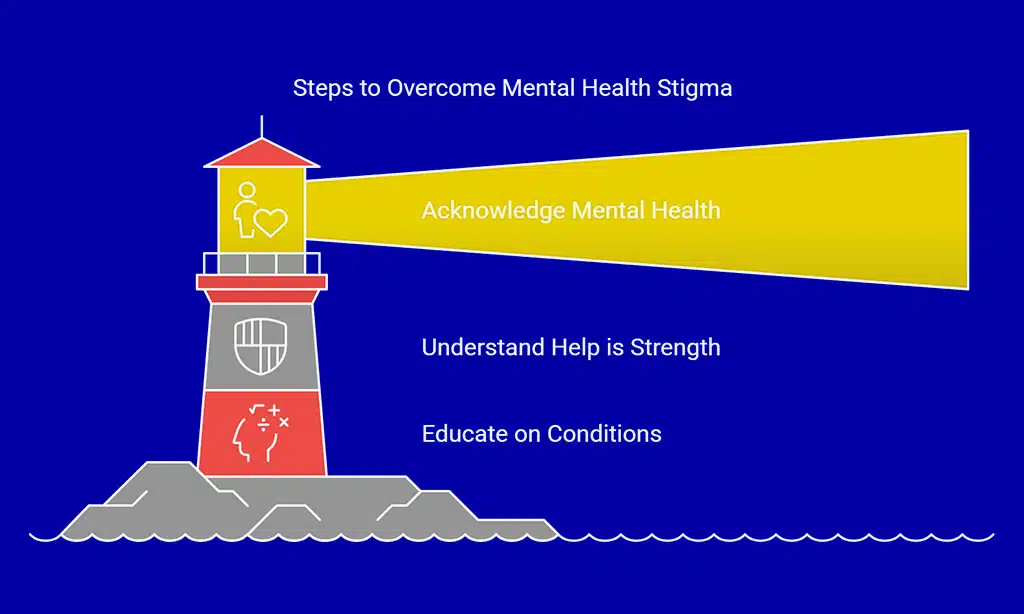
Overcoming the stigma associated with mental health begins with recognizing that seeking help is not a sign of weakness but rather an act of self-care and strength.
Many people hesitate to take the first step due to fear of judgment or lack of information, but understanding available options and support systems can make the journey easier.
Below are actionable steps that can help individuals find the mental health care they need while minimizing stigma and encouraging positive conversations about well-being.
1. Acknowledge the Importance of Mental Health
The first step in seeking help is understanding that mental health is just as important as physical health.
Just like we visit a doctor when experiencing physical illness, seeking mental health support should be considered equally essential.
Mental well-being affects all aspects of life, from relationships to job performance, and addressing concerns early can prevent more serious complications in the future.
- Recognize that mental health is just as vital as physical health.
- Understand that seeking help is a sign of strength, not weakness.
- Educate yourself on common mental health conditions to normalize conversations around them.
2. Choose the Right Type of Support
There are multiple options available depending on your comfort level and needs:
| Type of Support | Description | Best For |
| Professional Therapy | One-on-one counseling with a licensed therapist or psychiatrist. | Those needing structured treatment and guidance. |
| Support Groups | Peer-led or facilitated groups sharing experiences. | Individuals looking for community support. |
| Online Therapy | Virtual counseling via apps or websites. | People preferring remote, flexible support. |
| Self-Help Strategies | Meditation, journaling, and stress management techniques. | Mild mental health concerns and personal growth. |
3. Talk Openly About Mental Health
Breaking the silence around mental health is a key factor in reducing stigma. Open discussions encourage others to seek help and foster a culture of support.
Here are some ways to initiate meaningful conversations:
- Share your experiences with trusted friends and family.
- Educate others by sharing credible information about mental health.
- Listen without judgment when someone confides in you about their struggles.
- Join advocacy groups or social campaigns aimed at mental health awareness.
- Share your experiences with trusted friends and family.
- Join online communities or forums focused on mental wellness.
- Challenge misconceptions by educating others about mental health.
4. Utilize Confidential and Anonymous Resources

- Seek support through anonymous hotlines or chat services.
- Use telehealth platforms that provide private consultations.
- Explore mental health apps designed for self-improvement and crisis support.
5. Advocate for Workplace and Community Awareness
A supportive workplace and community environment play a crucial role in mental well-being. Employers and organizations can implement the following strategies:
| Initiative | Description | Benefits |
| Employee Assistance Programs (EAPs) | Provides employees access to mental health counseling and support. | Reduces stress and enhances productivity. |
| Mental Health Training | Educates employees and managers about mental health challenges and coping mechanisms. | Fosters an empathetic work culture. |
| Flexible Work Policies | Allows remote work and mental health days. | Helps employees manage stress and maintain work-life balance. |
| Community Awareness Campaigns | Organizes workshops and mental health advocacy events. | Increases mental health literacy and acceptance. |
- Encourage workplaces to adopt mental health-friendly policies.
- Participate in mental health awareness campaigns and events.
- Support policies that improve mental health care access in your community.
Overcoming Barriers to Seeking Help
Seeking mental health support can be challenging due to various obstacles, but recognizing and addressing these barriers is essential for personal growth and well-being.
Many people experience fear of being judged, financial concerns, or cultural stigmas that prevent them from taking the first step toward seeking help.
By understanding these challenges, individuals can explore effective strategies to navigate them and access the necessary support.
Common Barriers and How to Address Them
| Barrier | How to Overcome It |
| Fear of Judgment | Focus on personal well-being rather than external opinions. |
| Financial Constraints | Explore free or low-cost mental health resources. |
| Cultural Stigmas | Seek culturally competent mental health providers. |
| Lack of Access | Use telehealth services for convenient mental health support. |
Success Stories: Breaking the Stigma
- Public Figures Advocating for Mental Health: Celebrities, athletes, and influencers sharing their mental health journeys have helped normalize seeking support.
- Workplace Mental Health Initiatives: Many companies now offer Employee Assistance Programs (EAPs) and mental health days to support staff well-being.
- Community-Led Movements: Grassroots initiatives and mental health advocates have pushed for greater acceptance and resources.
Takeaways
Seeking help for mental health should never be a source of shame. By understanding and addressing stigma, choosing the right support system, and advocating for mental health awareness, individuals can prioritize their well-being without fear.
Remember, mental health care is a fundamental right, and taking the first step toward seeking help is a courageous act. Whether through professional therapy, community support, or self-care practices, resources are available to support your journey to better mental health.
If you or someone you know is struggling, consider reaching out to a trusted mental health professional or support group today.