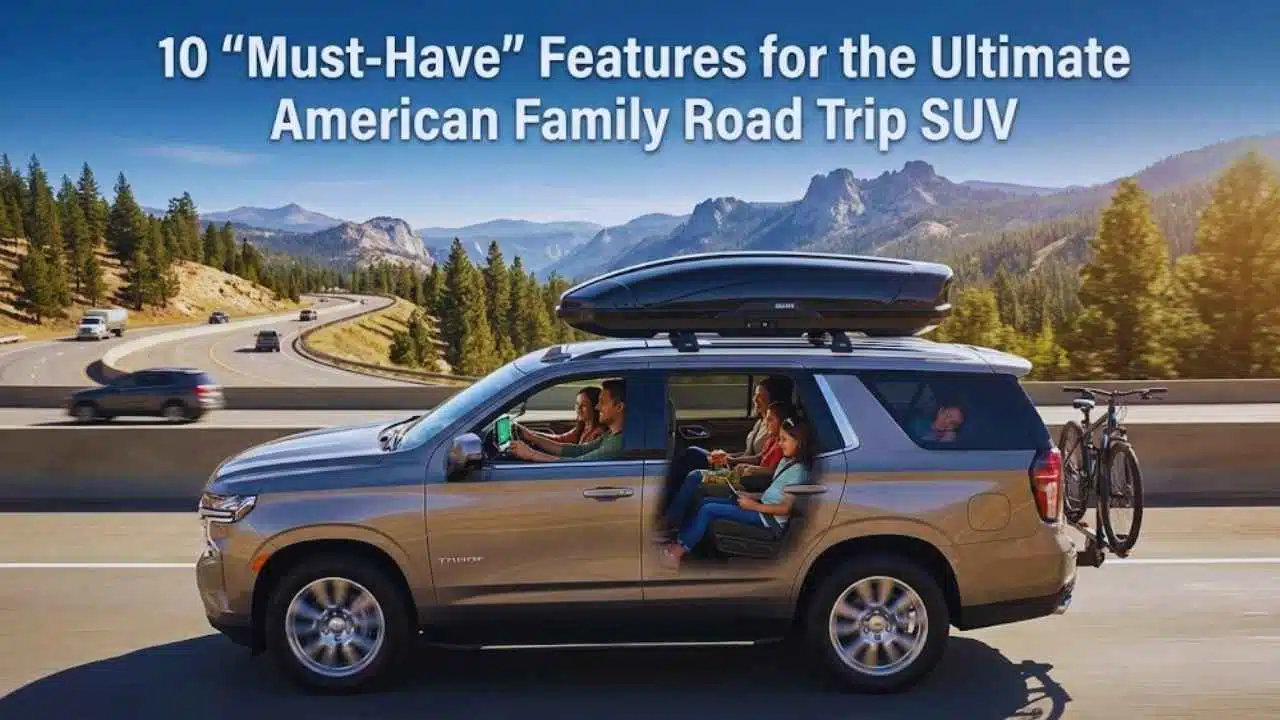
A family road trip can feel like a highlight reel or a stress test. The difference often comes down to your vehicle. A good SUV reduces fatigue, keeps kids comfortable, and makes packing and stopping simpler. A poor match can turn small problems into constant interruptions.
This guide focuses on family road trip SUV features that matter in the real world. You will learn what to look for, what to test quickly, and how to prioritize based on your family’s routines. It is not a brand or model ranking. It is a feature-first checklist you can use anywhere.
Family Road Trip SUV Features: Quick Snapshot
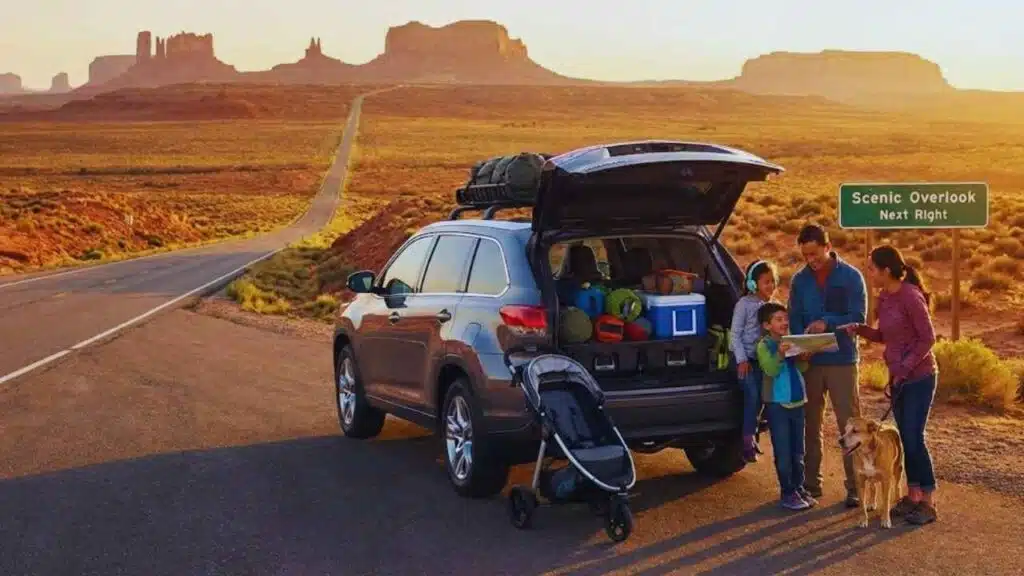
Choosing the right SUV gets easier when you focus on what causes pain on long drives. Families usually struggle with three things: safety confidence, comfort over time, and “stuff management.” If you solve those, the trip feels lighter and smoother. The goal is not a perfect SUV. The goal is the right trade-offs for your route, your passengers, and your budget.
Many shoppers also forget the “repeat factor.” You will open doors, buckle seats, grab snacks, and load cargo dozens of times. A small convenience feature can save you minutes every day of a trip. That is why this list mixes big-ticket items like safety systems with practical details like charging ports and cargo access.
| Priority | Why It Matters On Road Trips | What To Check In 2 Minutes |
| Safety + driver support | Reduces risk and fatigue | Ratings, AEB, lane support |
| Comfort across rows | Less complaining, less tension | Rear legroom, vents, recline |
| Usable cargo | Faster stops, less chaos | Cargo shape, floor height |
| Power + entertainment | Calmer cabin | USB-C in rear, audio options |
| Range + efficiency | Fewer long fuel stops | Highway MPG, tank size |
Feature #1: Verifiable Safety Protection That Inspires Confidence
Safety is the foundation of any family travel plan. Road trips add more miles, more highway merging, and more night driving. You also face more unknown drivers, more weather shifts, and more construction zones. A road-trip SUV should feel stable and protective in normal driving, and strong in worst-case scenarios.
Many families think “bigger is safer,” but safety is more than size. Structural strength, airbag coverage, and modern crash prevention systems matter. You want a vehicle that protects in a collision and helps you avoid one. That is why you should verify safety scores and compare them before you fall in love with a trim or color.
What To Look For In Crash Protection
Crash protection is about what happens when impact is unavoidable. Strong crash performance helps protect the driver and every passenger, including kids in rear seats. It also protects against the kinds of crashes that happen on highways, like front and side impacts. If you have a third row, you should also care about rear-impact protection and seat design.
Look for these signs:
- Strong crash-test results for the vehicle year you are shopping
- Solid structural integrity and consistent ratings across categories
- Modern airbag coverage that includes side and curtain airbags
- Head restraints and seats designed to reduce neck injury risk
What To Look For In Crash Avoidance
Crash avoidance systems can be just as important on long trips. Fatigue increases reaction time. Heavy traffic creates sudden braking. Kids create distraction even for careful parents. A good SUV helps you catch problems earlier and respond faster.
Prioritize:
- Automatic emergency braking
- Forward collision alerts with clear warning signals
- Blind spot monitoring
- Rear cross-traffic alerts for parking lots and tight stops
| Safety Element | Why Families Benefit | Quick Test |
| Crash-test strength | Better protection in real impacts | Verify ratings by year/trim |
| Curtain airbags | Helps protect rear passengers | Ask dealer, check spec sheet |
| AEB + alerts | Helps when attention dips | Test warnings in a demo drive |
| Blind spot support | Safer lane changes | Check visibility and alert speed |
Feature #2: Driver Assistance That Cuts Fatigue On Highways
Long-distance driving is mentally demanding, even when roads are straight. Small corrections, speed changes, and lane decisions add up over hours. Driver assistance helps reduce that constant workload. It is not “self-driving.” It is support that can help you stay steady and alert.
Families benefit because a less fatigued driver is a safer driver. When the driver is calm, the cabin stays calmer too. You also get smoother stops, fewer harsh accelerations, and fewer stressful moments during merges. That matters when kids are sleeping or when you are traveling late.
The Core Driver-Assist Features Worth Paying For
Not every assist feature is useful. Some are flashy, but unreliable. Focus on the systems that reduce fatigue and prevent common road-trip incidents. You want consistency, smooth behavior, and clear alerts.
Must-have features:
- Adaptive cruise control for speed and gap control
- Lane keeping or lane centering support for highway stability
- Automatic emergency braking for sudden slowdowns
- Blind spot monitoring for safe lane changes
How To Test Driver Assistance In Real Conditions
Testing matters because the same feature can feel different across vehicles. One system can be smooth and confidence-building. Another can feel twitchy or overly aggressive. You should try it on a highway loop if possible, even for ten minutes.
Test these:
- Does adaptive cruise brake smoothly?
- Does lane support hold the lane without bouncing?
- Does the system alert you clearly when it needs your input?
- Does it disengage safely and predictably?
| Driver-Assist Tool | Road Trip Value | What “Good” Feels Like |
| Adaptive cruise | Less fatigue, smoother pace | Gentle braking, stable following |
| Lane support | Fewer micro-corrections | Centered feel, no ping-pong |
| AEB | Backup for sudden events | Early warning, confident braking |
| Blind spot alerts | Easier merges | Timely alerts, not constant false alarms |
Feature #3: Cargo Space That Is Usable, Not Just “Big”
Cargo is where road trips often go wrong. A vehicle can have great cargo volume on paper and still be awkward to pack. Families need a wide opening, a low lift-over height, and a floor that stays flat when seats fold. You also need storage spots for messy items, valuables, and emergency gear.
The best cargo layout supports your habits. If you stop often for snacks, you want access without unloading everything. If you travel with sports gear, you want long-item space. If you travel with a stroller, you want quick load and unload. Cargo convenience can feel like a luxury on day one, then feel like a necessity on day four.
Cargo Features That Matter Most On Trips
These details improve speed and reduce frustration at every stop. They also help keep the cabin clean and less cluttered.
Look for:
- Low cargo floor and low lift-over height
- Wide, square cargo opening
- Underfloor storage for small gear
- Strong tie-downs and hooks
- Split-fold seats that create flexible layouts
A Practical Cargo Test You Can Do Anywhere
Numbers do not show awkward shapes or tight openings. Bring real items. If that is not possible, at least simulate with your hands and eyes.
Test ideas:
- Can you fit a stroller without twisting it sideways?
- Can you fit a cooler and still access it easily?
- Can you pack for five people without blocking rear visibility?
- Does the third row leave meaningful space when up?
| Cargo Detail | Why It Matters | Quick Check |
| Low lift-over | Easier heavy loading | Try lifting a suitcase in |
| Flat fold | Better packing | Fold seats and inspect floor |
| Underfloor storage | Hides clutter | Open panels and measure depth |
| Wide opening | Strollers fit easier | Check width at narrowest point |
Feature #4: Real Comfort For Every Row, Not Just The Front
Comfort is not only soft seats. It is support, posture, legroom, airflow, and noise control. A road trip turns tiny discomfort into a big problem because it lasts for hours. Kids get restless. Adults get sore. The driver gets tired faster.
A good road-trip SUV keeps posture stable and reduces body fatigue. It also keeps passengers from sliding around or cramping. If you have a third row, you need to ensure it is usable for your real passengers, not just “in an emergency.” Comfort is one of the biggest differences between “we arrived happy” and “we need a break.”
Front-Seat Comfort That Protects The Driver
The driver’s seat matters most because it impacts safety and fatigue. Good support reduces lower back strain and shoulder tightness. Good steering wheel position reduces wrist and neck tension. After a long day, this can be the difference between calm driving and stress.
What to prioritize:
- Adjustable lumbar support
- Comfortable seat cushion length and support
- Good armrest placement
- Clear visibility without constant head movement
Second And Third Row Comfort For Real People
Row two often matters most for families. That is where kids sit and spend the most time. You want space, airflow, and a relaxed seating angle. Row three comfort depends on who uses it. If it is mostly kids, it can be shorter and still work. If it is adults, you need more space and better entry.
Look for:
- Rear seat recline and sliding row two
- Rear vents that reach the back of the cabin
- Sunshades or tinted glass for direct sunlight
- Easy third-row access without removing car seats
| Comfort Factor | Why It Matters | Quick Test |
| Lumbar support | Less driver fatigue | Adjust and drive 10 minutes |
| Rear recline | Happier passengers | Recline and check head support |
| Cabin quiet | Less stress | Drive at highway speed |
| Third-row access | Less frustration | Try entry with seats installed |
Feature #5: Climate Control That Keeps Everyone Calm
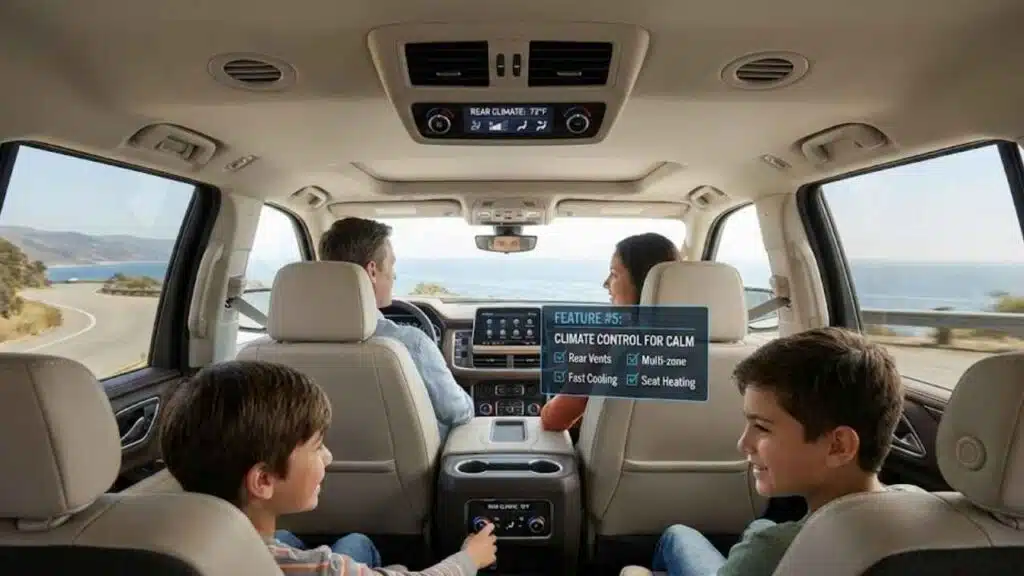
Temperature fights can ruin a trip faster than traffic. Kids get hot. Adults get cold. Sunlight heats the back seats first. If airflow is weak in row two and three, everyone becomes uncomfortable and cranky. That makes stops more frequent and the driver more distracted.
A road-trip SUV should cool quickly and distribute air evenly. The best systems keep the cabin stable even when you stop and start. They also allow rear passengers to adjust their own comfort without the driver constantly changing settings.
The Climate Features That Matter Most
These are practical upgrades that pay off in comfort and calm.
Prioritize:
- Rear vents with strong airflow
- Rear-zone temperature control (or at least rear fan control)
- Fast cabin cooling in summer
- Heated front seats for cold-state trips
Simple Ways To Test Climate Performance
Climate performance is easy to test on a visit. You can feel airflow. You can check vent placement. You can observe how quickly the cabin changes temperature.
Test ideas:
- Sit in row two and feel the vent strength
- Check if air reaches row three (if present)
- Look for roofline vents that help cool the rear faster
- See if controls are easy to use while parked
| Climate Feature | Road Trip Benefit | Quick Check |
| Rear vents | Keeps kids comfortable | Sit rear, test fan on medium |
| Multi-zone | Reduces arguments | Confirm separate rear control |
| Fast cooling | Helps in hot regions | Time cooling after start |
| Seat heating | Comfort in cold | Check availability by trim |
Feature #6: Entertainment And Power That Prevents Boredom
Entertainment is not about spoiling kids. It is about reducing stress and keeping the cabin peaceful. A calm cabin helps the driver focus and reduces sudden distractions. It also makes long stretches feel shorter for everyone.
Charging matters just as much as screens. If devices die, boredom rises quickly. If chargers are hard to reach, wires become a mess. A road-trip SUV should have enough ports in the right places and enough power for modern devices.
Rear-Seat Entertainment Options That Work
Different families need different setups. Built-in screens can be great for multiple kids. Tablets can be cheaper and easier to update. The best approach is the one that fits your kids’ ages and your travel style.
Good options include:
- Built-in rear screens for shared viewing
- Tablet mounts with offline downloads
- Easy Bluetooth pairing for headphones
Charging, Ports, And Power Outlets
Charging should feel effortless. You want ports in row two and row three, not just upfront. USB-C is increasingly important for faster charging. A 12V outlet supports coolers and inflators. A household-style outlet can help for laptops and camera chargers.
Look for:
- Multiple USB-C ports for rear passengers
- A 12V outlet in the cargo area
- Easy cord routing to avoid tangled wires
- Enough storage to keep devices from falling
| Tech Feature | Why It Matters | Quick Check |
| USB-C in rear | Devices stay charged | Count ports in each row |
| Headphone support | Less noise | Test pairing and volume control |
| Wi-Fi option | Helpful for streaming | Ask about plan requirements |
| 12V outlet | Coolers, inflators | Check location and access |
On a road trip, navigation is not just “directions.” It is timing, detours, fuel planning, and finding stops that work for a family. A slow system increases distraction. A confusing menu makes you rely on your phone, which may overheat or lose signal.
A good infotainment system reduces driver workload. It makes it easy to change routes, call ahead, and control audio without taking your eyes off the road. It also supports passengers who want to change music or check progress without bothering the driver.
What Makes Infotainment Road-Trip Friendly
- Fast and responsive screen
- Clear map display and rerouting
- Simple audio controls
- Reliable phone integration
- Voice controls that actually understand basic commands
Test It Like You Will Use It
You can test most of this while parked. You can also test a few functions during a short drive with a passenger.
Try:
- Pair your phone and start navigation
- Change music and volume quickly
- Use voice commands for a destination
- Check how many steps it takes to do common tasks
| Infotainment Trait | Road Trip Benefit | Quick Test |
| Fast response | Less distraction | Tap menus while parked |
| Clear maps | Fewer wrong turns | Zoom in/out and reroute |
| Voice control | Hands stay on wheel | Try a destination by voice |
| Simple audio | Less fuss | Switch sources quickly |
Feature #8: Highway Efficiency And Range You Can Live With
Fuel stops cost more than money. They cost time, patience, and sometimes extra purchases at the convenience store. Better highway efficiency reduces stop frequency and helps you stay on schedule. Range also matters when kids fall asleep and you want to keep going.
Efficiency is also about planning. If you do mostly highway driving, highway MPG matters most. If you mix cities and attractions, a hybrid can reduce fuel use in slow traffic. Your “best choice” depends on where you drive, not just what looks good on paper.
What To Compare When You Shop
- Highway MPG
- Total range (tank size plus efficiency)
- Hybrid versus non-hybrid performance for your routes
- Realistic driving habits, like roof boxes or heavy cargo
How To Think About Range With Kids
Some families stop every two hours anyway. In that case, range matters less. Other families prefer longer stretches between stops. If that is you, prioritize highway efficiency and tank size. Also consider how fast you can refuel or recharge along your route.
| Efficiency Metric | Why It Matters | What To Compare |
| Highway MPG | Closest to road-trip use | Compare trims and drivetrains |
| Total range | Fewer long stops | MPG plus tank size |
| Hybrid benefit | Helps in mixed driving | City stops, attractions, traffic |
| Load penalty | Cargo reduces MPG | Consider roof boxes and weight |
Feature #9: Family Ergonomics That Save Time At Every Stop
A road trip is a loop of small tasks. Open door. Buckle seat. Hand snacks. Wipe spills. Load bags. Repeat. Family-friendly ergonomics make these tasks easier and faster. They also reduce physical strain and keep kids safer when entering and exiting.
This is where many SUVs feel similar at first glance but very different in daily use. Door angles, step-in height, grab handles, and storage bins can change your whole experience. For families with toddlers, these details can be more valuable than luxury materials.
Car-Seat Friendliness And Easy Entry
Look for:
- Easy-to-reach LATCH anchors
- Wide door openings
- A comfortable step-in height
- Space for a rear-facing seat without crushing front legroom
Smart Storage That Reduces Clutter
Good storage keeps the cabin clean and calm. It also prevents items from rolling under seats or becoming hazards during sudden braking.
Useful features:
- Large door pockets for bottles and wipes
- Deep center console storage
- Seatback pockets that can hold real items
- Multiple cupholders that actually fit big bottles
| Ergonomic Feature | Road Trip Benefit | Quick Check |
| Easy LATCH access | Faster installs | Anchors not buried |
| Wide door opening | Easier loading | Try buckling a seat |
| Cabin storage | Less mess | Check pocket size and reach |
| Grab handles | Safer entry for kids | See placement and sturdiness |
Feature #10: Capability That Matches Your Real Road Trip Style
Capability is not just about off-road adventures. It is about confidence in weather, stability on steep grades, and handling when fully loaded. Some families need AWD for snow and mountains. Others do fine with two-wheel drive but benefit from good tires and stability.
Towing is also a real need for some families, especially for campers, small trailers, and hitch cargo carriers. But capability comes with trade-offs like cost, fuel use, and sometimes ride quality. The best approach is to match capability to your most common trips, not your most extreme fantasy trip.
When AWD And Ground Clearance Matter
AWD can help in snow, heavy rain, and loose surfaces like gravel. Ground clearance matters for campsites, uneven roads, and steep driveways. But if you do mostly paved highways in warm seasons, you may not need these upgrades.
Towing And Payload Basics Families Forget
Towing is not just “tow rating.” Payload matters too. Payload is what you can carry inside the vehicle, including people, luggage, and gear. A family of five plus luggage can use a big portion of payload quickly.
Check:
- Towing rating for your intended trailer
- Hitch options and wiring availability
- Payload rating and how it changes with trim
- Cooling systems for mountain driving
| Capability Feature | Best For | What To Confirm |
| AWD | Snow states, mountains | How it behaves in rain/snow |
| Ground clearance | Campsites, rough roads | Clearance number and approach |
| Tow rating | Trailers, small campers | Rating and hitch setup |
| Payload | Full-family packing | Sticker rating and real load |
Family Road Trip SUV Features Checklist Before You Buy
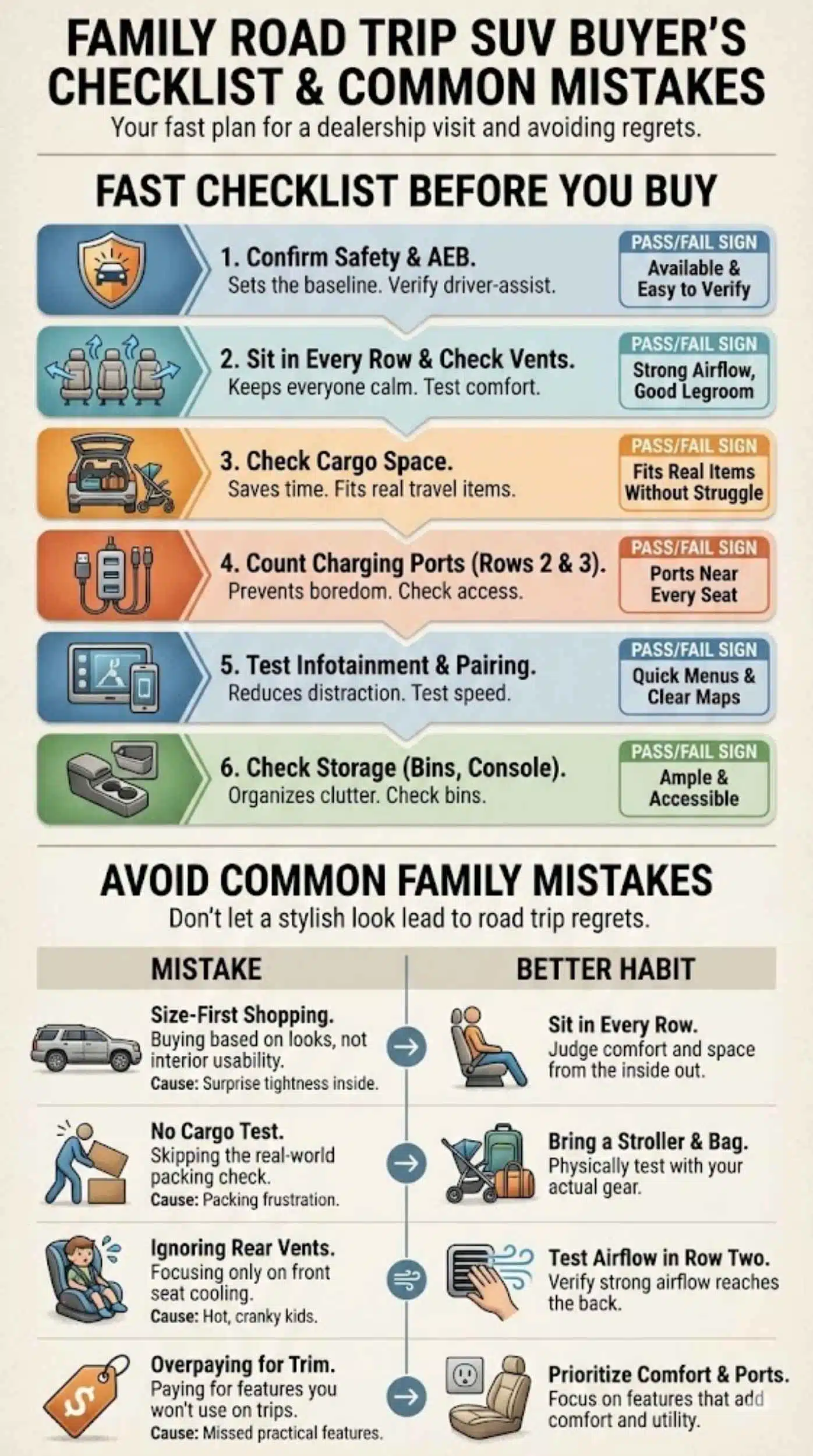
This is your fast plan for a dealership visit. It keeps you focused when sales talk gets loud. It also helps you compare two SUVs quickly.
Do this in order:
- Confirm safety ratings and key driver-assist features.
- Sit in every row and check comfort and vents.
- Check cargo space with seats in your real travel position.
- Count charging ports in row two and three.
- Test infotainment speed and phone pairing.
- Check storage: cupholders, door bins, and console space.
| Checklist Step | Why It Matters | Pass/Fail Sign |
| Safety + AEB | Sets the baseline | Available and easy to verify |
| Rear comfort + vents | Keeps kids calm | Strong airflow, good legroom |
| Cargo practicality | Saves time | Fits real items without struggle |
| Charging access | Prevents boredom | Ports near every seat |
| Infotainment speed | Reduces distraction | Quick menus and clear maps |
Common Mistakes Families Make When Choosing A Road Trip SUV
Families often buy the SUV they like in a short test drive, then discover issues on day one of a long trip. These mistakes are common, and they are avoidable.
Most mistakes come from shopping by looks instead of routines. A stylish SUV can still have weak rear vents or awkward cargo access. A big SUV can still feel cramped in row three. If you shop with your real habits in mind, you get a better match and fewer regrets.
Common mistakes:
- Buying based on exterior size, not interior usability
- Skipping the third-row comfort test
- Ignoring storage and charging in rear seats
- Assuming all AWD systems feel the same
- Forgetting that heavy loads change fuel economy and handling
| Mistake | What It Causes | Better Habit |
| Size-first shopping | Surprise tightness inside | Sit in every row |
| No cargo test | Packing frustration | Bring a stroller and bag |
| Ignoring rear vents | Hot, cranky kids | Test airflow in row two |
| Overpaying for trim | Missed practical features | Prioritize comfort and ports |
Final Thoughts: Build Your Trip Around The Right Features
The best SUV for your family is the one that matches your real travel life. Start with verified safety, then focus on comfort across rows, usable cargo, rear-seat power, and reliable infotainment. Add the capability you truly need, not what looks tough in a brochure. When you choose the right family road trip suv features, you get fewer interruptions, calmer passengers, and a better drive from the first mile to the last.
FAQs
Which Family Road Trip SUV Features Matter Most With Kids?
The biggest wins are strong rear airflow, easy charging access, practical cargo space, and comfortable second-row seating. These features reduce boredom, reduce complaints, and make stops faster. If you add smooth driver-assist support, the driver stays calmer too.
Is A Hybrid SUV A Smart Pick For Road Trips?
A hybrid can be a great fit if your road trips include city traffic, attractions, and frequent stop-and-go driving. It can also help when you are fully loaded, depending on the system design. The best move is to compare highway efficiency, total range, and your typical routes.
Do I Need A Three-Row SUV For A Family Road Trip?
Not always. A two-row SUV can work well for a family of four if cargo space is strong and you pack smart. A three-row SUV makes more sense if you travel with extra adults, carpool, bring a large pet, or carry bulky gear. The key is to keep enough cargo space even when seats are in use.
How Can I Tell If An SUV’s Cargo Area Will Work For Us?
Do a real-world test. Bring a stroller, a suitcase, and a cooler if you can. Check if you can load them without blocking visibility. Also check how easy it is to access snacks or emergency items without unloading everything.
Is AWD Necessary For An American Road Trip?
AWD is helpful in snow, mountain weather, and heavy rain regions. It can also help on gravel roads to campsites. If your trip is mostly paved highways in warm seasons, you may not need AWD. In many cases, good tires and careful driving matter more than drivetrain.