
Smartphones help us do almost everything. We use them for calls, photos, banking, learning, and work. But each device also carries an environmental cost that most people never see. That cost starts with mining and processing raw materials. It continues through energy-heavy manufacturing and global shipping. And it ends, too often, in drawers, informal dumps, or landfills.
That is why “green smartphones” has become more than a marketing phrase. Many brands now talk about recycling, renewable energy, and climate targets. Some steps are genuinely helpful. Others sound good but change very little. This article explains the real shifts behind eco friendly smartphones in a clear, practical way.
You will learn what “going green” actually means in phone design. You will also learn how to spot strong evidence and avoid greenwashing. Most importantly, you will see which changes matter most for cutting emissions and e-waste.
Quick Take: What “Going Green” Means In Smartphones

Going green in smartphones is not one single action. It is a mix of design choices, factory decisions, and end-of-life planning. A phone can have recycled packaging and still be difficult to repair. Another phone can be repairable but made in a supply chain that uses high-carbon electricity. Real progress happens when brands improve the full life cycle, not just the easy parts.
A simple way to think about it is this: a smartphone is a bundle of mined materials, refined metals, plastics, glass, chips, and battery chemicals. Those materials must be extracted, transported, processed, and assembled. Each step uses energy and creates waste. If brands reduce virgin materials, clean up factory energy, and help people keep phones longer, impact drops.
For most users, the biggest sustainability choice is not a single “green feature.” It is how long they keep a phone and what happens to it afterward. A longer-lasting phone avoids the need for another new one. Repairable design makes that longer life realistic. And take-back systems keep old devices from becoming unmanaged waste.
| What “Going Green” Can Mean | Why It Matters | What To Look For |
| Lower-impact materials | Less mining and refining | Recycled content by component |
| Cleaner manufacturing energy | Lower emissions during production | Renewable electricity details |
| Longer device life | Fewer phones needed overall | Updates + durability + repair |
| Better end-of-life handling | Less e-waste leakage | Take-back, refurb, recycling proof |
The Smartphone Life Cycle (Where The Biggest Impacts Happen)
A smartphone’s story begins long before it reaches a store shelf. It starts in mines, chemical plants, and metal refineries. It continues in component factories that build displays, chips, and camera sensors. Final assembly brings parts together, and shipping moves the device across oceans and borders. After purchase, software updates and battery health shape how long it stays useful. Finally, end-of-life determines whether value is recovered or wasted.
This life cycle matters because most environmental impacts cluster in a few hotspots. Mining and refining can be land- and water-intensive. Chipmaking can use large amounts of electricity and ultra-pure water. Assembly lines depend on power grids that may be clean or coal-heavy. Shipping adds emissions, especially when air freight is used. End-of-life creates risk when devices are dumped or dismantled in unsafe conditions.
When you hear a brand say “we’re greener,” ask where they are improving the life cycle. Are they reducing virgin materials? Are suppliers using cleaner electricity? Are devices designed for longer life? Are they collecting old phones at scale? These questions keep the conversation grounded.
- Extraction and refining
- Component manufacturing
- Assembly and testing
- Logistics and retail
- Use phase (charging and updates)
- End-of-life (repair, resale, recycle, or waste)
Why This Matters Now (E-Waste, Emissions, Critical Minerals)
The world is producing more electronics than ever. People upgrade faster, and many old devices sit unused in drawers. When electronics are not collected and processed safely, they become a pollution problem. They can leak heavy metals and chemicals. They also waste valuable materials that could be reused. At the same time, demand for critical minerals is growing, putting pressure on mining and supply chains.
Smartphone makers are responding for several reasons. Consumers are asking tougher questions. Governments are writing repair and sustainability rules. Energy prices and supply risks push companies to reduce waste. Brands also compete on reputation, and environmental commitments are now part of that brand story.
Still, progress is uneven. Some brands do deep work in design, repair, and supplier energy. Others focus on packaging and slogans. That is why it helps to understand the twelve most common “green” moves and what separates real impact from surface-level change.
How We’ll Judge “Green” Claims (So This Stays Unbiased)
If you want to understand sustainability claims, start with one rule: trust numbers, not adjectives. “Eco,” “green,” and “planet-friendly” are vague. Real sustainability shows up in measurable actions that can be tracked over time. Brands should explain what changed, by how much, and how they measured it.
It also helps to compare like with like. A brand may say emissions fell, but if phone sales dropped that year, emissions might fall even without better practices. Another brand may have rising total emissions but improving emissions per device. Both can be true. The point is not to pick a winner. The point is to understand what the data is saying.
Finally, be careful about “one big claim” like carbon neutrality. Some companies rely heavily on offsets. Offsets can be part of a plan, but they are not the same as cutting real emissions in factories and supply chains. Strong strategies focus first on reducing energy use, switching to cleaner power, and designing products to last.
| Credibility Test | What Strong Looks Like | What Weak Looks Like |
| Measurable targets | Clear baselines and timelines | No baseline or vague goals |
| Transparent methods | Explains how totals were calculated | No method details |
| Repair access | Parts, manuals, fair pricing | Repair blocked or overpriced |
| Circular outcomes | Reports collection and reuse results | Mentions take-back without results |
Real Signals Vs. Marketing
Real signals are actions that change the physical world. They reduce materials used, energy consumed, or waste created. Marketing signals often focus on what is easy to show, like “plastic-free packaging” or a new logo on a box. Those steps can still be good, but they are usually smaller than design and supply chain changes.
A strong signal is a longer software support promise that keeps devices secure for years. Another strong signal is making batteries easier to replace. Supplier renewable energy adoption is also a strong signal because upstream factories can be a major footprint driver. A weaker signal is a one-time “eco edition” phone that does not change the main product line.
When evaluating claims, look for repeatability and scale. Is this a pilot program or a standard practice across products? Does it cover major suppliers or only a small portion? Does the brand show progress year over year? These questions make marketing less persuasive and evidence more important.
Helpful Standards And Labels (And Their Limits)
Labels and standards can help buyers compare phones. They can also reduce confusion about terms like energy efficiency, durability, and repairability. Some programs score repairability. Others focus on responsible sourcing or environmental reporting. The value of any label depends on clear rules and enforcement.
But labels are not magic. A label might measure only one dimension, like energy use. Another might rely on self-reported information. Also, standards vary by region. A score that is common in one market may not exist in another. That is why labels should be one input, not the whole decision.
Use standards as a starting point. Then confirm the details that matter most: update support, repair access, battery service, and real take-back options. Think of sustainability like a checklist rather than a single stamp of approval.
1. Using More Recycled Metals, Plastics, And Rare Materials
Material choices shape a phone’s footprint from the very beginning. Mining and refining virgin metals and minerals is energy-intensive. It can also create land disturbance and pollution if poorly managed. Using recycled materials reduces demand for new extraction and keeps valuable resources in circulation.
Many brands now use recycled aluminum for frames and recycled plastics for internal components. Some also use recycled rare materials in small parts, though this can be harder due to technical requirements and supply constraints. The most credible claims explain exactly which parts contain recycled materials and what percentage is recycled.
Recycled content is not automatically good in every scenario. It depends on quality, sourcing, and how the recycled material is processed. Still, as supply chains mature, recycled content is becoming one of the most common moves toward greener devices.
| Material Change | Why It Helps | Best Practice Detail |
| Recycled aluminum frame | Less virgin mining | % by weight, by part |
| Recycled plastics in parts | Cuts plastic demand | Traceable supply chain |
| Recovered rare materials | Reduces extraction pressure | Clear volumes and use cases |
| Recycled packaging fibers | Lowers tree and plastic use | Verified recycled paper content |
What Brands Are Changing
Brands are changing both visible and hidden materials. Visible parts include frames, backs, and camera rings. Hidden parts include internal brackets, speaker housings, and small plastic supports. Brands also work on inks, adhesives, and coatings to reduce harmful substances and improve recyclability.
A key shift is moving from “some recycled material” to “recycled material across multiple parts.” That matters because a single small component does not change much. But a broader approach can reduce virgin input per device. Brands are also learning how to maintain durability while changing materials, which is important for long-term use.
The best reporting breaks down recycled content by component and by device generation. That allows readers to see progress instead of a one-time claim. It also encourages competition based on real improvements.
Why It Helps (And Where It Doesn’t)
Using recycled materials helps most when it reduces virgin extraction. It can also lower energy use compared to primary production for some metals. But it does not solve everything. If a phone is still replaced every two years, high recycled content cannot fully offset the impact of constant new manufacturing.
Also, “recycled” can mean different things. It might be post-consumer recycled content (from old products) or pre-consumer scrap (from factory leftovers). Both can be useful, but they are not the same. A responsible approach is to disclose which type is used and where it comes from.
Finally, recycled materials should not reduce durability. If a recycled plastic part cracks more easily, repair rates may rise. The best designs balance sustainability with long-term reliability.
2. Designing Phones To Last Longer (Durability + Extended Support)
Longevity is a cornerstone of sustainable tech. Every extra year a phone stays in active use delays the need to manufacture another device. That can reduce overall demand for raw materials, energy, and shipping. In many cases, extending device life is one of the highest-impact sustainability actions available.
Durability is not just about surviving a drop. It includes resistance to water and dust, long-term button reliability, strong port design, and screen toughness. It also includes good thermal management, so performance stays stable. A phone that stays fast and reliable encourages people to keep it.
Software support is the second half of longevity. If updates stop early, phones can become insecure or incompatible. Longer security updates, and ideally longer operating system updates, reduce upgrade pressure and support longer use.
| Longevity Feature | Sustainability Benefit | User Benefit |
| Stronger build materials | Fewer breakages | Lower repair costs |
| Better water/dust protection | Longer functional life | More everyday confidence |
| Long security updates | Keeps device safe longer | Safer banking and browsing |
| Long OS updates | Extends compatibility | New features, longer value |
Longer Software Support As A Sustainability Strategy
Software support is a quiet but powerful sustainability tool. A phone that stays secure and compatible can remain useful for years. That can reduce the “forced upgrade” cycle caused by security risks or app incompatibility.
Longer support also helps resale and refurbishment. Refurbished buyers often want a device that still receives updates. If a phone is out of support, its second-life value drops. That means fewer phones get reused, and more end up as waste.
The most meaningful commitments are those that apply to security patches and major system updates. Brands should also support older models with bug fixes and performance improvements when possible. A stable experience makes keeping a phone feel normal, not like a sacrifice.
More Durable Materials And Better Protection
Durability improvements can be practical and user-focused. Stronger glass, better frame design, shock absorption, and more reliable seals reduce common failures. Ports and buttons designed for long-term use prevent annoying breakdowns that lead to replacement.
Durability also includes serviceability. If a phone uses fragile adhesives and layered parts that make repairs risky, a minor crack can become a major issue. Better internal layouts can reduce repair time and costs. That makes durability and repairability work together.
A truly durable phone should handle real life: pockets, bags, rain, heat, and accidental drops. The greener choice is often the phone that survives everyday use without needing major repairs.
3. Making Devices Easier To Repair (Right To Repair In Action)
Repair is a direct way to cut e-waste. If a screen breaks or a battery degrades, the most sustainable outcome is fixing the device and continuing to use it. But repairability depends on design choices and brand policies. A phone can be technically repairable but practically impossible to fix due to expensive parts or restricted tools.
Repair-friendly design uses standard screws, modular sub-assemblies, and fewer permanent adhesives. It also provides access to common failure points, especially screens, ports, and batteries. Repair-friendly policies include making parts available, sharing manuals, and supporting independent repair shops.
Repair does more than reduce waste. It lowers cost for users. It also supports local jobs in repair businesses. And it can improve trust, because buyers feel less trapped.
| Repair Element | Why It Matters | What Good Looks Like |
| Parts availability | Repairs can happen | Parts sold directly |
| Repair manuals | Guides reduce errors | Clear official documentation |
| Fair pricing | More people choose repair | Reasonable part and labor cost |
| No software locks | Repairs remain functional | No disabled features after repair |
Repair-Friendly Design Choices
Small design decisions have big repair effects. Using strong adhesive everywhere can make battery replacement dangerous and time-consuming. Using proprietary screws can block independent technicians. Soldered ports can turn a minor problem into a full board replacement.
Repair-friendly phones use screws where possible, simplify internal layering, and make battery access safer. They also separate components so you can replace only what failed. For example, a port module can be replaced without changing the whole motherboard. A camera module can be swapped without touching the battery.
These choices make repairs faster and cheaper. They also reduce the chance of accidental damage during repair. That increases the repair success rate, which keeps more phones in use.
Programs That Actually Help Users
A repair program is only useful if real people can use it. That means parts must be available in the user’s region. Prices must be fair compared to the cost of a new phone. Manuals must be clear and accessible. And repairs should not void warranties unfairly when done correctly.
Some brands offer mail-in repairs, authorized service centers, or self-repair kits. Each model has pros and cons. Mail-in is convenient but slow. Authorized centers can be high quality but pricey. Self-repair kits help skilled users but can be intimidating.
The strongest ecosystem supports multiple options. It respects the user’s choice, whether they want official repair or an independent shop. It also avoids punishing repairs by blocking features or showing constant warnings.
4. Building More Modular Phones (Replace Parts, Not The Whole Device)
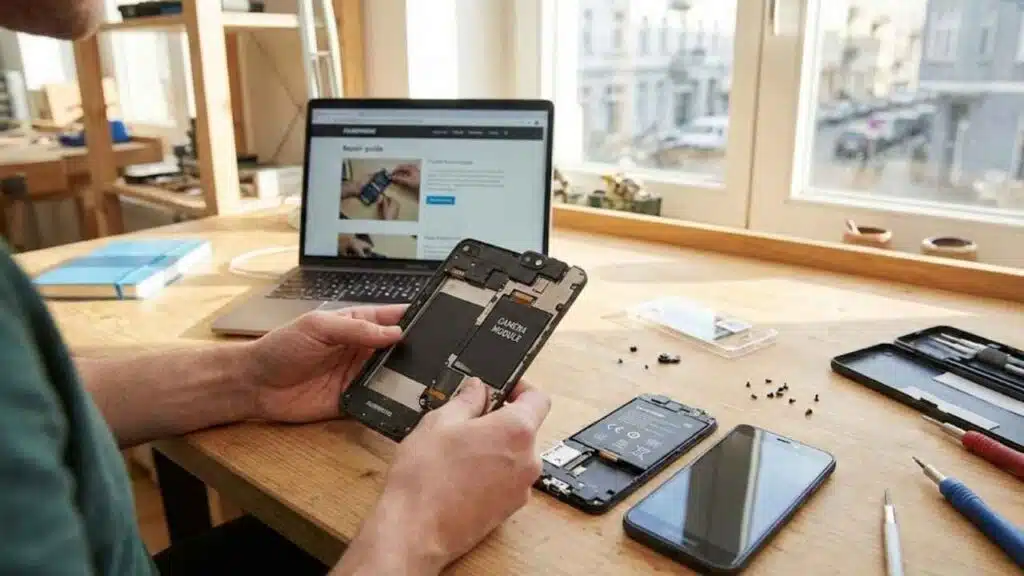
Modular phones aim to change the upgrade model. Instead of replacing the whole device, users replace or upgrade specific parts. That can reduce waste and cost. It also helps users tailor performance over time.
Modularity can mean many things. In some designs, only the battery is easy to replace. In others, screens, cameras, and ports are modular. The greener value comes from how often modules are replaced instead of full devices and how long the base device remains supported.
Modular design can also make repairs simpler for non-experts. If a screen module is designed for quick replacement, more people will fix instead of replace. But modular design also adds engineering constraints, especially around water resistance and compact size.
| Modular Feature | Sustainability Upside | Common Trade-Off |
| Swappable screen module | Repair becomes easier | Seal and durability challenges |
| Replaceable camera module | Upgrades without new phone | Potential bulk or cost |
| Replaceable port module | Fix common failure point | Design complexity |
| Replaceable battery module | Extends device life | May affect water resistance |
What “Modular” Really Means
A modular phone is not always fully modular. Some phones are “semi-modular,” where only a few parts are easy to change. Others are designed around modules as a core concept. Understanding the difference helps set realistic expectations.
True modularity includes clear part separation, easy access, and widely available modules. It also includes stable software support for those hardware variations. Without that, modularity can become a niche feature rather than a mainstream sustainability solution.
Modularity works best when paired with long update support and strong parts supply. That allows a base phone to stay useful for many years, while modules refresh performance or fix wear.
Environmental Upside And Real-World Limits
The environmental upside is straightforward: fewer full devices manufactured. But limits appear in user behavior and market support. If modules are expensive or hard to find, people may still replace the whole phone. If software support ends early, modular hardware becomes less valuable.
There is also a design limit: modular parts can require extra connectors and structural elements. That can increase materials and size. A well-designed modular phone balances these factors so the net impact remains positive.
In practice, modularity is one tool, not a universal fix. It is most valuable for users who keep devices longer and prefer repairs and targeted upgrades.
5. Cutting Packaging Waste (Smaller Boxes, Less Plastic, Fewer Extras)
Packaging is one of the most visible sustainability areas. Brands can change packaging faster than they can redesign chips or supply chains. That is why packaging is often the first “green” move consumers notice.
Common improvements include smaller boxes, plastic-free trays, less ink, fewer inserts, and more recycled paper. Smaller packaging can reduce shipping volume, meaning fewer pallets, fewer containers, and fewer trucks. That can cut logistics emissions.
But packaging is only part of the overall impact. A phone that is easy to repair can have a larger sustainability benefit than a phone with perfect packaging but short support. Packaging matters, but it should not distract from the bigger levers.
| Packaging Change | Benefit | Buyer Note |
| Smaller boxes | Lower shipping footprint | Look for real reductions |
| Plastic-free trays | Less plastic waste | Paper should be responsibly sourced |
| Fewer printed inserts | Less material use | Digital guides can replace paper |
| Reduced accessories | Less manufacturing waste | Ensure user needs are met |
Plastic-Free And Recycled Packaging
Plastic-free packaging usually replaces plastic wraps and trays with paper-based materials. It can also reduce the use of glossy coatings that make recycling harder. Inks and adhesives can be adjusted to improve recyclability. Some brands also reduce color printing to limit chemical use.
Recycled paper content is important here. Using recycled fiber reduces demand for virgin pulp. However, quality matters. Strong packaging must still protect the phone during shipping. Broken phones create more waste than the packaging savings.
The best approach is packaging that protects well, uses recycled content, and is easy to recycle in common municipal systems.
Charger Removal (Sustainability Or Cost Cut?)
Removing chargers can reduce waste when it prevents millions of duplicate chargers from being produced. Many households already have chargers. If those chargers are compatible and safe, the net waste can drop.
But the real-world outcome depends on behavior. If users buy a new charger anyway, or if old chargers are incompatible, the benefit shrinks. It can also create frustration for buyers, especially first-time users or people switching ecosystems.
A fair sustainability approach includes clear compatibility guidance, support for universal charging standards, and easy access to durable chargers. The goal should be fewer total chargers made, not simply shifting the cost.
6. Switching Factories And Supply Chains To Renewable Energy
Manufacturing a smartphone involves many suppliers. Display factories, chipmakers, and battery plants are energy-intensive. If their electricity comes from fossil fuels, emissions rise quickly. That is why clean energy in the supply chain is one of the most impactful sustainability strategies.
Switching to renewable energy can mean different things. It can mean building solar at factories, buying renewable electricity from the grid, or signing long-term contracts that fund new clean energy projects. Some companies also use renewable energy certificates. Each approach has different strengths.
The most credible programs show how much supplier electricity is renewable, how progress is measured, and which suppliers are included. A brand that cleans only its own offices is missing the main opportunity.
| Energy Step | Why It Matters | What To Look For |
| Renewable power at factories | Cuts production emissions | % renewable and method |
| Supplier clean energy targets | Upstream footprint is large | Coverage across key suppliers |
| Energy efficiency upgrades | Lowers total energy demand | Measured reductions over time |
| Process improvements | Less waste in production | Yield improvements and scrap cuts |
Where Emissions Often Concentrate
In many electronics, the biggest emissions are upstream. That means not just final assembly but also component manufacturing. Chips, displays, and batteries can be major drivers because their processes are complex and energy-heavy.
This matters because a brand can claim operational improvements while leaving supplier emissions mostly unchanged. If you want to track true progress, the supply chain is often the main story. That is also where change can be harder, because suppliers serve multiple brands and invest in long-term equipment.
Sustained progress usually requires partnerships, incentives, and clear requirements for suppliers. It also requires long-term planning, because energy projects and factory upgrades take time.
What “Renewable” Claims Should Specify
A strong claim explains the source. Is it on-site solar? Is it grid renewable electricity? Is it a long-term power contract? Or is it mostly certificates and offsets? Transparency is crucial because “100% renewable” can mean different things depending on accounting.
It is also important to explain the boundary. Is the claim for one factory or the full supply chain? Is it for electricity only, or also for fuels used in heating and industrial processes? These details show whether the claim is narrow or meaningful.
In general, the most valuable approach is one that increases the real amount of renewable energy used, not just the paperwork.
7. Reducing Carbon Footprint With Smarter Logistics And Shipping
Smartphones are global products. Parts come from many countries, then final devices travel to warehouses, stores, and homes. Logistics emissions are smaller than manufacturing for many models, but they are still real, especially at scale.
Brands can reduce logistics emissions by improving forecasting so they do not rely on air freight. Air freight is often used when launches are tight or inventory planning fails. Sea freight is usually lower impact per unit. Better packaging density can also reduce shipments.
Brands can also improve last-mile delivery by optimizing packaging size and working with low-emission carriers where available. None of these steps is dramatic alone, but together they can cut a meaningful slice.
| Logistics Move | Sustainability Benefit | Real-World Example |
| Shift air to sea | Lower transport emissions | More sea freight planning |
| Better demand planning | Less emergency shipping | Smoother launch logistics |
| Higher packing density | Fewer pallets and containers | Smaller box design |
| Local distribution hubs | Shorter routes | Regional warehousing |
Lower-Impact Transport Options
Shipping choices matter most during major product launches. When brands rush inventory, they often use air freight. Switching more volume to sea reduces emissions per device. It also reduces cost, which can make the change easier to maintain.
Rail and road can also be optimized, especially for regional distribution. Efficient routing and full truckloads reduce per-unit emissions. In some areas, electric delivery vans can reduce last-mile impact.
The key is planning. Cleaner logistics is rarely about one perfect method. It is about avoiding high-impact emergency decisions.
Packaging And Distribution Efficiency
Distribution efficiency is strongly linked to packaging. Smaller boxes mean more phones per pallet and more pallets per container. That reduces shipping frequency and fuel use. It also reduces warehouse space needs.
Efficiency also includes returns. If packaging is weak and phones arrive damaged, returns increase emissions and waste. So packaging needs to be both smaller and protective.
Brands that improve packaging efficiency while maintaining protection can achieve a rare win-win: lower footprint and lower shipping cost.
8. Improving Battery Sustainability (Materials, Longevity, And Replacement)
Batteries are central to smartphone sustainability. When batteries degrade, phones feel slow, die early, or overheat. Many users replace the phone instead of the battery. That turns a manageable repair into a full device replacement.
Battery sustainability includes three areas: responsible material sourcing, longer battery lifespan, and easier replacement. Better charging management can slow degradation. Affordable battery service can extend device life. Better battery design can also improve safety and reduce waste.
It is also important to educate users. Many people do not realize how charging habits affect battery health. A phone that offers clear battery health tools helps users keep devices longer.
| Battery Lever | Sustainability Benefit | User Benefit |
| Battery health features | Slower degradation | Longer daily runtime |
| Affordable replacement | Repair beats replacement | Lower long-term cost |
| Better cycle life | Fewer early failures | More stable performance |
| Responsible materials | Reduced supply risk | Stronger ethical assurance |
Battery Health Features That Reduce Upgrades
Battery management can reduce stress on cells. Features like optimized charging, charge limits, and heat management help slow wear. Phones can also learn user patterns and charge more gently overnight.
These features matter because battery wear is normal. The question is how fast it happens. Slower wear means a phone can remain comfortable to use for more years. That reduces the “my phone is dying” feeling that drives upgrades.
Battery health indicators also help. If users can see battery status clearly, they can make smarter choices, like replacing the battery instead of replacing the phone.
Replacement Options And Practical Serviceability
Even the best battery will wear out. So replacement should be straightforward and affordable. When battery replacement is expensive or complicated, people often upgrade instead. That leads to more manufacturing and more e-waste.
Serviceability includes design and policy. Design determines whether the battery is accessible. Policy determines whether parts and service are available and affordable. Brands can support official service while also allowing independent repair where safe.
Better battery service is one of the most direct ways to make eco friendly smartphones feel practical, not idealistic.
9. Cleaning Up Chemical Use In Materials And Manufacturing
Chemicals are not as visible as recycled metal or plastic-free packaging, but they matter. Electronics can contain substances that are harmful to workers, recyclers, and the environment if mishandled. Some chemicals also make recycling harder by contaminating recovered materials.
Brands can reduce chemical risk by adopting strict restricted substance lists, improving supplier compliance, and redesigning materials that rely on problematic additives. They can also reduce solvent use in some manufacturing steps and improve wastewater treatment.
This area is complex because supply chains are layered. Still, meaningful progress is possible, especially when brands set clear standards and audit suppliers.
| Chemical Action | Why It Helps | What Good Looks Like |
| Restricted substance lists | Reduces harmful exposure | Clear public policy |
| Safer material substitutions | Improves recyclability | Documented alternatives |
| Supplier training | Better compliance | Regular programs and checks |
| Wastewater controls | Less pollution | Verified treatment performance |
Safer Materials Policies
A safer materials policy sets rules for what can and cannot be used. It can cover plastics, flame retardants, coatings, adhesives, and cleaning chemicals. It can also set thresholds for trace contaminants.
Policy is not enough alone. It must be enforced. That means supplier contracts, audits, and corrective action plans. It also means testing, because materials may change over time or across regions.
Strong policies are updated regularly. They reflect new science and new regulations. They also apply across suppliers, not only to direct manufacturing sites.
Why Verification Is Hard (And What To Look For)
Verification is hard because many components come from sub-suppliers. A brand may buy a part from a supplier who buys materials from another supplier. Each layer adds complexity.
That does not mean you should ignore chemical claims. It means you should look for signs of serious effort. These include detailed policies, supplier audits, incident reporting, and transparent progress updates.
The most credible brands treat chemical management as part of quality. Safer materials can also improve reliability and recyclability, making it a smart business choice.
10. Responsible Mineral And Metal Sourcing (Conflict Minerals And Beyond)
Smartphones require many minerals and metals. Some are common, others are rare, and many come from complex global markets. Responsible sourcing aims to reduce human rights risks and environmental harm. It also aims to create transparency, so buyers and regulators can see where materials come from.
Historically, conflict minerals reporting focused on certain metals linked to high-risk regions and supply chains. Today, the conversation includes cobalt, lithium, nickel, and rare earths as well. These materials are critical for batteries, magnets, and electronics.
Responsible sourcing is not simple. It requires tracing supply chains, working with refiners, participating in audits, and taking action when risks appear. It is slow work, but it matters.
| Sourcing Step | Why It Matters | What Strong Looks Like |
| Supply chain mapping | Finds risk hotspots | Identifies refiners and smelters |
| Audit participation | Adds credibility | Regular independent checks |
| Responsible procurement rules | Sets expectations | Clear supplier requirements |
| Remediation plans | Fixes problems | Corrective actions, not silence |
What Ethical Sourcing Covers
Ethical sourcing covers labor conditions, community impact, and environmental practices. It can include child labor risk, unsafe working conditions, and unfair wages. It can also include pollution, water use, and land rights issues.
Sourcing also includes governance. Are suppliers compliant with regulations? Do they report incidents? Do they have grievance systems? Brands can push improvement by requiring standards and offering support for compliance.
Ethical sourcing is strongest when it includes transparency and action. Reporting alone does not fix problems. Brands need to show what they do when a risk is found.
What Readers Should Look For In Reports
Readers can look for a few practical signals. Does the brand list the refiners and smelters involved? Does it explain how it checks suppliers? Does it describe cases where it found issues and what it did next?
It also helps to watch consistency. If reporting changes format every year, it becomes hard to track progress. If the same risks appear every year with no improvement, that is a warning sign.
Responsible sourcing will never be perfect, but it should show steady improvement and honest disclosure.
11. Expanding Take-Back, Trade-In, Refurbishment, And Closed-Loop Recycling
A phone’s end-of-life is often where sustainability claims are tested. If a brand says it supports recycling but provides no convenient collection, few devices will be recovered. If it offers trade-in but does not refurbish and resell at scale, many devices may not get a strong second life.
A strong circular approach follows a simple ladder. First, keep devices in use longer. Second, repair them. Third, reuse and refurbish. Fourth, recycle what truly cannot be reused. Recycling is valuable, but it is not the top option because it still requires processing and often loses some material value.
Circular programs can also build trust. When users know there is a responsible take-back option, they are more likely to return old devices instead of storing them or discarding them improperly.
| Circular Option | Best Outcome | What To Look For |
| Trade-in | Device reused or refurbished | Clear refurbishment pathways |
| Take-back drop-off | Safe collection | Convenient locations and mail-in |
| Refurb resale | Extends device life | Warranty and quality checks |
| Recycling | Material recovery | Certified recyclers, safe handling |
The Circular Economy Ladder (Repair → Reuse → Recycle)
Repair keeps the most value because the phone stays a phone. Reuse and refurbishment keep much of the value by reselling devices. Recycling recovers materials but often loses complexity and value. For example, high-grade alloys and micro-components can be hard to recover perfectly.
That is why circular thinking starts with design and support. If a phone is not repairable, circular programs become less effective. If software support ends early, resale value drops and fewer devices stay in use.
A strong circular approach needs both: product design that supports long life and systems that support collection and reuse.
When Trade-In Helps (And When It Doesn’t)
Trade-in helps when it captures old phones and returns them to use. That means refurbishment, resale, donation, or parts harvesting for repairs. It also helps when it prevents devices from leaking into unmanaged waste streams.
Trade-in does not help as much when it encourages rapid upgrades. If discounts push people to replace working phones frequently, total manufacturing rises. That can offset the gains from refurbishing.
The best trade-in programs are balanced. They provide fair value, emphasize refurbishment, and make it easy for users to choose repair or battery replacement instead of upgrading.
12. Publishing Clear Sustainability Reporting (So Progress Is Measurable)
Transparency is the backbone of credible sustainability. Without clear reporting, it is hard to know if a brand is improving or simply changing its marketing language. Good reporting gives numbers, timelines, and methods. It also discusses setbacks, because real progress is rarely perfect.
Reporting can cover emissions, energy use, materials, packaging, waste, water, and recycling outcomes. It can also cover social topics like worker safety and sourcing. The best reports connect these topics to clear goals and show progress year by year.
For buyers, reporting builds confidence. It allows you to compare brands using evidence instead of guessing. It also pressures companies to stay consistent, because public commitments create accountability.
| Reporting Item | Why It Matters | Strong Example |
| Baselines and targets | Shows direction | Clear target year + baseline year |
| Methods explained | Builds trust | Simple calculation explanation |
| Product-level data | Helps comparison | Per-device metrics |
| Supplier coverage | Addresses major footprint | Supplier participation details |
What Good Reporting Looks Like
Good reporting is consistent and specific. It uses the same measurement approach over time. It explains what is included and what is not. It provides both totals and intensity metrics, like per-device emissions, when possible.
It also avoids vague language. If a company claims progress, it shows the numbers behind it. If progress depends on future actions, it explains the plan and key milestones. If it uses offsets, it separates them from direct reductions.
Most importantly, good reporting is readable. It should be understandable without a technical background. Clear charts, definitions, and summaries help.
Greenwashing Red Flags
Greenwashing often follows patterns. A company uses broad claims without numbers. It highlights small improvements while ignoring bigger problems. It changes measurement methods frequently so progress cannot be tracked. It focuses on consumer-facing details and avoids supply chain topics.
Another red flag is relying heavily on offsets without reducing real emissions. Offsets can support climate finance, but they do not replace clean energy transitions and efficiency improvements. A credible plan prioritizes reduction first.
If you see a big promise, ask what changes inside factories, suppliers, and product design actually support that promise.
Eco Friendly Smartphones Buyer Guide: How To Choose Without Guesswork
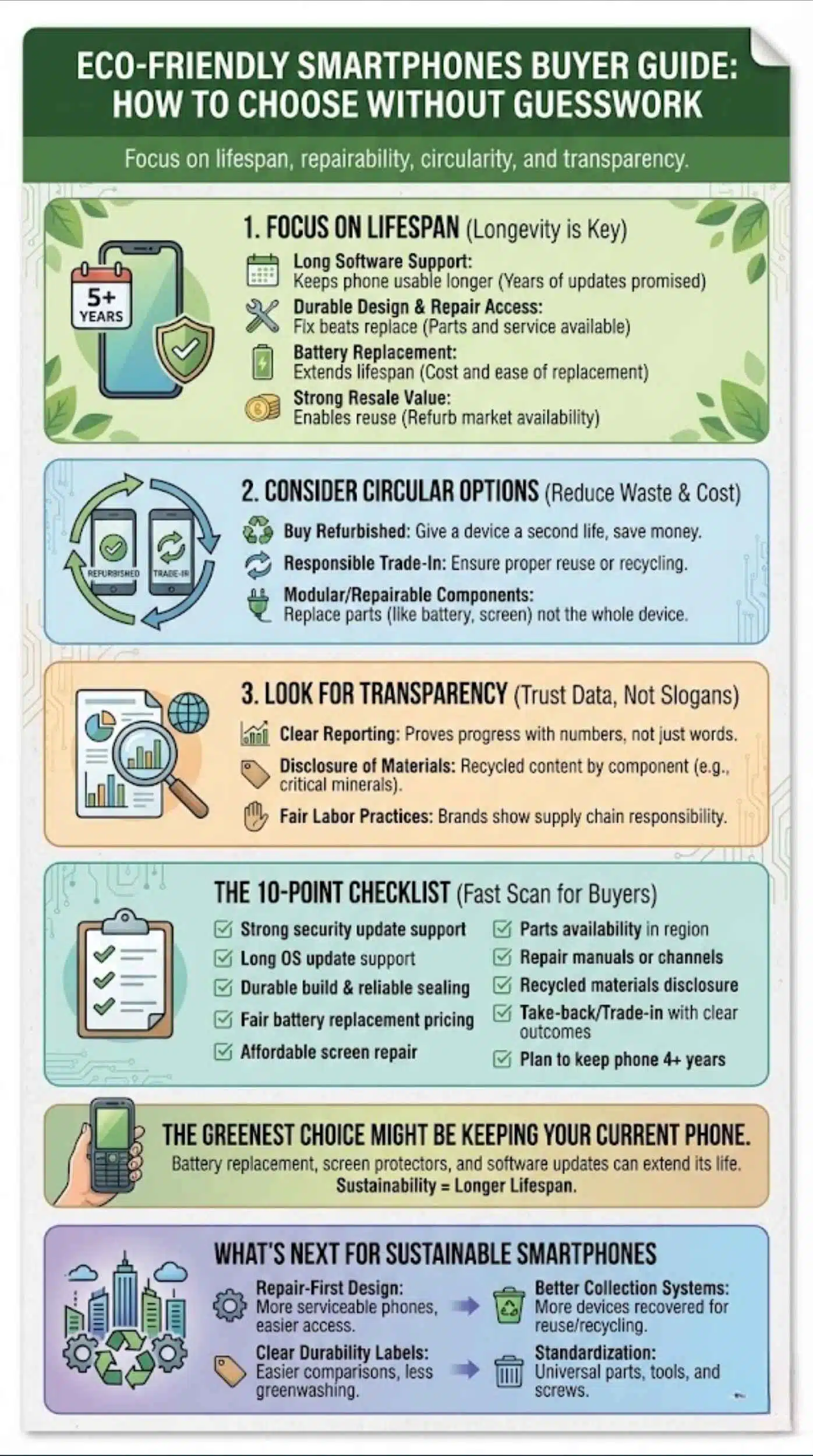
Buying a phone can feel confusing because every brand claims improvement. The simplest way to cut through it is to focus on lifespan. A phone that lasts longer is often the most sustainable choice. That means long update support, durable design, and repair access.
Second, consider circular options. Can you buy refurbished? Can you trade in responsibly? Can you replace the battery? These choices can reduce environmental impact while saving money.
Third, look for transparency. Brands that publish clear data and show real progress are easier to trust. Brands that rely only on slogans are harder to evaluate.
Here is a practical checklist you can use in minutes.
| What To Prioritize | Why It Matters | Quick Check |
| Long software support | Keeps phone usable longer | Years of updates promised |
| Repair access | Fix beats replace | Parts and service available |
| Battery replacement | Extends lifespan | Cost and ease of replacement |
| Strong resale value | Enables reuse | Refurb market availability |
| Clear reporting | Proves progress | Numbers, not slogans |
The 10-Point Checklist (Fast Scan)
- Strong security update support
- Long operating system update support
- Durable build and reliable sealing
- Fair battery replacement pricing
- Screen repair that does not cost “almost a new phone”
- Parts availability in your region
- Repair manuals or approved repair channels
- Recycled materials disclosure by component
- Take-back or trade-in with clear outcomes
- A plan to keep the phone at least 4 years
The Greenest Choice Might Be Keeping Your Current Phone
If your phone still meets your needs, keeping it is often the best sustainability move. A battery replacement can restore usability. A screen replacement can prevent a full device upgrade. A case and screen protector can prevent future damage.
Also, managing storage and uninstalling heavy apps can improve performance. Updating software and resetting occasionally can keep older phones smooth. These steps may feel small, but they extend lifespan, which is where the biggest sustainability gains often come from.
To make eco friendly smartphones practical, consumers need both better devices and better habits. Keeping a phone longer is a powerful habit.
What’s Next For Sustainable Smartphones
The future of smartphone sustainability will likely focus on repairability, labeling, and longer support. Governments are increasingly interested in reducing e-waste. That pushes brands toward better product design and clearer consumer information.
We may also see more standardization. Universal charging has already improved compatibility in many markets. Similar approaches could expand to parts and repair practices. Standard screws, easier battery replacement, and simpler component layouts could become more common.
Supply chain transparency will also matter more. Consumers and regulators want to know how products are made. Brands that invest early in clean energy and supplier standards will be better prepared.
| Future Shift | What It Means | Why It Matters |
| Repair-first design | More serviceable phones | Longer lifespan, less waste |
| Clear durability labels | Easier comparisons | Reduces greenwashing |
| Longer update support | Default expectation | Less forced upgrading |
| Better collection systems | More devices recovered | Higher reuse and recycling |
Regulations And Repair Momentum
Repair momentum is growing because repair reduces waste and supports local economies. As repair becomes a policy focus, brands may be required to support spare parts and fair access. This could normalize repair across more price segments, not just premium phones.
Policy can also discourage practices that block repair. That includes unnecessary software restrictions and parts pairing that disables features. The goal is to make repair a standard option for ordinary users.
Over time, this can shift the market. When repair is easy, phones last longer. When phones last longer, fewer new phones are needed.
Recycled Critical Minerals At Scale
Recycling critical minerals is difficult, but progress is possible. Better collection systems can increase the supply of end-of-life devices. Better recycling technology can improve recovery rates. Better design can make disassembly easier.
But scaling mineral recycling requires volume. That means collecting phones, not leaving them in drawers. It also requires safe and formal recycling systems, not informal dumping and burning. Brands can help by funding collection, improving incentives, and designing devices for easier separation.
If this scales well, it can reduce pressure on new mining while improving supply resilience.
Wrap-Up: The Green Moves That Matter Most
Not every green claim has the same weight. The biggest sustainability gains usually come from longer device life, better repair access, and cleaner manufacturing energy. Recycled materials and packaging improvements help too, but they are strongest when paired with longevity and circular systems.
If you want to evaluate a phone quickly, ask three questions. How long will it stay secure and useful? How easy and affordable is it to repair? What happens to it at the end of its life? These questions lead you to real impact.
Brands are moving in the right direction, but the pace varies. Some changes are deep and structural. Others are cosmetic. Buyers can influence this by rewarding brands that provide evidence, support repair, and design for long use.
| Highest-Impact Move | Why It Matters | Simple Buyer Signal |
| Longer use | Avoids new manufacturing | Long updates + durability |
| Repairability | Fix beats replace | Parts + manuals + fair cost |
| Cleaner supply chain energy | Cuts production emissions | Supplier clean energy progress |
| Circular programs | Reduces e-waste leakage | Take-back + refurb options |
Final Thoughts: Why Eco Friendly Smartphones Start With Longer Use
The best sustainability story is not about perfection. It is about real improvements that reduce waste and emissions. Eco friendly smartphones are becoming more common because brands are adopting recycled materials, cleaner energy, and better repair policies. But the biggest gains come when devices last longer and stay supported.
If you want to make a strong choice, prioritize long updates, durability, and repair access. Then consider circular options like refurbished devices and responsible take-back. When you combine smarter products with longer use, you reduce both cost and environmental impact.
Eco friendly smartphones are not just a trend. They are a sign that the industry is slowly shifting toward longer life, less waste, and more accountability.
FAQs About Eco Friendly Smartphones
Are eco friendly smartphones always more expensive?
Not always. Some sustainable features appear in mid-range devices, like longer updates or better battery health tools. Repairability and long support can also save money over time.
What matters more: recycled materials or repairability?
Repairability often has a bigger impact because it keeps phones in use longer. Recycled materials reduce virgin extraction, but frequent upgrades still create high manufacturing demand.
Is buying refurbished one of the best options?
Yes, in many cases. Refurbished phones extend the life of existing devices and can reduce demand for new manufacturing. Just choose reputable sellers with testing and warranty.
Do trade-in programs always reduce e-waste?
Not always. They help most when devices are refurbished and resold, or used for parts. They help less when they mainly encourage faster upgrading.
How can I make my current phone greener?
Keep it longer, replace the battery when needed, repair the screen instead of upgrading, and recycle responsibly at the end. A case and careful charging habits can also extend life.