


Cats are fascinating, but their fights can be scary. If two cats are fighting, you might wonder: Do cats fight to the death? This question worries many pet owners and animal lovers.
Cat fights happen for many reasons—territory battles, misunderstandings, or protective instincts. While it’s rare for domestic cats to kill another cat during a fight, serious injuries can still occur.
In this blog post, we’ll explore why these fights happen and how to stop them safely. You’ll also learn tips to prevent future clashes.
Ready to uncover the truth? Keep reading!
Key Takeaways
- Cats rarely fight to the death, but their sharp claws and teeth can cause serious injuries or infections like FIV or sepsis.
- Most fights stem from natural instincts such as territorial disputes, dominance issues, or motherly protection of kittens.
- Avoid breaking up cat fights with your hands; use distractions like toys, noise, or barriers to separate them safely.
- Spaying/neutering your cats reduces aggression tied to hormones and prevents many common causes of catfights.
- Providing space and recognizing body language helps prevent conflicts between cats in multi-cat households.
What Is a Catfight?
A catfight happens when two or more cats engage in aggressive behavior. It often starts with body language and vocalizations like hissing, growling, or yowling. Cats may crouch low, flick their tails, or stare intensely before making physical contact.
Sharp claws and teeth can cause painful injuries like puncture wounds or infected scratches.
These fights usually stem from natural instincts such as defending territory or asserting dominance. Male cats commonly fight over mates, while feral cats clash over food sources. Even indoor kittens might playfully wrestle but quickly escalate if one feels threatened.
Recognizing these signs helps prevent serious damage to your pets.
Do Cats Fight to the Death?
Cats rarely fight to the death, but serious injuries can occur. Their fights often involve hissing, growling, and posturing more than actual physical contact. Yet, if one cat bites another deeply, it may cause infections like sepsis or feline immunodeficiency virus (FIV).
Infections from deep wounds can turn deadly within 24-72 hours if untreated. Cats don’t instinctively seek to kill during fights; most aim to assert dominance or defend territory.
However, older cats or those with aggressive personalities might escalate a fight that poses high risks for injury.
Blood loss and stress make these battles dangerous even without intent to kill. Once aggression builds up, neither cat backs down quickly. Triggers include territorial disputes or protecting kittens due to motherly instincts.
A cat’s sharp teeth and claws make every scratch risky since bacteria spread fast through saliva or open cuts. If you see dilated pupils and tense body language in your pets before they lunge at each other, act fast by separating them safely using barriers like couch cushions rather than risking your hands getting bitten!
Common Causes of Cat Fights
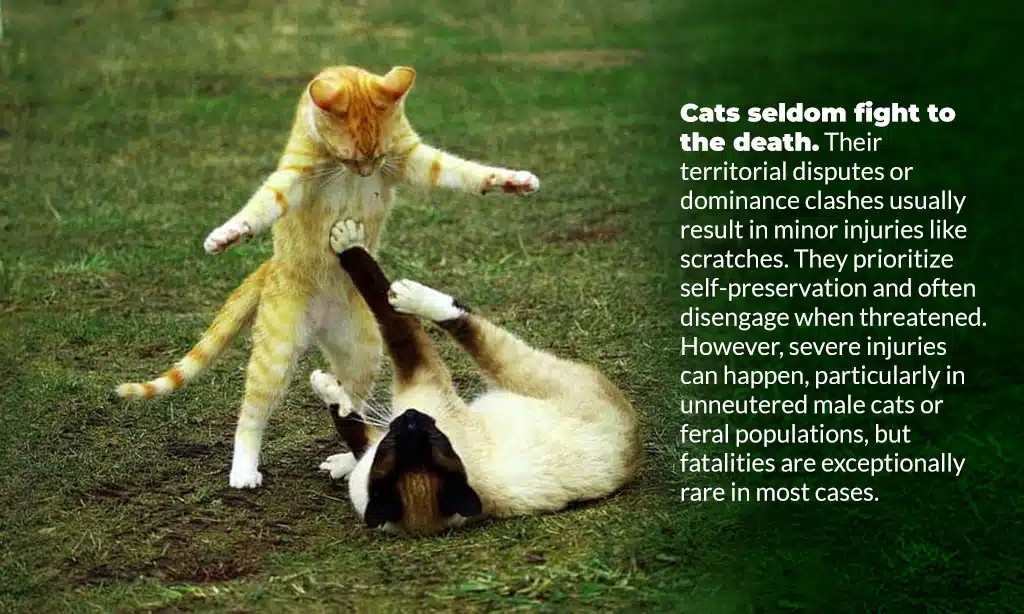
Cats clash for many reasons, often tied to instincts or misunderstandings—read on to uncover what triggers their spats.
Territorial Disputes
Fights often break out over territory. A dominant cat may feel threatened if another enters its space. Areas of your home, like a favorite sleeping spot or litter box, can spark aggression.
Cats instinctively know their boundaries and defend them fiercely.
Providing separate areas helps reduce tension. Multiple litter trays and feeding stations are key for homes with multiple cats. Lack of these resources can make disputes worse, causing one to attack the other repeatedly.
Aggressive Personalities
Some cats are naturally more aggressive. This behavior can stem from dominance hierarchy issues, causing the cat to lash out at others. An adult cat with a history of fights may resort to violence if it feels threatened or challenged.
Certain breeds, like Bengals or Siamese, might display stronger aggression due to higher energy levels. Cats who lack attention or live together in tense spaces often show bursts of anger.
Aggressors tend to cause serious injury during altercations, making proper intervention crucial before infections develop.
Play Fighting That Escalates
Play can quickly turn rough, especially with adult cats. A playful swat may lead to claws out or hissing. Cats often misread the other’s intentions, making them defensive. This shift can occur over toys, favorite spots, or even by accident during high-energy play.
Redirecting their focus works wonders. Toss a ping pong ball or use a toy like the Cat Dancer to distract them before things get heated. Separating feeding stations with an automatic feeder also helps calm tensions after play ends badly.
Motherly Instincts and Protection
A mother cat will fiercely protect her kittens. Her aggression may skyrocket if she feels danger creeping close to her babies. Even cats who seem calm can turn into ferocious defenders when their young are at risk.
Territory (animal) also plays a big role here. A mother sees anyone nearing her space as a threat, including other cats or even dogs. If the intruder ignores warnings like hissing or growling, a fight can erupt fast and hard.
Move with care around maternal cats to avoid chaos.
How to Safely Stop a Cat Fight
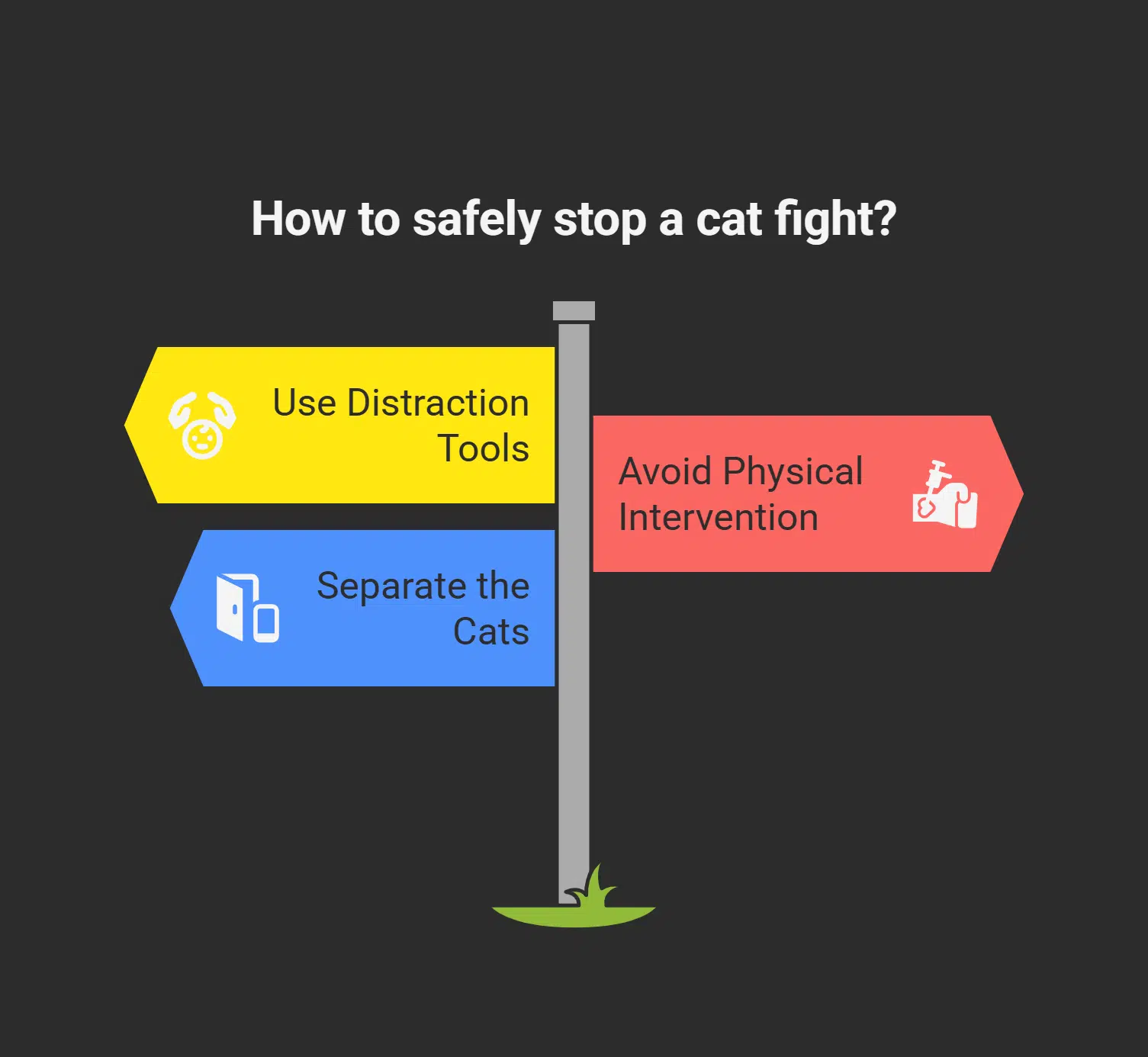
Stopping a cat fight takes quick thinking and calm actions. Your goal is to break their focus without putting yourself in harm’s way.
Use Distraction Tools
Shake a bag of treats to grab their focus. Toss a ping pong ball or roll a favorite toy across the floor. These small actions can spark curiosity and break up tension fast. Call out to the calmer cat with an upbeat tone, pulling attention your way instead of on each other.
Noise works wonders too. Clap your hands or drop something soft nearby, like a pillow, to startle them just enough to pause the fight. Once they stop, move quickly toward separating the cats into different rooms for safety and cooldown time.
Avoid Physical Intervention
Don’t attempt to break up a fight with your hands. Cat bites can cause serious infections, like sepsis, which may turn deadly within 24–72 hours. Even minor scratches or wounds may become infected quickly.
Physical intervention increases the risk of injury for you and stress for the cats. Tools like squirt bottles or loud noises often escalate aggression instead of calming it down. Move carefully to use safer methods next—like separating them into different rooms.
Separate the Cats into Different Rooms
Use a large cardboard box, cutting board, or even a couch cushion as a barrier to stop the fight. Guide each cat into separate rooms using toys or treats. It’s safer and avoids risking injury to yourself.
Keep them apart for 24–48 hours, or longer if they remain stressed. Use this time to calm both cats down. A feliway diffuser can help reduce aggression during separation. After enough time has passed, safely reintroduce them under supervision.
Preventing Future Cat Fights
Keeping the peace between cats takes patience, observation, and a little effort.
Spay and Neuter Your Cats
Fixing your cat’s ability to reproduce helps prevent aggression toward others. Cats that don’t undergo spaying or neutering often fight more, especially males. This behavior stems from territorial instincts and mating competition.
After a procedure at the veterinarian’s office, many cats calm down significantly. It lowers hormone levels tied to fighting, spraying, or wandering off. Plus, it reduces risks of infections that may arise from injuries during fights with other cats.
Provide Enrichment and Space
Spayed and neutered cats often show fewer aggressive behaviors, but they still need space to thrive. Each cat must have its own resources like food bowls, water, litter boxes, and resting spots.
Overcrowding increases stress and sparks more fights.
Use shelves or cat trees to create vertical spaces for climbing. This gives them ways to escape tension, avoiding clashes with other cats. Barriers like baby gates can block off problem areas or separate feuding pets temporarily if needed.
A calm environment helps prevent animal communication from turning into conflict.
Monitor Body Language and Triggers
Cats communicate a lot through body language. Watch for signs like flattened ears, puffed-up tails, or narrowed eyes. An old cat might show aggression when stressed by younger ones.
A fight may start if one cat keeps attacking because it feels cornered or threatened.
Pheromones can help calm tension between cats. Use them to create a soothing environment. Pay attention to triggers like food disputes, sudden noises, or changes in routine causing the problem.
Spot these early to prevent such fighting from escalating into injuries or infections that may hurt your cats further.
Takeaways
Stopping cat fights takes patience and a good plan. Most fights don’t lead to death, but they can cause serious injuries or infections. Watching for triggers, providing space, and seeking help from a vet or behaviorist can work wonders.
Keep your cats safe, happy, and far from harm’s way!
FAQs on Do Cats Fight to the Death
1. Do cats fight to the death?
Cats rarely fight to the death, but fights can get serious. If left unchecked, they may risk injury or infections that could worsen over time.
2. Why do cats fight with other cats?
Cats usually fight over territory, food, or dominance. Sometimes a cat wants space and lashes out when another cat gets too close.
3. How can I stop my cats from actually fighting?
Make a loud noise to de-escalate the situation quickly. Don’t attempt to pick them up mid-fight—it’s worth waiting until they calm down.
4. Can fighting lead to long-term problems for my cat?
Yes, fights can lead to injuries like scratches or bites that might cause infections later on. Blood work at your veterinary clinic may help check for hidden issues after a bad fight.
5. What if my three cats don’t become friends?
If your cats’ behavior doesn’t improve despite patience and effort, rehoming one might be time-consuming but necessary for their well-being.
6. Should I ask a cat behaviorist for help with aggressive animals?
Yes! A skilled behaviorist can help you understand why your cats are fighting and offer tips to make sure each cat feels safe in its environment without risking more animal fights.




























