
Digital transformation is changing how companies in Taiwan do their work. It’s about using technology like the internet, computers, and data analysis to get better results. This change is big for businesses.
They can now do things faster, make fewer mistakes, and find new ways to grow. Taiwan has a plan called DIGI+ that wants to make the whole island smarter through tech by 2025.
The government of Taiwan set up the Ministry of Digital Affairs in 2022 to help with this big change. They made new rules and have money ready to use for projects that cut down pollution and help small companies use AI.
They think these steps will make the economy grow by 3.29% in 2025.
Using digital tools means companies can be more productive and bounce back faster from tough times. It also makes moving goods around simpler and cheaper.
But it’s not always easy. Some people don’t want to change how they’ve always done things, and there are worries about keeping information safe online.
Still, with support from the government focusing on small businesses from 2022-2026, Taiwanese companies have a lot to gain: more growth without hurting the planet much.
This article talks all about it!
Explanation of digital transformation and its impact on businesses
Digital transformation changes how companies use technology, from computers to the internet. It’s like upgrading from an old phone to a smartphone. This change helps businesses do things faster and better.
In Taiwan, this upgrade aims to make industries smarter by 2025. The DIGI+ program is a big part of this plan. It pushes for more innovation across different sectors.
Companies that go digital can work more efficiently and handle problems better. They also find it easier to manage how they get and send out goods or services. With targets set for 2025, Taiwan’s focus on tech shows how important digital tools are for growth.
This includes using artificial intelligence (AI) and cloud computing to improve areas like marketing and making cities smarter.
Key Factors Driving Digital Transformation in Taiwan
Government actions and money plans are pushing Taiwan into a digital future. Tech advancements in important areas help too.
Government Initiatives and Budget
Taiwan’s government is putting a lot of money into the future. In 2025, they plan to spend $4.99 billion on important things like zero pollution goals, using AI smarter, and making healthcare better.
This big spending aims to make Taiwan’s business world stronger and more able to face big changes.
One key move was setting up the Ministry of Digital Affairs in 2022. This new part of the government works hard to make sure Taiwan stays at the top in tech stuff like AI and digital health.
They also look after a program called DIGI+ that wants to grow Taiwan’s digital economy to $203.1 billion by 2025. On top of all this, small businesses can get special loans up to NT$100,000 to help them join in on these tech improvements easier.
Strategic Industries Development
Strategic industries in Taiwan focus on key sectors like semiconductors and Information and Communication Technology (ICT). The government supports these areas through programs like DIGI+.
This program pushes for tech innovation and equal digital rights. It helps to ensure everyone can benefit from the digital economy.
Taiwan also opened Digital Opportunity Centers. These centers aim to bridge the digital divide by providing access to technology and training. By investing in smart machinery and fintech companies, Taiwan’s economy grows stronger.
The Financial Technology Development and Innovation Experiment Act further aids businesses in accessing the digital market, ensuring a brighter future for all entrepreneurs in the region.
Economic Growth Forecast for 2025
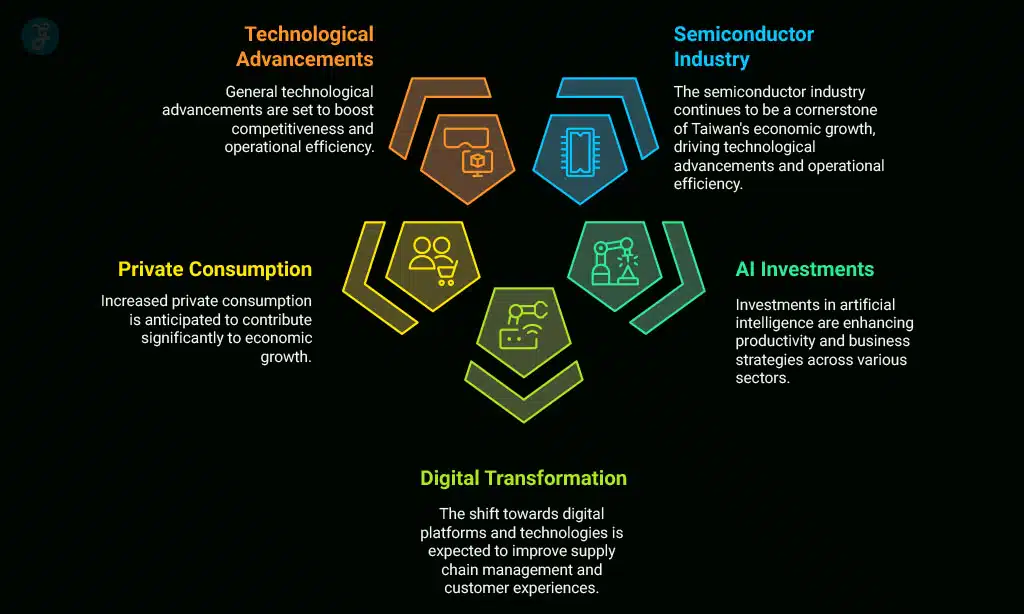
Taiwan’s economy is set to grow by 3.29% in 2025, according to the National Development Council (NDC). Many experts also see strong growth ahead for the semiconductor industry and technology sector as they adapt to new digital trends.
NDC Projection of 3.29% growth
The National Development Council (NDC) projects a 3.29% growth rate for Taiwan in 2025. This forecast shows strong confidence in the Taiwanese economy. The rise is mainly driven by high demand for artificial intelligence (AI).
Companies are investing in AI to boost productivity and efficiency. This change can help improve the business sector.
With new technology, many industries will likely see improvements. Smart manufacturing and e-commerce platforms will benefit from these advancements too. As businesses adapt, they can expect better supply chain management and customer experience.
All these factors indicate a bright future for Taiwan’s economic landscape.
Other Predictions for 2025
In 2025, several factors will shape Taiwan’s economy. Experts expect growth rates to reach about 3.0%. This aligns with the optimism shared by Citi for Taiwan’s economic future. Predictions indicate that private consumption and investments in digital transformation will play a big role in this growth.
The semiconductor industry will keep driving progress. As companies adopt new technologies, they will boost operational efficiency and increase productivity. AI applications are also set to enhance business strategies across various sectors, from marketing to supply chain management.
These changes can lead to better customer relationships and improved market competitiveness for Taiwanese businesses.
Impact of Digital Transformation on Taiwan’s Business Sector
Digital transformation changes how businesses in Taiwan operate. It boosts productivity and makes supply chains more efficient… This shift helps companies respond better to challenges, like inflation or market demands.
More firms are using smart machinery and data analytics to improve their strategies and stay ahead. With these tools, Taiwanese businesses can adapt quickly in a fast-paced world.
Increased Productivity
In Taiwan, digital transformation boosts productivity in many ways. Companies see improvements in output thanks to new technologies. Automation takes over repetitive tasks, allowing employees to focus on more important work.
This shift saves time and enhances job satisfaction.
Access to real-time data and analytics plays a significant role too. Businesses can make quick decisions based on accurate information. With tools like ERP systems and advanced software as a service (SaaS) solutions, firms streamline their operations.
These changes help create a more efficient digital economy in Taiwan’s business sector.
Enhanced Resilience
Digital transformation boosts resilience in Taiwan’s business sector. This change helps companies adapt quickly to market shifts and unpredictable events. Strong digital tools allow businesses to respond faster when challenges arise.
They also improve export performance, which is vital for the economy.
Taiwan shows how adaptability plays a key role in this process. Companies that embrace new technologies—like cloud solutions and smart machinery—are more likely to succeed. By enhancing their internal systems and strengthening customer relationships, these businesses stay competitive.
As a result, they can weather economic storms better than those who resist change.
Improved Supply Chain Management
Supply chain management is improving in Taiwan due to digital transformation. Companies are using AI, blockchain, and big data analytics to streamline their processes. This shift helps businesses reduce costs and enhance service delivery.
Small and medium-sized enterprises (SMEs) gain the most from these changes. They can manage their supply chains more effectively, which leads to increased efficiency.
Integrating smart machinery also plays a key role in this process. It allows for real-time tracking of goods and materials. As a result, businesses can respond quickly to market demands.
Improved supply chain management boosts productivity and enhances resilience against disruptions. In 2025, we will likely see even greater advancements in how companies handle their logistics and operations.
Success Factors for Digital Transformation in Taiwan
Success factors for digital transformation in Taiwan include the ability to adapt and bounce back from challenges, along with the smart use of technology tools. These elements help businesses grow and thrive in a fast-changing market.
Curious about how these factors play out? Keep reading!
Adaptability and Resilience
Adaptability and resilience are key for businesses in Taiwan. These qualities help companies respond to changes and face challenges, especially during tough times. In 2025, the importance of these traits will grow as digital transformation takes hold.
Companies need to embrace new technologies like cloud solutions and smart machinery. By doing so, they can boost productivity and manage risks better.
Building digital resilience allows firms to recover quickly from crises. For example, a strong online presence helps businesses reach customers even when disruptions occur. This flexibility protects their income and enhances their brand reputation.
In summary, adaptability and resilience are crucial for thriving within Taiwan’s changing economy driven by digital change.
Integration of Digital Tools
Digital tools are key to Taiwan’s growth. They help businesses work better and faster. The government is pushing for more use of these technologies. Programs like DIGI+ focus on high-tech sectors, especially in AI and smart machinery.
This push helps businesses become 60% more competitive in the digital space.
AI governance plays a big role too. Businesses now integrate AI applications into their daily tasks. This can improve how they manage customer relationships and handle operations. As companies embrace cloud technology, they find new ways to grow their markets while battling inflationary pressures.
By using these modern tools, Taiwanese companies can adapt quickly to changes and stay ahead of the game.
Role of AI in Driving Growth in 2025

AI will play a big role in Taiwan’s growth in 2025. It helps businesses be smarter and faster. Companies are using AI to improve how they market their products. This means better customer connections and more sales too! Keep reading to find out how these changes could shape the future of business in Taiwan.
Citi’s Forecast and Potential Impact
Citi predicts a strong economy for Taiwan in 2025. This growth will be fueled by artificial intelligence (AI). The demand for chips and infrastructure will keep rising as AI changes how businesses operate.
Taiwan’s semiconductor industry stands to gain significantly from this trend. Companies are expected to invest more in digital tools, enhancing productivity and efficiency. Entrepreneurs can also use AI applications to improve marketing strategies and reach customers better.
With these advancements, the future looks bright for Taiwan’s digital economy.
How Taiwanese Entrepreneurs Are Using AI to Enhance Content Marketing
Taiwanese entrepreneurs are using AI tools to boost content marketing. These technologies help create personalized experiences for customers. By analyzing data, AI can suggest what content a customer might like.
This means businesses can engage with their audience better than before.
Start-ups in Taiwan are also adopting AI solutions for marketing needs. They use these tools to learn about customer behavior and preferences. With smart machinery and advanced software, they craft messages that resonate more deeply with users.
As a result, their marketing becomes not just effective but also more connected to what people want.
Challenges in Achieving Successful Digital Transformation
Businesses face many challenges in their digital change journey. Some workers resist new ways of doing things. Others worry about keeping data safe from cyber threats. These barriers can slow progress and cause setbacks…
Yet, overcoming them is key to success! Want to learn more? Keep reading!
Resistance to Change
Change can be tough for many businesses. People often feel scared or uncertain about new ways of working. This fear can slow down digital transformation efforts in Taiwan. Without support from senior management, securing funding becomes hard.
Companies may stick to old habits instead of exploring new technologies like AI and smart machinery.
The resistance to change also comes from a lack of understanding. Many employees do not see the full benefits of going digital. They worry about losing their jobs or having to learn new skills quickly.
These feelings create challenges that hinder growth and innovation in the business sector. It is crucial for leaders to address these concerns if they want successful digital transformations in 2025 and beyond.
Cybersecurity Concerns
Taiwan faces a huge threat from digital attacks. Each month, there are about 30 million cyber threats targeting businesses. This makes cybersecurity a top concern for many companies.
As more businesses move to the cloud and adopt new technologies, they become bigger targets.
The Ministry of Digital Affairs (MODA) is pushing for Zero Trust Architecture (ZTA). This approach helps improve security by not trusting any user or system right away. It needs constant verification of identities and devices.
With these steps, Taiwan aims to protect its growing digital economy against rising risks in cybersecurity.
Takeaways
Digital transformation is key for businesses in Taiwan. It offers many chances to grow and adapt. Embracing change can help firms improve efficiency and customer relations. As Taiwan looks towards 2025, staying ahead means using new technology, like AI and smart tools. Businesses must act now to thrive in this fast-paced economy. Interested in more insights? Keep reading!
Importance of Embracing Digital Transformation for Businesses in Taiwan
Embracing digital transformation is crucial for businesses in Taiwan. About 27% of companies see it as a key advantage. The service sector leads this change, and many manufacturers are catching up.
Companies with more than NTD 100 million in revenue have a high adoption rate of 57%. This trend shows that bigger firms understand the value of new digital tools.
Small and medium enterprises (SMEs) also recognize its importance. A remarkable 91% invested in digital transformation after the pandemic hit. The Taiwanese government supports these efforts from 2022 to 2026, especially for SMEs.
With a record-high budget for digital infrastructure coming in 2025, there’s plenty of opportunity ahead—driving growth and making businesses more resilient in an ever-changing economy.
Future Outlook and Potential Benefits.
Taiwan’s digital economy is set to grow. By 2025, it could reach USD 203.1 billion. This growth will boost the country’s GDP by 29.9%. Small and medium-sized enterprises (SMEs) are leading this change.
After the pandemic, 91% started investing in digital tools.
The Ministry of Economic Affairs has plans for SMEs too. They aim for net-zero emissions and a full digital transition by 2026. Such changes will make businesses more resilient, especially after challenges faced during COVID-19.
With strong investments in advanced semiconductor production and AI integration, Taiwan stands to gain a lot from these shifts in its business sector.
FAQs on Digital Transformation on Taiwan’s Business Sector
1. What is the impact of digital transformation on Taiwan’s business sector?
Digital transformation has a significant impact on Taiwan’s business sector, promoting economic growth rate and GDP growth by integrating AI applications, smart machinery, and high-performance computing into various industries like semiconductors and cybersecurity.
2. How does digital transformation influence the semiconductor industry in Taiwan?
The semiconductor industry benefits from digital transformations such as AI governance, SaaS solutions, disruptive technology like quantum tech and advanced persistent threat protection. These innovations not only improve productivity but also enhance information security.
3. Can you explain how AI impacts education in Taiwan due to digital transformation?
Sure! The integration of AI into education through smart cities initiatives allows for personalized learning experiences. It also provides metrics for performance analysis while ensuring internet access to all students which reduces income inequalities.
4. How are businesses adapting to this change in the economic environment?
Businesses are adopting new models such as subscription services or streaming services to adapt to changes brought about by the digital economy. They’re implementing change management strategies with an internal audit process that focuses on touchpoints like customer relationship management (CRM) and pricing options.
5. Could you shed some light on how government procurement policies affect this transition?
Government procurement policies play a crucial role in accelerating this transition by investing heavily in areas such as national standards technology research centers or supporting events like COMPUTEX Taipei held at Taipei World Trade Center which showcases latest technological advancements.
6. Is there any sign of economic recovery post-digital transformation implementation?
Yes indeed! With increased internet usage leading to more online subscriptions along with wage growth observed from world inequality database records indicate positive signs towards an economic recovery post-digital transformation.